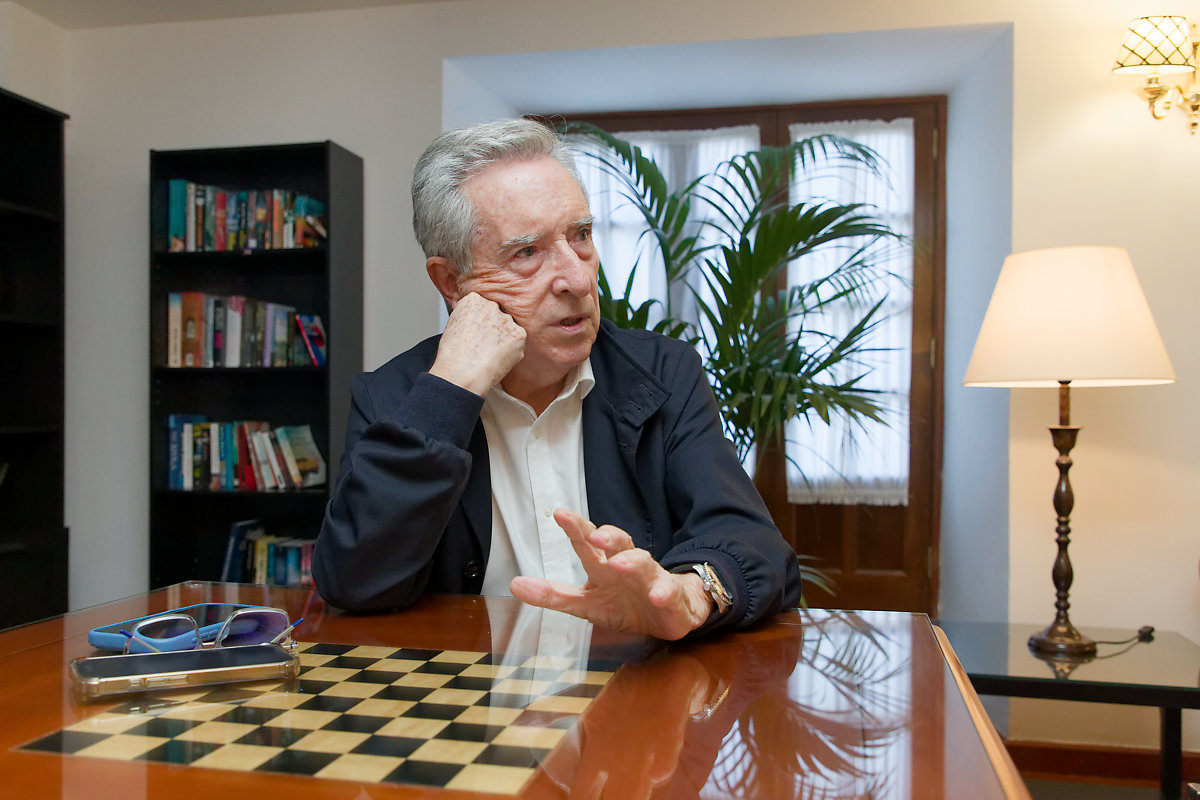
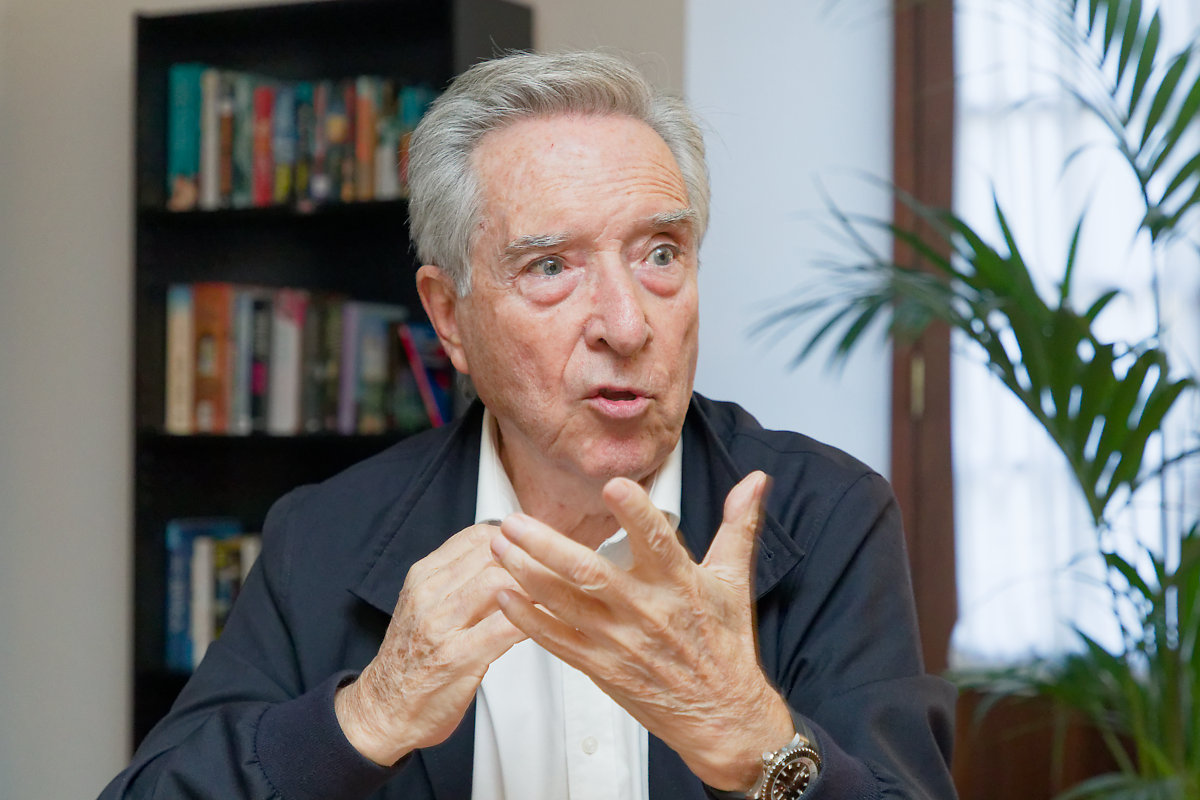
Iñaki Gabilondo has been a leading figure in Spanish media for over six decades, whether as an executive or, above all, as the director and presenter of top-rated programs. Although he has worked in virtually every genre and his face remains very popular, he is undoubtedly most associated with radio.
His extensive career began in 1963 at Radio Popular in San Sebastián, so he knows perfectly well what it means to live—or perhaps even survive—with a lack of freedom. He was an exceptional witness to the Transition and a protagonist in one of its most tragically iconic moments, when on February 23, 1981, he appeared on television for the first time in his life to report, as director of TVE, on the fortunately unsuccessful coup attempt.
Gabilondo participated in early November in the program of events “For freedom. Spain, 1975”"with which the University of La Laguna commemorates the fiftieth anniversary of the democratic transition. It starred in a fluid public dialogue with journalism students and also had time to reflect on that past, but also on the unstable present, with this communications office.
A few days ago, an interview was published in the Catalan newspaper El Periódico in which you stated: “That Francoism died in its bed was a disgrace and a generational shame.” What do you think could have been done better?
Yes, it remains a historical and generational shame because it shouldn't have happened that way. But things unfolded as they did. Franco's regime took a leap forward in 1960 with the Stabilization Plan, which gave Spanish society a significant boost, consolidated a middle class that hadn't existed before, and led to spectacular economic growth in the following days, etc. This greatly relaxed society, although a formidable transformative current was brewing beneath the surface, because the lack of freedom was becoming increasingly difficult to endure—because people didn't understand what a lack of freedom meant—and so circumstances led to the outcome. Something else should have been possible.
And what would you have preferred?
I would have preferred that Francoism had ended its days in a different way.
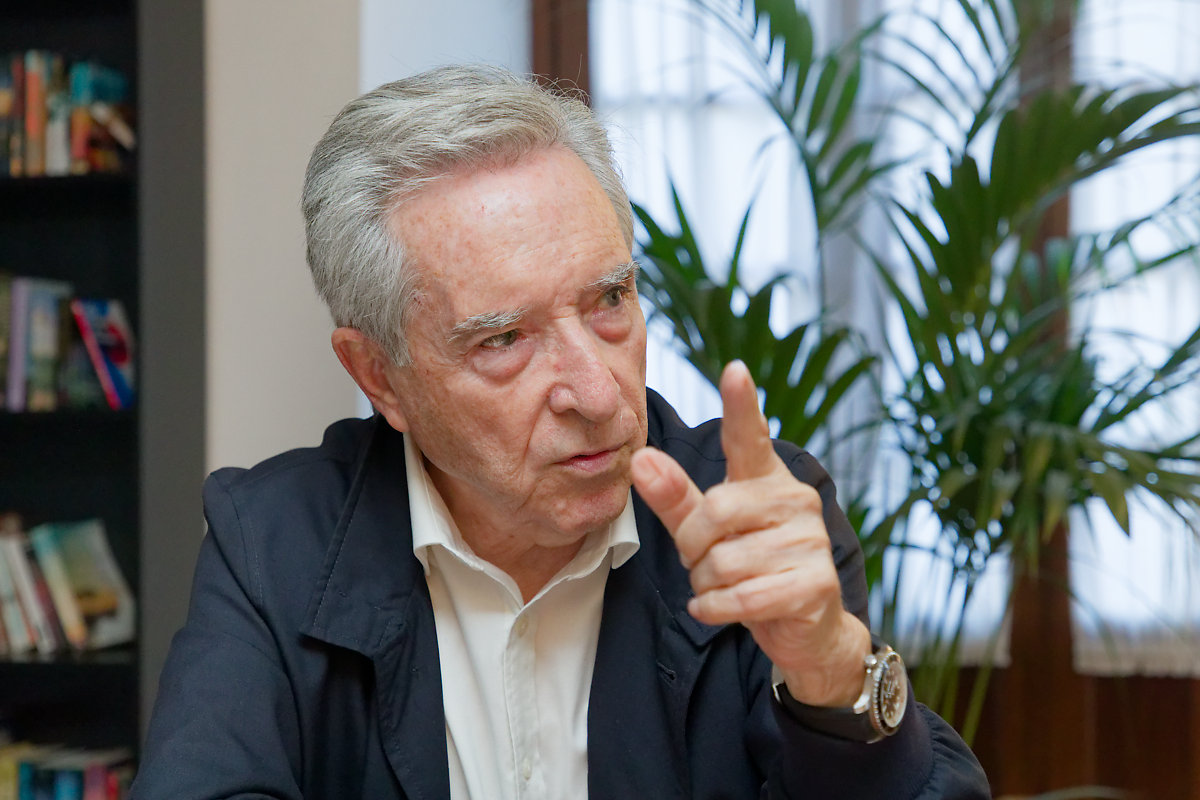 Speaking of that time, you started as a journalist in 1963. What was it like working in a profession that seeks the truth in a situation of total control and censorship?
I worked in radio and people don't know this, but radio in Spain could only start broadcasting news without connecting to Radio Nacional de España in 1977. Until that day in October 1977, all radio stations in Spain were required to connect at 2:30 in the afternoon and 10:00 at night with Radio Nacional, which broadcast the only news program in Spain.
On the radio, we did reports, feature programs, sports, local news, current events; we were paving the way. Hora 25 had already been launched, but it was considered a current affairs program; it couldn't be called a news program.
The press was changing, but there were still censorship processes. For example, at Radio Madrid we did local news and it went through censorship in the following way.Next, Gabilondo interprets a conversation):
“-Ministry of Information and Tourism, good morning.
-Hello, good morning, I'm calling from Radio Madrid.
-Yes, I'll put you through with censorship, one moment... Censorship, good morning.
-Hello, look, I want to tell you what we're going to announce at 12. That there's been a robbery at the jewelry store…
-No!
-There are parties…
-Yeah!".
This was how these programs were made, with no freedom and national and international political information banned, which was only provided by Radio Nacional.
And there wouldn't be any live broadcasts either, because they were uncontrollable, right?
Yes: the Tomelloso festivities, the Real Madrid football match, the Perico el de los Palotes concert… It was like a table with one leg missing, an amputated organism. And we were waiting for the day when Spanish radio, which was very good and did brilliant creative work, could also provide news coverage like the French, the Belgians, the Italians, and the French. It was a terrible situation.
To allude to the past is a complete injustice, because I understand it as a challenge to the shortcomings of democracy, which is proving ineffective in solving the problems affecting society. It's getting lost in grand rhetoric and failing to realize that it's using a set of solutions overwhelmed by the complexity of the current reality. And so, people challenge this model by embracing the most shocking ideas, even though they aren't being offered solutions: they're being denounced. People like to hear things denounced, but they haven't been told how they're going to be resolved.
But wanting to challenge the present doesn't change the reality of the past. That's why I often tell younger people that democracy isn't the same as what we have now but without political parties, which seems to be what those who long for that time believe. Or a man who has a lot of power. No: it's a man who has so much power that he decides your life. We couldn't meet with whomever we wanted, we couldn't watch the movies we wanted, we couldn't read the books we wanted, we couldn't practice our religion or not, we couldn't have the sexual identity we had. Young people don't know that this happens when an authoritarian regime starts to restrict things.
We're seeing now, for example, that Donald Trump in the United States is making decisions that are dismantling things. Tell me if you really like that model, even if you only appreciate the glamorous aspect of a powerful man who actually does and implements the things he says he's going to do.
Democracy should take a very hard look at the colossal shortcomings it is revealing to younger generations. This yearning among young people seems more like an invocation of the most disruptive elements than a genuine desire for change. They're saying, "These are the ones who tell the truth!" And these parties may tell whatever truths they want, but they aren't saying how they plan to solve the problems they're denouncing.
But, as I say, there is a very clear global backlash against democracies that are showing signs of failing to address fundamental issues, and this is leading people to this widespread challenge. And then there are those who, evidently, do yearn for a return to that kind of political approach.
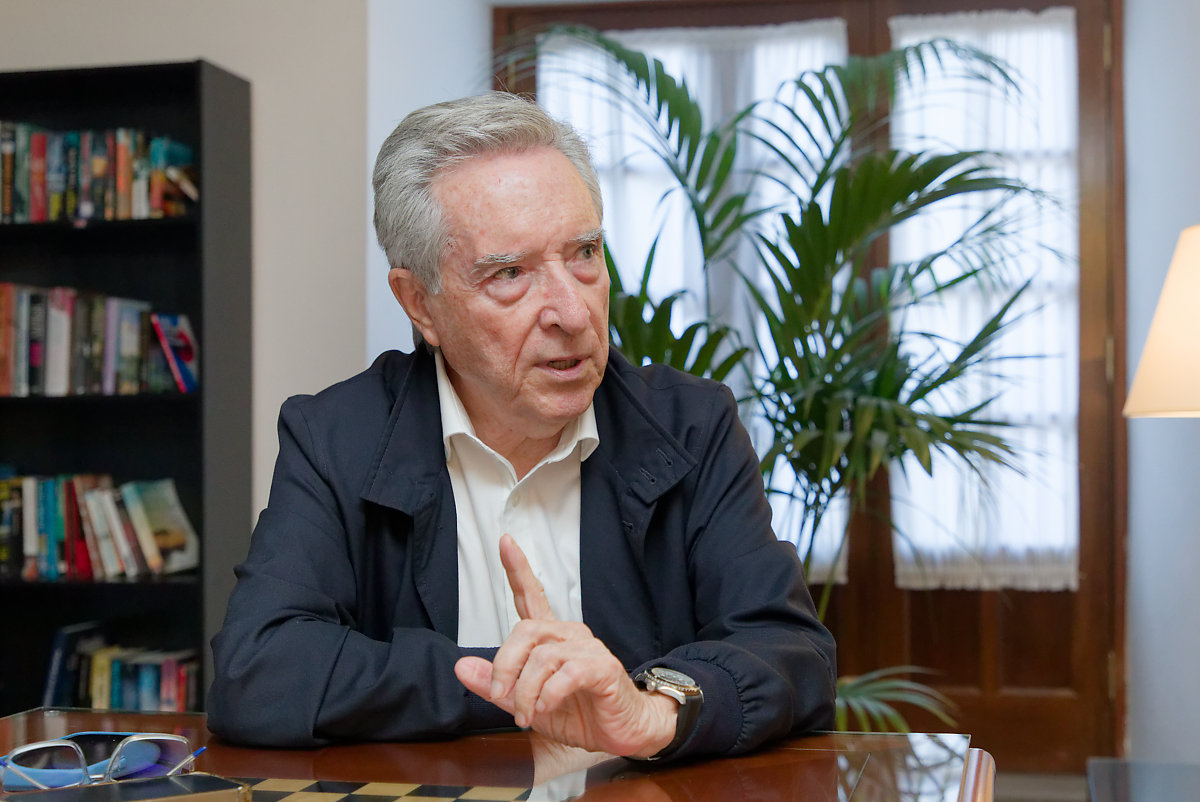 It is disheartening that the youngest are defending Francoism.
Yes, because they challenge the most radical elements. There's always an alternative. On the day of the 15M movement, there was a radical proposal of a different kind that drew in people dissatisfied with the two-party system. Now people look to the reference to the strongman, which has been an old yearning when there were problems: the iron man, the Deus ex Machina, The man who solves humanity's greatest problems... It's a very human tendency. We're seeing it, and it's gaining momentum everywhere.
The 15M movement gave rise to what was called the “new politics,” but it quickly seemed that the powerful forces in society extinguished it. However, now we are talking about an international movement, because it's not just about Trump.
Yes, an international movement of nationalism is being created, which is the most paradoxical thing that has ever existed. Now, Patriots for Europe—the group of European parties to which Abascal's party belongs—is forming a kind of infiltrated fifth column in each European country, and it's working. We are in a moment of such profound, total, and absolute change that it is very difficult to predict anything or analyze it clearly. We are in the midst of a major earthquake.
And even more so with the situation of the media, which seems unable to fulfill that supposed role of fourth estate, of moderator.
That has also changed completely. For starters, newspapers are no longer mass media: TikTok and Instagram are mass media. The media are completely redefining their purpose, transforming themselves, and adapting as best they can.
Whenever we talk about information, we must first and foremost place this motto: “The media is living in financial panic.” Because the model that sustained them has collapsed, and they are groping in the dark, searching for another. Some are making more progress than others, and they are all experiencing this profound disorientation that is bringing them to a standstill. At this moment, it is impossible to analyze what they are doing with any seriousness or certainty, because they are defending themselves against a colossal change, searching for a way out.
Which, incidentally, is happening with countless other things around the world. Absolutely everything is in turmoil, and the media, indeed, can no longer play the role they once did and are trying to position themselves however they can. Above all, they are trying to find mechanisms for consolidation and economic stabilization that will sustain the business. Because right now, journalism isn't in crisis: the structure that supports journalism is in crisis.
That's why it's often said—quite jokingly, but not entirely—that there's never been a better time to work in journalism, nor a worse time to make a living from it. Because it's a time when the very foundations of the business are shaking. The media are looking for shortcuts to reach the reader, the listener, the viewer… through superficiality, trivialization, empty promises, likes, dislikes, games, and by playing games and using gimmicks because they're desperately hunting for a customer whose whereabouts they can't even find.
In this situation, what message can be given to someone studying journalism who wants to pursue a career in the field? What does their future hold?
The future? Who knows what the future holds? What is the future? The future of nothing! Tell me one career whose future you know. Or one activity. Or one country. The world is trembling. But that can't be the deciding factor in anyone's life. You have to live doing what you believe you have to do, with as much decency and clarity as possible, without making predictions and prophecies about where this is going to lead you. The world will be what you make it.
The world right now is full of crime, mafia networks, smugglers, drug traffickers… Is it, therefore, impossible to live a decent life? No. There are plenty of people who, in that landscape, create bubbles of decent living and cultivate them, develop them, and sustain them. Well, it's the same with journalism: it has to remember what its profession entails, what its task is, try not to be misled by the lures of likes and dislikes, and stand firm in maintaining a profession in which it believes it will play a role and where it will find secure paths. But it will have to grit its teeth.
I was a radio station director when there was no freedom of information. And people would say to me, "Why did you study journalism if you're working somewhere where they won't let you report the news?" Well, because I hope that one day I'll be able to. In the meantime, I'm preparing myself.
We shouldn't make these kinds of pessimistic predictions. In all my years in this business, which I don't know how many, I've seen every profession—ours, for example—be the one nobody wanted, the one everyone wanted, the most envied, the most reviled… The cycles of life are constantly changing. And what nobody in life, or in journalism, can do is get stuck on the current situation. You can't avoid being affected by the current situation, but you can't live for it, much less believe that the current situation is the established order forever.
It's the typical sin of young people: they know that life is constantly changing, that the 13th century was one thing, the 14th another; they believe the world is constantly evolving, but only up until the moment they're born, and then everything stands still. But even this isn't static; it's changing too. And it will pass. And perhaps it will pass for the worse. Or for the better. But don't act as if this is the final outcome of humanity's long journey; this isn't the final outcome of anything's long journey. In this part of the journey that you're on, you must live with greater consistency, solidity, and decency, without losing faith that you can move things in the right direction.
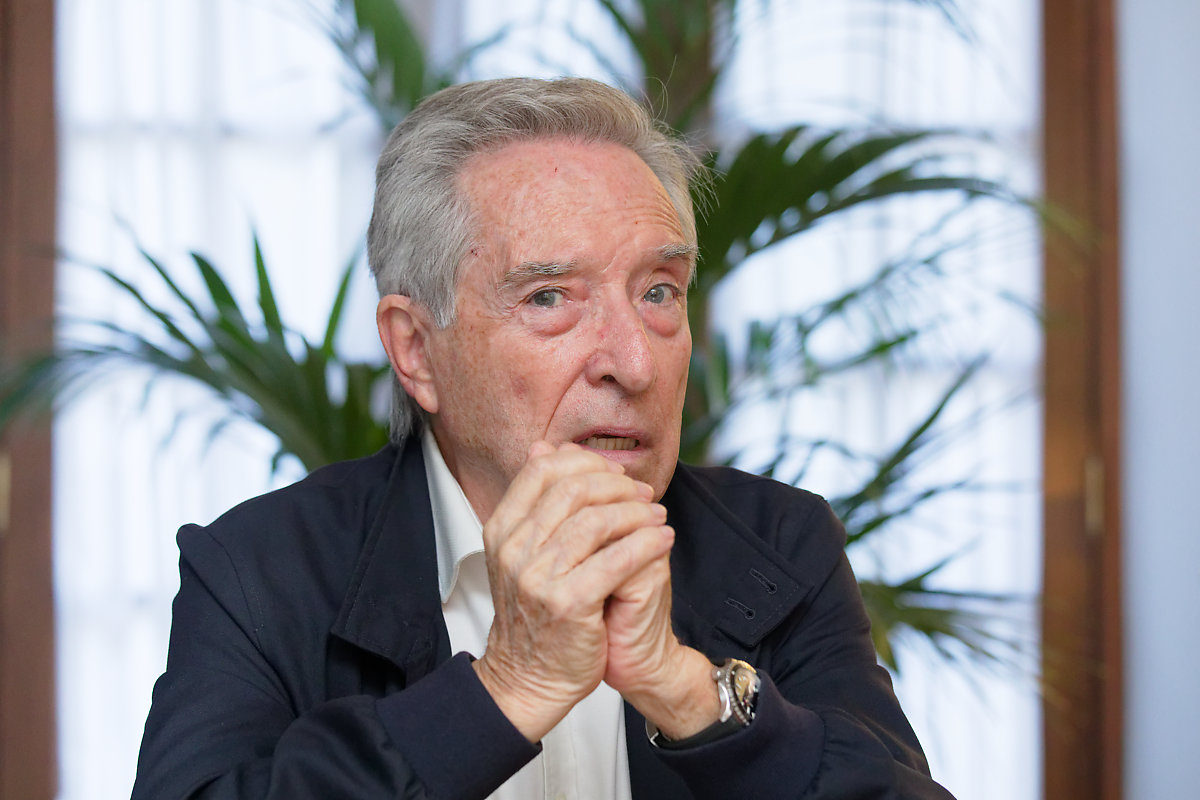 Connecting the Transition with what you are saying now about the disappointment that young people have, after 50 years of democracy, what is your assessment of how that process has turned out to be?
Democracy is a great success, but like everything else, it needs a serious shake-up, and it's not very aware of this. There's a certain arrogance in politics, a belief that everything has to change. It knows that every human being and every company is trying to adapt, but politicians don't think they have to do the same. Because they manage something as sacred as freedom, they think it will happen automatically. No: freedom also needs to be studied, reflected upon, and updated, and it isn't. Society is much more complex than before; problems have taken on a new dimension. They aren't easy to solve, and they're applying old solutions from a time when society wasn't so complex.
The Socialist Party (PSOE) has no solution for housing. The People's Party (PP) has no solution for housing. Vox has no solution for housing. Nobody has a solution for housing. Traditional approaches won't solve a problem of this magnitude. A concerted effort is needed. Without local government, regional government, the central government, unions, employers' associations… it's impossible to tackle an issue with so many facets.
This polarization of "I'm smart, you're stupid; I'm good, you're bad" is playing out. They offer solutions that can only make small progress: one expresses satisfaction that youth unemployment has dropped from 30.1% to 29.7%. And the other says, "When I'm in office, it'll be 28.2%." And so people understand that the political fight is a battle that shifts things around a bit, but doesn't address the underlying issues because they've reached a very large scale and depth. Then, they look for someone like Trump to come and fix it.
He said a moment ago that politicians have to manage freedom, which is a word that has been prostituted a lot lately.
Everyone loves to play at freedom. If you want to know how a man feels about freedom, measure how he treats the freedom of others. And what I observe is that there are some great champions of freedom who are getting incredibly irritated by every instance of freedom exercised by others. Freedom, but only for me. Democracy has come this far by accomplishing many things, and now, like everything else, it's tired, worn out; there's material fatigue in almost everything in today's society. We need to review, refresh, renew all of this. And I'm a little sad because I don't see politicians or political parties analyzing the current situation in any other way.
Confrontation for everything is ridiculous because there are a huge number of problems that can't be solved without some kind of agreement or compromise. It's not about destroying political parties or their legitimate perspectives, but we have to understand that certain issues require a different approach. The current attitude is "I hate you so much I want to destroy you because it's more important that you lose than that I win." It's an attitude of "instead of explaining what I'm going to do, I'm going to denounce how badly you're doing." That's a game that doesn't solve anything.
Therefore, we are living in a time of profound change, and politics is feeling the effects very seriously without showing any sign of change. In the United States, there is a lot of anger with Trump's attitude, but the Democratic Party hasn't been seen to advance an inch or propose anything alternative. The Republican Party, the old party, is accepting, humiliated, where Trump is leading it. There are no political responses to anything. It's the same everywhere: in France, social democracy has collapsed, the traditional right wing has too, the Fifth Republic is in pieces…
Milei has just been endorsed, he has just won the legislative elections.
Milei just won the elections, Peronism lost them… Everyone is lost.
I might sound a bit like I'm spouting a conspiracy theory, but don't you think politics is really doing nothing because it's been hijacked by bigger powers? Especially now that we're talking about these multinationals like Amazon, which are above the law.
They are above democracy, that's a fact. But they aren't controlling the media the way people think they do. It's not that Amazon tells you what to do; it's that right now, for some time now, the great financial powers have acquired a power that far surpasses that of democracies. Above you and me and Party A and Democracy B. Millions and millions and millions of yen and dollars float through the ether 24 hours a day without stopping for even a tenth of a second, moving here and there with a click of the brokers' fingers.
That has completely changed. Before, the rich were rich because they made things. One made cars, another oil, another houses, another whatever… Those rich people of the past are very poor compared to the rich of today. Today's rich don't make anything, they don't offer a product, and they get rich that way; the truly rich press a key and with a click move a cloud of billions of dollars from here to there. And this is a circumstance that has completely altered the reality of the world. The media lives there, in that space.
But anyway, I deeply believe in politics; it's the only tool capable of changing that, but it's not there. We need a politics that's aware of its power, that puts things in their place, stops fighting the simple battle for power, and understands its capabilities. There's no other power above politics capable of altering absolutely everything. In other words: politics changes a law and turns the power of these enormous multinationals upside down; it slaps them with a 27% [tax] tomorrow and leaves them stunned. Only politics can react to this, but to do so, it has to start replacing its current conception.
 Politics is a mechanism. The first chapter is the struggle to seize power. The second chapter is seizing it to do the things you want to do. But when the struggle for power becomes the entirety of politics, when all the energy is focused on having or not having power, that's when the things that need to be done become secondary. Public opinion polls become important because you don't have a clear objective of transforming society; your clear objective is to gain power, to avoid being ousted, or to take it from those who hold it. And the things that need to be done will be told to us by the polls.
A truly scandalous case is that of the People's Party (PP) and abortion; it's the most comical thing that's ever happened. The People's Party is against abortion on principle. Then Alberto Ruiz-Gallardón, Minister of Justice, comes along, and since he's against abortion on principle, he passes a law prohibiting it. The People's Party conducts a poll, discovers it doesn't support their position… and fires Alberto Ruiz-Gallardón. And this was supposed to be a matter of principle, not a tactical one! There are no principles. There's only public opinion polling. And if the poll tells you not to pursue a certain course of action, you don't pursue it. Now, they've gone back on the abortion issue again, the poll shows it's not viable, and they've backtracked once more. I'm talking about the PP, but I could talk about any other party.
The problems have grown enormous, and many can only be solved through agreements. The Education Law is no longer being discussed because, as everyone knows, it can only be implemented through an agreement, and since there can be no agreement, education has been shelved. The constitutional reform has been shelved. The public administration reform has been shelved. All the issues that need to be addressed collaboratively have been shelved, because the possibility of doing anything collaboratively is unacceptable. Our attic is being filled with reforms. And that's what people sense.
Polarization is what I find the worst thing about all this, not only because it's unpleasant, aesthetically horrible, and deplorable—which is generally why polarization is criticized. I criticize it, in addition to that, and even more so, because it makes solving problems impossible. It leads many people—especially young people—to believe that problems can't be solved and that the proposed solutions only improve them slightly. And they embrace the Cid Campeador who comes riding a spirited white horse, even though they haven't yet asked him the crucial question: “I know everything you're saying. You've already won and you have an absolute majority. Now what do we do? How are we going to do it?” They haven't dedicated even a tenth of a second to explaining how they're going to do anything. It's disheartening.
You can follow a journalist, a teacher, a priest, or a sociologist because they speak the truth, but you can't follow a politician. You have to follow a politician because they offer solutions. I remember talking to Felipe González when he was president and telling him that every morning I would observe the news and spend the day thinking about what I would say. And he replied, "Well, I should be thinking about what I would do." And it's in this area of action that society seems to have stalled. And young people, as clever as they are, haven't thought to say, "Hey, from now on we're going to demand the solution they've planned, because we're following them like sheep without really knowing why.".
Communications Office

 Spanish
 English
 French