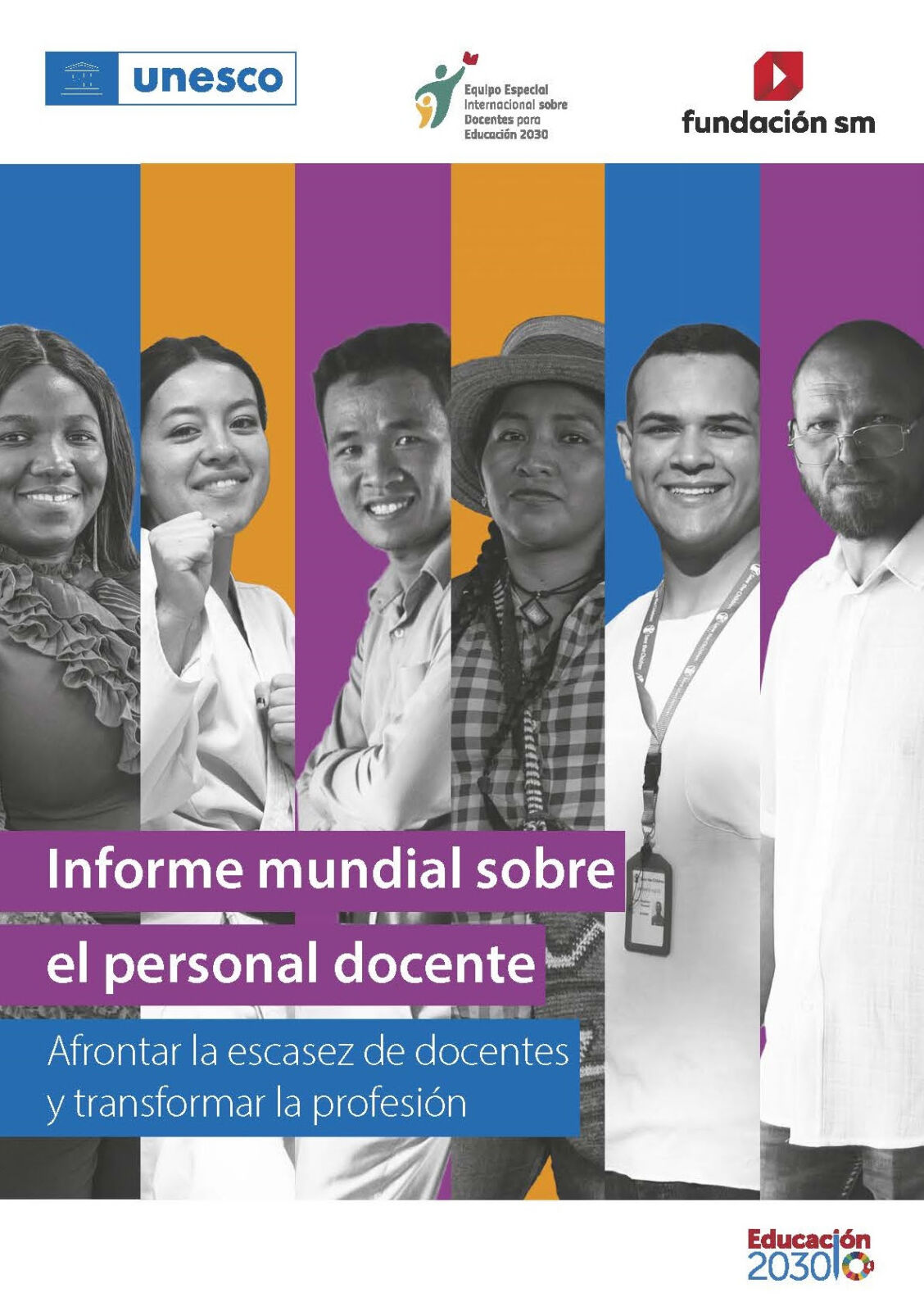
 The Faculty of Education of the University of La Laguna hosted yesterday afternoon, Tuesday, November 11, the presentation of UNESCO's first world report on the status of teachers. The SM Foundation Together with the academic center, they chose the Canary Islands to present this document, which aims to shed light on the state of teachers worldwide, nationally, and even in the archipelago.
Teachers are key to achieving Sustainable Development Goal 4 (SDG 4), which commits countries to ensuring inclusive, equitable, and quality education for all by 2030. However, the world faces a shortage of 44 million teachers to achieve universal education by 2030. At the same time, the teacher attrition rate has almost doubled, rising from 4.6% to over 9% between 2015 and 2022.
With a call to dignify, diversify, and value the teaching profession in the face of the challenges of transforming teaching in the face of teacher shortages, UNESCO, the International Task Force on Teachers for Education 2030 (the Teacher Task Force, or TTF), and the SM Foundation launched the first Global Teacher Report on April 22 in Madrid, Spain. This report provides a comprehensive overview of the challenges and opportunities facing the profession worldwide. The Global Teacher Report reveals that in Europe and North America, over 90% of the estimated teacher shortage (4.8 million) is due to teachers leaving the profession because of excessive workloads, low salaries, and a lack of recognition, with the greatest projected shortages at the secondary level (3.1 million).
This document also warns that over 20% of teachers in Spain work on annual or fixed-term contracts. Countries like Austria, Romania, and Italy also currently have this level of employment. Across the European Union, 16% of teachers work on contracts of one year or less.
In the Canary Islands, over 45% of teachers in public schools are temporary, substitute, or temporary staff appointed by the relevant authorities, totaling 13,301 education professionals, compared to 51% who are tenured civil servants and 14,259 trainee teachers. The temporary employment rate is 30.9%.
Canary Islands: Needs and situation of teachers
According to official data, the Canary Islands had over 27,000 teachers in public schools during the 2024-2025 academic year. Of these, approximately 45% are over 50 years old, according to data from the Regional Ministry of Vocational Education, Physical Activity, and Sports. The number of teachers over 50 years old totals 12,146.
Furthermore, as in the rest of Spain, the shortage of mathematics teachers is particularly critical; teachers are also needed in other areas, such as vocational training, Latin, and philosophy. According to the latest data from the National Institute of Statistics (INE), the STEM (Science, Technology, Engineering, and Mathematics) graduate rate in Spain was 2.28 per 100 graduates aged 20 to 29. The growing demand for graduates in emerging fields such as data analysis, big data, and artificial intelligence, coupled with the attractive salaries offered by sectors like technology, banking and finance, consulting, and IT, is leaving schools without teachers in these disciplines.
In light of all this, the latest analyses commissioned by the SM Foundation also point to a global situation of teacher burnout. Two out of five teachers report experiencing detachment from their work, which is reflected in the fact that 47% of those surveyed remain neutral regarding the possibility of leaving teaching. Furthermore, one in three teachers has suffered from a lack of enthusiasm, and two out of five have experienced symptoms consistent with exhaustion, anxiety, and depression.
Lack of motivation and difficulty in engaging students are two of the issues that present the greatest challenges for teachers.
«If we believe that teachers are the key to achieving personal and social transformation through culture and education, we need them to remain enthusiastic and motivated so they can address the complexities of educating today. The profession is much more than simply covering the content of a curriculum,” says Mayte Ortiz, director of the SM Foundation.

 Spanish
 English
 French