The European Commission recognizes the project case study ARSINOE in the Canary Islands as a success story in the EU for its impact, transferability and public utility in water management on volcanic islands. The Commission's official profile highlights the combination of 3D hydrogeological models of La Palma and El Hierro, coordinated by Alejandro García Gil (IGME-CSIC) with high-resolution (100 m) climate projections of SICMA-Canarias, platform of the University of La Laguna developed with the Foundation for Climate Research (Fitclima) and Meteogrid, as well as the scientific production associated with this project for its usefulness and possibility of transfer to other island regions.
The “EU Success Story” designation is awarded to exemplary European projects for their impact, transferability, and contribution to the European Green Deal—a distinction reserved for initiatives that combine scientific excellence, applied innovation, and public benefit. Only a very small number of EU-funded projects achieve this level of visibility, underscoring the University of La Laguna's leadership in climate engineering and water resources management on volcanic islands.
Arsinoe
The ARSINOE project (Climate-resilient Regions Through Systemic Solutions and InnovationsThe project promotes climate-resilient regions through methodological innovation, co-creation with local stakeholders, and advanced technological tools, under a Systems Innovation (SIA) approach. In the Canary Islands, coordinated by the University of La Laguna and the INGENIA research group, the project addressed the challenges of water management in volcanic aquifers under climate uncertainty, focusing on La Palma and El Hierro.
The hydrogeological impact of the 2021 volcanic eruption on the island of La Palma was also studied, along with the role of forests as carbon sinks, the residence time of volcanic aquifers, and the first pioneering analysis of microplastics in the islands' groundwater. More than twenty publications and international presentations in high-impact scientific journals and conferences have strengthened and supported with data the understanding of the island aquifers and their resilience to future climate scenarios.
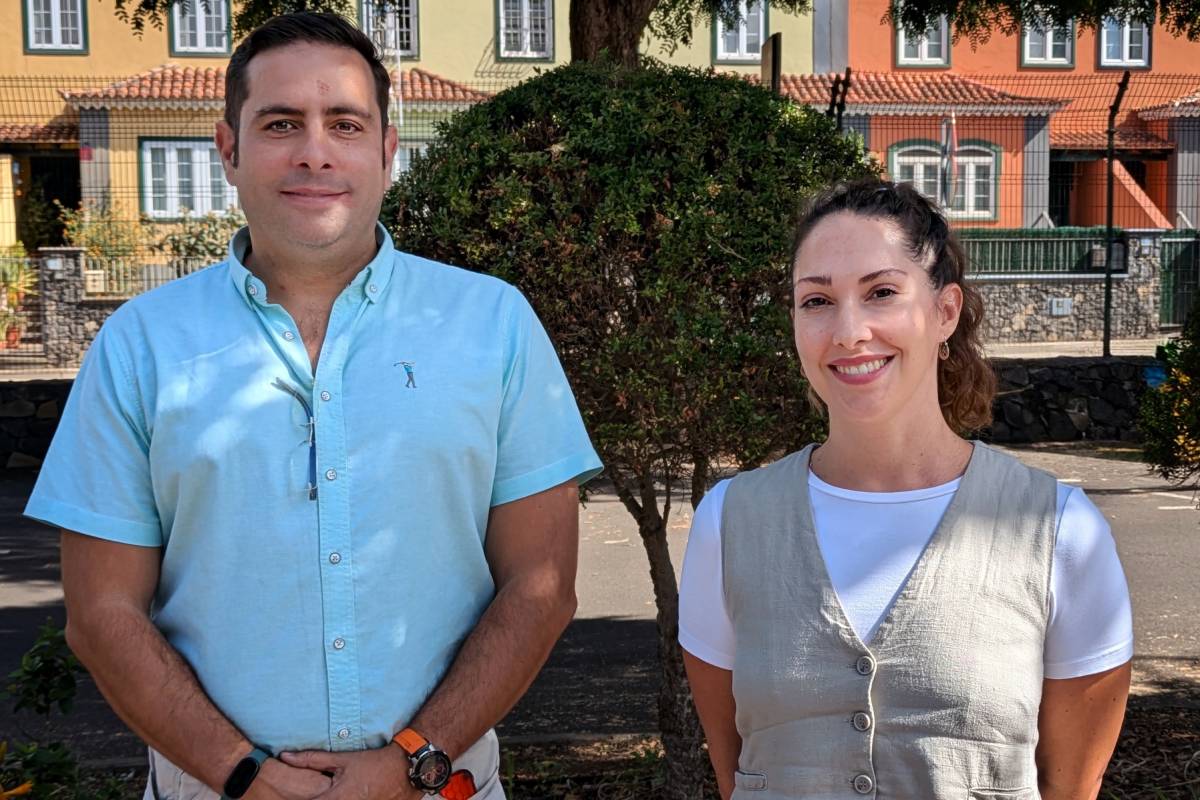
The professor Juan Carlos Santamarta, The principal investigator and head of the case study in the Canary Islands, states that “this recognition places the University of La Laguna and the Canary Islands on the European map of climate innovation, showing how regional engineering and science can contribute to global solutions.”.
For her part, Dr. Noelia Cruz Pérez He emphasized that “ARSINOE demonstrates the importance of linking applied science with the real needs of the islands, with the help of citizens, generating tools that can be transferred to other European archipelagos or outermost regions.”.
The ARSINOE project concluded in September 2025 with a closing ceremony in Brussels. It was funded by the European Union's Horizon 2020 program with over €15 million and brought together more than 40 institutions from 15 countries to design systemic climate solutions for vulnerable regions.
This milestone adds to REGIOSTARS award 2025, the highest European distinction in regional development from the European Commission achieved a few weeks ago by the same research group.

 Spanish
 English
 French