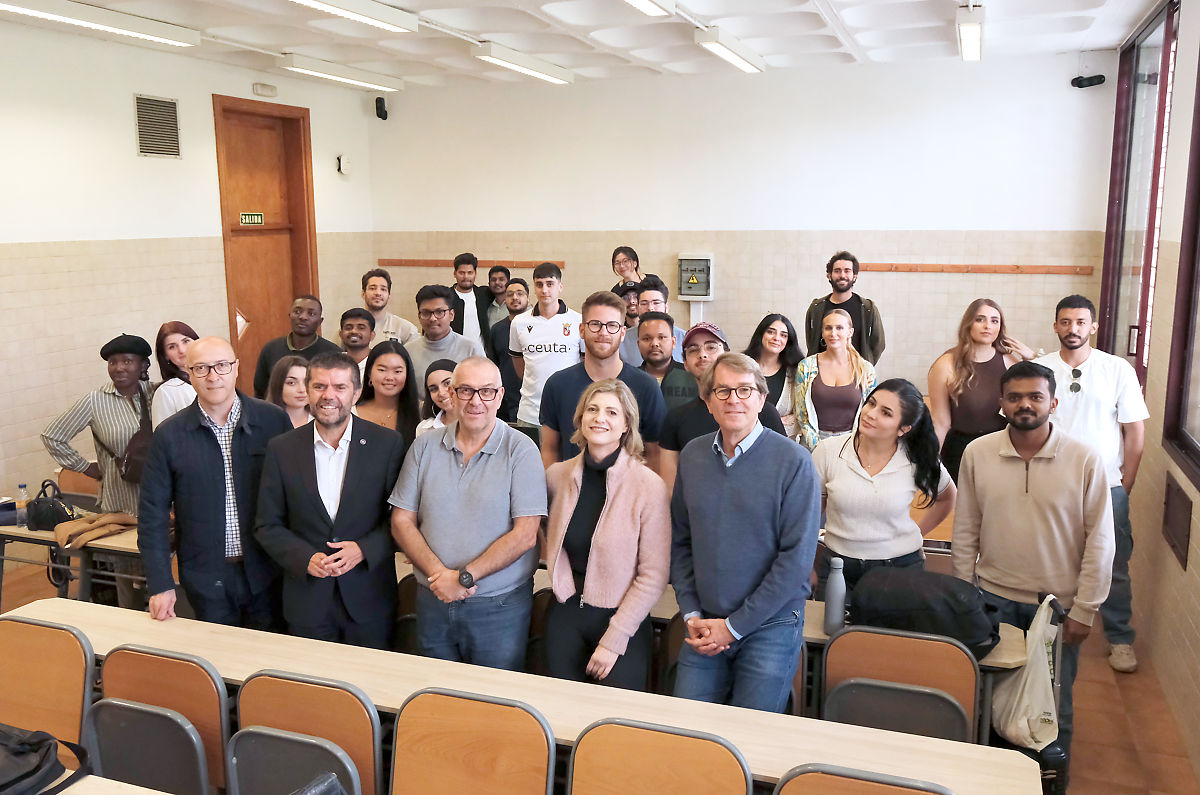
The University of La Laguna is hosting the in-person portion of a Blended Intensive Program (BIP) developed within the framework of the university alliance STARS EU. This type of training combines several weeks of online classes with one in-person session, which is currently taking place at the Tenerife center. The course focuses on the circular economy and is being attended by around thirty undergraduate and postgraduate students from Germany, Albania, Lithuania, Portugal, and Spain, representing various disciplines: international business, environmental science, engineering, and economics.
The Rector of the University of La Laguna, Francisco J. Garcia, welcomed the international students yesterday, Wednesday, November 12th, highlighting the importance for the University of La Laguna of its involvement in the STARS EU university alliance, which aims to create joint degree programs and normalize the presence of international students in various fields. He also emphasized that this training in the circular economy is directly linked to the institution's commitment to sustainability, a cross-cutting principle in all the activities of the academic center.
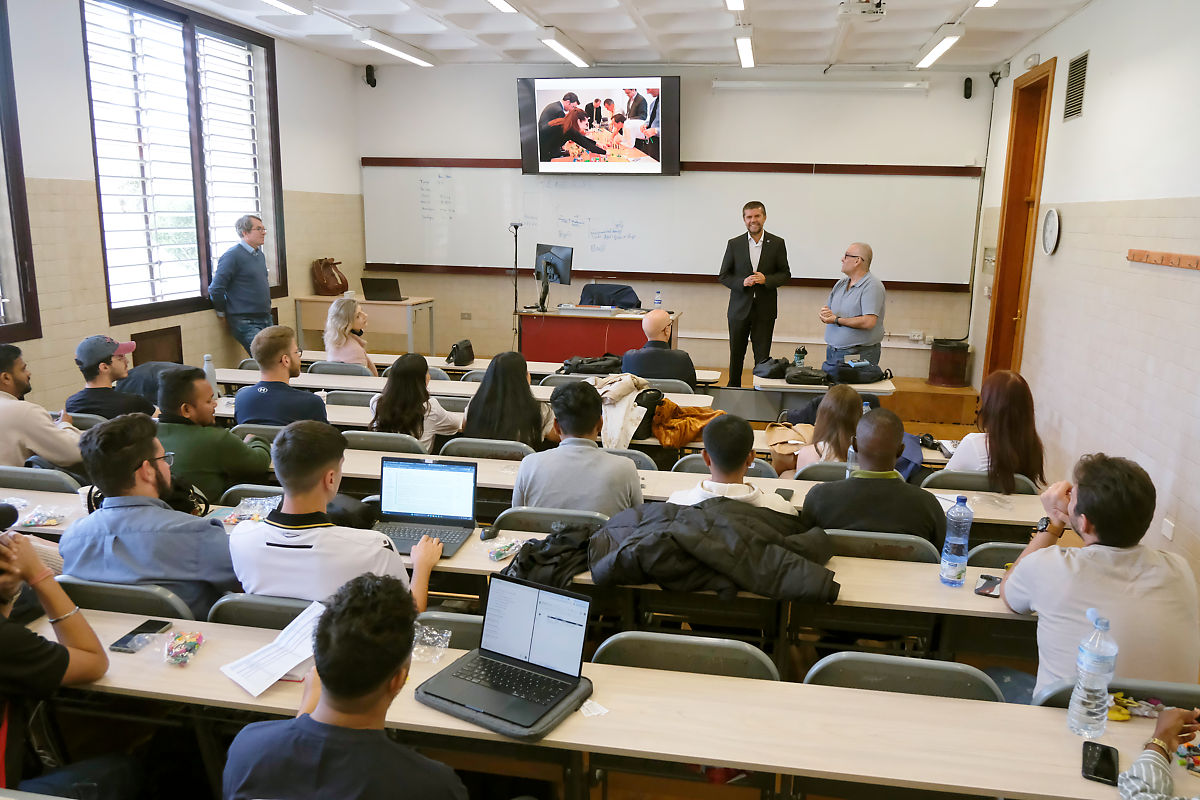 In addition to the University of La Laguna, the course is sponsored by two other institutions affiliated with STARS EU: the Polytechnic University of Braganza (Portugal) and Aleksandër Moisiu University in Durrës (Albania), as well as two external institutions: the Kempten University of Applied Sciences (Germany) and the Kaunas University of Technology (Lithuania). The course includes students and faculty from all of these institutions, and four professors from Portugal, Germany, and Lithuania have also traveled to La Laguna to participate.
The professor from the Department of Mathematical Analysis Rodrigo Trujillo He is the coordinator of this course at the University of La Laguna, and explains that in the first online phase, students were trained and guided in the analysis of business models and development within the circular economy. “The key element of this in-person week is working directly with companies that were selected beforehand. The students have already contacted them, and some companies presented them with sustainability-related problems they wish to solve. Others are open to students proposing improvements, always focused on sustainability and integration within the circular economy.”.
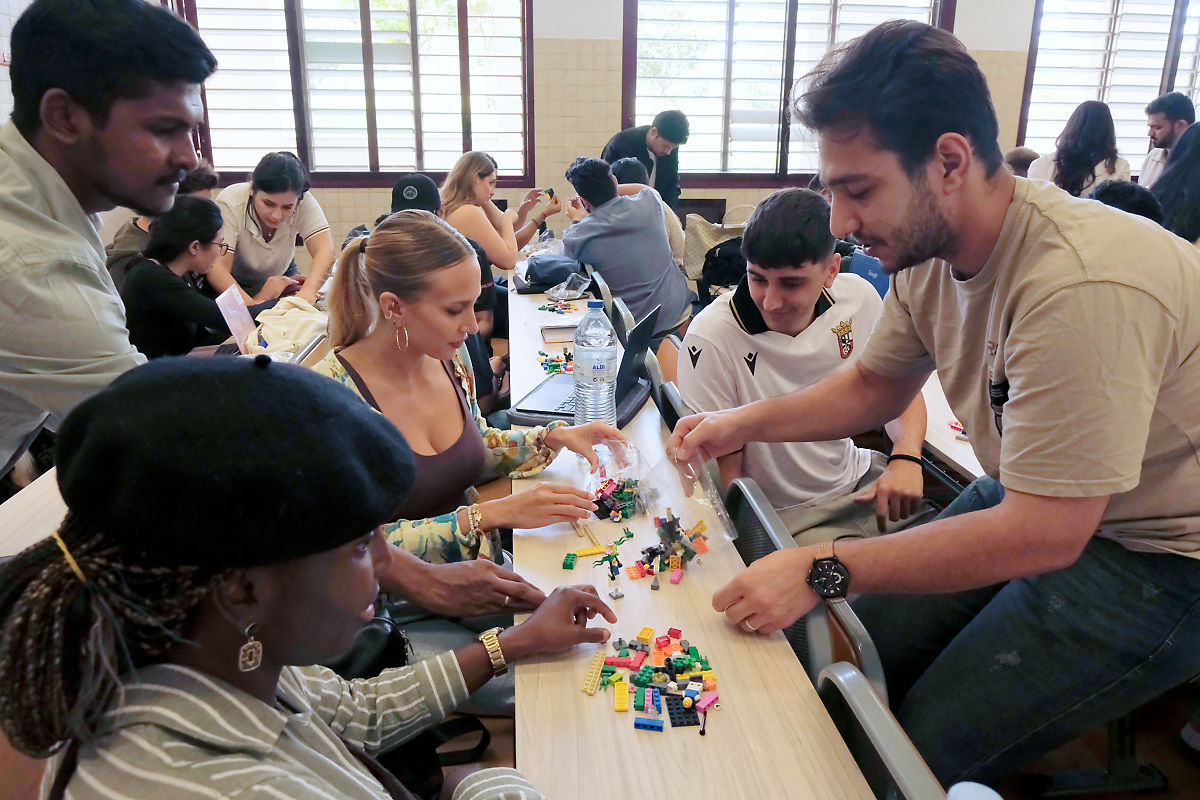
One of the group dynamics of the course.
The collaborating companies are Teidagua, Balten, Tagua, Hotel Tigaiga, Wooptix, and Loro Parque. Trujillo clarifies that, “although there are three water treatment companies, each has focused its challenge on different aspects: energy storage and utilization, sludge distribution and uses in the agricultural sector, and desalination.” The weather emergency declared on Wednesday disrupted these plans somewhat, although the academic coordinator highlights the rapid response of the collaborating companies, who had no problem organizing online meetings that same afternoon to avoid losing work time.
In Monday's session, the students also received two international online talks from James Ellsmoor, president of Island Innovation, who connected from Ireland, and Rafael Perini, one of the organizers of COP3, which was held in Belém, Brazil. Furthermore, tomorrow, Friday, the students will present the projects they have developed. Companies are invited to participate. The course will conclude online at the end of the month, during which time the students will compile their conclusions and proposals into a more detailed final document.

 Spanish
 English
 French