
Nearly 200 people from eight European universities affiliated with the University of La Laguna in the alliance STARS EU They have been meeting from today, Tuesday, November 25, until tomorrow, the 26th, to participate in a working meeting to advance the objectives of this ambitious project encompassing education, research, mobility, and local development. During the opening ceremony held in the Paraninfo, the rector of the host institution, Francisco García, emphasized that, above scientific and academic considerations, the alliance is a space that underscores the importance of European values of “unity, diversity, knowledge, and solidarity.”.
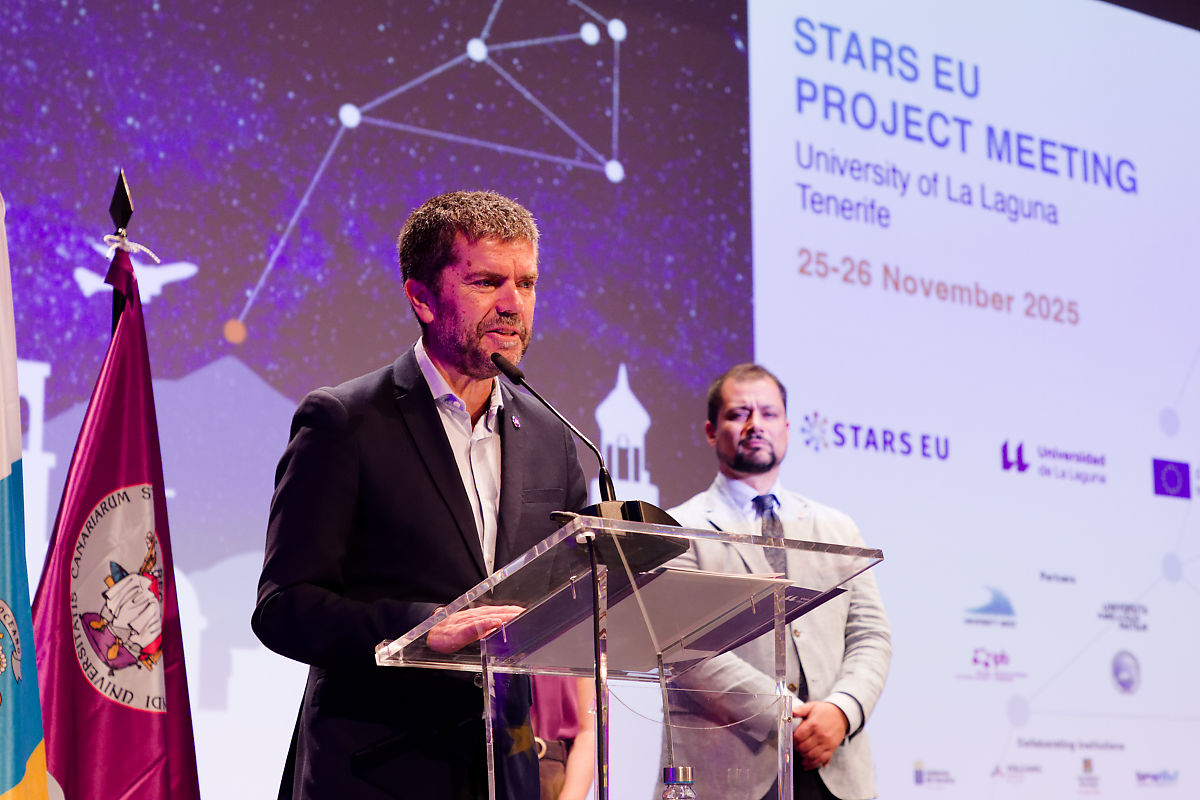
Francisco García.
In her closing remarks at the meeting's opening ceremony, García emphasized the role that institutions in the outermost regions can play within the European context. She also highlighted that the alliance's work focuses on aspects such as inclusion, sustainability, and the digital transition—all essential for equipping the new generation of the 21st century with the skills necessary to thrive in an increasingly dynamic and competitive society, emphasizing the importance of mobility initiatives and collaborative work.
The regional authorities present at the event highlighted the great opportunity that having one of its universities in a European alliance like STARS EU represents for the Canary Islands, a type of inter-university collaboration structure promoted by the European Commission to increase the competitiveness of the community academic system.
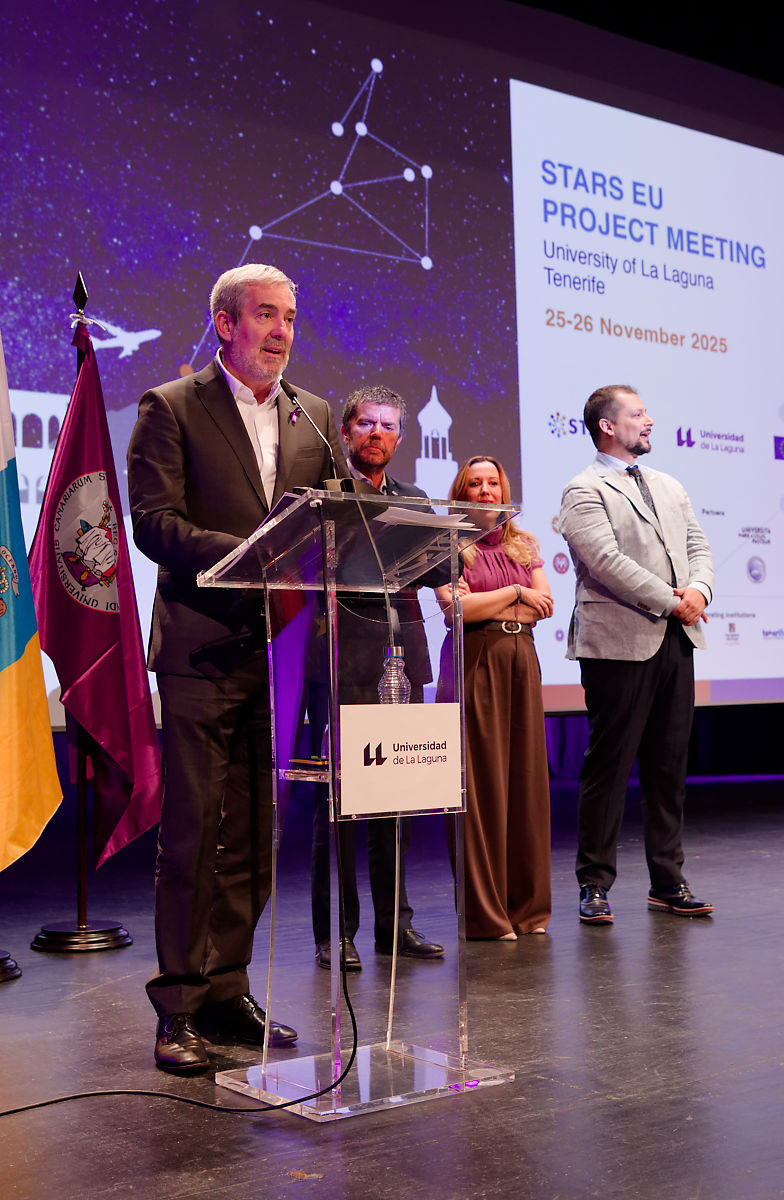
Fernando Clavijo.
During his speech, the President of the Government of the Canary Islands, Fernando Clavijo, also emphasized the status of the outermost regions within the European Union at a time when these regions are being questioned within EU institutions: “The outermost regions are not a burden. We are a strategic opportunity for Europe, and this is the best example. We are territories that contribute to cohesion, that expand Europe's borders, that connect continents, and that offer innovation, talent, and proven scientific capacity. Projects like the one that brings us together here today are the best example. That is our commitment: that the Canary Islands be known for what it knows, for what it researches, and for what it contributes to the world.”.
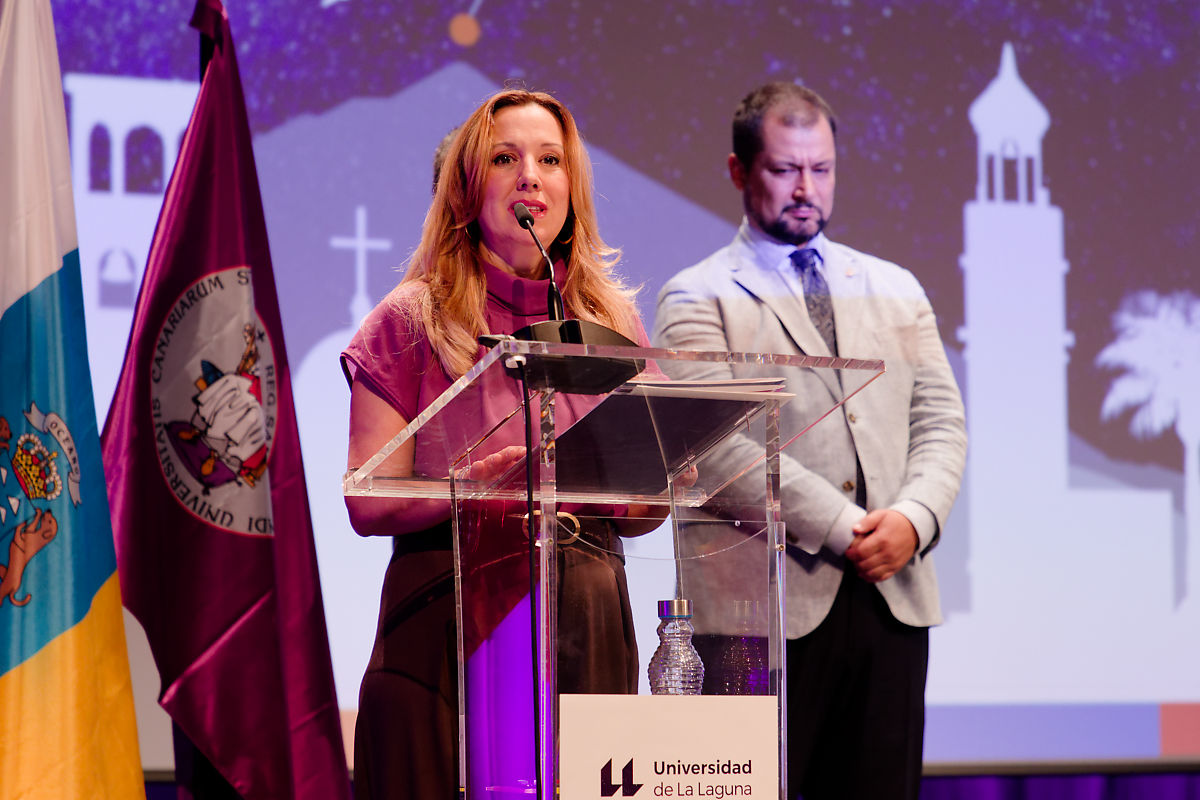
Rosa Dávila and Badel Albelo.
For her part, the president of the Tenerife Island Council, Rosa Dávila, expressed the council's commitment to research, for which a budget of 200 million euros has been allocated, and also addressed the issue of the outermost regions. “We are facing profound transformations influenced by the energy transition, digitalization, job automation, artificial intelligence, demographic challenges, and the need to diversify our economic models. In this context, universities play an irreplaceable role. You are engines of knowledge, spaces for critical thinking, laboratories of innovation, and meeting points between academia, the public sector, and the productive sector.”.
For his part, the First Deputy Mayor of San Cristóbal de La Laguna, Badel Albelo, highlighted the role of the local university in adapting to a changing socioeconomic context that demands agility. “From the City Council, we highly value this internationalization strategy because it will allow the University of La Laguna (ULL) to continue attracting talent and to remain committed to scientific innovation. The challenges we face in healthcare and the economic diversification our islands need for balanced development require a strong public university to drive it forward, and this alliance will allow us to work in that direction.”.
Work packages
During the ceremony, representatives from the various partner universities gave brief presentations on the milestones achieved in different areas of work during the first two years of activity. They also outlined the objectives for this working meeting held at the University of La Laguna. The event was moderated by José Sigut, Director of the Secretariat for Mobility and Cooperation with Europe and North America and coordinator of STARS EU at the University of La Laguna. Marieke Steenbergen, from Marie & Louis Pasteur University, spoke on behalf of the alliance's steering committee and provided an overview of the alliance, which comprises nine universities located in non-capital cities facing similar local challenges. Together, they represent a community of 150,000 students, 15,000 professors, researchers, and staff, and 75 faculties.
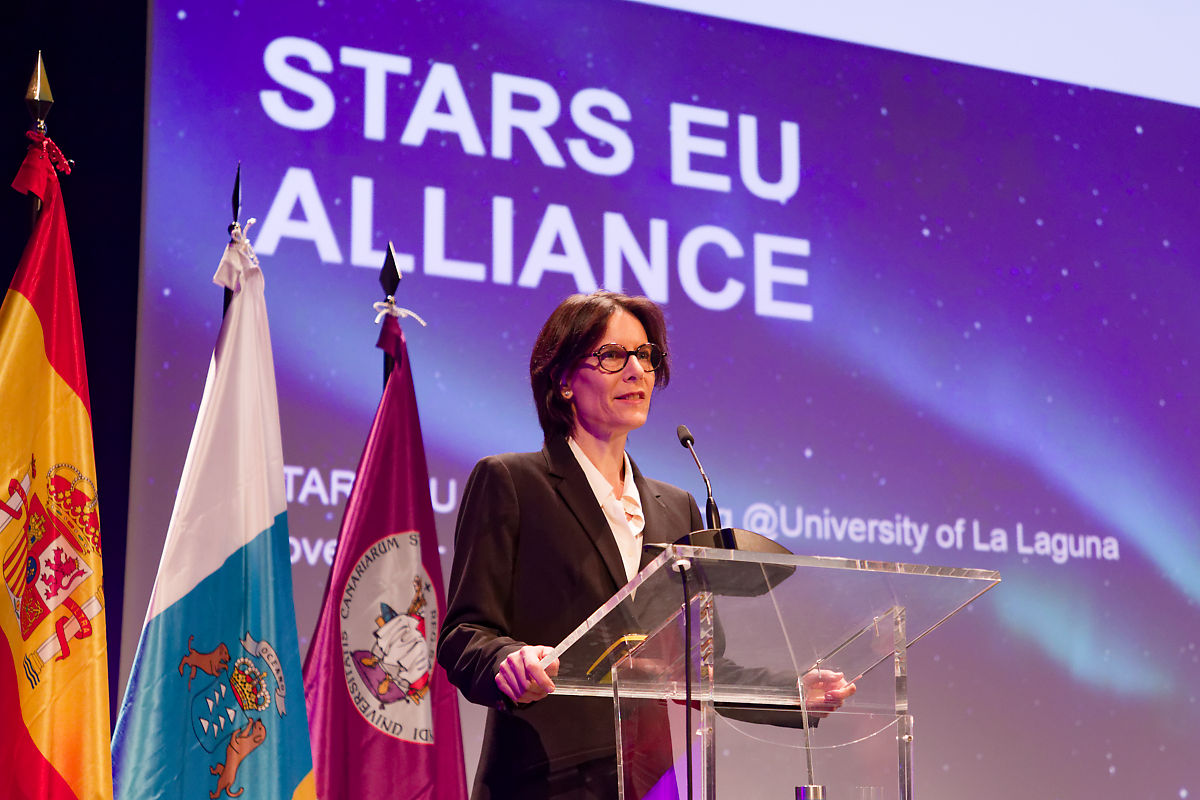
Marieke Steenbergen, from the steering committee.
He explained the organizational structure of the alliances and some of the objectives achieved in this two-year period, such as the mobility of more than 4,300 people to date; the creation of common undergraduate degrees, of which 14 are currently under discussion; the launch of 40 BIP courses, half of which have already been taught; the design of 36 micro-credentials; the launch of the Technology Transfer Office to share the scientific infrastructures of the nine universities; the launch of aid programs to prepare proposals for competitive European calls for proposals; and the launch of three Living Labs to encourage impact on the local fabric.
Next, representatives from the work packages that make up the STARS EU project spoke to introduce their progress to date: package 2, the Regional Transition Acceleration; package 3, called Curriculum Lab, which is responsible for academic innovation and teaching offerings; package 4, Challenge Lab, which is responsible for research within the alliance; package 5, related to physical and virtual campuses, which will present examples of the visual elements available to physically identify the alliance spaces in each institution during the meeting in Tenerife; package 6, in charge of mobility; package 7, which addresses the alliance's sustainability model, not only in terms of environmental aspects, inclusion and equality, but also financing and governance; and package 8, on communication, dissemination and open science.
There was also a summary presentation of the nine thematic interest groups (TIGs) on the different subjects that underpin the alliance's research and training proposals: energy transition, arts and creative industries, entrepreneurship and innovation, sustainable industry, circular economy, transformation digital, active aging, spaces for life, and inclusion and social justice.
Campus Charter
Following the opening ceremony, the rectors and presidents of the nine universities that make up the European alliance STARS EU signed the STARS EU Campus Charter, a common commitment to build an integrated European campus that facilitates studying, teaching, research and working together for students, faculty and staff throughout the network.
The agreement was signed by Francisco J. García Rodríguez, Rector of the University of La Laguna; Dick Pouwels, Rector of the Hanze University of Applied Sciences (Netherlands); Konrad Josef Wolf, Rector of the Bremen University of Applied Sciences (Germany); Orlando Rodrigues, Rector of the Polytechnic University of Braganza (Portugal); Tomáš Gongol, Rector of the Silesian University in Opava (Czech Republic); Mats Jägstam, Rector of the University of the West (Sweden) and Shkëlqim Fortuz, Rector of the Aleksandër Moisiu University in Durrës (Albania).
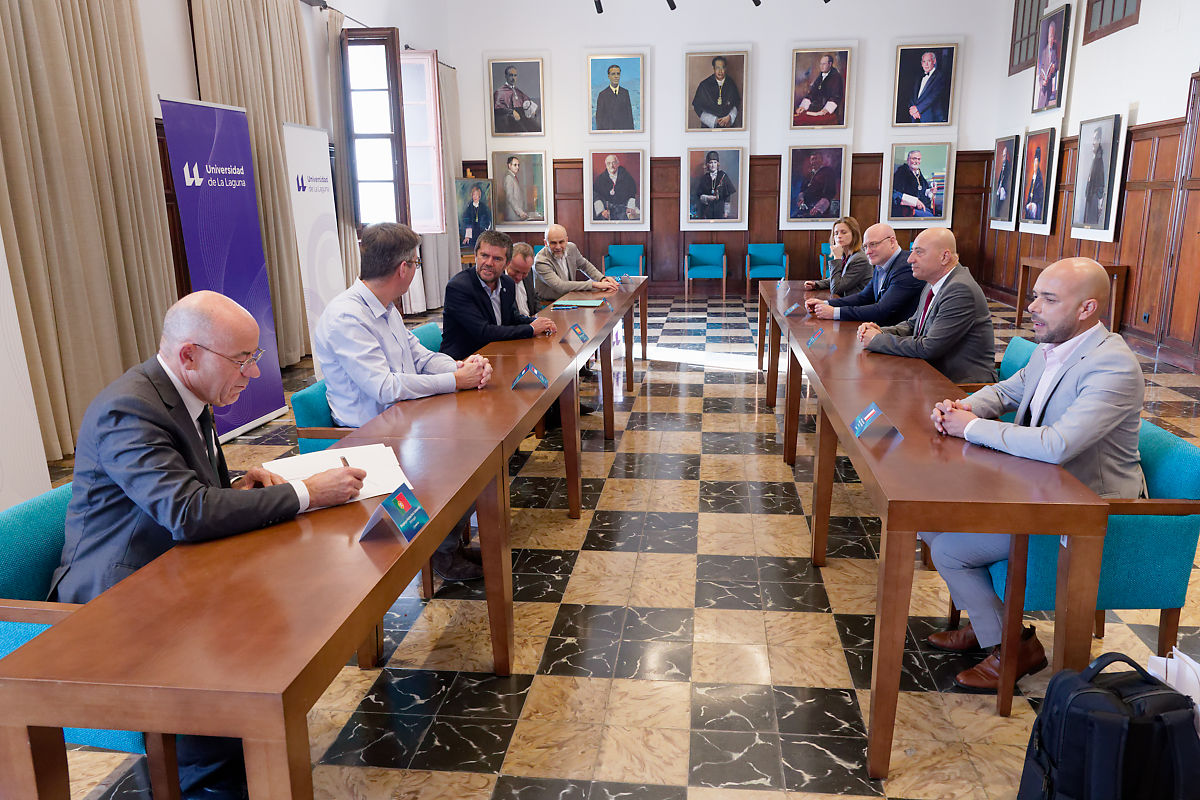 Along with them, and representing the vice-rectorates of the alliance, were also present Samir Jemei, Vice-President of International Extension, Art, Culture and Scientific Communication of the Marie and Louis Pasteur University (France) and Katarzyna Bizon, Vice-Rector of Education and International Cooperation of the Technological University of Krakow (Poland).
This Campus Charter envisions a single campus with multiple locations, comprised of physical spaces at each university, such as learning and meeting areas, laboratories, and innovation hubs. The expanding digital campus will offer shared services, virtual and blended learning opportunities, and shared tools for research and innovation.
The aim is for any student or staff member to be able to move, study, teach, and work easily across any of the nine institutions, as if they were part of a single European university. To make this possible, STARS EU will develop a common signage system that will allow spaces to be recognizable throughout the network; a single digital access point with single sign-on.‘ y Shared open science and mobility platforms. These tools aim to strengthen a common European identity and a sense of belonging among the entire university community.
The signing of the Campus Charter thus confirms the will of the nine universities in the STARS EU alliance — integrated into the European Universities Initiative (EUI) — to build a cohesive European ecosystem, capable of connecting talent, knowledge and innovation on a transnational and regional scale.

 Spanish
 English
 French