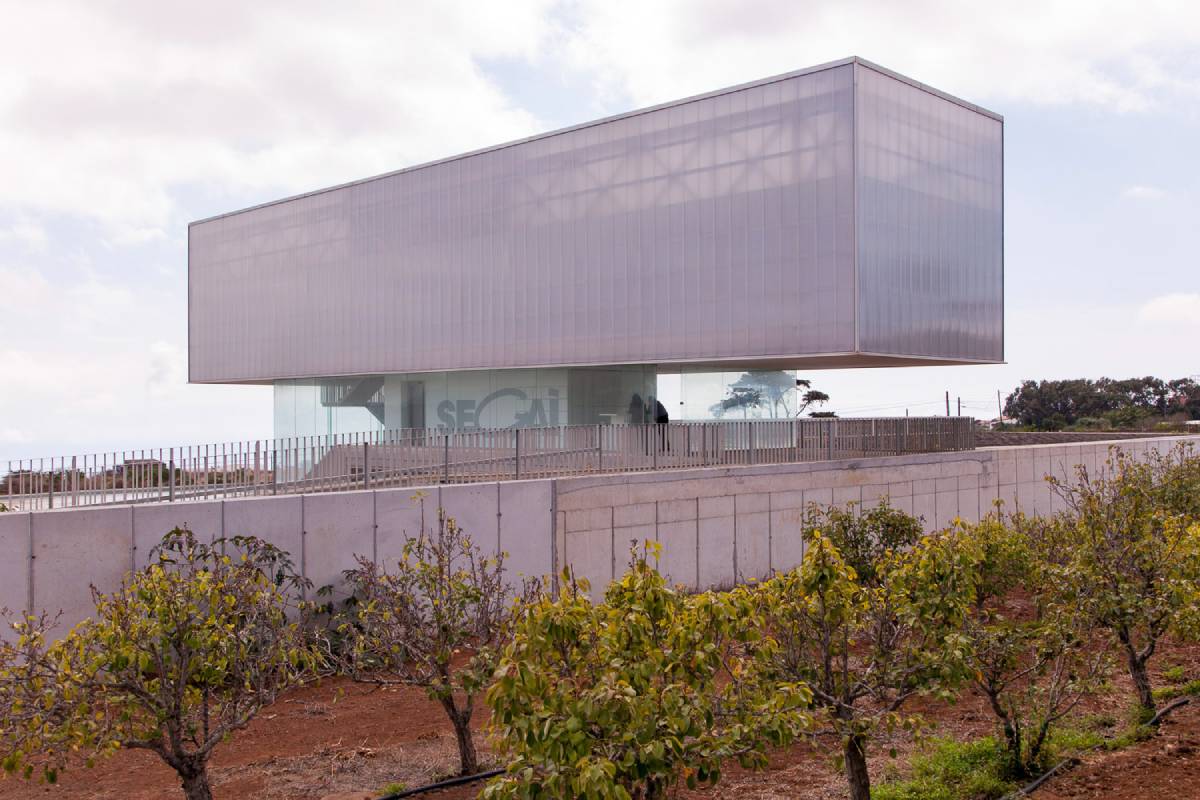
The University of La Laguna held today, Thursday, November 27th, the VI Conference of the General Research Support Service (SEGAI), with the aim of showcasing its technological capabilities, especially through its three newly incorporated services: the Advanced Imaging and Microscopy Service, the Level 2+ Biological Safety Laboratory, and the Sculptural Creation and Thermal Processes Laboratory.
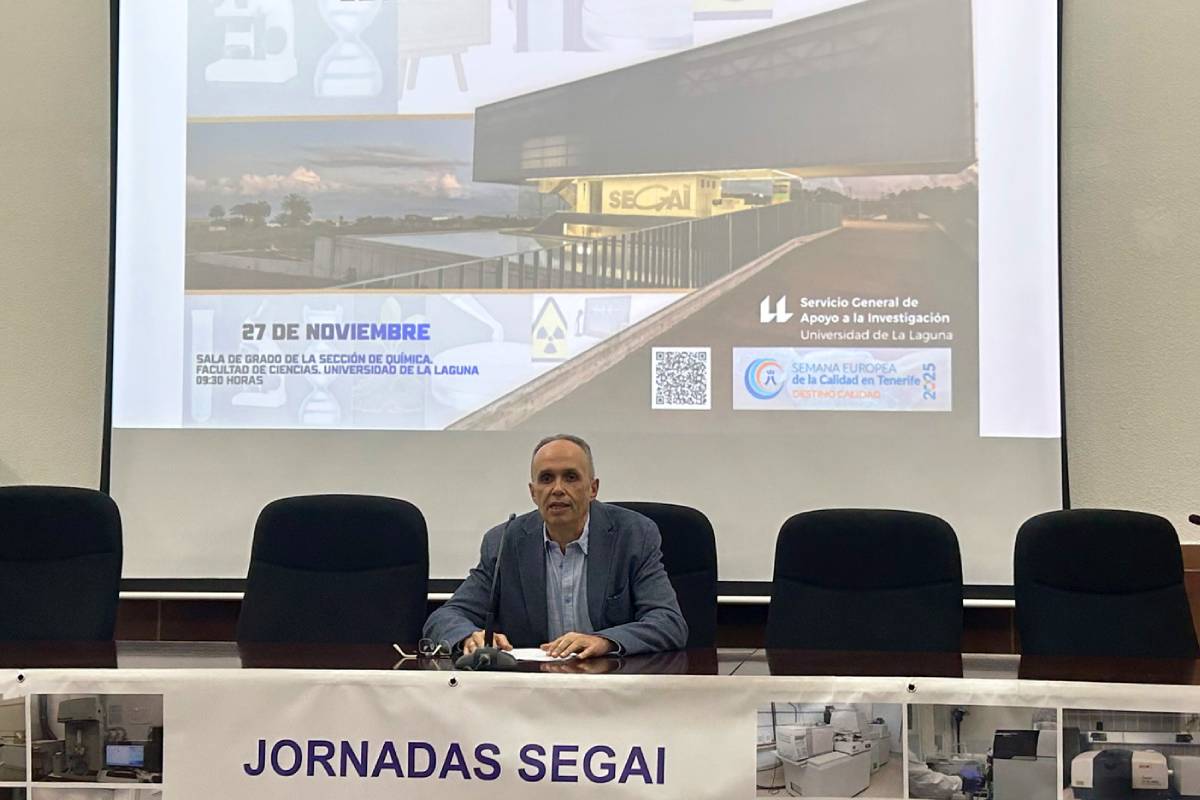
José Luis Rodríguez.
The event, held in the Graduation Hall of the Chemistry Section, began with a welcome from the director of SEGAI, José Luis Rodríguez Marrero, He emphasized that the new units already had experience providing services within the university, but that they would now also be available to external entities. Following this, the new laboratories were presented, along with the range of technologies offered in biomedicine, materials and surface characterization, technological support, and elemental and molecular analysis.
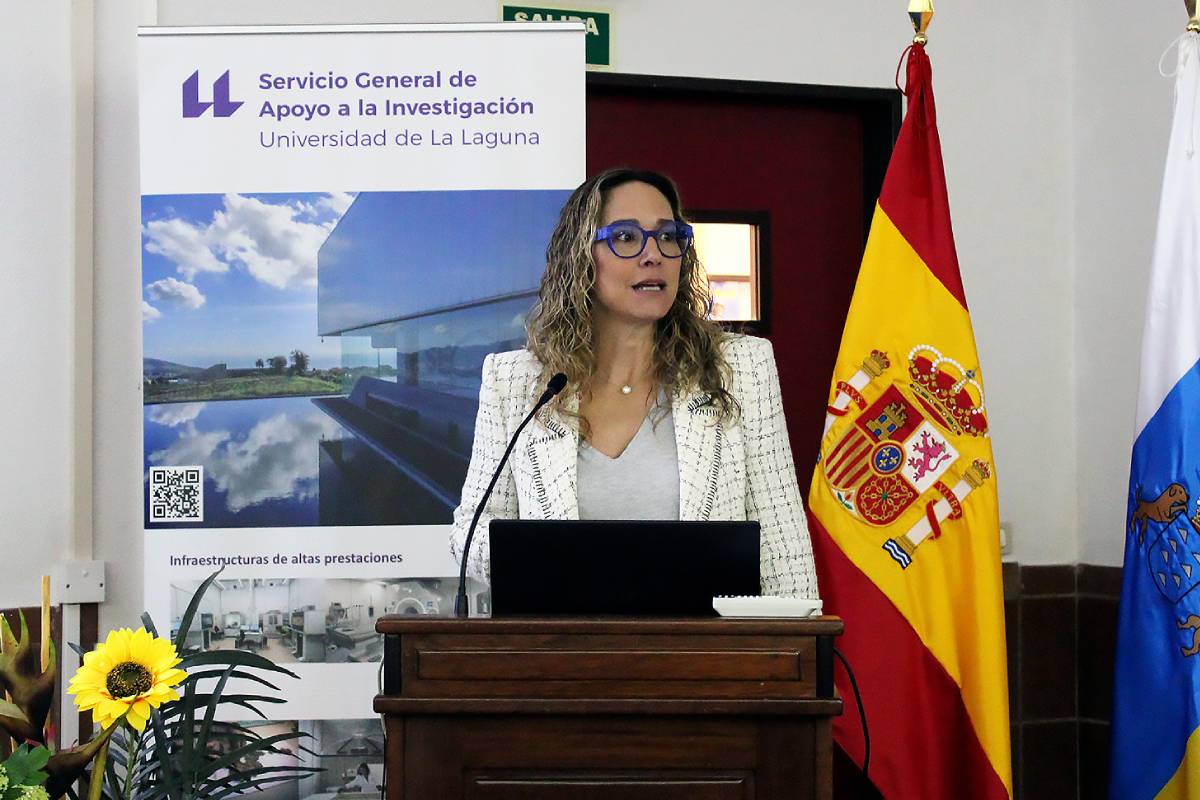
Teresa Giráldez.
Advanced Imaging and Microscopy
The Advanced Imaging and Microscopy Service, located at the Institute of Biomedical Technologies, is directed by the professor in the area of Physiology Teresa Giráldez. The researcher explained the functions of the services offered, such as laser scanning confocal microscopy (Leica SP8), the Olympus FV1000 confocal microscopy —currently out of service, although this will be resolved through a reconfiguration—, total internal reflection fluorescence microscopy, and laser microdissection.
The applications of this service are highly varied, ranging from super-resolution microscopy to FRET and FRAP studies, as well as photoactivation and photoconversion in whole cells or microdomains. The service combines these capabilities with user support and training, and is currently recruiting specialized technical staff to optimize its operation. Furthermore, Giráldez noted that the equipment has been acquired through infrastructure grants from the Ministry of Science, European projects, support from the Bioavance Foundation, and the institution's own resources, from 2003 to the present.
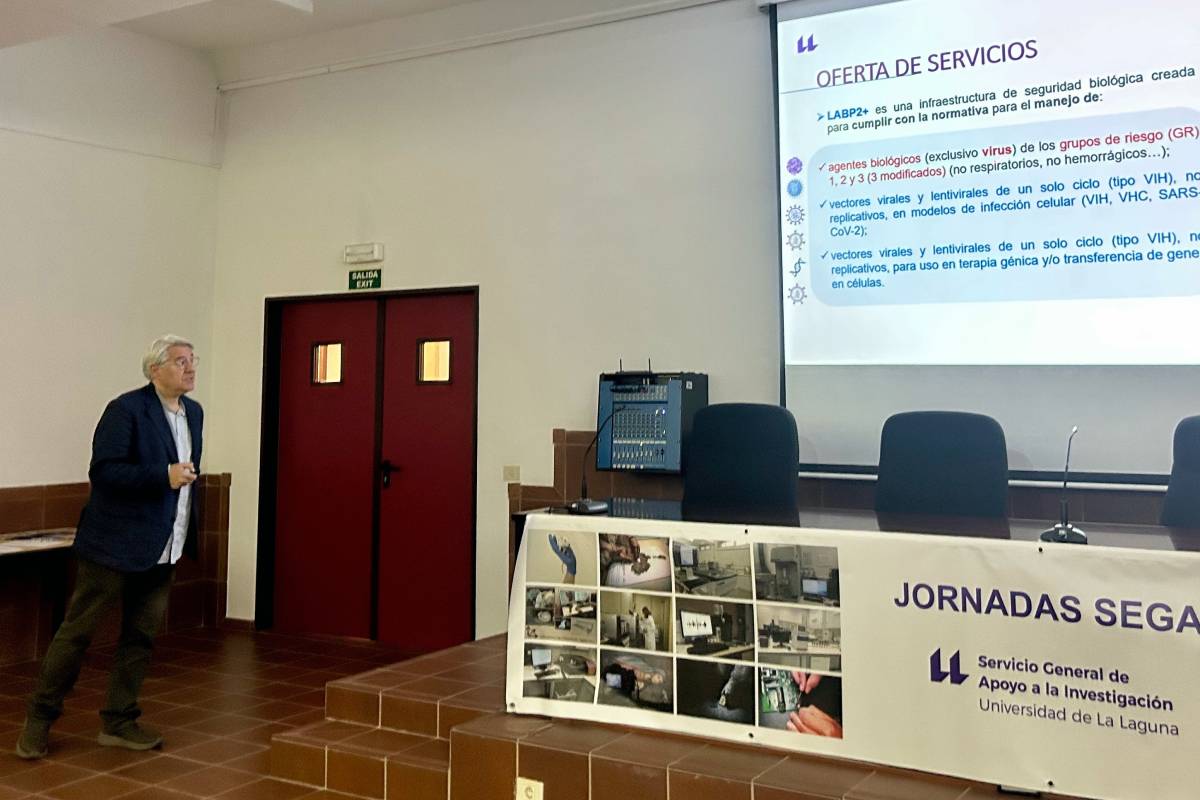
Agustín Valenzuela.
Biosafety
For his part, the Biological Safety Laboratory Level 2+, coordinated by the professor of the Pharmacology area Agustín Valenzuela, It is a leading scientific infrastructure, designed for the safe handling of viruses and pathogens of moderate risk, complying with national and European biosafety regulations. Although classified as P2+, it incorporates features typical of a P3 laboratory, such as pressure control and air filtration, guaranteeing maximum safety.
The laboratory collaborates with the Faculty of Medicine and the University Hospital of the Canary Islands, participating in research projects on HIV, SARS, gene therapy, COVID-19, and assisted reproduction, among others. Co-financed with national, European, and Caja Canarias funds, the laboratory actively participates in the training of specialized personnel and collaborates in the development of new biosafety regulations at the regional and national levels.
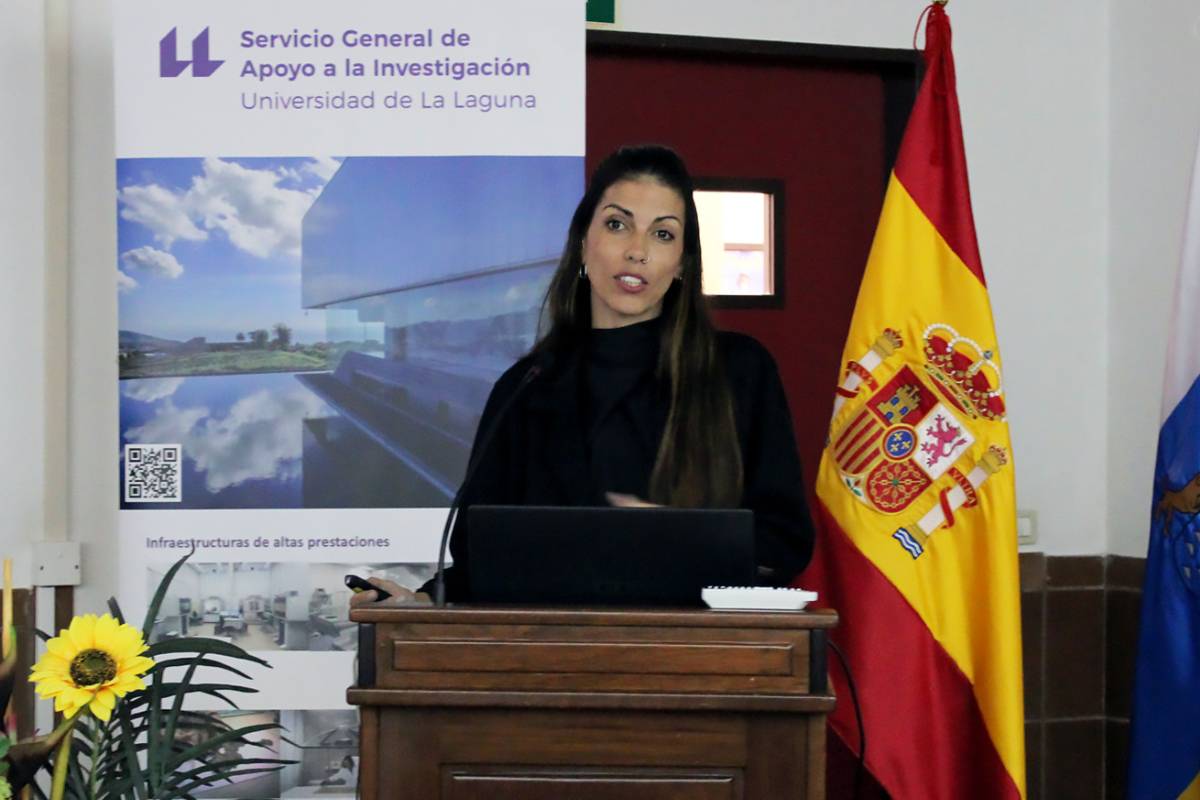
Itahisa Pérez.
Sculptural creation
He Laboratory of Sculptural Creation and Thermal Processes, coordinated by the assistant professor PhD in the area of Sculpture, Itahisa Pérez, It offers advanced infrastructure for artistic research and production. The laboratory features traditional sculpture techniques, thermal processes, digital technologies, and microwaves, enabling the creation of innovative works and prototypes.
Pérez explained that the laboratory works with students, graduates, researchers, and artists, developing public works projects, artistic research, and experimental prototypes that can be applied in both the cultural and scientific-technological fields. Its equipment includes ceramic and foundry kilns, welding equipment, 3D printing, metal electropositioning and thermal simulation, as well as jewelry making and materials coating techniques.
SEGAI provides scientific, instrumental, and technical support to both research groups at the University of La Laguna and external entities. According to its director, this addition of new laboratories complements a series of improvements implemented over the last two and a half years, many of them made possible by external funding, such as the Cabildo's allocation for the new animal facility at the Medical Campus and the acquisition of highly relevant equipment through funds from the Canary Islands Development Fund and the Ministry.
Thanks to these funds, SEGAI currently has 15 technicians with contracts until 2028 and, in 2024, carried out almost 3,000 service interventions, equivalent to more than 18,000 tests, with a user satisfaction rating of 4.4 out of 5. “At SEGAI, we try to do things as well as possible with the resources we have, both human and financial,” concluded Rodríguez Marrero.

 Spanish
 English
 French