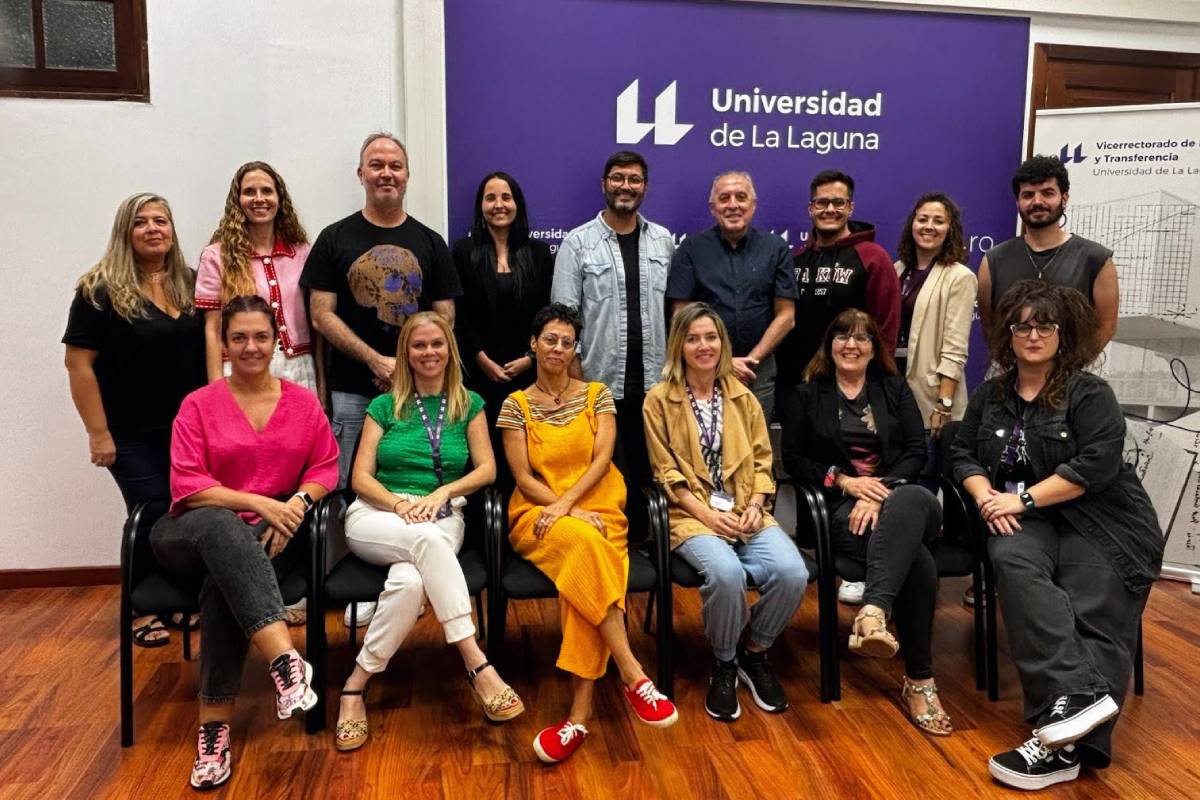
The Knowledge Transfer Office (OTCThe University of La Laguna's Office of Knowledge Transfer is strengthening its ties with European institutions through cooperation and training programs in innovation, knowledge transfer, and university management. Thus, within the Erasmus+ staff mobility program, the office recently hosted Andrea Palomba, an official from the University of Perugia (Italy) and one of the three deputy directors of its Knowledge Transfer Office, as well as Rafał Orłowicz-Murawski., technology broker from the University of Warsaw (Poland), who carried out stays under the Staff Mobility for Training modality, aimed at sharing good practices and promoting international collaborations.
Palomba participated in a workplace observation program with the OTC team at the University of La Laguna, the objective of which was to learn about its structure and operations. “I was able to visit all the areas, as the OTC is divided by different thematic areas. Each team explained their functions to me, and I had the opportunity to compare the management of some issues, even the most sensitive ones.” During her stay, she also visited the General Research Support Service (SEGAI), the University Innovation Agency of the institution's General Foundation, and met with university researchers to explore potential collaborations on projects to enhance the value of native grape varieties.
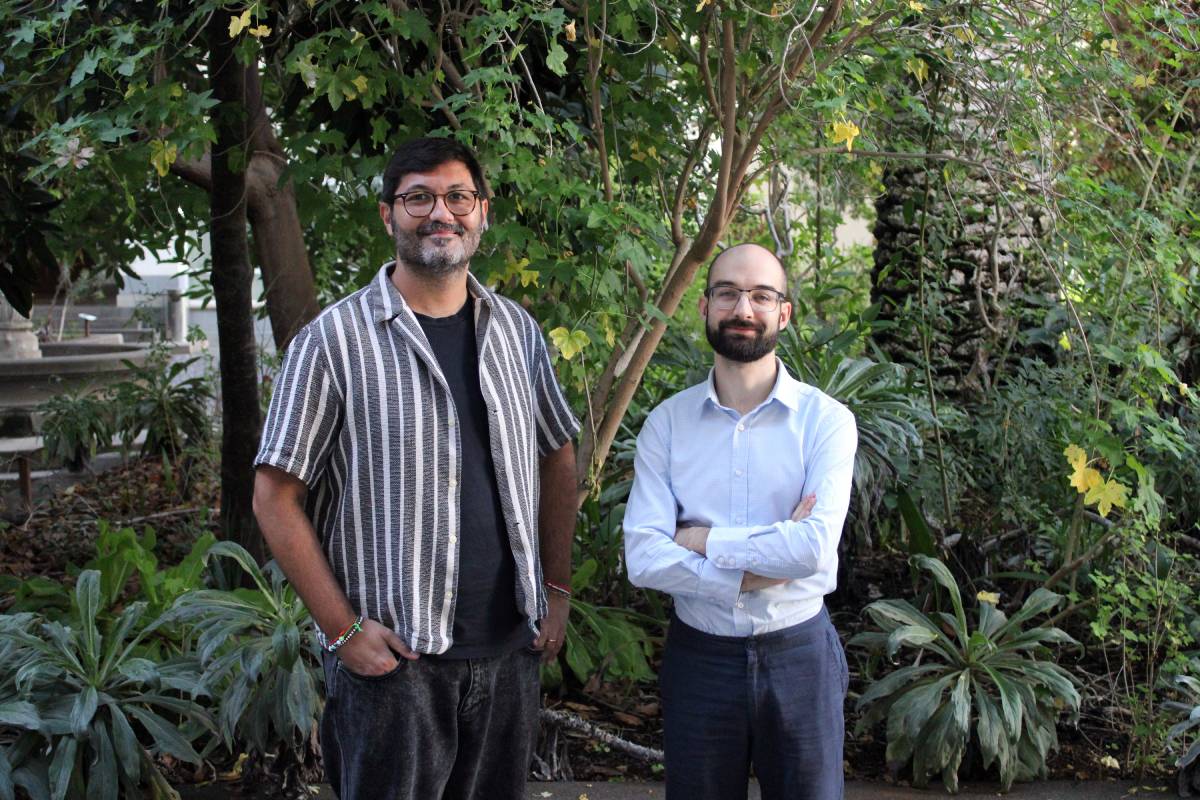
Andrea PAlomba and Rafał Orłowicz-Murawski.
For her part, Orłowicz-Murawski focused her visit on the processes of valorization, intellectual property, and technology commercialization carried out at the University of La Laguna. “In Warsaw, we usually rely on external evaluations, so learning how you do it here could be very useful for improving our own procedures,” she noted. She also highlighted her center's interest in strengthening collaboration between universities and businesses, a challenge also faced by the Canary Islands, and expressed her intention to learn about the process and knowledge management methodologies applied at the Canarian academic center, as well as to share her institution's experience in these areas.
Visits abroad
These stays are complemented by visits from OTC staff to European universities and centers, as part of their internationalization strategy. Recently, Carlos Cañizares, a member of this office at the University of La Laguna, participated in training stays at the Krakow University of Technology in Poland and at the University Hospital of Copenhagen in Denmark, within the framework of the Erasmus+ and STARS EU programs, as well as the DOKI project (Diabetes, Obesity, Kidneys and Investigation), led by the researcher from the Department of Internal Medicine, Dermatology and Psychiatry Esteban Luis Porrini.
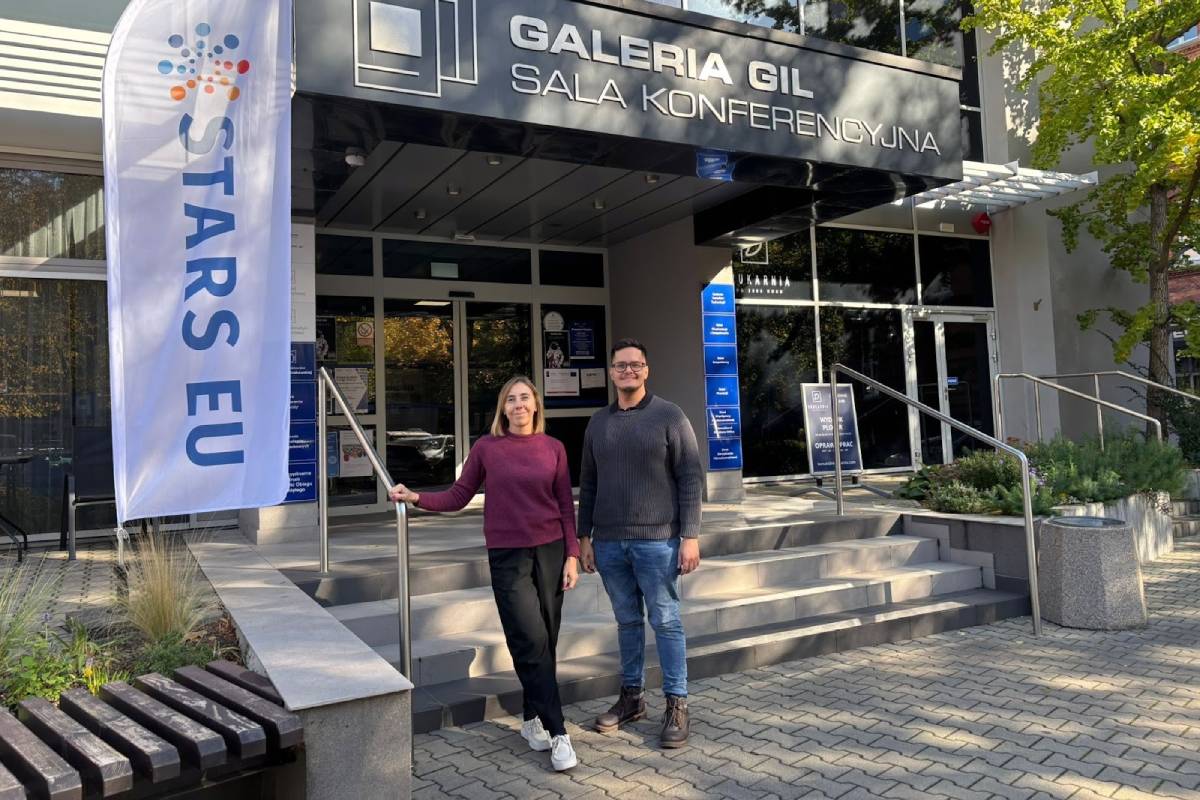
Cañizares during his visit to Krakow.
In Krakow, the objective of the visit was to learn about the workings of the Technology Transfer Center, which is very similar in structure and objectives to the Technology Transfer Office (OTC) at the University of La Laguna. “The idea was to see how they were organized, how they worked, and what their functions were, and to compare their model with ours,” explained Cañizares. During the visit, they focused particularly on management practices in spin-offs and collaboration with private companies.
In Copenhagen, the visit focused on the University Hospital, within the framework of the DOKI project. “Part of our objective was to observe the project's management and exchange experiences in this area,” Cañizares stated. The visit provided an opportunity to learn about the hospital's administrative organization, its digitized project management model, supported by the SAP enterprise software, and its mechanisms for monitoring and tracking funding, especially for projects with European funding (Horizon Europe).
Cañizares highlighted some similarities and differences between the European models and that of the University of La Laguna. “In Krakow, their incubator of spin-off, Intec, also known as Intec, faces the same difficulties in creating these companies. In 10 years, they have launched seven, demonstrating the complexity of the process. The difference is that their incubator was created as spin-off, ”This has helped them to better understand the creation process,” he explained. Regarding Copenhagen, he highlighted the importance of detailed monitoring through SAP and the combination of private funding and European public funds, which offers an interesting model of efficient management.

 Spanish
 English
 French