
The jurist, magistrate and former mayor of Madrid, Manuela Carmena, visited the University of La Laguna to participate in the cycle ‘For freedom. Spain after 1975’, It is an academic program that invites prominent figures from public life to engage in dialogue with students about democratic memory, the Transition, and the challenges facing our institutional system in the 21st century. intervention In the University Auditorium, before a packed auditorium, she allowed students to get a first-hand look at a direct protagonist of Spain's recent history, whose career encompasses labor law in the final years of the Franco regime, the construction of the Atocha office, the judiciary, international defense of human rights, and municipal politics.
Throughout more than five decades of public service, Carmena has combined a staunch defense of social justice with a profoundly humanistic approach, based on listening, empathy, and the conviction that institutions must serve the people. Her time in the judiciary—from her first posting in Santa Cruz de La Palma, where she began a judicial practice characterized by close contact with the public, to her work as a member of the General Council of the Judiciary and president-rapporteur of the United Nations Working Group on Arbitrary Detention—consolidated a vision of law as a transformative tool and as a space for civic care.
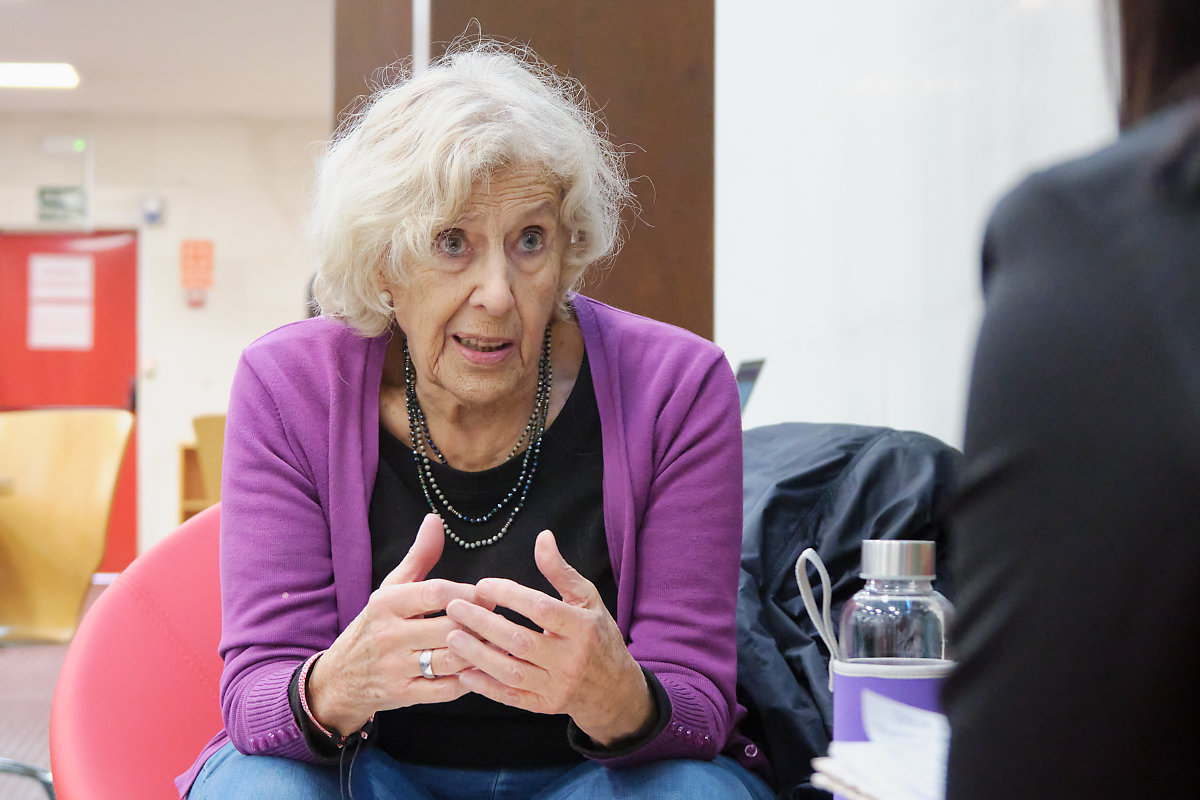 After retiring as a judge, Carmena continued to promote social economy and job reintegration initiatives, and between 2015 and 2019 she served as mayor of Madrid with a program focused on care, citizen participation, and creating more livable cities. Her political experience, documented in books such as Imagining life o To those who come, This has allowed him to develop a critical reflection on the current drift of democracy, polarization, the lack of evaluation of public policies, and the need to recover an ethic of responsibility.
We spoke with her in the Equality Space of the General and Humanities Library. In this interview, Carmena revisits decisive episodes in contemporary Spain—the dictatorship, the Transition, the fight for labor rights, the administration of justice, and municipal politics—and reflects on youth, care, truth, and the meaning of democracy in a time that demands imagination, cooperation, and a renewed commitment to the common good.
Her career spans labor law, the judiciary, international organizations, and municipal politics. What fundamental lessons does she draw about freedom and democracy?
I believe that democracy is the most suitable instrument for enabling the positive development of humanity and for making the possibility of equality among human beings a reality. It is based on the premise that we are all equal and have the same right to shape our future and the policies we want in our environment. It is a compelling organizational structure for continuing the progress of humanity, but, since it is based on human beings, it needs to be nurtured, updated, and adapted to scientific and social developments.
That is why I maintain a dual position: a deep belief in democracy and, at the same time, a belief in the need to update it to the demands of today's world.
To better understand this democratic reflection, it's necessary to go back to your early years as a lawyer during the dictatorship. You practiced law during the Franco regime. How do you explain that era to those who didn't live through it? What scenes summarize it?
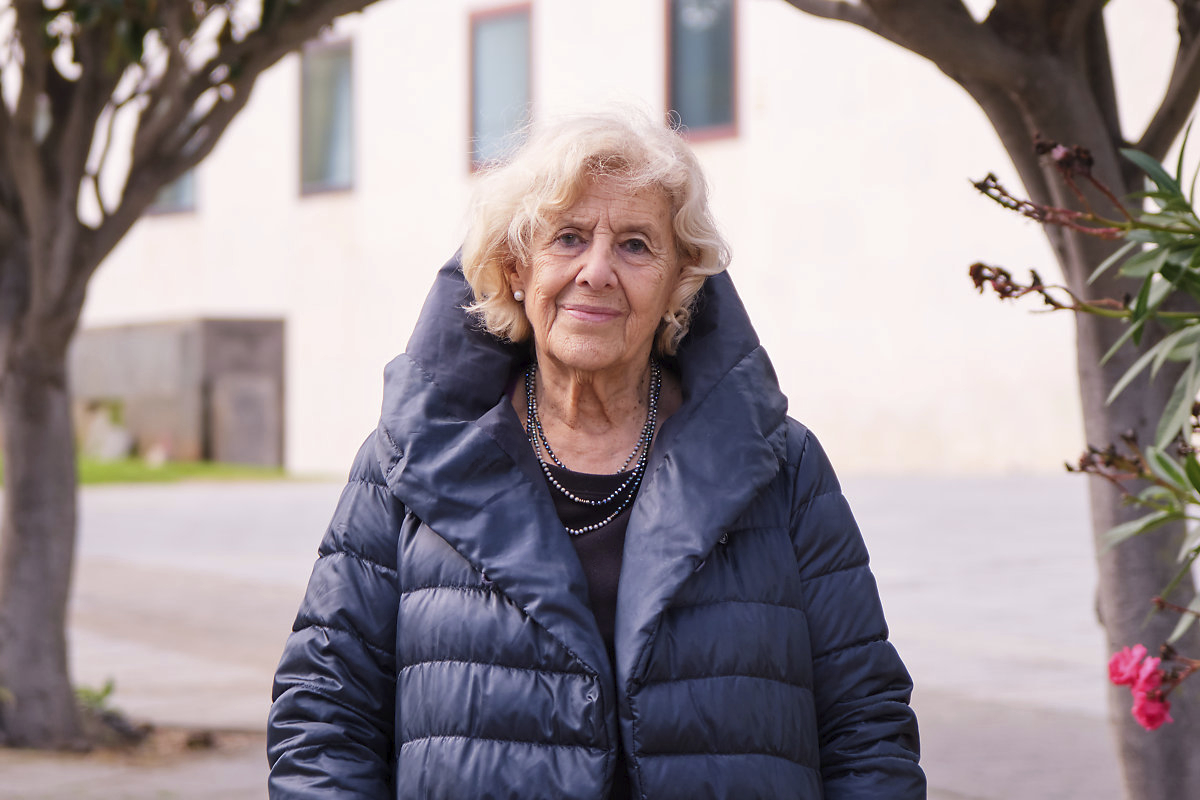 The clearest example is the strangulation of freedom. Authoritarian regimes prevent you from choosing what you think, what you say, and how you live. There are sentences that seem absurd today but show how any behavior that didn't fit in was punished. I remember a case where someone said, "I shit on Franco," and that led to a trial. I also defended some young men during their military service because they had a UNESCO publication in their locker; that resulted in a military court.
And there were very revealing everyday scenes. One day, my boyfriend and I received a fine for kissing in the street. On another occasion, I accompanied my sister, who was taking office in Cáceres, and we were fined for walking on a sidewalk that “wasn’t ours.” These situations, ridiculous in appearance, perfectly illustrate what it meant to live without freedom.
This repressive context also helps to understand the significance of his commitment in labor law offices and during the Transition. When he mentally returns to the Atocha office and his murdered colleagues, what are his reflections today on the price paid to achieve freedom in Spain?
The restoration of freedom was a slow process that began in 1956. It involved effort, loss of life, and, above all, a great deal of imagination and intelligence. By the time Franco died, the dictatorship was already deeply undermined. It was crucial that there were political figures capable of understanding the situation and making the necessary institutional leap.
The cracks left by the dictatorship were created in many areas: the labor law offices, for example, promoted by the Communist Party, which contributed political and personal expertise. We were groups of young people designing how these offices should operate: no initial fees, equal pay for everyone, and a highly horizontal work structure.
Sometimes we forget the importance of the national reconciliation proposed by Santiago Carrillo in 1956. Those of us who were young were drawn to that approach. We didn't want violence; we were the children and grandchildren of people whose lives had been torn apart by the civil war and the brutal Francoist repression. Reconciliation was a very difficult undertaking, but it allowed us, twenty years later, to regain our freedom.
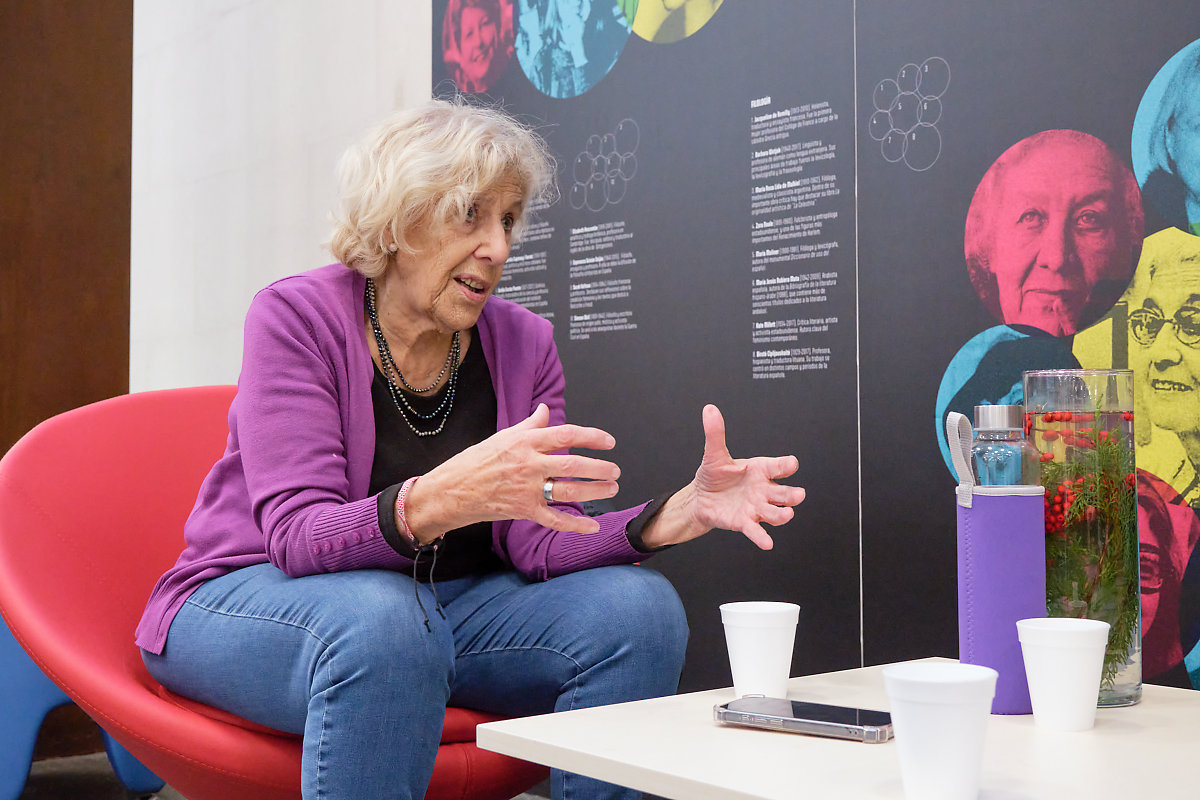 After that pivotal period, he changed the course of his professional life and entered the judiciary. In 1981, he arrived in Santa Cruz de La Palma, very close to this university. How does he remember that arrival, and what did he discover there about the justice system in such a small, island territory?
I knew how the courts in Madrid worked, but I didn't know how things worked in smaller places. Even so, I went with my idea of the kind of judge I wanted to be. I wanted to always have an open-door policy, listen, and resolve conflicts in a way that fostered coexistence. In a small place, it was easier to talk to everyone and follow the cases closely. That helped me develop, in practice, the way I practiced law that I've always maintained.
I remember a very significant anecdote. The day I decided to retire from the judiciary, I had a trial, and at the end, the convicted person stood up and said: “It is an honor that you have condemned me, Ms. Carmena.”. For me, it symbolizes that journey that began in La Palma: clarity, empathy, and an honest relationship with those who seek justice.
Decades later, she made the leap into institutional politics and eventually became mayor of Madrid. From that experience, what did she learn from that period leading a major city?
I learned a great deal. Managing a city allows you to see, in great detail, how its forces, tensions, and potential operate. Cities are fascinating spaces where profound democratic structures can be developed.
One of my favorite practices was to go to a different district each month and simply say: “Good afternoon, I’ve come to listen.”. Sometimes thirty or forty people would get involved. We'd take notes, talk to people, and then take action. I remember the case of a woman who asked for a bench in her park; a month later it was there with her name on it. That makes citizens feel heard and included.
But I also experienced the limitations: a highly bureaucratic administration and a misguided understanding of the opposition. The opposition is perceived as having to systematically obstruct the government's actions. This undermines democracy and makes it very difficult to implement projects within four years. We need to overcome this confrontational view. Democracy is about inclusion. The opposition should criticize, but constructively.
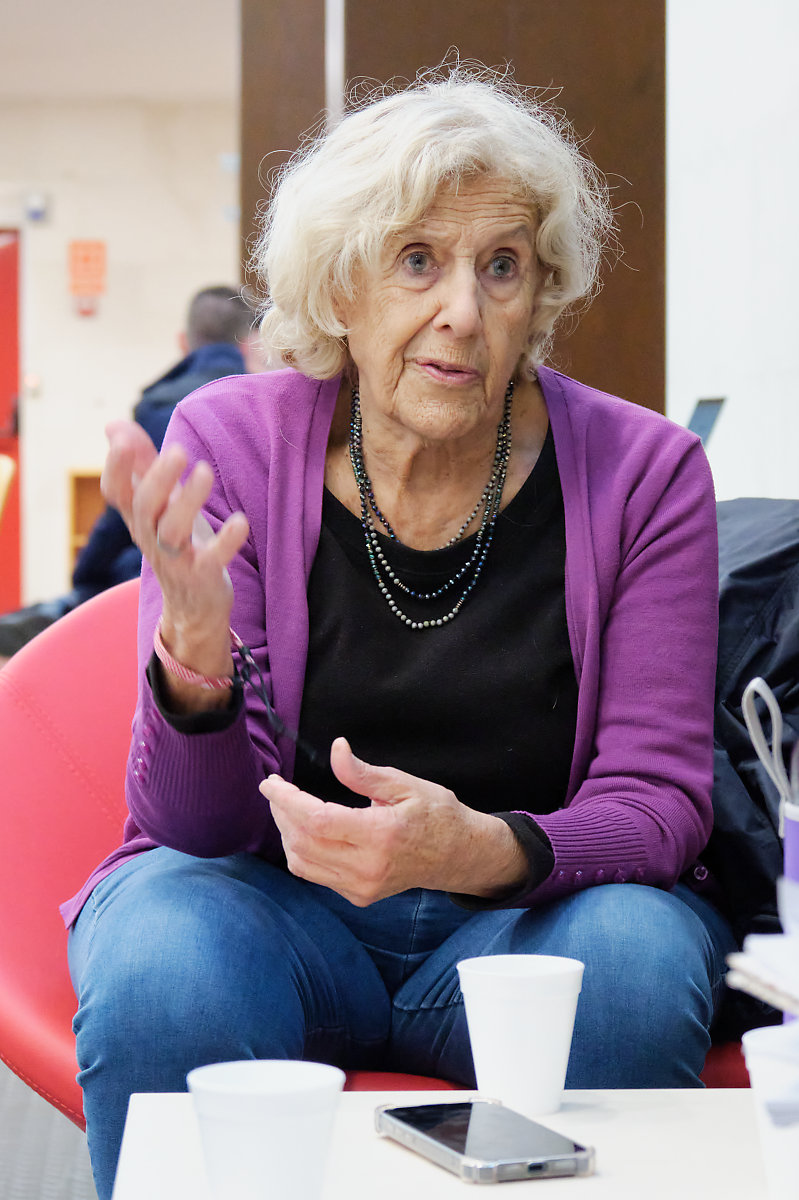 In recent months, tensions have arisen that are affecting trust in judicial and political institutions. Beyond the specific case of the Supreme Court, what signs lead you to believe that democracy is beginning to erode? How can we prevent this?
When you care for a plant, you observe it, analyze it, and interpret it: whether it needs more or less water, more sun, or a different pot. You take action because you want it to reach its full potential, to bloom and bear fruit. Democracy is the same: you have to observe it and define its purpose, which is to be the instrument that solves the community's problems so that each member can achieve their goals. If that doesn't happen, you have to see what's wrong.
I think the professionalization of politics is seriously flawed, having replaced the satisfaction of needs with the interests of those involved in politics. Politics should never be a profession; it's a responsibility. The essence of politics is to solve problems, to act, not to talk. What matters most is what you've done and what results it has yielded. All rules and policies should be evaluated, and yet none are. There are laws to help young people find housing, and you don't know about them; they exist, but they're either not used or they're misused.
Speeches should be concise; politicians must speak to explain what they are doing, not to deliver abstract pronouncements or to lie. The Constitution states that all information must be truthful, and right now the political class is lying, poisoning the very lifeblood of democracy: freedom of expression and the need for truth.
It would be very interesting to have public policy evaluation bodies chosen by anonymous lottery, to try to give society more accountability. Political parties must continue to exist, but they don't govern; the elected official governs and must be independent.
The laws are incredibly long, with countless words and pages, yet the public doesn't read them. It's absurd to create regulations that no one knows about. Laws need to be concise and visually appealing. There might be over 50 housing regulations, and you're unaware of them; they're neither followed nor implemented. If there have been so many laws and none have been effective, let's examine why and what we're going to do now.
In books like To those who come o Imagining life He engages in dialogue with young people and with his own memory. From that perspective, what does “caring for democracy” mean to you?
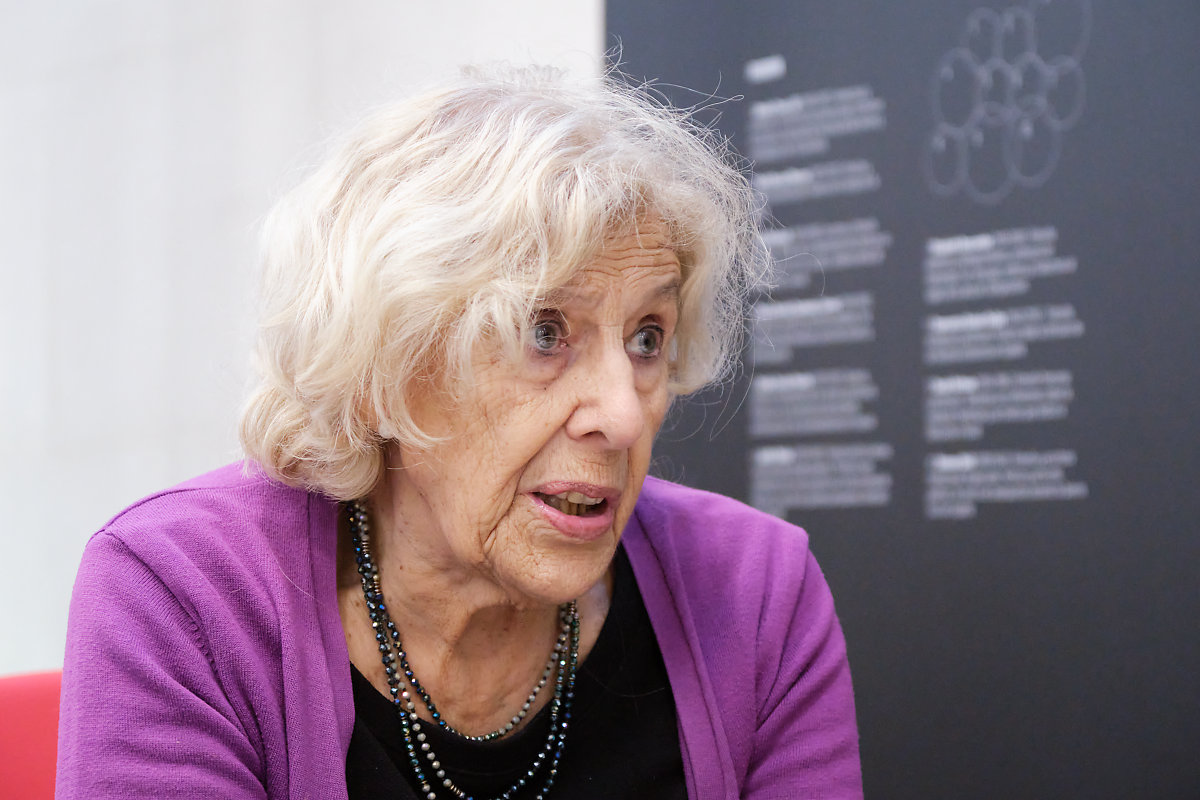 Human beings need to care for their environment. Caregiving is a skill historically exercised by women, not by nature, but because of the role assigned to them. We should be proud of this, not only in our private lives, but also in our social lives.
For me, politics is an activity of care. Solving other people's problems is caring for them. That attitude should be part of the daily life of public officials.
He has returned to the Canary Islands as part of the cycle “For freedom. Spain after 1975” from the University of La Laguna. On that return, what would you say to today's youth and also to your 1981 self who arrived in La Palma?
I would share what I learned as a teenager from reading the journalist Begoña García Diego: “Say yes to life”.
Saying yes means changing what you don't like, creating what's missing, imagining what doesn't exist, moving forward, learning, working. It means not standing still. It's a very progressive message for the time I read it, and it's still relevant today.
In this dialogue with young people, a recurring theme emerges: the attraction some young people feel towards authoritarian discourses. Why do you think this happens?
When democracy disappoints, some look where it isn't. But I'm bored of analyzing percentages. I prefer to say:“We will work together to improve what is concerning.”.
We can create, for example, a housing cooperative with young people who have very different ideas. The key is to take action. Labels don't matter. Polarization thrives when there are no shared projects.
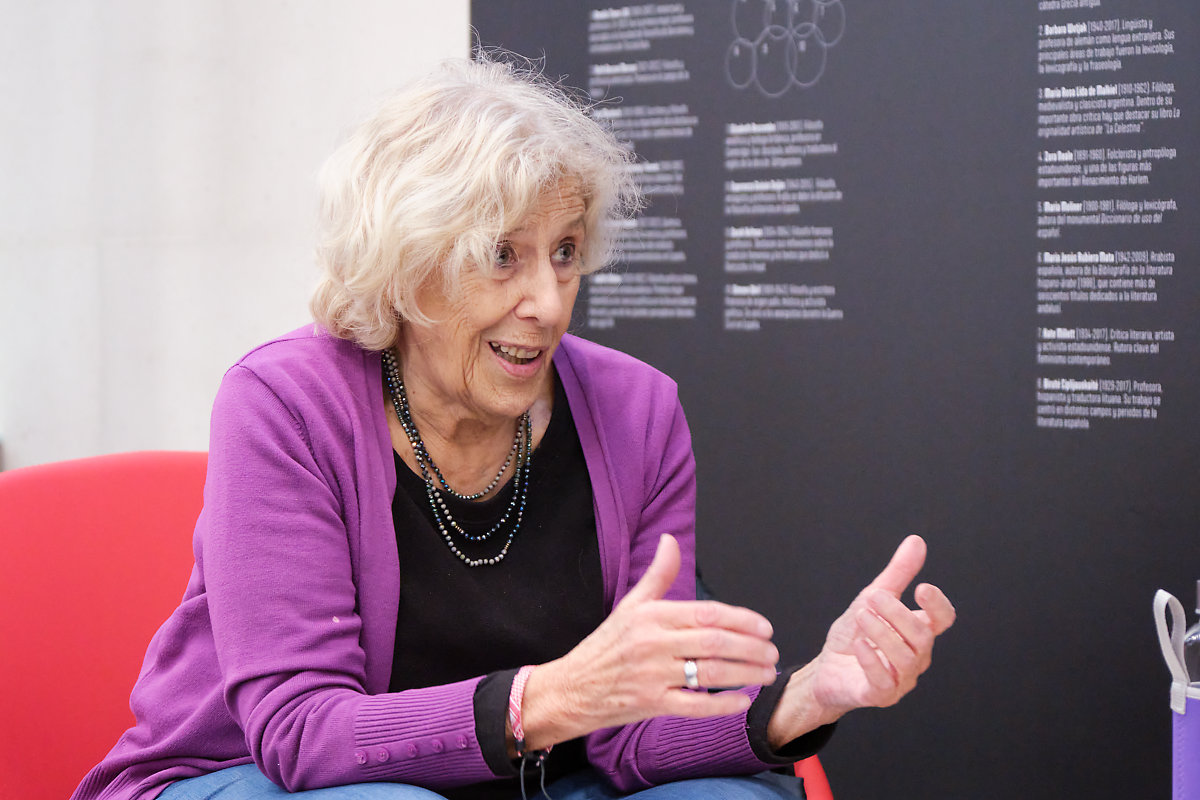 And within this context of democratic tensions, is polarization making it difficult for us to collaborate with each other?
What hinders it is a lack of imagination, management skills, and boldness. And a climate of verbal aggression. The public should say clearly: we don't want politicians who insult. We want them to talk about important issues.
Corruption, for example, isn't analyzed by comparing how many corrupt individuals each country has, but by studying why public procurement systems fail. The important thing is to solve problems, not fuel them.
At the end of the interview, Manuela Carmena returns to an idea that runs throughout her career: democracy must be nurtured. It is nurtured by listening, governing responsibly, telling the truth, imagining new ways to solve common problems, and creating spaces where diverse people can work together. From her memories of the dictatorship to her experience in the justice system and municipal government, she insists that the key to the future lies in cooperation, care, and the audacity to continue saying, like that article that marked her at fifteen, "yes to life.".
Communications Office

 Spanish
 English
 French