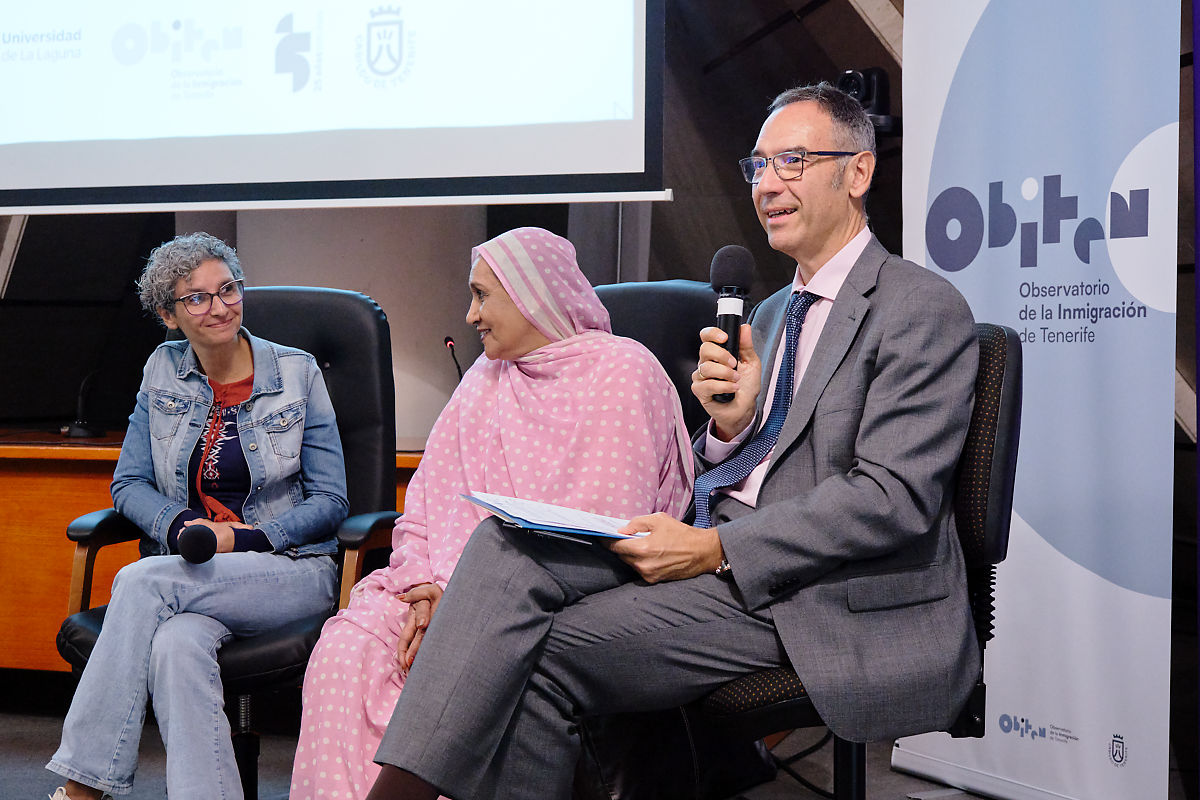
The amplification of racist attitudes and behaviors and hate speech must be contained in neighborhoods, forming part of the responsibilities of societies that have grown and diversified as a result of international migration in recent decades. This statement was one of the main conclusions of the Technical Conference marking the 25th anniversary of the Tenerife Immigration Observatory (OBITenn). This organization emerged in 2001 from a collaboration between the Tenerife Island Council and the University of La Laguna, and was recently recognized as a best practice by the Council of Europe within the framework of its program. Intercultural Cities.
This year, the OBITen Technical Conference coincided with the opening of a retrospective exhibition The event, which reviewed its 25 years of existence, also featured Carlos Giménez Romero, Professor Emeritus of Social Anthropology at the Autonomous University of Madrid, who reflected on human mobility in recent times. “We are in a different phase of human evolution, in which the individual takes precedence over the community, and where racism cannot be explained solely from a psychological perspective, given that economic and political components must also be considered,” he explained. “Democracy is something we all have to build every day, all of us who live together,” he said, demanding greater shared responsibility to create inclusive societies.
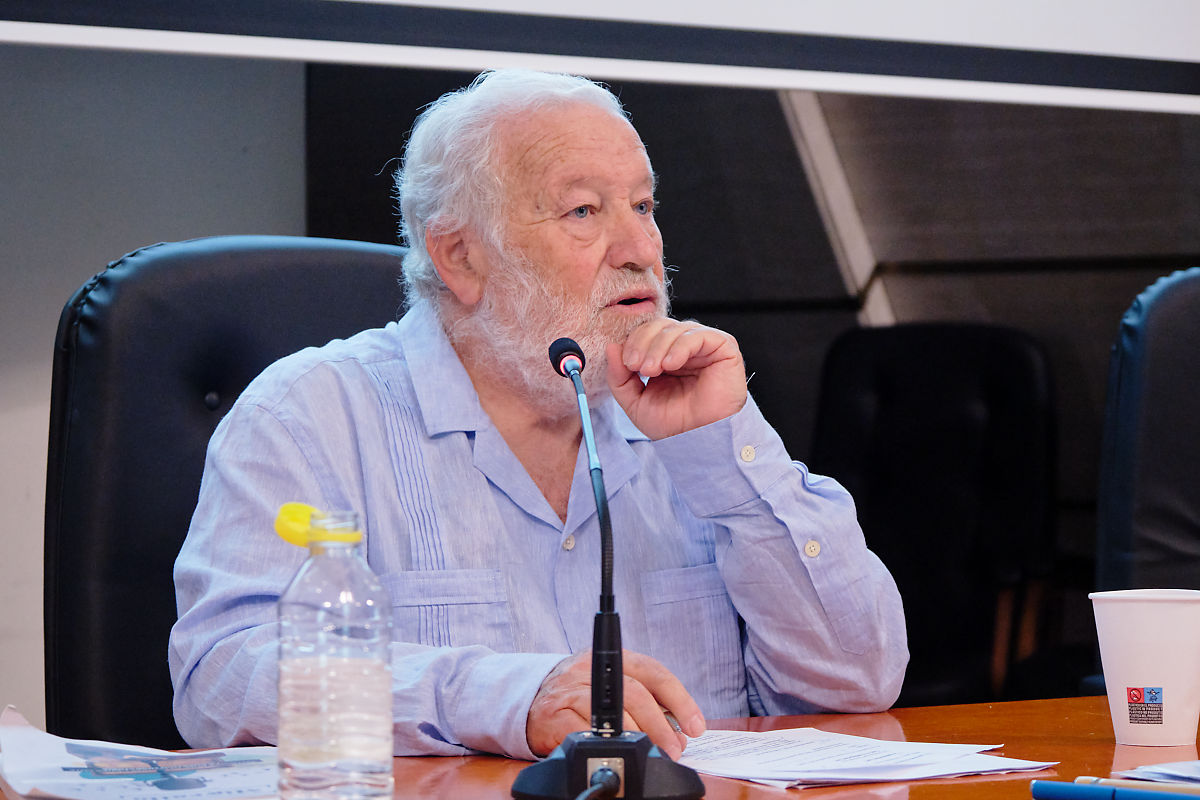
Carlos Giménez Romero.
Giménez emphasized that “achieving full citizenship for all members of a community is essential to strengthening democracy and consolidating a democratic citizenry.” The State must move in this direction, and citizens must support it by meeting and interacting in everyday life, renewing narratives to combat hate speech, creating environments free from discrimination and racism, and forming learning communities that also value their migrant experiences.
According to the specialist, humanity's great challenges seem to remain the same, with the increasing importance of addressing them from local contexts such as neighborhoods and towns, transforming their diversity into an opportunity rather than a problem.
Dialogue
Giménez's speech was endorsed by the people who participated in the subsequent dialogue, residents of Tenerife who have been recognized by OBITen Based on their contribution to strengthening coexistence on the island, they focused their attention on the importance of acting more decisively in the everyday spaces where people interact, because "working at the local level is key to strengthening social bonds and preventing situations of exclusion, discrimination, and racism.".
Thus, they referred to the importance of acting in the educational sphere, due to the fundamental role of youth in building a more inclusive and just society, as well as reinforcing "the leading role of neighborhoods in ensuring environments of positive coexistence.".
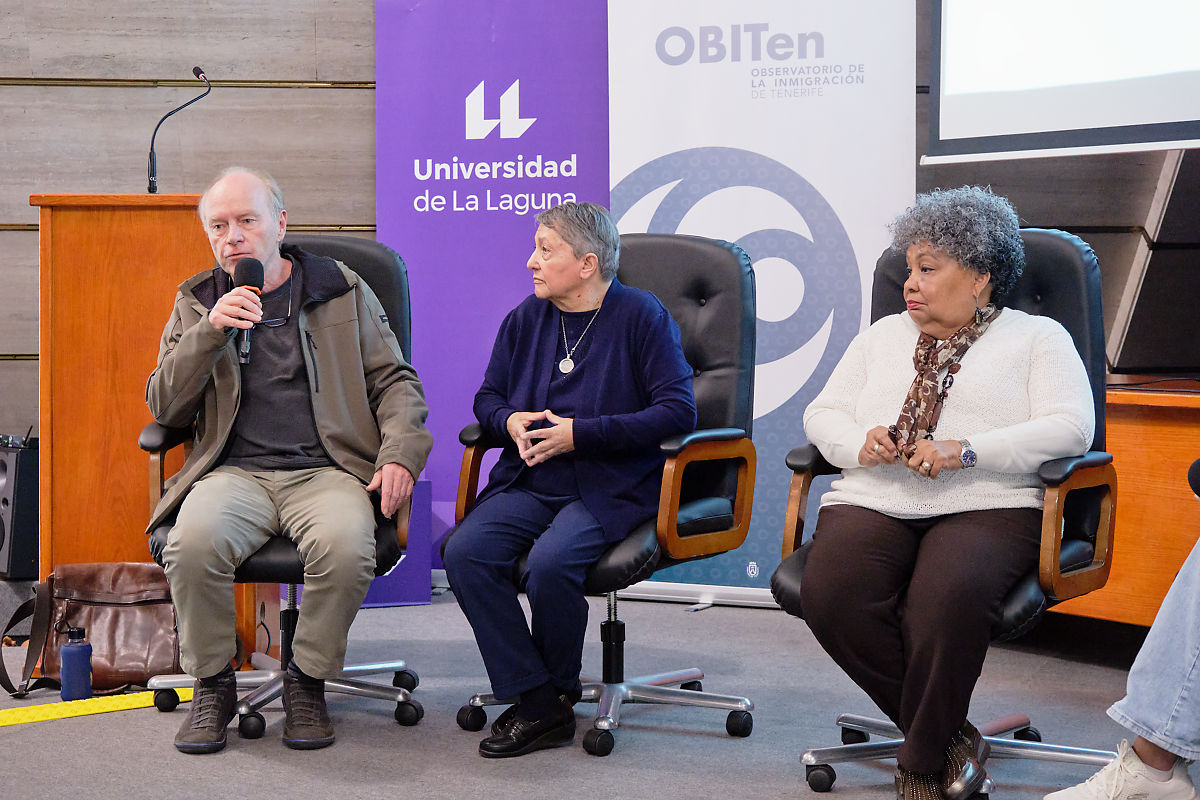 In this second part of the Technical Conference, Dirk Godenau, Roxana de Ortiz, Paula Pimentel, Dácil Baute, and Sukeina Ndiaye participated. Vicente Zapata, academic director of OBITen, facilitated the dialogue and, in the presentation of the commemorative exhibition, emphasized the importance of increasingly speaking of the "plural we," as well as participation and alliances, along with knowledge, as key to confronting the current of hatred and social exclusion that is spreading to more and more places on the planet.
In fact, the contents of the exhibition “Immigration in perspective: OBITen, 25 years” highlight the relevance of public universities and their relationship with institutions regarding the production and transfer of knowledge, with a view to a better understanding and management of phenomena that are transcendental for humanity, such as migrations.
The exhibition “Immigration in Perspective: OBITen, 25 Years” will be open until January 29 in the lobby of the General and Humanities Library of the University of La Laguna at the Guajara Campus, during the Library's usual opening hours.

 Spanish
 English
 French