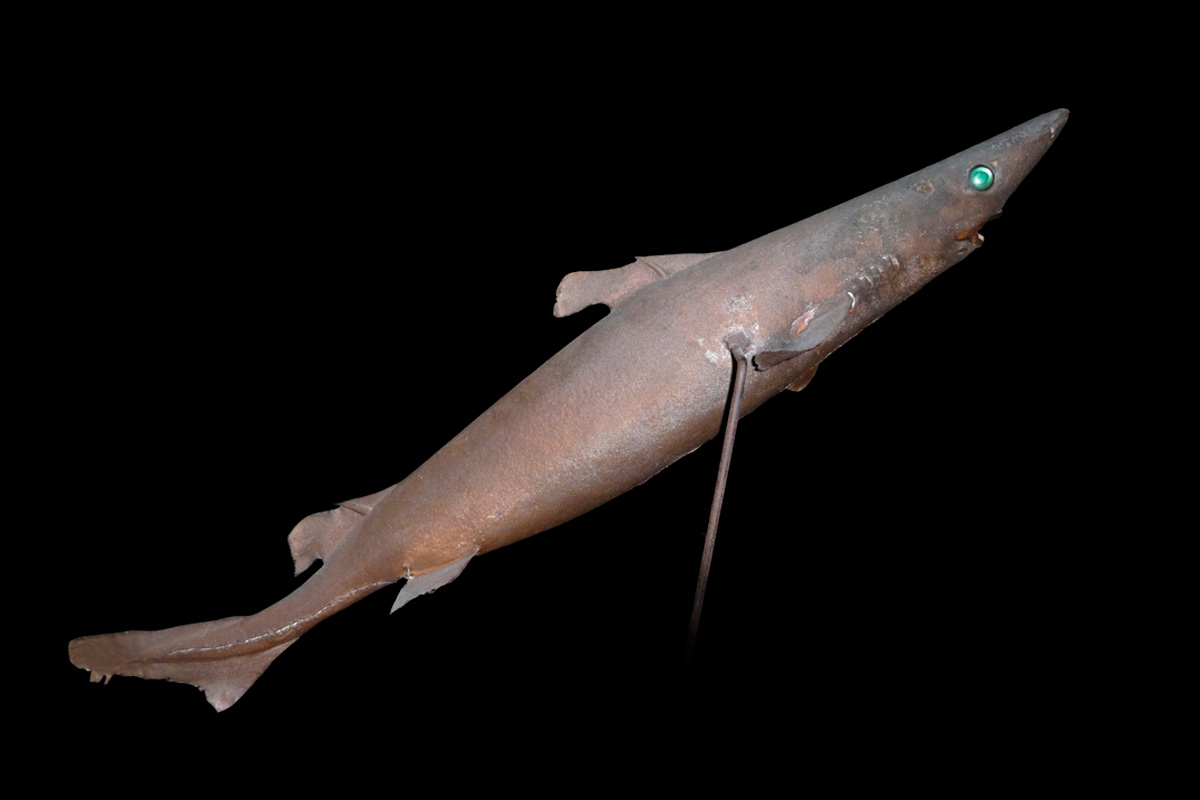
A research team from the University of La Laguna has carried out a study, published in the journal Marine Pollution Bulletin, The study focused on deep-sea sharks inhabiting the waters around the Canary Islands. The results reveal that these species are not only essential for the balance of marine ecosystems, but can also be considered indicators of metal pollution in the oceans.
The authors emphasize that these types of sharks play a crucial role as predators: they regulate the populations of other species and maintain the balance of food chains in the deepest ocean habitats. However, their slow growth, late maturity, and long lifespan make them especially vulnerable to pollution.
Researchers analyzed 51 specimens from seven species accidentally caught by artisanal fishermen, who release the live sharks and donate the dead ones to science. The species studied included: Deania quadrispinosa, Deania profundorum, Oxynotus paradoxus, Centroscymus crepidater, Zameus squamulosus, Apristurus laurussonii y Hexanchus griseus.
The results showed that D. quadrispinosa y D. profundorum They accumulated higher concentrations of metals such as aluminum, zinc, iron, and copper, while A. laurussonii It had much lower levels. O. paradoxus It was located at an intermediate level, standing out for its lead content. These differences reflect the influence of habitat depth, the biology of each species, and its phylogeny.
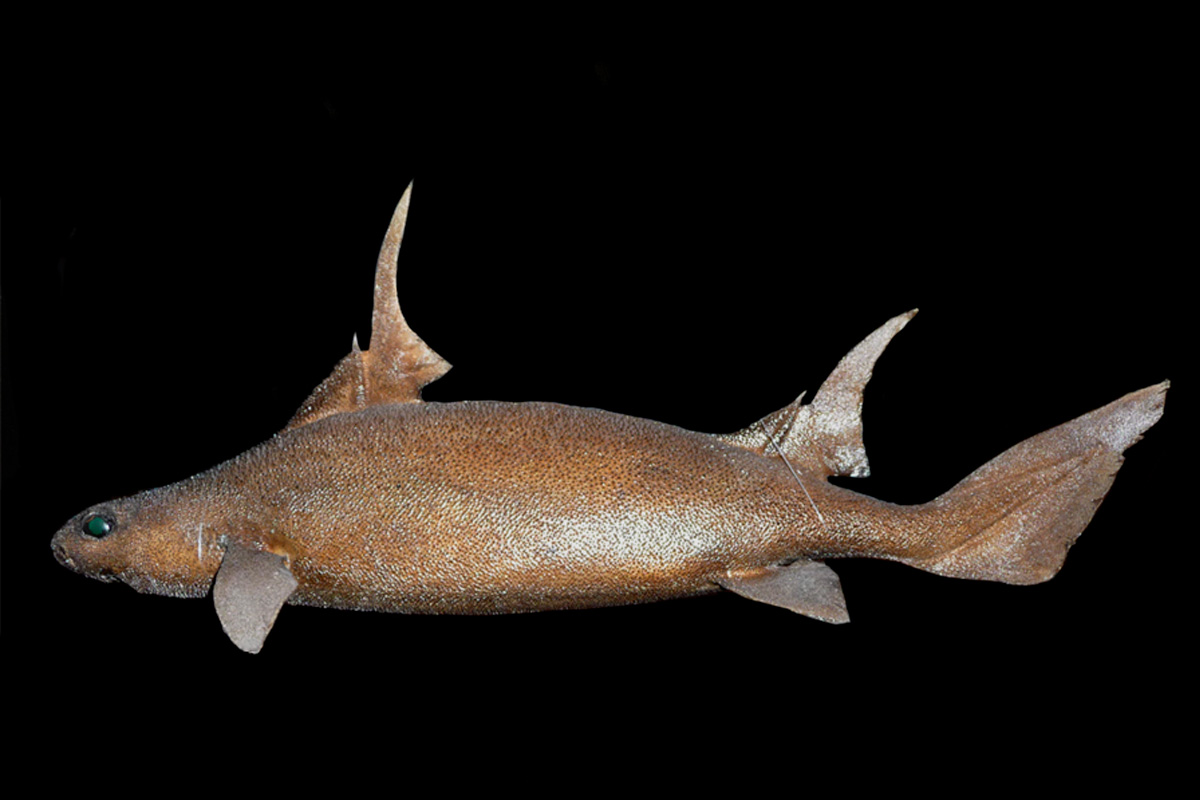
An image of an Oxynotus paradoxus shark.
Some metals present, such as cadmium and lead, can affect the health of sharks by interfering with metabolism, muscle contraction, and oxygen transport. Specialists detected that the levels of these metals in D. profundorum y D. quadrispinosa They are approaching the safety limits set by the Food and Agriculture Organization of the United Nations (FAO) and the World Health Organization (WHO) for seafood, which could pose dietary risks if the meat is consumed locally or without proper labeling.
They also highlight the fact that, compared to sharks from other regions, Canary Island sharks have higher concentrations of metals, probably due to the archipelago's volcanic activity, the presence of mineral-rich sediments, and the Canary-African upwelling, which brings deep waters and nutrients to the surface. Other sharks in Europe, the Arctic, the Indian Ocean, and the Pacific Ocean have lower levels, reflecting environmental and ecological differences.
In addition to demonstrating the presence of metals in the tissues of these species, the study highlights the usefulness of deep-sea sharks as biological indicators of the state of the oceans. Due to their longevity, as they occupy high positions in the food chain, these animals accumulate chemical signals from their environment in their muscles and organs. This allows scientists to reconstruct the history of marine pollution in remote and inaccessible areas, revealing how the effects of human activity reach even the deepest habitats. The researchers point out that elements such as boron and cadmium, which are underutilized in environmental monitoring programs, proved particularly useful for differentiating species and assessing exposure to pollutants.
The importance of strengthening conservation measures is also emphasized, as all seven species studied appear on the International Union for Conservation of Nature (IUCN) Red List with varying degrees of threat. Due to their low recovery capacity, any increase in mortality, whether from bycatch, habitat loss, or pollution, could severely impact their populations.
This study was conducted by members of the Department of Animal Biology, Soil Science and Geology, he Inter-University Group on Environmental Toxicology and Food and Drug Safety from the ULL, and the Department of Obstetrics and Gynecology, Pediatrics, Preventive Medicine and Public Health, Toxicology, Legal and Forensic Medicine and Parasitology. The research team consists of Enrique Lozano, Arturo Hardisson, Carmen Rubio, Dailos González, Soraya Paz, and Ángel J. Gutiérrez. The research also benefited from the collaboration of the University of Las Palmas de Gran Canaria and the support of the Canary Islands Public Health Service.

 Spanish
 English
 French