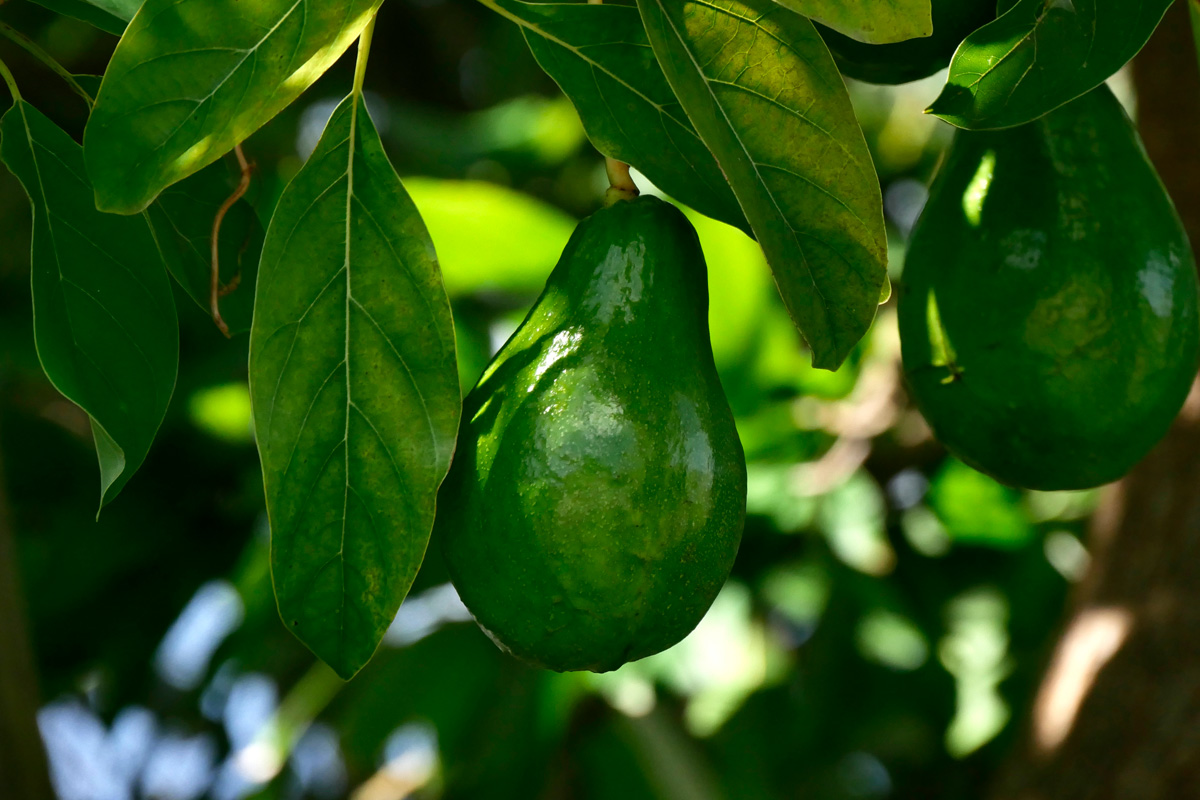
Researchers at the University of La Laguna have developed a pioneering genetic method to identify avocado varieties of the race Antillean, commonly resistant to the salinity of irrigation water, which offers nurseries a valuable tool for certifying their plants.
The invention, supported by two international publications, is currently under evaluation by the Spanish Patent and Trademark Office. This innovation seeks to solve a critical problem for the agricultural sector in the Canary Islands and the Mediterranean: the incorrect identification of avocado varieties, which leads to economic losses due to poor water quality.
The biotechnological invention is capable of identifying West Indian avocado rootstocks, key to the crop's survival under high salinity conditions. This achievement is the culmination of a research project initiated in 2022, which has not only generated high-impact scientific knowledge but has also resulted in a patent application published by the Spanish Patent and Trademark Office (OEPM).
The path to this technological solution has been made by the team led by the doctors José A. Pérez Pérez y Mario A. González Carracedo, from the Genetics department of the academic institution. In 2022, the team published in the journal Agronomy he first study which used 'jumping genes' (retrotransposons) to decipher the genetic complexity of the avocado and develop new molecular markers. Given the commercial potential of the discovery, the University of La Laguna filed a patent application entitled "Method, primers and kit for identifying specific genomic regions of horticultural avocado varieties.".
The official publication of this patent application has marked a milestone in the protection of the technology, opening the door to its future commercial exploitation. In a second study published in 2025, in the magazine International Journal of Molecular Sciences, The team of geneticists has demonstrated that the developed molecular markers have absolute sensitivity to detect the West Indian race, identifying potential hybrids, which allows for a significant improvement in the classification of rootstocks in commercial nurseries.
The expansion of avocado cultivation faces a significant challenge: water and soil salinity. "Until now, farmers have acquired plants relying on their salinity resistance, based solely on a visual identification of morphological characteristics that often failed," they explain. "Our technology, currently undergoing patenting, offers a molecular analysis tool designed to eliminate this uncertainty, greatly reducing the wait for farmers to know if their investment has paid off.".
The registered invention allows for addressing the genetic certification of the Antillean genomic component, and provides nurseries with a method to ensure that their stock are truly purebred. Antillean, or they exhibit hybridization with other breeds that are commonly less resistant to salinity, such as the breeds Mexican y Guatemalan.
Unlike other expensive genomic techniques, the patent-pending kit uses a much simpler methodology, based on standard PCR, accessible to any basic quality control laboratory. With the patent application already published and the scientific results validated, the research is at the forefront of agri-food innovation, offering unique tools to protect a crop vital to the islands' economy.
The method developed has been validated using a collection of avocado cultivars supplied by researchers from ICIA-CSIC and Agro-Rincón SL and has been funded by the Government of the Canary Islands and supported by the Knowledge Transfer Office of the University of La Laguna.

 Spanish
 English
 French