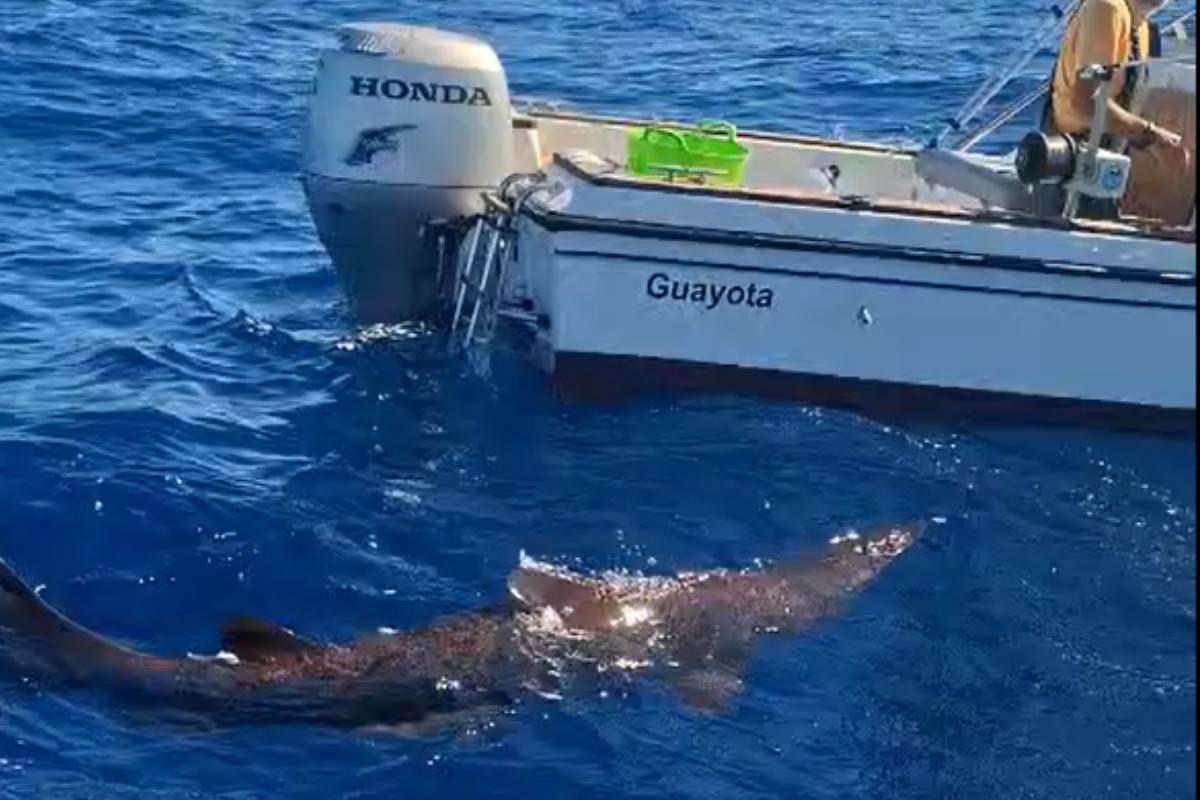
A team of researchers, including Alberto Brito Hernández, a retired professor from the Department of Animal Biology, Soil Science and Geology at the University of La Laguna, has documented for the first time the presence of a live specimen of goblin shark (Mitsukurina Owstoni) in the waters of the Canary Islands.
The analyzed specimen, approximately 2.5 meters in length, was accidentally caught on May 4, 2024, during a recreational fishing trip off the coast of San Cristóbal (Gran Canaria) at a depth of 900 meters and 9.5 kilometers from the shore. After capture and handling, the shark was released alive and recorded using photography and video, allowing for the documentation of the diagnostic morphological characteristics of the species.
Among the characteristics observed in the shark are its flattened and elongated snout, protrusive jaws with long, sharp teeth, small eyes without a nictitating membrane, flaccid body, and two rounded, flexible dorsal fins, along with a long caudal fin lacking a ventral lobe. Furthermore, the provisional identification as female was based on the absence of copulatory organs.
This record, detailed in the international magazine ThalassaThis represents a significant advance in understanding the geographical distribution of the species. Mitsukurina Owstoni, This is the first confirmed sighting in the Canary Islands and the second appearance in the Macaronesian region.
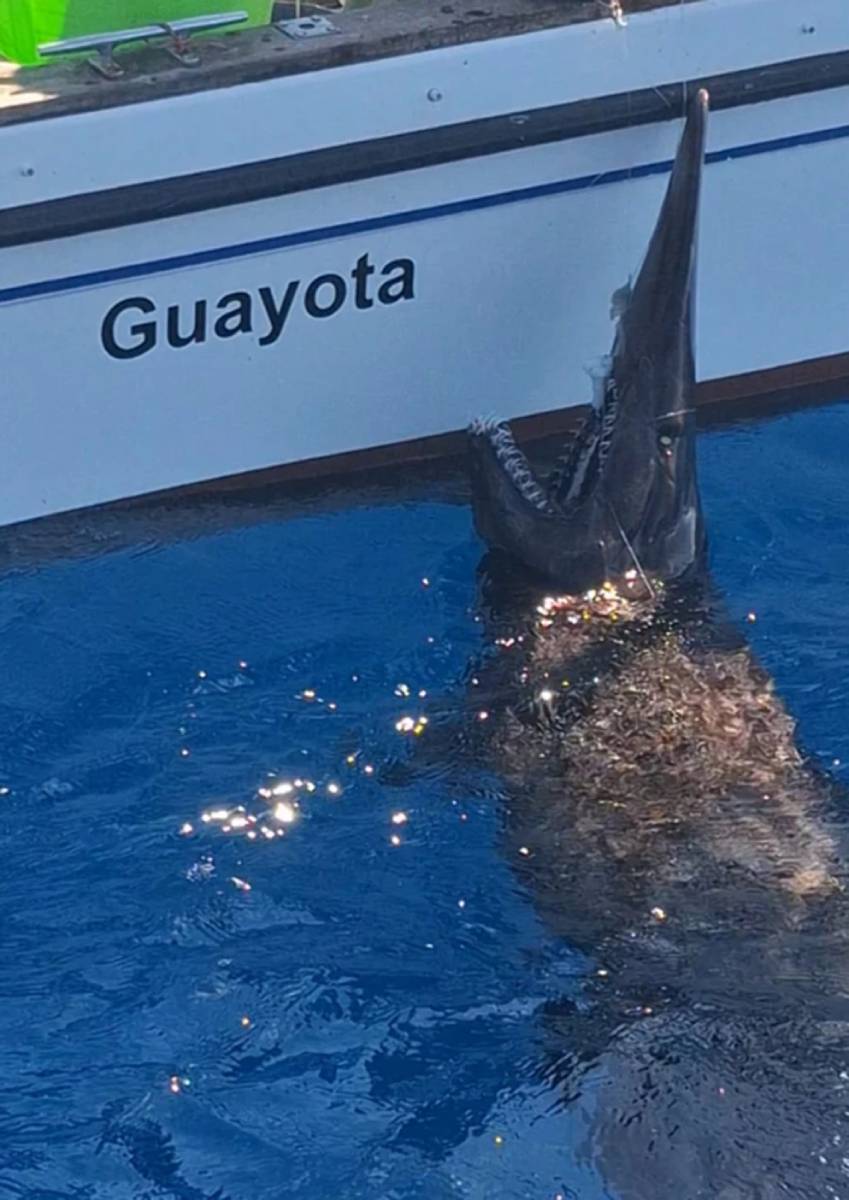 Photo published by the research team in the journal Thalassas. Detail of the head of Mitsukurina owstoni captured in the Canary archipelago, in which the diagnostic morphological features can be seen: elongated, flat and leaf-shaped snout, with long and thin teeth, and tiny eyes without nictitating membranes.
To date, fewer than 250 individuals of this unusual-looking shark have been documented worldwide. The goblin shark has a scattered but widespread distribution across most of the planet in tropical and temperate waters, at depths ranging from 250 to 1,500 meters. In the northeastern Atlantic, its presence has been recorded occasionally in Galicia, Madeira, Moroccan waters, and near Portugal.
On the other hand, the discovery also underscores the ecological importance of deep-sea habitats in the Canary Islands, which serve as a refuge for sharks and other elasmobranch species. The absence of bottom trawling since the 1980s and the limited fishing activity targeting deep-sea sharks contribute to the preservation of these populations, although incidental catches by passive fishing gear persist.
This documentation provides evidence of the geographic segregation by size observed in the species. Records from the eastern Atlantic correspond mostly to juvenile or subadult individuals, while in the western Atlantic, adults (>300 cm TL) predominate. This differential distribution could reflect ecological or reproductive factors that are not yet fully understood.
The research team notes that this record represents a significant expansion of the species' known distribution area in the Central-Eastern Atlantic and highlights the need to continue exploring and monitoring these understudied environments.

 Spanish
 English
 French