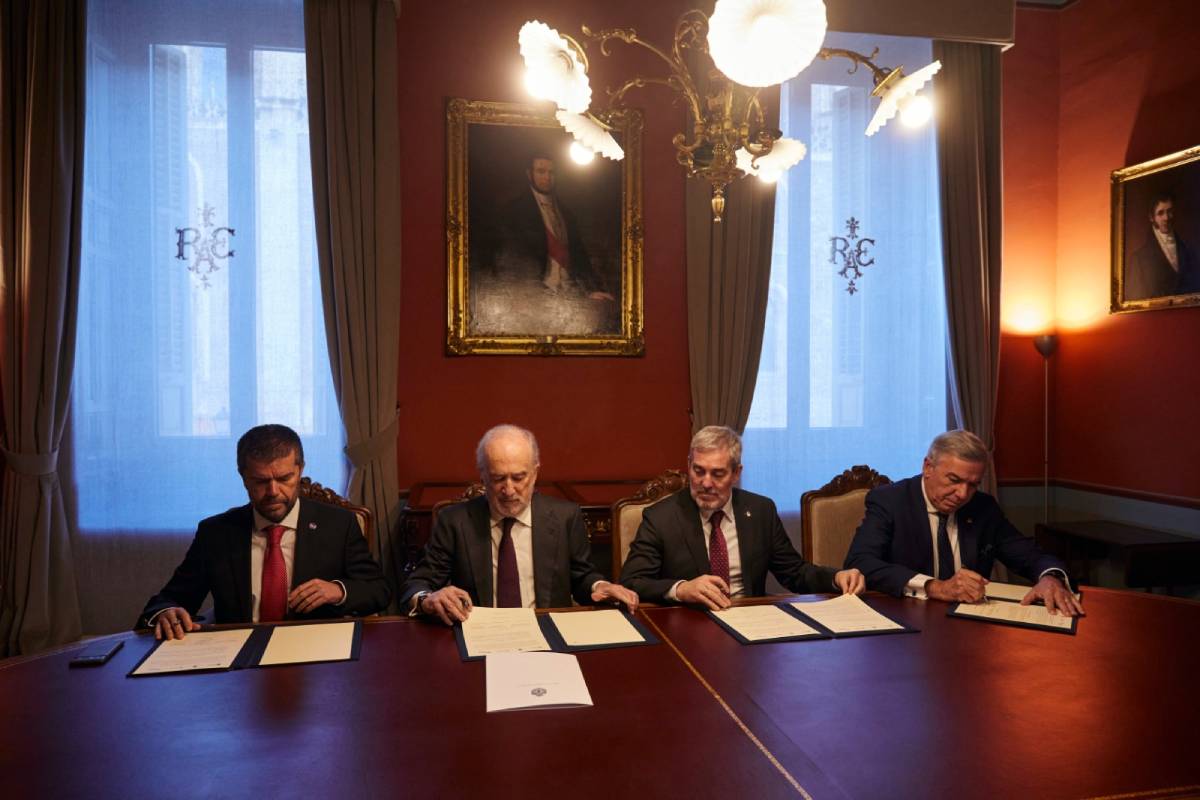
President Fernando Clavijo, along with the rectors of the University of La Laguna and the University of Las Palmas de Gran Canaria, Francisco García and Lluís Serra, respectively, signed a declaration of intent this morning with the director of the Royal Spanish Academy (RAE), Santiago Muñoz Machado. This agreement aims to strengthen the relationship between the Canary Islands Autonomous Community and the Royal Spanish Academy. The Canary Islands Government has been a member of the board of trustees of the Foundation for the Royal Spanish Academy since January 29, 2025.
Clavijo thanked the Academy for the opportunity to hold this meeting and emphasized, once again, “the importance of collaboration between institutions, to work, in this case, for a language rich in meanings and unique characteristics that unites a community of more than 600 million people.”, that we must take care of at the same time as to encourage the use of words with positive connotations to contribute to a better future.”.
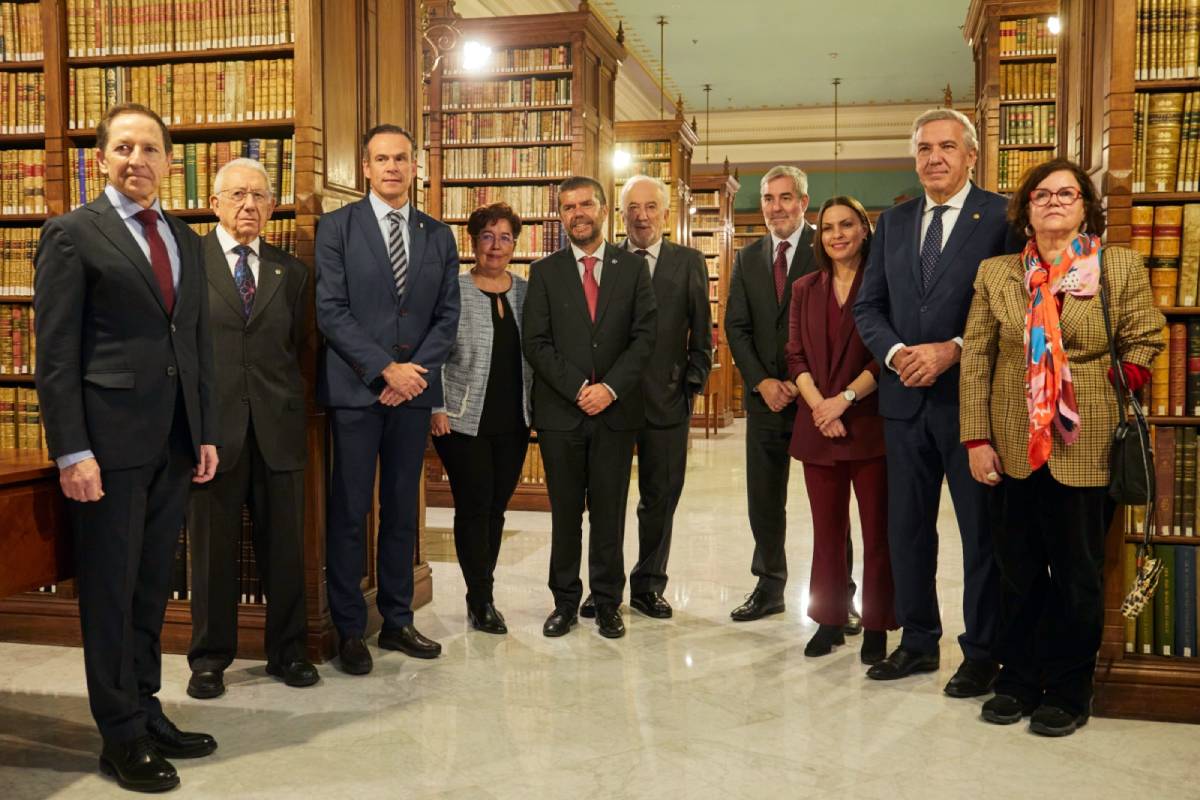
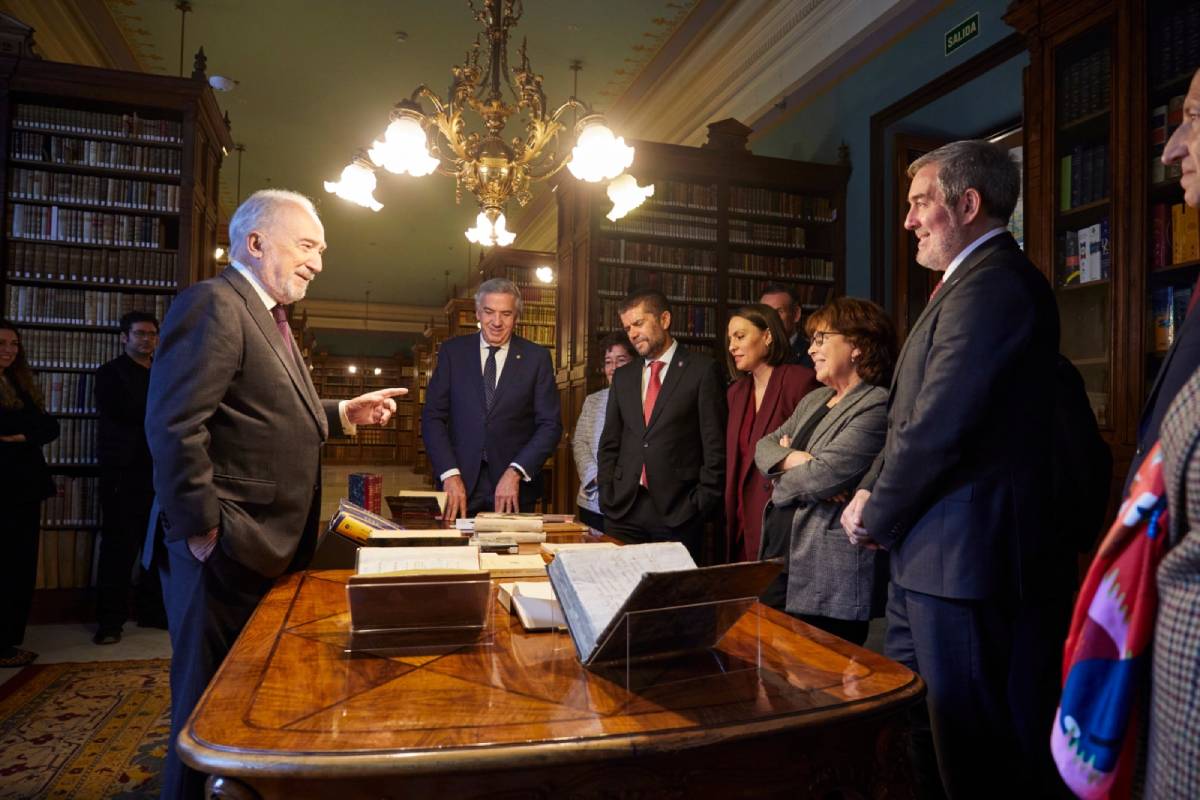
Also present on this visit were the Minister of Universities, Culture and Science and Innovation, Migdalia Machín, Dolores Corbella, academic and director of the team at Historical dictionary of the Spanish language at the University of La Laguna; the director of coordination Organic and strategic projects, David Pérez-Dionis; Alejandro Fajardo Aguirre, Professor of Spanish Philology at the University of La Laguna y, Teresa Cáceres Lorenzo, Professor of Spanish Language at the University of Las Palmas de Gran Canaria. and the secretary of the Royal Spanish Academy, Pedro R. García Barreno.
 The rector of the University of La Laguna recalled his institution's philological tradition, as well as its ties with the Royal Spanish Academy (RAE), strengthened by the appointment of Professor Dolores Corbella as a member. In this regard, he agreed with the rector of the University of Las Palmas de Gran Canaria in emphasizing the importance of the more than two million speakers of the Canarian variety of Spanish, "which shares so many features with the American varieties," being represented in the academy.
The Autonomous Community of the Canary Islands collaborates through the pro-RAE Foundation in the advancement of Dictionary of the Spanish Language, of the Historical dictionary of the Spanish language and from academic corpora, in order to reinforce the presence of Canarian identity in these dictionaries and corpora, as well as that of its Atlantic links
Likewise, the universities have been working for some years through agreements with the entity, highlighting the results of this cooperation, both by the University of La Laguna, as well as the University of Las Palmas de Gran Canaria.
By virtue of these, the University of La Laguna joined the pan-Hispanic network of collaborating teams of the Historical Dictionary of the Spanish Language (REDACTA) and participated in the preparation of the digital edition of the Historical Dictionary of Canarianisms, (1420-2020) and joined the Treasury of historical dictionaries of the Spanish language.
For its part, the University of Las Palmas de Gran Canaria has collaborated in the development of activities and projects that contribute to the adaptation of the Spanish language to the needs of speakers as well as to the global projection of the language, with initiatives such as the development and updating of the Dictionary of the Spanish Language, the Spanish Language and Artificial Intelligence project and participation in the Pan-Hispanic Network of Clear and Accessible Language and its work programs, among others.
 Pan-Hispanic Network
The Government of the Canary Islands is a member of the Pan-Hispanic Network of Clear and Accessible Language and is currently, through the General Directorate of Modernization, addressing the improvement of language in documents, procedures and public services so that "any person can exercise their right to understand the communications of the Administration freely and securely".
This network has two essential purposes: to promote clear and accessible language as the foundation of democratic and civic values, and to promote the commitment of authorities to ensure it in all areas of public life.
The Network is open to any public or private institutions and entities that wish to join this pan-Hispanic initiative.

 Spanish
 English
 French