The word "logic" is frequently used as a commonplace in discourse, as the term used to validate an argument or question its truth. All these expressions are intrinsically linked to a discipline that has existed since the first thinkers attempted to understand the workings of human thought. It was Aristotle who developed logic, defined its principles, and laid the foundations of deductive reasoning.
However, despite logic's pervasiveness in our everyday conversations, we rarely pause to reflect on its true meaning or the many ramifications it has acquired today. It is not only a fundamental discipline in the philosophy of science, mathematical reasoning, and the evaluation of legal arguments, but it also plays a key role in more recent fields, such as the development of programming languages, the machine learning or artificial intelligence, which are now central to research in numerous fields. Thus, almost without realizing it, logic acts as a pivotal discipline that allows us to access the foundations of the reasoning and argumentation systems that shape our daily lives.
In 2019, UNESCO and the International Council for Philosophy and Human Sciences established World Logic Day to draw the attention of both interdisciplinary scientific circles and society as a whole to the intellectual history of this discipline, its theoretical importance, and its practical implications. In her declaration, UNESCO Director-General Audrey Azoulay emphasized that “logic is a discipline more vital than ever for our societies and economies, shaped and structured by computer science and information and communication technologies, fields that rely on logical and algorithmic reasoning.”.

Margarita Vázquez.
Gödel and Tarski: pillars of modern logic
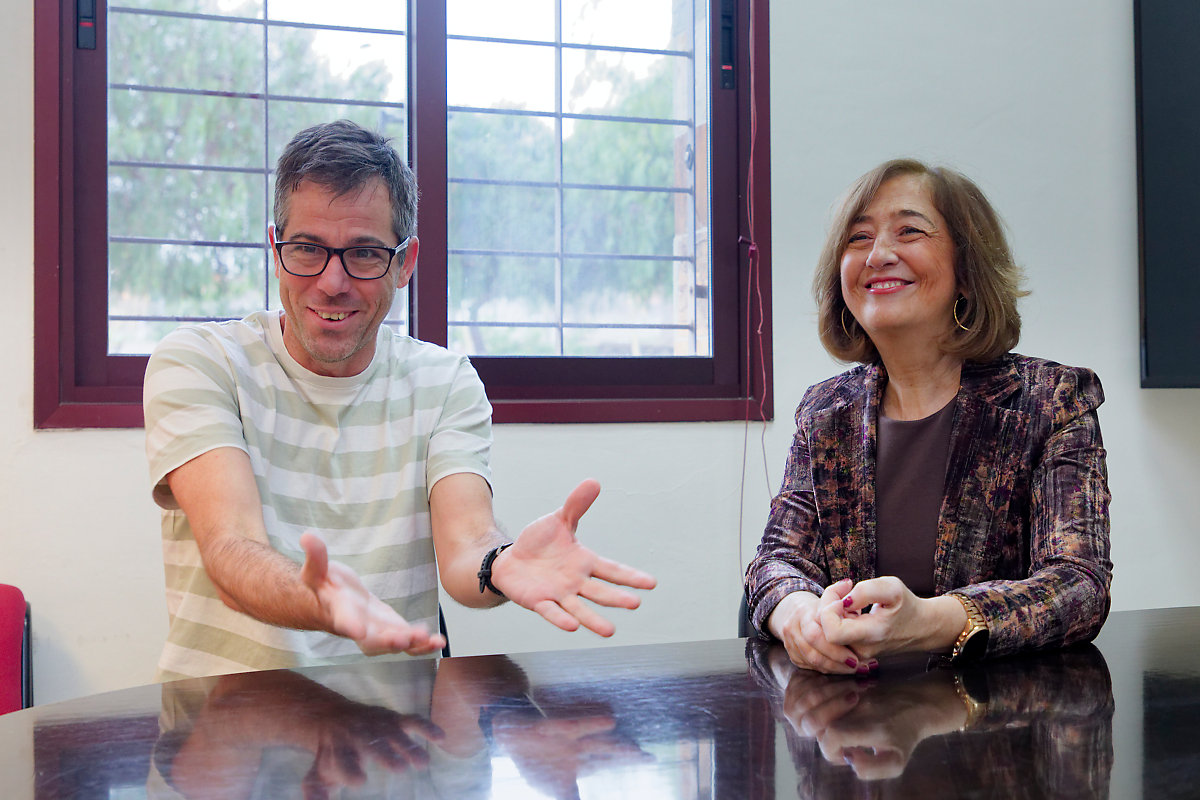
This commemoration on January 14th recalls the decisive contributions of two great figures in 20th-century logic: Kurt Gödel, who died on that day in 1978, and Alfred Tarski, born on that date in 1901. According to Margarita Vázquez Campos, Professor of Logic and Philosophy of Science at the University of La Laguna, both philosophers and mathematicians revolutionized modern logic by highlighting its limitations and paving the way for new lines of research that have shaped the evolution of the discipline to this day.
Through his incompleteness theorem, Gödel answered a question that was already present in the works of mathematical authors such as Gottlob Frege, who introduced the principles of symbolic logic at the end of the 19th century, or in a work as influential as “Principia Mathematica”, by Bertrand Russell and Alfred North Whitehead, published at the beginning of the 20th century.
As Vázquez points out, by demonstrating that in formal systems such as arithmetic there are propositions that cannot be proven within the system itself, Gödel concluded that "there is a difference between what is true and what is provable within the system itself," highlighting the intrinsic limitations of mathematics.
For his part, Tarski developed the semantic theory of truth, in which he precisely established the distinction between object language and metalanguage. According to Vázquez, the combined impact of both contributions on 20th-century logic was remarkable, as they redefined the scope, ambition, and method of modern logic, and opened new lines of research in the development of new logics and semantics.
For the researcher, the trajectory of these mathematicians and philosophers constitutes a clear example of the profound interconnection between disciplines, a link that has historically been closer than current academic structures allow us to appreciate. Ultimately, she concludes, “the scientific method follows the rules of logic, formulating hypotheses and testing them.”.

Ignacio García.
Between theorems and algorithms
Logic is a cross-cutting tool in contemporary science and technology. It underlies programming languages, algorithm design, artificial intelligence, and many scientific models.
In particular, Vázquez argues that branches such as temporal or modal logic are fundamental for representing dynamic systems: processes that change over time, conditional decisions, or alternative scenarios. He adds that without logic there are no reliable models or responsible science, and this is especially evident in current technological developments.
Along the same lines, Ignacio García Marco, [Name], a researcher in Computational Algebra and lecturer in the subject Fundamentals of Mathematics, which introduces this field of study to students of the Mathematics Degree at the University of La Laguna, emphasizes that logic plays a fundamental role in two major research trends in this branch of knowledge. Furthermore, he underscores that with the emergence of computers and new technologies, logic acquires a renewed dimension that must be taken into account.
First, the field of computer-assisted proofs stands out. This line of work, which emerged in the late 20th century, involves developing computer programs capable of verifying proofs and theorems formulated by humans. This process establishes a dialogue between the person and the machine, in which the rigor of the system requires exhaustive and meticulous justification of each logical step in the proof.
As García explains, this double-checking mechanism involves translating the laws of logic into machine operation, which is then able to apply them as a set of instructions. Due to its high complexity, this type of tool is primarily used to verify major discoveries and fundamental theorems.
Secondly, García refers to a more recently developed branch: that of automated theorem proving, or automated deduction, in which the human component disappears from the proof process. It is no longer a matter of verifying, through dialogue, a proof developed by a mathematician, but rather of having the computer itself use computational methods to generate theorem proofs. “In this leap from asking the machine to validate our reasoning to asking it to develop new reasoning, logic plays a fundamental role,” the researcher emphasizes.
However, García also points out that another fundamental element is involved in these reasoning processes: ingenuity, the creativity needed to combine axioms and logical laws to obtain new results. The possibility of programming machines capable of taking this step is one of the most dynamic fields of research today within mathematics and computer engineering, due to its enormous relevance to disciplines such as artificial intelligence and, in particular, machine learning or machine learning.
The latter is an area of computer science whose objective is to develop techniques that allow systems to learn from datasets and accumulated experience. Even so, the researcher emphasizes the central role that logic plays in these autonomous training processes, stressing that to implement in a computer the mechanisms that emulate the articulation of these mental processes, it is essential to precisely understand the logical laws on which they are based.
 Critical thinking in the age of information overload
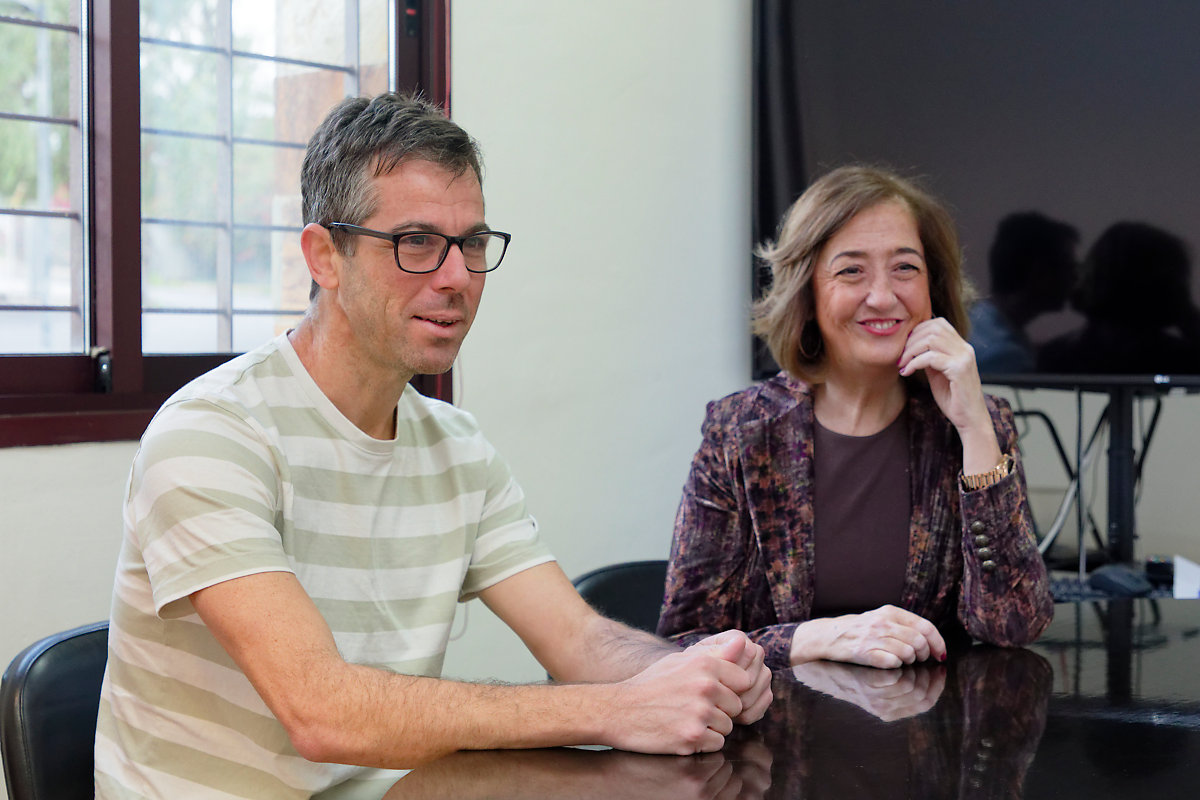
For Margarita Vázquez, this is a particularly relevant point in the current debate on the contribution of logic to computer systems. “Logic allows people to develop as epistemic subjects, that is, as individuals who, through critical thinking, develop beliefs and accept the consequences of those beliefs,” the researcher points out.
However, he adds that the artificial intelligence systems present in everyday life today, such as ChatGPT, operate using algorithms that are nothing more than patterns; they do not justify their reasoning and, therefore, cannot be considered epistemic subjects capable of developing their own ideas. Hence, he argues for the need to resort to logic as a fundamental tool in our daily lives, not only to understand what kind of beliefs underlie the inferences made by these systems, but also “as a compass to orient ourselves in a world full of echo chambers.”, fake news and post-truth,” he emphasizes.
Basic training in logic, which Vázquez argues should be included in educational curricula from the earliest levels of schooling, as is already the case in other countries, is fundamental for citizens. According to the researcher, it allows people to detect falsehoods, contradictions, and false dichotomies present in the media and social networks. “Logic seeks the truth and, therefore, fosters the development of critical thinking,” the researcher adds.
However, the very concept of truth is one of the most complex, debated, and analyzed within the field of the philosophy of logic. The researcher points out the importance of differentiating between the idea that there are no absolute truths and falling into extreme relativism, where “anything goes.” In logic, a rigorous discipline, a distinction is made between that which can be true in some cases and not in others, called contingency, and that which is always true, called tautology or validity. It is validity that allows us to construct solid arguments, guaranteeing a coherent chain of inferences. In contrast, Vázquez argues, post-truth is based on statements that lack validity, claiming that all truths are equally acceptable regardless of the knowledge or experience that supports them.
For his part, Ignacio García also emphasizes the usefulness of logic in evaluating the data and conclusions we receive daily through all kinds of discourse. “If we apply logic to analyze them, we can detect serious errors in the reasoning that supports certain claims, sometimes made carelessly and other times deliberately,” he explains.
He points out, in particular, statistical fallacies, which occur when one starts with correct data but interprets it using reasoning that disregards logical principles. In these cases, as well as with false dichotomies, logic becomes an indispensable tool, allowing us to think more clearly, reflect critically, and consider alternatives that might otherwise go unnoticed.
Both researchers agree on the need to reclaim logic not only as an academic discipline, but also as an essential tool for understanding and acting in an increasingly complex world, where the amount of information received grows exponentially and it becomes urgent to have a system that allows us to distinguish between valid and invalid data. Likewise, from artificial intelligence to... machine learning, From biotechnology to other emerging fields, understanding and applying logical principles ensures that systems and algorithms are not only efficient, but also reliable and transparent.
Thus, logic has ceased to be an abstract concept and has become a true ally in daily life and research, and to reclaim it is, ultimately, to provide people with the necessary tools to understand, question and transform the reality that surrounds them.
(This report is an initiative framed within the InvestigaULL Commemorations Calendar, a scientific dissemination project promoted by the University of La Laguna).
Scientific Culture and Innovation Unit (Cienci@ULL)

 Spanish
 English
 French