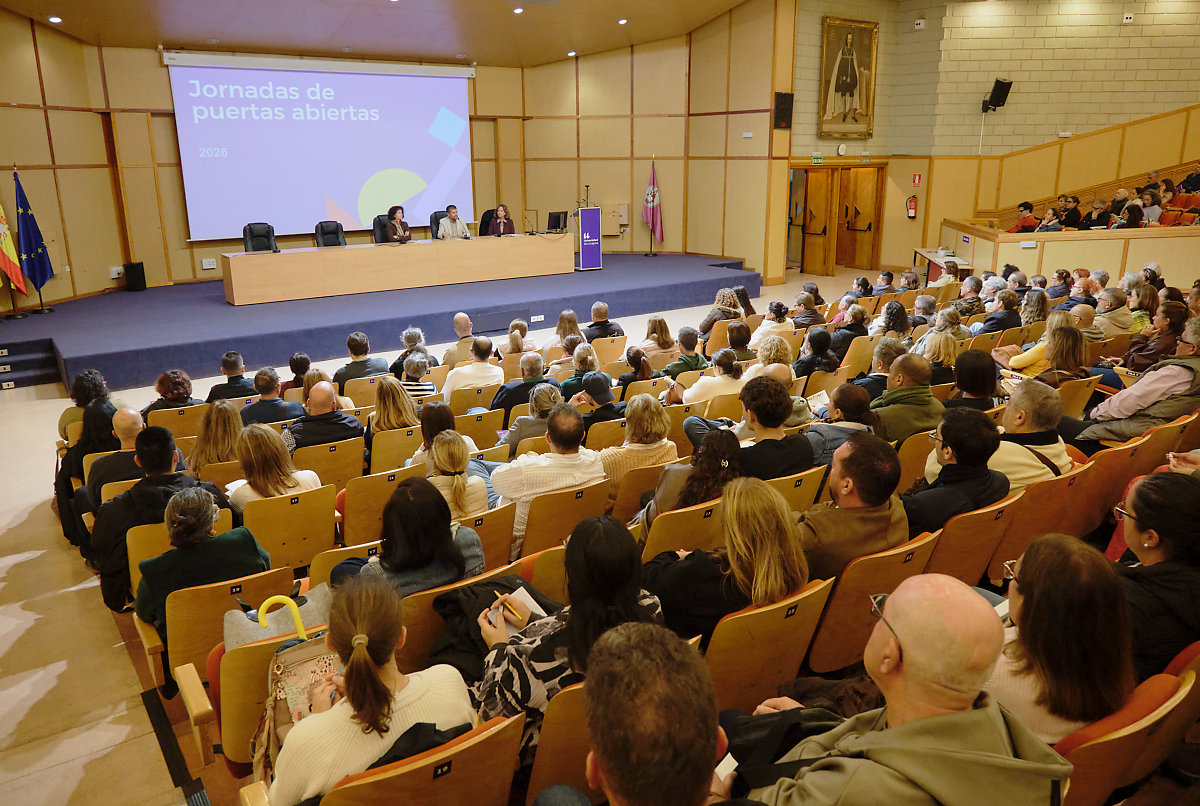
As part of the Open Days organized by the University of La Laguna to inform high school students about its academic offerings for those beginning their higher education next year, one of the most popular events was the talk aimed at families. At the talk held yesterday afternoon, January 22nd, Rocío Media, legal advisor for the Information and Guidance Service, encouraged parents to "let go" of their children so they can begin to take responsibility "like adults" for managing their time and navigating the bureaucracy involved in university admissions. "Accompany them, support them, but my advice is to let them handle the process.".
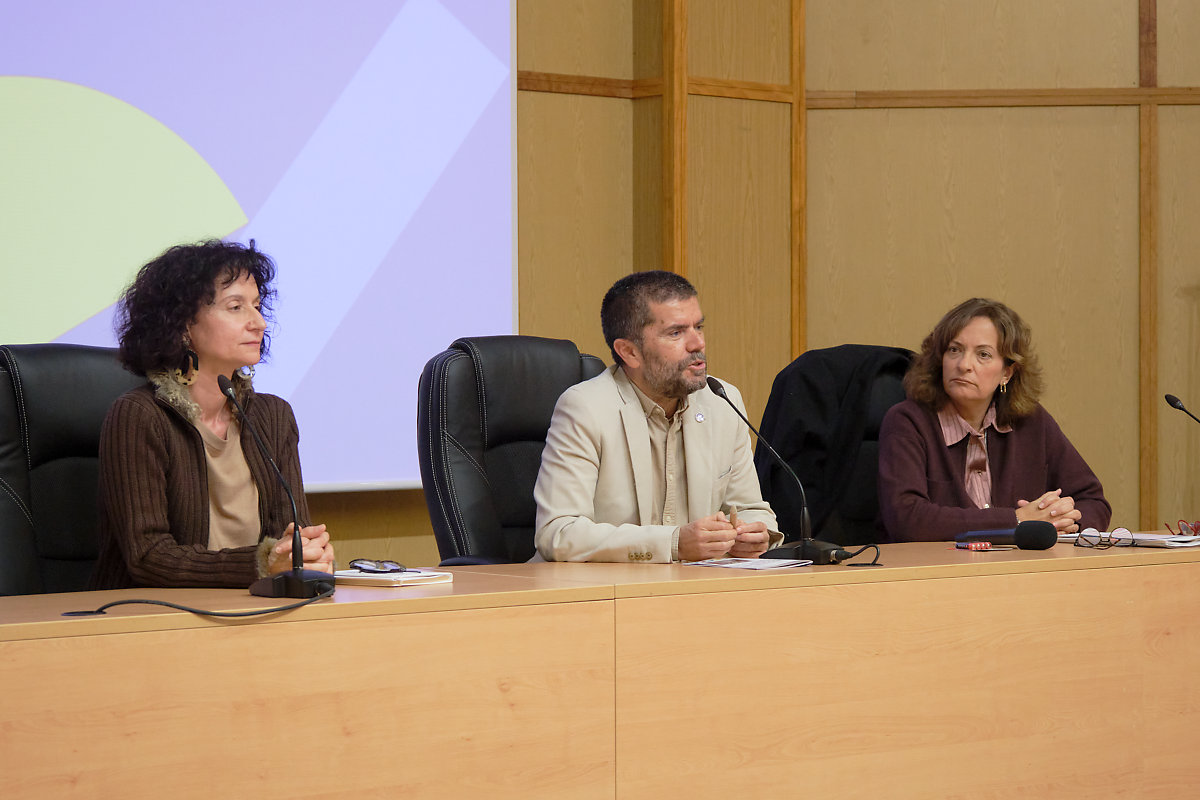
(From left to right) María Rosario Hernández, Vice-Rector for Students; Francisco García, Rector of the ULL; and Rocío Medina, Legal Advisor of the Information and Guidance Service.
The talk began with brief remarks from the Rector, Francisco J. García Rodríguez, and the Vice-Rector for Students, Rosario Hernández, who welcomed the families that filled the Aula Magna of the César Manrique General Building. The Rector reiterated that, as he likes to say, the University of La Laguna is “old, but not outdated,” and is currently undergoing a complete renewal of its faculty and degree programs, focusing on more practical and innovative training. He also noted that having a university degree improves employability, as successive labor force surveys have consistently shown.
For her part, the vice-rector offered reassurance to families, acknowledging that university admissions can be a source of anxiety. “We have a very streamlined process, and despite the large number of students we manage, they are not just a number: we address each case and its specific circumstances. Therefore, they can rest assured; the rules and phases are very clear, and all the necessary information will be provided.”.
The talk itself, given by Rocío Medina, was divided into three main sections: a description of the current Spanish university system, the university admissions process, and the available grants and scholarships. The guidance counselor pointed out that, although much of this content wouldn't directly affect parents, it was important for them to have some knowledge of the world their children would be navigating, as this would help them better understand their children's reactions to university life.
The conference focused particularly on administrative aspects, explaining concepts such as bachelor's degrees, master's degrees, and academic credits, as well as the European Higher Education Area, since the experience of an academic exchange within the Erasmus+ program is one of the most sought-after by incoming students. The university entrance exam (PAU) was also explained in detail, including how the access grade is calculated and how places are allocated through pre-registration. Medina emphasized the importance of being aware of the deadlines for each step, as missing any of them could result in being excluded from the process.
He also explained the financial aid offered by the University of La Laguna and how to apply for state and regional scholarships, which have the same income thresholds but different academic requirements. Regarding tuition costs, he detailed that last year the price of a full course for first-time enrollment ranged from 606 to 913 euros, depending on the degree program's level of practical component. "Along with Galicia, the Canary Islands has the cheapest tuition fees in Spain, but at the same time, Spain doesn't have the cheapest in Europe.".
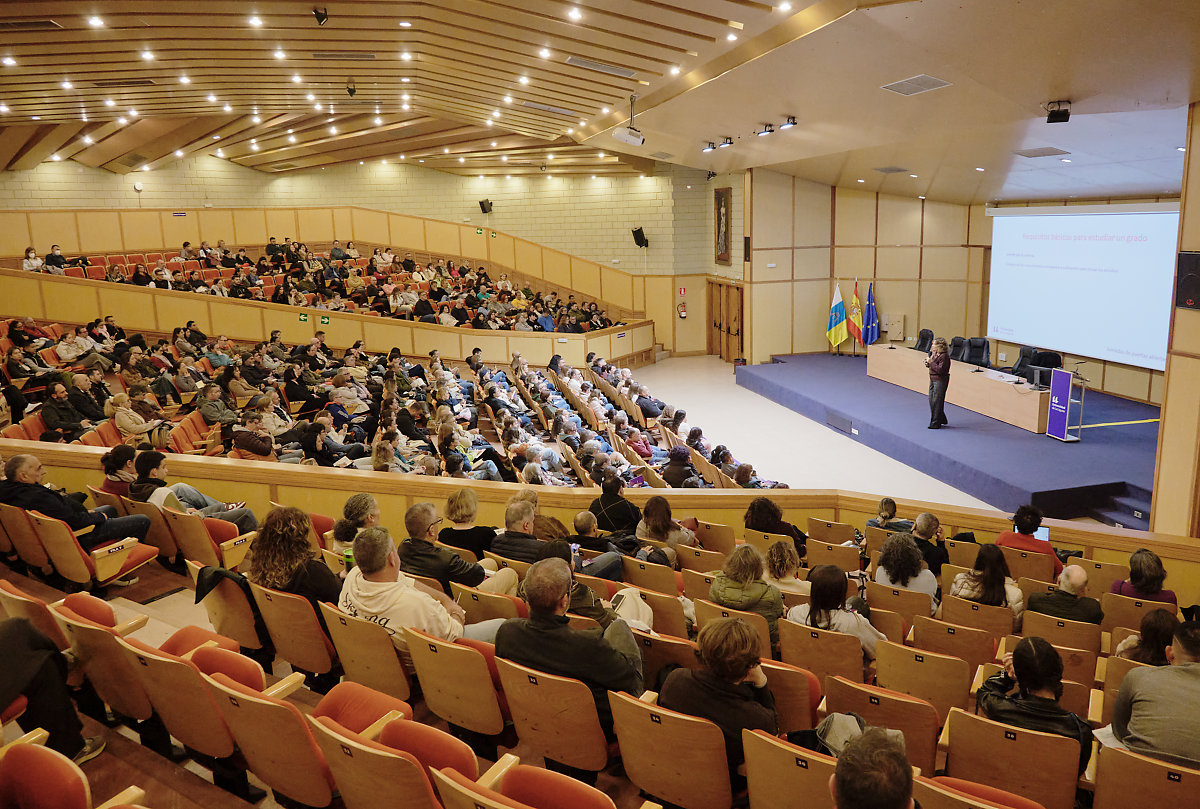
Rocío Medina during her speech.
The advisor from the academic institution clearly emphasized both the positive and negative aspects of university life. Among the positive aspects, she noted that it is a vital time in which students not only receive essential training for professional careers but also forge strong friendships that can last a lifetime and even lead to starting families. Among the negative aspects, she pointed out that higher education is demanding and requires hard work and organization. “We have to dedicate a significant portion of our time to it because university education is the highest level of education a person can have. Here, we will train the future leaders of society.”.

 Spanish
 English
 French