More than 60 meetings have been held and a dozen agreements signed, reaffirming the Canary Islands' commitment to maintaining a presence in African countries within its geostrategic area. The head of the regional government attributed this success to the wise decision to include business representatives from sectors such as industry, tourism, and transportation in the delegation, in addition to the rectors of the archipelago's two public universities.
Fernando Clavijo emphasized that thanks to continued efforts, “connections have been forged, those necessary bridges to move beyond simply talking about the Canary Islands' opportunity due to its position in the Mid-Atlantic and turn it into a reality.” With this objective, the President of the Canary Islands announced that he is considering another visit to the neighboring country in April and that sector-specific trips have been arranged for March to further the implementation of the agreements signed over the past two days.
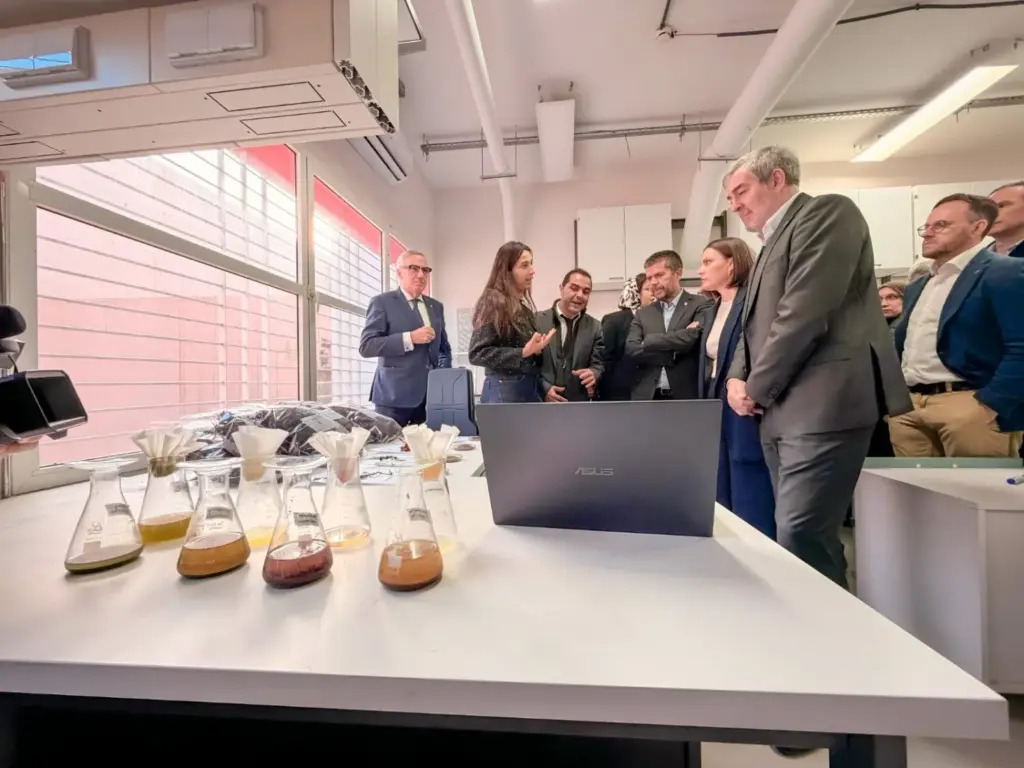
The final day of the Canary Islands' institutional, business, and scientific delegation's visit to Agadir began with a tour of the Souss-Massa Innovation City in Agadir. There, the president learned firsthand about the region's entrepreneurial and technological ecosystem, as well as the projects underway in applied research, innovation, and startup support. He was accompanied on this tour by the Minister of Universities, Science, Innovation, and Culture, Migdalia Machín; the Director General of Relations with Africa, Luis Padilla; and the Director General of Organizational Coordination and Strategic Projects, David Pérez Dionis.
This visit, according to a statement, took place after the signing of the Memorandum of Understanding between the Technological Institute of the Canary Islands (ITC) —a public entity under the Ministry of Universities, Science, Innovation and Culture— and Technopark Morocco, one of the country's leading innovation and entrepreneurship hubs. The agreement establishes a framework for collaboration aimed at strengthening cooperation between both innovation ecosystems, facilitating the exchange of knowledge and best practices, promoting joint projects in areas such as energy transition, water, digitalization, the blue economy, and sustainability, as well as boosting training, mobility, and support for technological entrepreneurship.
 Scientific diplomacy
The President of the Canary Islands stated that scientific diplomacy is now a key tool in the Canary Islands' foreign policy, "because it allows us to build stable alliances based on knowledge, innovation, and mutual trust." He added that "the Canary Islands want to be a useful bridge between Europe and Africa, also in research, technology, and entrepreneurship." In this regard, Fernando Clavijo emphasized that cooperation with Morocco translates into concrete projects, talent exchange, and real opportunities for our innovation ecosystems. He highlighted that these types of agreements allow progress toward a strategic and practical relationship with measurable results for both parties.
For her part, the Minister of Universities, Science, Innovation, and Culture, Migdalia Machín, stated that “collaboration with our neighboring country is not only desirable but strategic, especially in a changing international context.”, Strengthening bridges of institutional and scientific cooperation brings stability, trust, and mutual benefits.”.
The institutional agenda developed in Agadir was reinforced on the previous day with the meeting held by Councilor Migdalia Machín with the rector of the Ibn Zohr University, Nabil Hmina, in which both parties shared the conviction that the Canary Islands and Morocco should cooperate in a stable manner in the field of scientific diplomacy, knowledge and innovation.
The meeting was also attended by the rectors of the Canary Islands public universities —Lluís Serra, for the University of Las Palmas de Gran Canaria (ULPGC), and Francisco García, for the University of La Laguna (ULL)—, the CEO of the ITC, Guayarmina Peña, and the Director General of Cultural Innovation and Creative Industries of the Government of the Canary Islands, Cristóbal de la Rosa.
(Note and images provided).

 Spanish
 English
 French