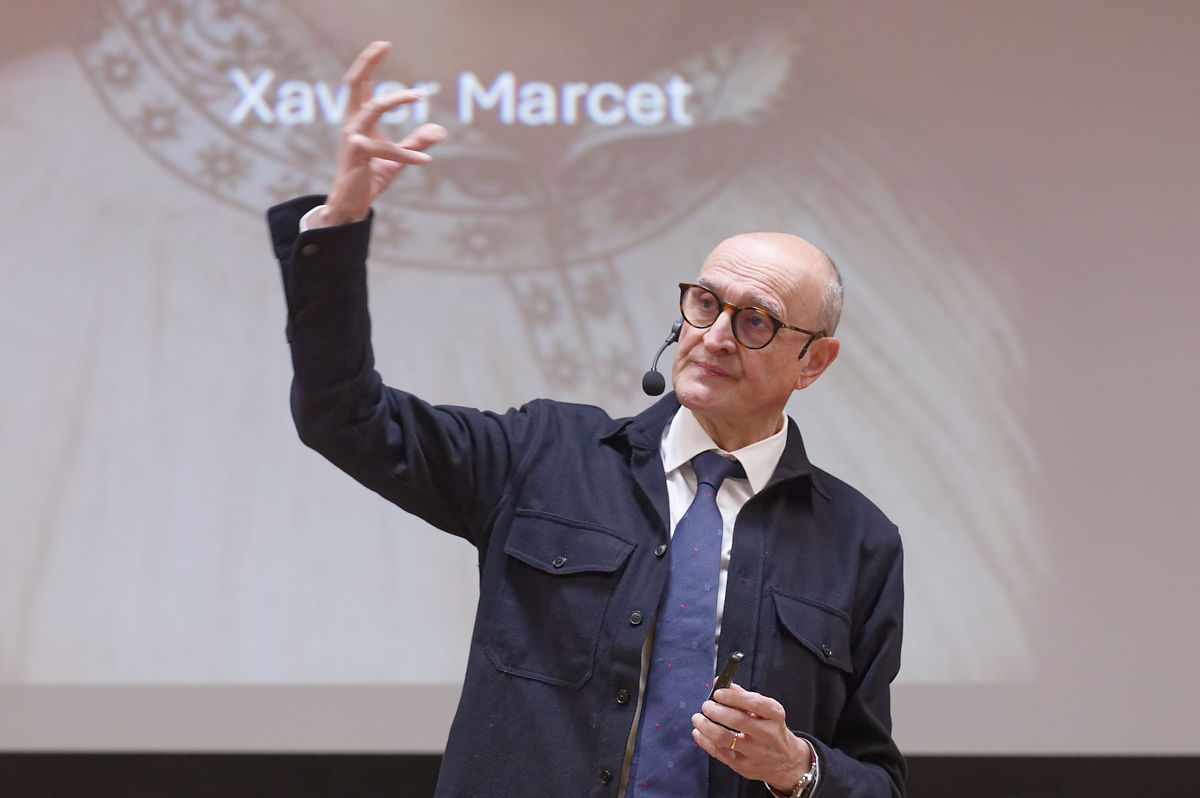
The consultant Xavier Marcet Today, January 27th, he gave a presentation at the University of La Laguna on organizational change and how to manage it in the age of Artificial Intelligence (AI). Invited by the university's administration, the expert argued that processes in the public sector need to be simplified and that a clear vision of the future is essential. "We need less planning and more strategic clarity," he stated.
The CEO of 'Lead to Change', who has supported international companies, institutions, hospitals and universities in their change processes, gave a talk at the Faculty of Economics, Business and Tourism, which was attended by a large audience, including professional managers from the administration as well as from private entities.
“People are the strategy,” he stated clearly, indicating that without the involvement of organizations as a whole, it is difficult to lead change. But he also indicated that every company, public or private, must embrace versatility and reduce rigidity. “If we want to maintain a competitive public system, we will have to be enormously flexible, because otherwise others, the proponents of populism, will come and cut everything,” he asserted. “No one is expendable in the public sector, but there is a great lack of flexibility and adaptation, and this trend will only intensify with AI,” he warned.
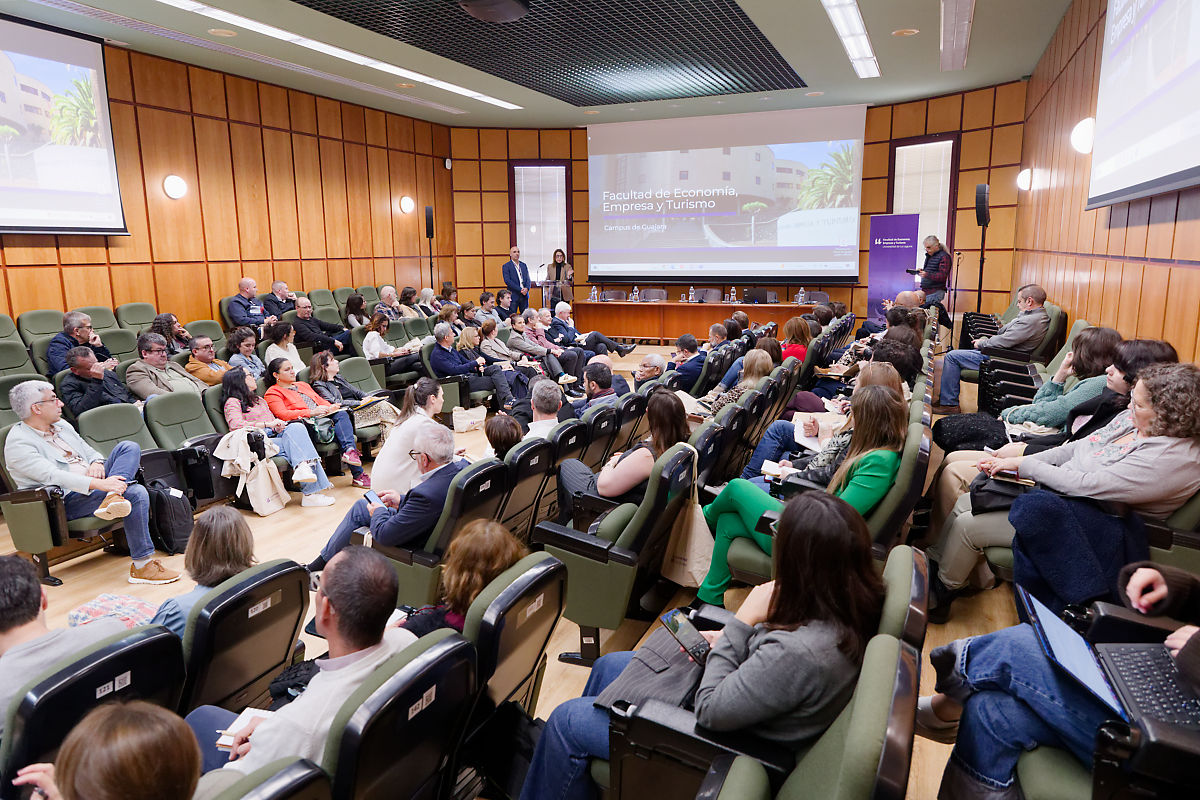 Marcet indicated that the public sector needs a complete overhaul; it cannot simply be a source of lifetime employment. “We need to attract talent and foster a desire to work in the public sector,” he explained. This is compounded by a rapidly changing landscape, with very serious demographic, climate, and geopolitical challenges, “and we cannot address them with ways of doing things that are on the verge of disappearing.”.
The mimetic versus the genuine
The internet has been the world of "the exhibition of mimicry," he stated, contrasting it with the world to come, with AI, in which, in his view, "we will have to think more, so that all thought is not superficial." In fact, he said, in the age of AI, the ability to observe and synthesize information will be as relevant as data management itself.
Who might AI leave behind? Young people, the answer came, because what matters these days is having judgment, experience, and the ability to think—that's what will make the difference. “We're going to need to continue creating value, striking a balance between people and machines, and this isn't the first time it's been done. This context of humanistic management, no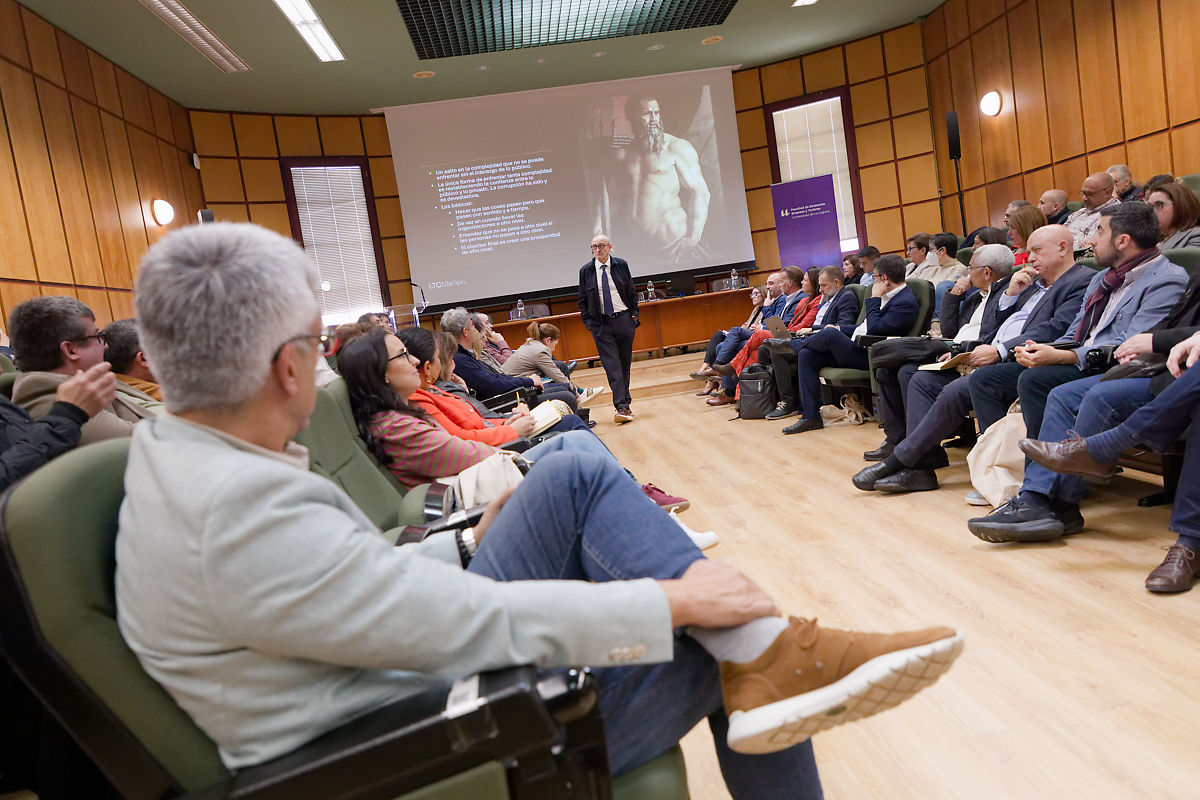 separating people.”.
According to the expert, the solution doesn't lie in technology; "it has more to do with empathy, although without the former, nothing can be done." In his opinion, artificial wisdom, a profoundly human quality, doesn't exist, and hence, he concluded, the crucial role of universities.
AI to add value
Following the consultant's presentation, a round table discussion was held in the same space to assess the impacts of AI in different scenarios. It was moderated by Pedro Ruiz Martínez, executive secretary of the CRUE-TIC sectorial committee. "We need to establish a governance system and a structural adoption if we want to work with AI, because it's essential to frame it as a shared objective, considering what value it will bring and how it will differentiate us," he stated.
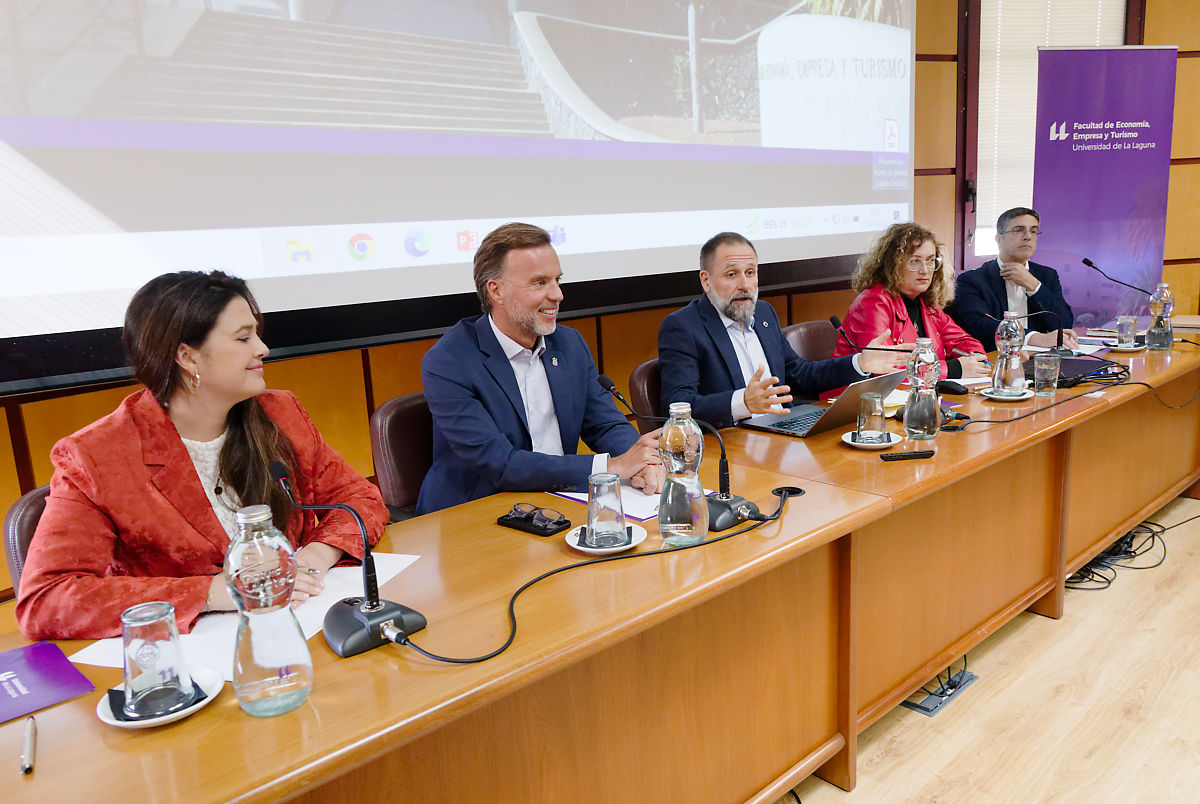
From left to right, Sabina Hernández, Ciro Gutiérrez, Pedro Ruiz, Guadalupe González and Alexis Robles.
Ciro Gutiérrez, Deputy Minister of Universities of the Government of the Canary Islands, added that this is a paradigm shift, and that public universities are the centers of knowledge that must play a fundamental role in leadership in this area.
For her part, Guadalupe González Taño, Director General of Digital Transformation for the Government of the Canary Islands, explained that all administrations are experiencing a severe staffing crisis, as there have been many years in which the system has failed to attract new talent, while management teams have retired and societal demands have increased.
“AI presents a challenge in eliminating repetitive tasks, but the staff shortage is so severe that no jobs will be at risk; however, it may help generate more value.” The official added that the regional government has prioritized areas where automation was less prevalent, coinciding with sectors where end-user needs were most pressing. Nevertheless, she said, “people think AI is a magic wand, when in reality it requires a significant amount of training.”.
Following her, Sabina Hernández, a digital consultant, spoke, explaining that not all business models are the same, and what works for one may not work for another. “Many companies don't even know what processes they have; they aren't defined. That's why, before focusing efforts, it's essential to establish a clear baseline,” the expert stated. “We settle for understanding the corporate culture, but not the people. Before starting a transformation process, it's necessary to map the organizational structure and identify our allies and where the resistance lies.” For this reason, she explained, digital transformation processes last between four and five years, because anything less is impossible.
Alexis Robles, founding partner of Innovaris Consultores, also participated in the roundtable to emphasize that, indeed, we cannot lose sight of the humanistic approach, and it is necessary to have several tailored solutions. He pointed out that we must overcome the resistance to change that often exists in the public sector and that AI will bring about a structural change in the organization's operations.
The art of management
The manager of the academic institution, Lidia Pereira, closed the session by thanking the speaker and the members of the round table for their participation in the event. I completely agree with Xavier.
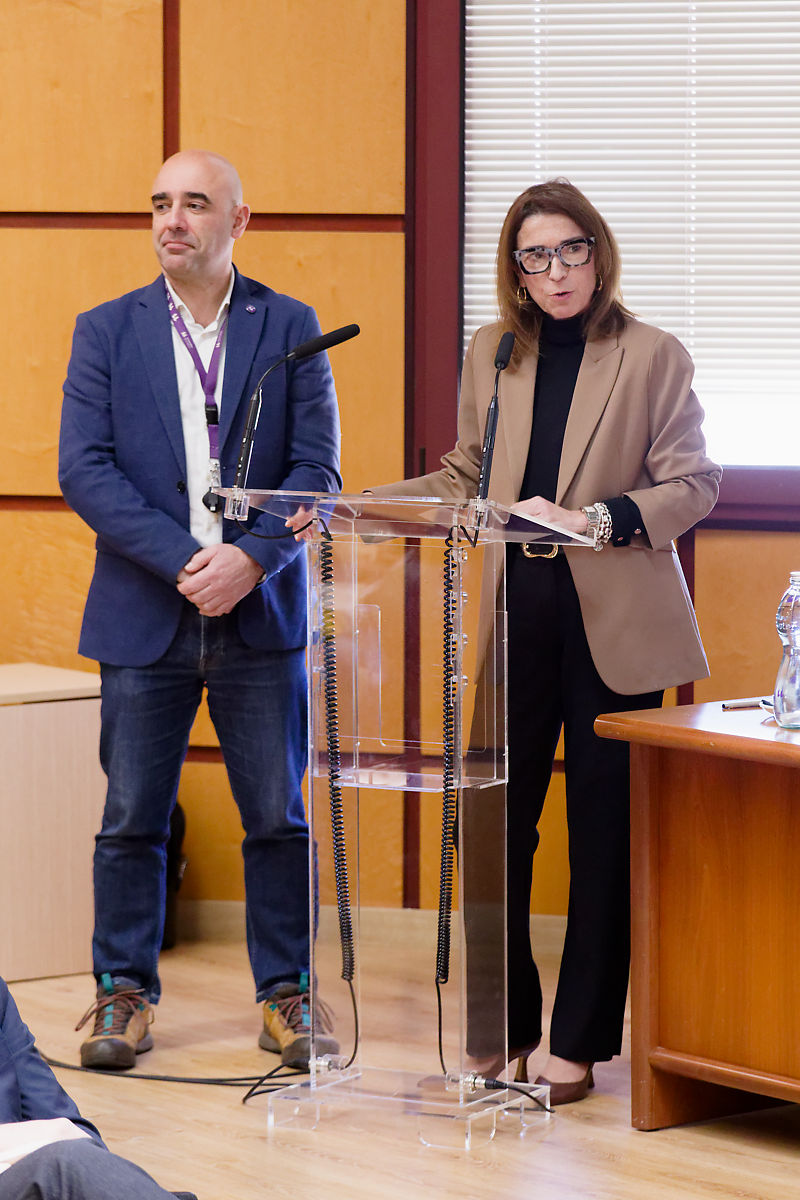
The Vice-Rector for Digital Agenda and the manager of the ULL, during one of the moments of the session.
Marcet pointed out that his vision encourages us to remember the importance of thinking and reasoning, "to understand that the best way to approach the future is to manage the present meaningfully." Pereira reminded us that we face the challenge of becoming "more agile, efficient, effective, and humane institutions, all while being mindful of the necessary application of technology.".
Managing is an art, the manager added, acknowledging that the institution faces many challenges, "but we have professional talent and can demonstrate that there is also the temperament and will to lead them," she continued. "We are faced with the art of combining the efficiency that technology can bring with the limits of service ethics, revitalizing human capabilities with a dual perspective, looking at both the present and the future," and without forgetting that decision-making, she said, requires boldness and courage.

 Spanish
 English
 French