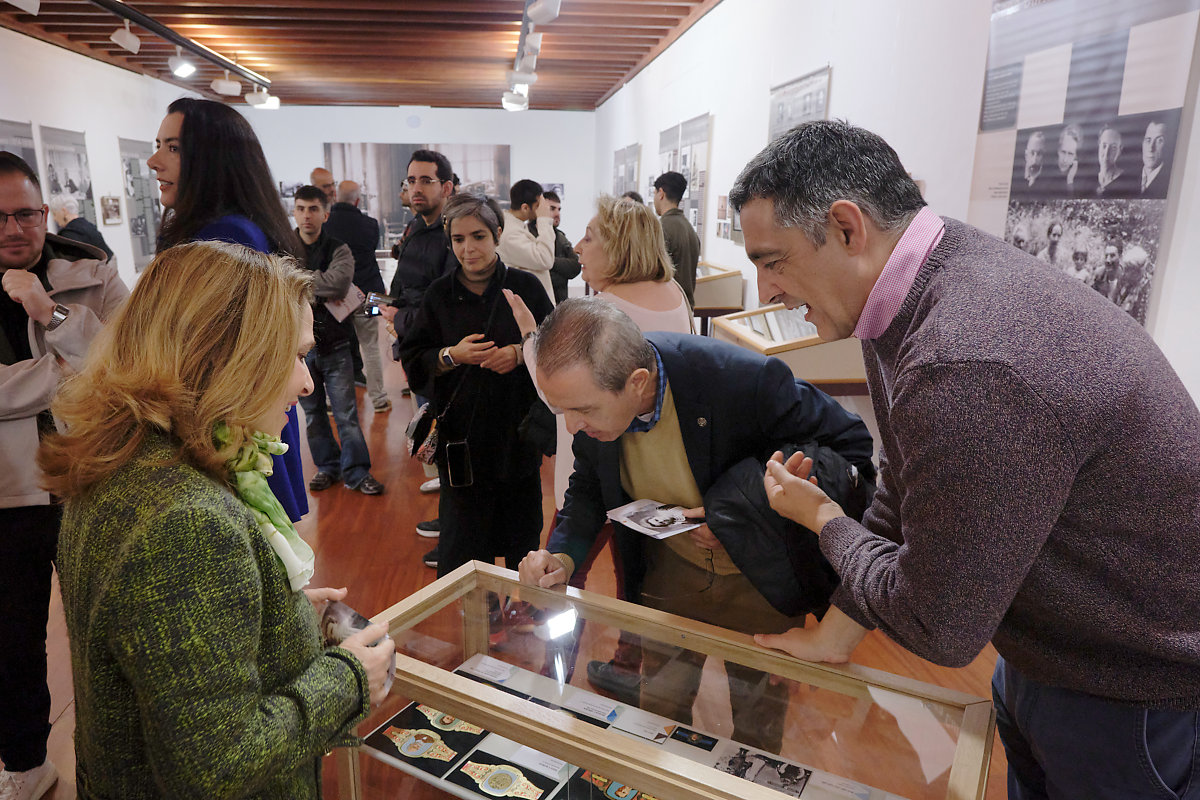
The former Convent of Santo Domingo Guzmán hosted the opening of the educational exhibition today, January 29th. Maria Skłodowska-Curie. A Polish woman in Paris, promoted by the Faculty of Sciences of the University of La Laguna through Cienci@ULL.
As one of the exhibition's curators, Sonnia L. Rivas-Caballero, explained, the exhibition is designed to introduce visitors to the life, scientific career, and legacy of this prominent Polish-French scientist, one of the most influential figures in the history of science. The exhibition offers a chronological and thematic itinerary that spans from her origins and education in Poland to her move to Paris, where she spent most of her career and studied at the Sorbonne University, becoming a key figure in the study of radioactivity.
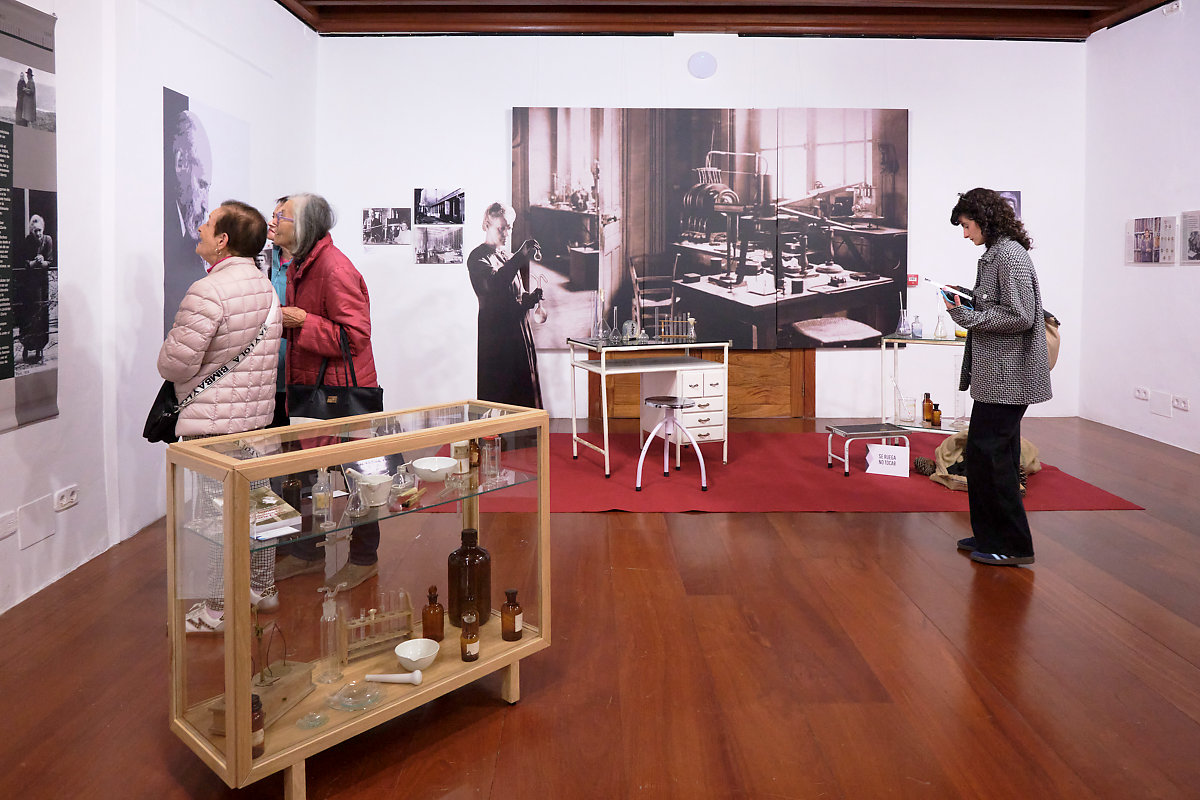 The two exhibition rooms are organized through historical and biographical panels that cover the main milestones of his life and work, accompanied by display cases with documents, laboratory equipment, photographs, original paintings, numismatic and philatelic pieces, as well as explanatory vellums that help to contextualize the different moments addressed.
The opening ceremony was attended by the rector of the academic institution, Francisco García; the mayor of La Laguna, Luis Yeray Gutiérrez; the director of the Canary Islands Agency for Research, Innovation and the Information Society of the Government of the Canary Islands, Javier Franco; the dean of the Faculty of Sciences of the ULL, María del Mar Afonso; the dean of the Official College of Chemists of the Canary Islands, María Candelaria Sánchez; the managing director of the General Foundation of the ULL, Julio Brito, and the director of People of Cajasiete, Daniela Postiglione Ten-Hoever.
During his address, the rector emphasized the importance of a university promoting and bringing exhibitions of this magnitude to the public. He highlighted Marie Curie not only as an exceptional scientist but also for her social and humanitarian commitment, especially during the First World War, when she promoted the use of mobile X-ray units for healthcare. He also underscored her role as a leading female figure in science and as an example for generations of women who have followed her research legacy.
For his part, the mayor of La Laguna highlighted the importance of these kinds of partnerships between the city and the university, which bring historically significant figures closer to the public. He noted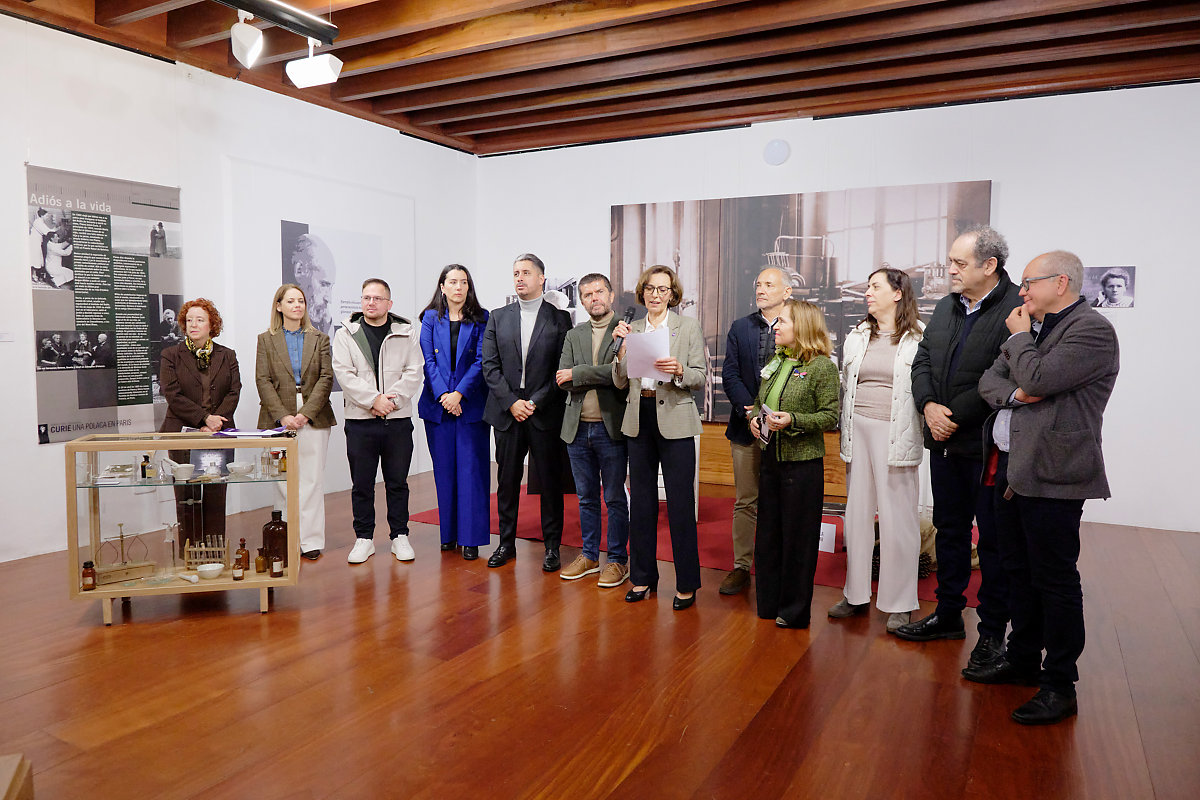 The exhibition offers the opportunity to analyze the figure of Marie Curie not only from a scientific perspective, but also a social one, with special emphasis on her status as an immigrant woman who moved to France to train and seek new opportunities, an experience with clear resonances today.
Among the highlights of the exhibition are the discovery of the elements polonium and radium, and Marie Curie's Nobel Prize in Physics in 1903 and Nobel Prize in Chemistry in 1911. The exhibition also includes a recreation of Marie Curie's laboratory using simple elements that allow visitors to understand the conditions under which she carried out her work. The exhibition also covers her three trips to Spain, during which she visited various cities, gave lectures, and was received in Madrid by the Canarian scientist Blas Cabrera. The exhibition concludes with a section dedicated to the Curie family, the most awarded family in the history of the Nobel Prizes.
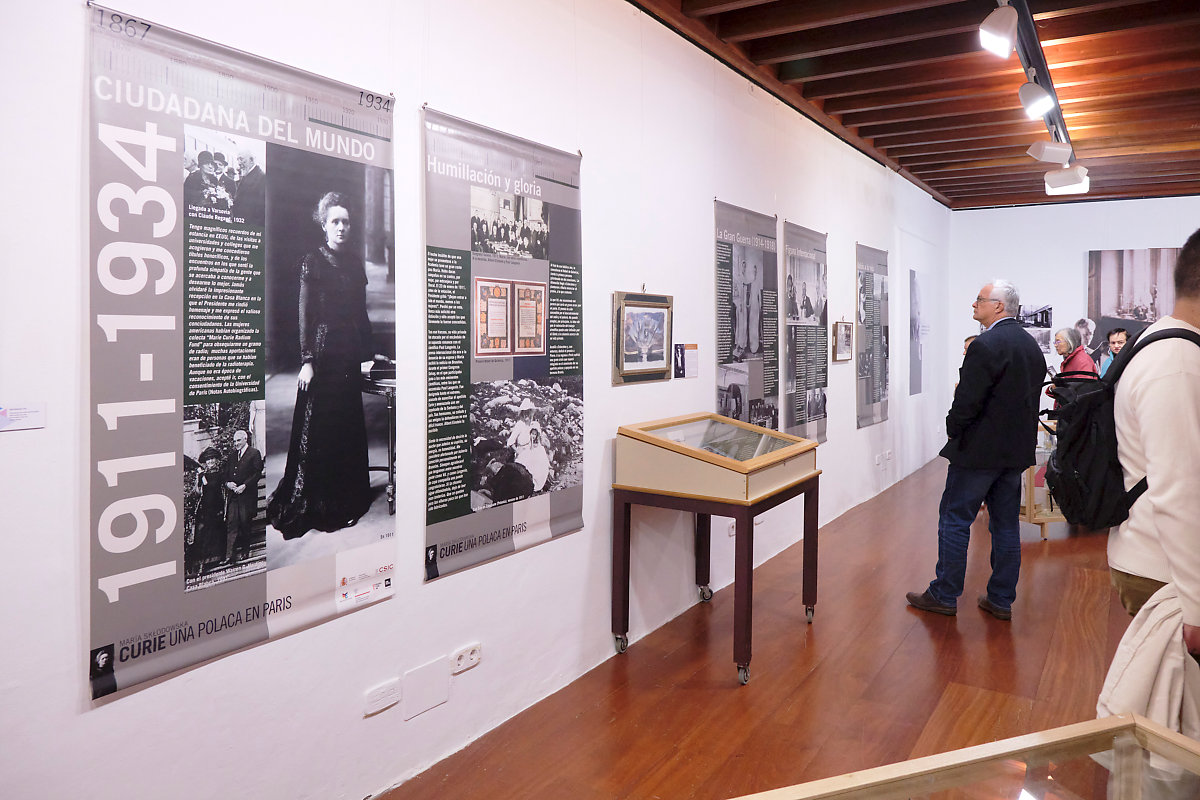 Curator Belén Yuste highlighted that Marie Curie is a figure who connects deeply with the public and that, with this exhibition, they wanted to show the person behind the myth and the two Nobel Prizes, bringing her more human dimension closer.
Following the opening of this traveling exhibition, which is visiting the Canary Islands for the first time, the curators offered a guided tour. During the tour, they emphasized Marie Curie's role as a pioneering woman in a historically male-dominated field, highlighting the difficulties she faced and her contribution to paving the way for future generations of female scientists.
The exhibition is organized in collaboration with the Spanish National Research Council, the embassies of Poland and France, and the Curie Museum in Paris, and will be open until March 4th.

 Spanish
 English
 French