
At a critical juncture for the Spanish education system, marked by the search for effective strategies to combat disinterest and school dropout rates during adolescence, researcher Letecia Marrero Déniz recently presented her doctoral thesis at the University of La Laguna. The thesis, titled “The Learning Climate as a Driver of Well-being in Secondary School Students: Its Relationship with Personal and Contextual Variables,” has received international recognition and offers a solid scientific foundation for transforming classrooms into environments of high motivation and emotional safety.
The thesis, directed by professors from the University of La Laguna Zuleica Ruiz Alfonso y Lidia Esther Santana Vega, It is not limited to theory, but is based on an exhaustive analysis of the perceptions of 929 secondary school students from eight educational centers in Gran Canaria and Lanzarote, focusing on key subjects such as music, Spanish language and English.
One of the fundamental pillars of Marrero Déniz's work is the demonstration that classroom climate is a malleable variable, breaking with the idea that a school's atmosphere is a static or unchangeable trait. Based on Self-Determination Theory, the researcher argues that the learning environment can be intentionally shaped through pedagogical strategies that satisfy the three basic psychological needs of adolescents: autonomy, competence, and social relationships.
The research narrative, structured around three interconnected empirical studies, reveals how these variables directly influence academic and personal development. In the first phase, it was discovered that academic enjoyment is not merely a side effect, but a fundamental mediating emotional mechanism; when a student perceives support and security, their enjoyment increases, which predicts a greater appreciation of tasks and, more importantly, a genuine interest in continuing their education in the future.
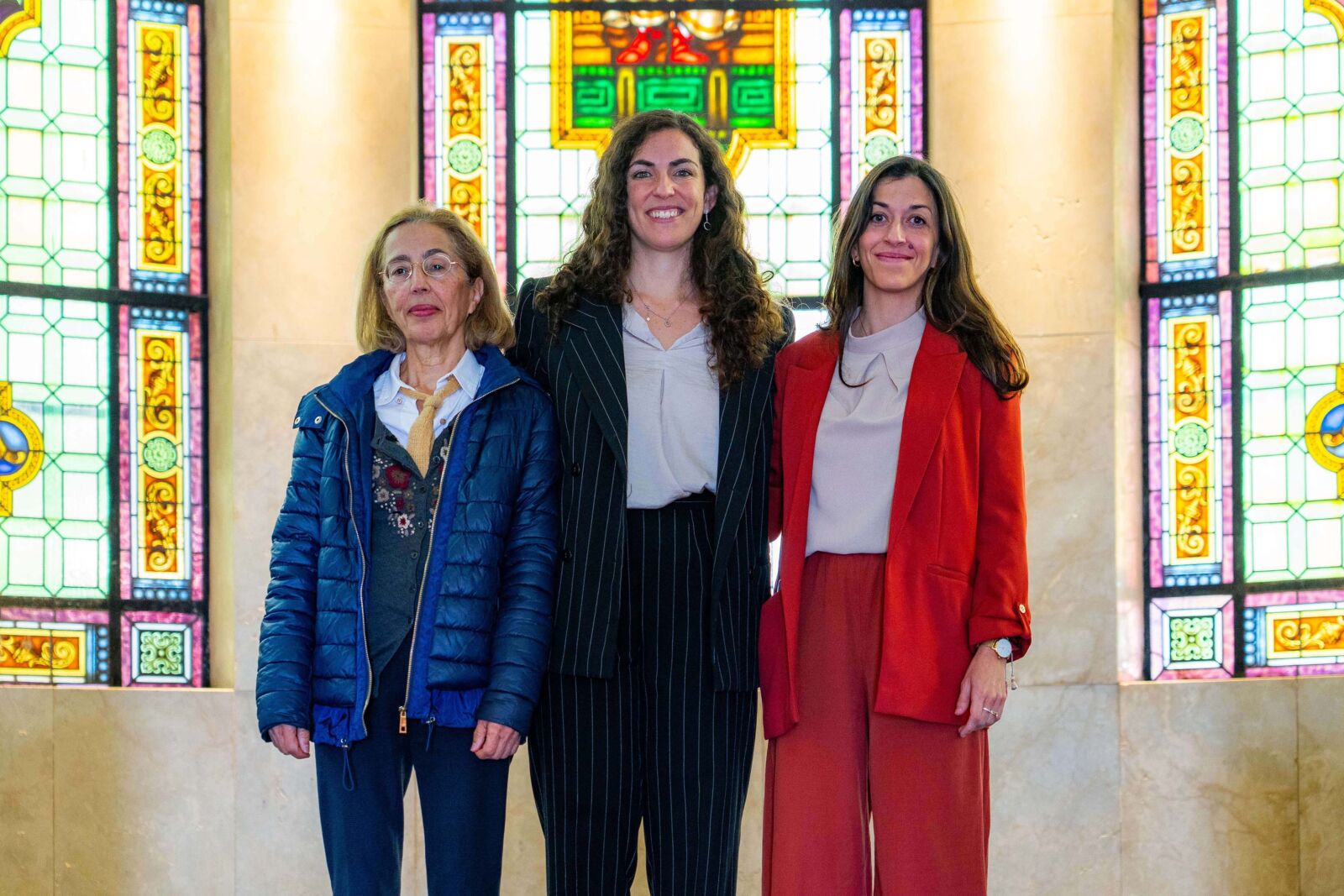
The doctor, in the center of the image, accompanied by her thesis directors, Lidia Santana (left) and Zuleica Ruiz (right).
Subsequently, research demonstrated that perceived supportive climates foster not only motivation, but also harmonious passion and creativity, essential elements for students to flourish during the complex stage of adolescence. Finally, the work validated the effectiveness of the TEAL intervention (Technology-Enhanced Active Learning), which proved that it is possible to improve the social connection of groups and intentionally prevent bullying when the teacher prioritizes the emotional climate over the mere transmission of content.
Marrero Déniz brings to this thesis the perspective of someone who knows the reality of classrooms firsthand, after 12 years of experience as a music teacher. During her defense, she emphasized that teachers spend more than a thousand hours a year with their students, which represents "a thousand hours of opportunity to truly change things in the classroom." For Dr. Marrero Déniz, music, for example, acts as a powerful tool for working on emotional development, allowing adolescents, who are in the midst of constructing their identity, to feel heard, understood, and supported.
The implications of this research for the education system are profound and urgent, according to the researcher. The thesis concludes that schools must evolve toward models that foster autonomy, offer students choices, and establish realistic goals that nurture emotional communication.
Furthermore, the study underscores the need to invest in teacher training programs that equip teachers with the tools to create trusting environments, since, in the researcher's words, if teachers don't believe in their students' potential, the students are unlikely to believe in themselves. Ultimately, this work positions the learning climate as the key psychological context for ensuring that learning "feels good," thus guaranteeing healthy academic and socio-emotional development.
The thesis defense was attended by, as members of the tribunal, María de los Ángeles Axpe, tenured professor in the Department of Didactics and Educational Research at the University of La Laguna, Carolina Fernandes, from the Institute of Education of the University of Lisbon and Miguel Ángel Santos Guerra, Professor Emeritus of the University of Malaga.

 Spanish
 English
 French