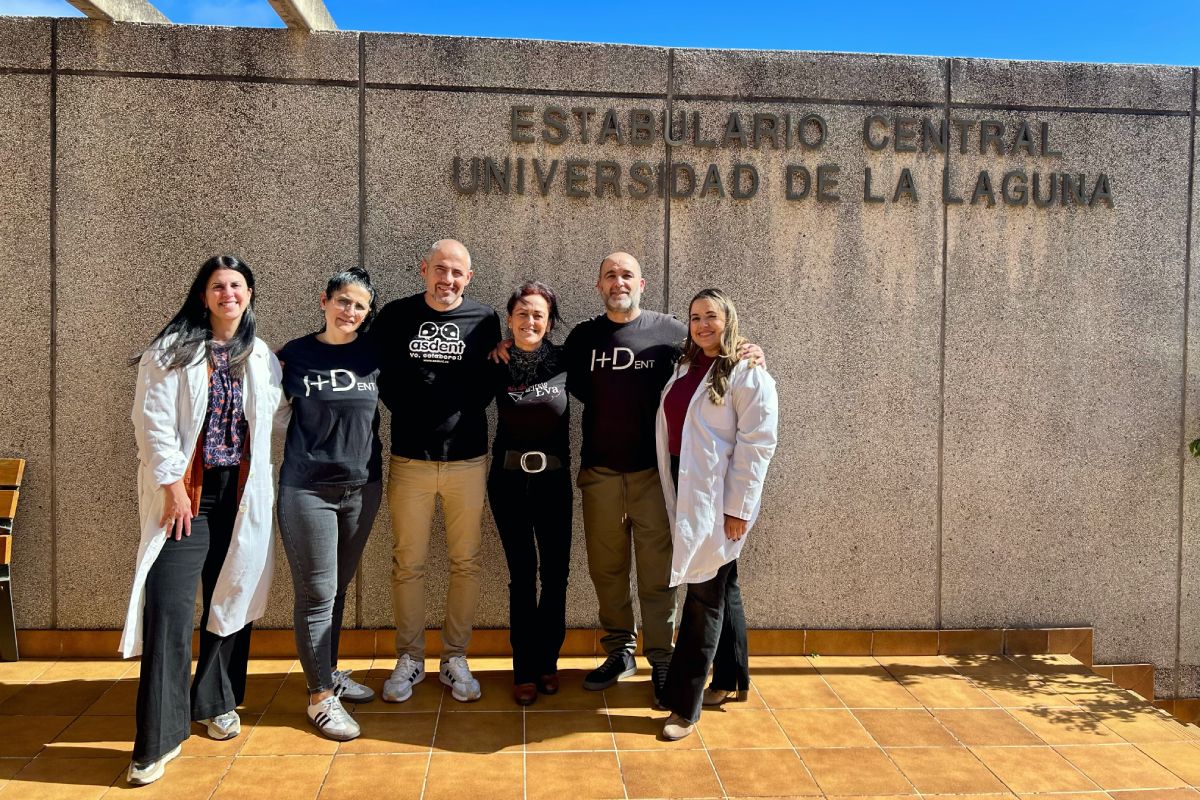
He Animal Shelter The University of La Laguna recently received a visit from the Spanish Association for Dent's Disease (ASDENT) along with a family affected by this ultra-rare kidney disease, diagnosed in approximately 250 people worldwide and with only four known cases in the Canary Islands. It is a hereditary renal tubulopathy linked to the X chromosome, so it mainly affects men, while women are usually carriers without showing symptoms.
It is characterized by excessive loss of low molecular weight proteins in the urine, hypercalciuria (high calcium excretion in the urine), nephrolithiasis (formation of kidney stones), nephrocalcinosis (accumulation of calcium salts in the kidney tissue), and, in some cases, rickets. It usually appears in childhood or adolescence and can progress to end-stage renal disease in adulthood. Currently, there is no cure, and available therapies focus on managing symptoms.
According to the researcher Elena Ramos, Researchers from the Nutrition and Food Science Department at the University of La Laguna and the Nuestra Señora de Candelaria University Hospital (HUNSC) have determined that the genetic cause of this disease is mutations in the CLCN5 gene, which encodes the CIC-5 protein, essential for the proper functioning of the proximal tubule of the kidney. “As with most rare diseases, the lack of specific treatment has made the development of experimental models essential to testing new therapeutic strategies,” they point out.
With this objective, the research group has developed cell models and a unique animal model: a knock-in mouse that reproduces a specific mutation identified in a child with a particularly severe form of the disease. Unlike other models, this mouse expresses the mutated protein, allowing for the study of potential drug treatments. The animal thus reproduces the main symptoms of Dent disease, such as high proteinuria, calcium and phosphorus loss, and polyuria, making it a key tool for preclinical research.
Visit
During the visit to the Animal Facility-Assisted Housing facilities, belonging to the General Research Support Service (SEGAIRepresentatives from the Spanish Association for Dent's Disease and affected family members of the academic institution were able to learn about the treatment of these animals. The mice are housed in metabolic cages that allow for the precise collection and analysis of urine samples.
The data collected is recorded progressively throughout the animal's life, since the disease, as in humans, manifests gradually. Treatments begin to be administered from three months of age, the point at which the first clinical signs have been observed.
In recent years, the team has focused on repurposing drugs already approved for human use to accelerate their potential clinical application. To date, three promising molecules have been identified that have significantly reduced protein loss in urine and improved other disease parameters. These include sodium 4-phenylbutyrate, tauroursodeoxycholic acid, and 3-indolepropionic acid, the latter being the subject of a recent study that received an award at the National Congress of the Spanish Association of Pediatric Nephrology.
Eva Giménez, mother of an affected child and president of ASDENT, recalls that when her son was diagnosed, “there was absolutely nothing.” After the diagnosis at Vall d'Hebron Hospital, the genetic sample was sent to Tenerife, where the disease was confirmed. “It was then that they proposed starting a research project to understand the mechanisms of the disease and test specific drugs for my son's mutation. It has been 14 years of work and constant struggle,” she explains. During this time, Giménez has raised funds through charity races, events, and campaigns.
Furthermore, the president of the association expresses her optimism regarding the positive results obtained from studies with mice in slowing the progression of the disease. “We know it’s genetic and that it can’t be cured, but today we can talk about slowing it down, something unthinkable 10 years ago,” she maintains. For her, bringing other families to the laboratory is a fundamental experience: “The best decision I’ve made has been to bring other families so they can see with their own eyes what is being done and how it’s being done,” she affirms.
This line of research is supported and funded by ASDENT, the Canary Islands Foundation for Health Research (FIISC), the University of La Laguna, the Carlos III Health Institute (ISCIII), the Dent Disease Foundation (DDF) of the United States, and the Canary Islands Agency for Research, Innovation and the Information Society (ACIISI) in collaboration with the European Social Fund Plus.
Video about this investigation:

 Spanish
 English
 French