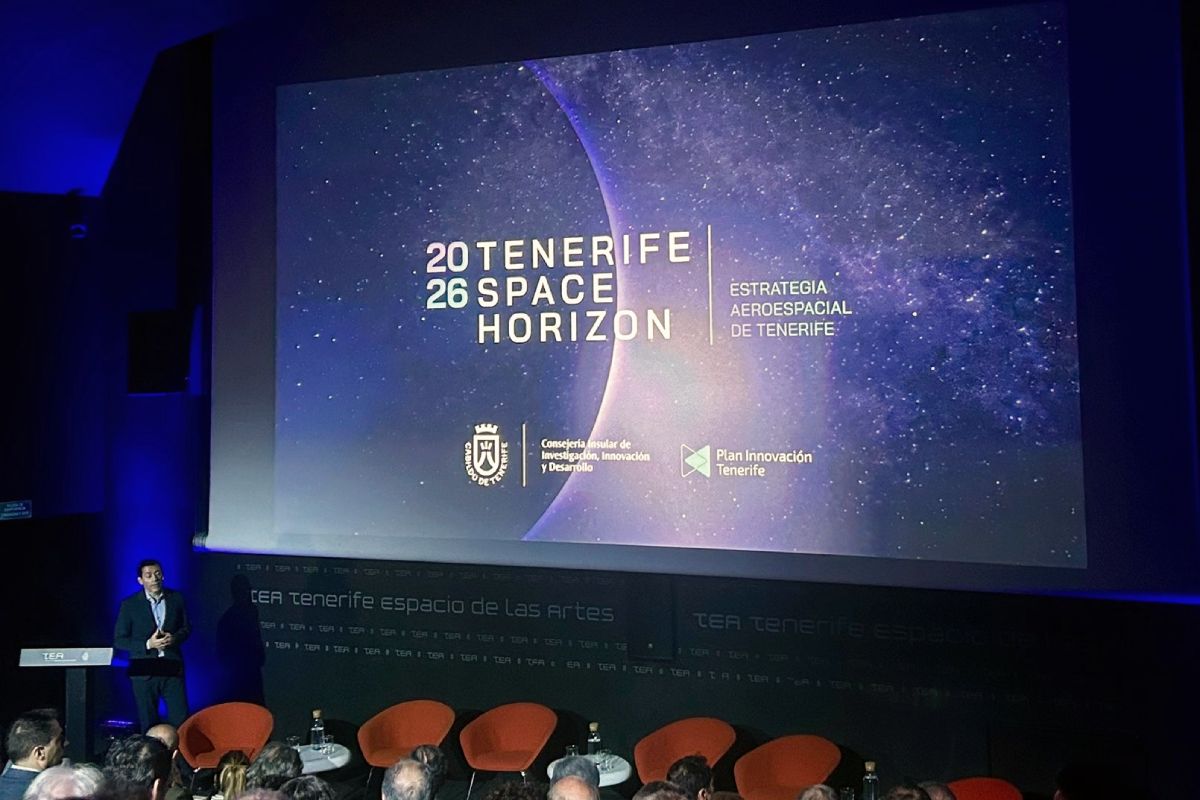
Last Thursday, January 29, the Tenerife Island Council presented the Tenerife Space Horizon (TSH) strategy at the Tenerife Espacio de las Artes (TEA). This roadmap positions the island as a leading Atlantic hub in the European space sector, with the University of La Laguna playing a strategic role in research, knowledge transfer, and the training of specialized talent.
Aligned with the island corporation's Innovation Master Plan, the TSH (Technological Space Strategy) was launched amidst a profound transformation of the aerospace sector, marked by the rise of New Space, where space is consolidating its position as an engine of economic development, sustainability, and security. With a five-year timeframe (2025–2029), the strategy outlines a coordinated set of actions focused on technological development, the creation of skilled jobs, and knowledge transfer.
Within this framework, the University of La Laguna is integrated as a key player in several strategic actions of the project. The Vice-Rector for Innovation and Transfer, Antonio Aparicio, highlighted the role of the academic institution as a “fundamental interlocutor in everything related to research, knowledge, and its application.” He also noted that the university “is naturally associated with space and astrophysics” and that, together with the Canary Islands Institute of Astrophysics, “the University of La Laguna must be involved” in these types of initiatives.
One of the fundamental aspects of the university's participation is the Postgraduate Program in Aerospace Technologies, developed jointly with the Institute of Astrophysics of the Canary Islands (IAC) through the Talentum CIDEI program.
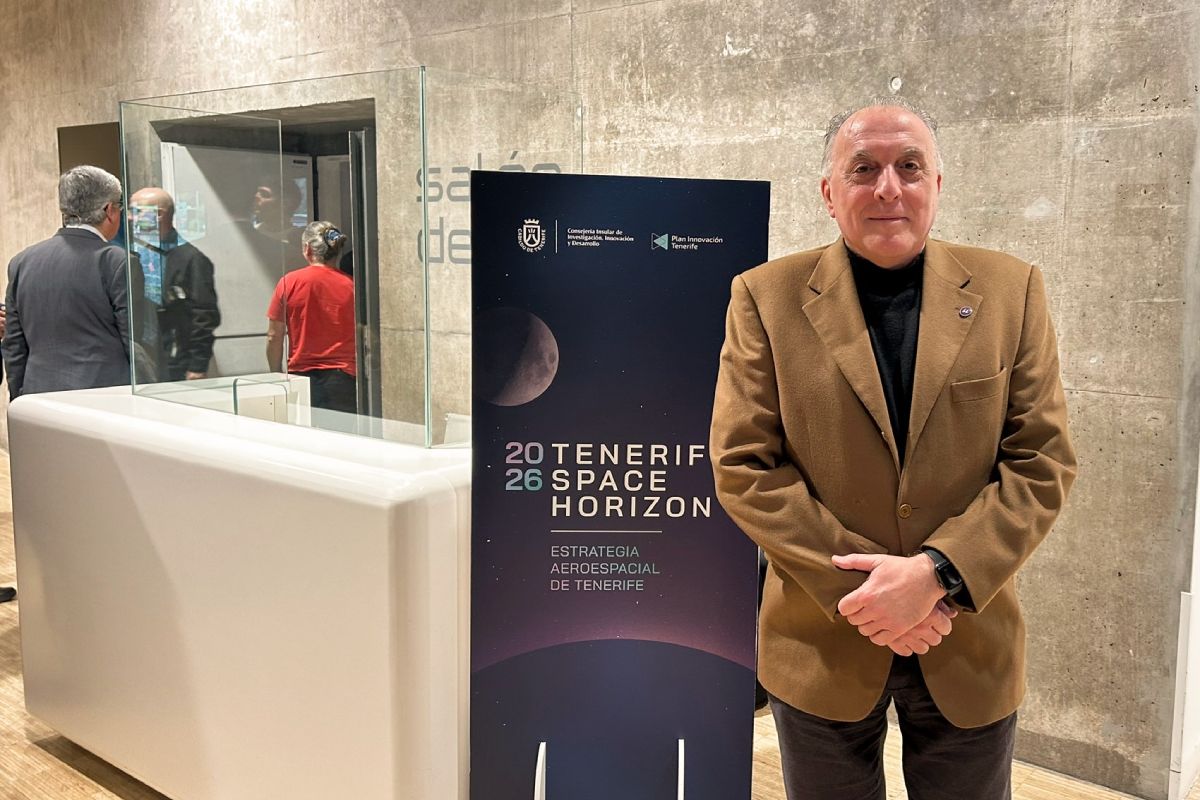
Vice-Rector Antonio Aparicio during the presentation.
In this regard, Juan José Martínez, Councilor for Innovation, Research, and Development of the Tenerife Island Council, explained that they are working on designing specialized training programs to "generate the specialists we need in the sector, not only as a source of graduates from the University of La Laguna, but also with specific training adapted to the different areas of the aerospace sector." This training program, focused on optical instrumentation, space systems, and mission management, is key to ensuring the availability of highly qualified technical and scientific professionals.
These actions are complemented by the creation of the Tenerife Space Horizon Chair, focused on teaching, research and scientific dissemination in space technologies, as well as the Tenerife Space Mobility scholarship program, designed to promote the international mobility of Canary Island students and researchers to ESA centers, the Spanish Space Agency and European universities.
Furthermore, the University of La Laguna is participating in the CELESTE initiative (Cutting Edge Leap to Excellence in Space and Optics Technologies), which aims to create an internationally renowned Center of Excellence in Optical and Space Technologies. This center will promote the development of advanced optical instrumentation, microelectronics, integrated photonics, adaptive optics with artificial intelligence, and quantum communications between space and Earth, connecting scientific research with applied innovation and industrial transfer.
The academic institution is also part of the Atlantic Data Lab, a joint IAC-ITER-ULL center focused on applying artificial intelligence, advanced analytics, and Big Data to satellite data, with the aim of developing products and services for strategic sectors such as the environment, agriculture, and emergency management. In addition to these initiatives, there is a funding program for aerospace technology transfer, designed to promote joint projects between scientific institutions and companies, accelerate the maturation of space technologies until their commercial exploitation, and strengthen collaboration between the university and the productive sector.
With the involvement of the University of La Laguna in research, training, and technology transfer projects, the Tenerife Space Horizon strategy reinforces the island's position as a key hub for New Space in Europe and the Mid-Atlantic. The combination of talent, innovation, and public-private collaboration opens the door to new scientific, industrial, and educational opportunities, consolidating Tenerife as an international leader in aerospace development.

 Spanish
 English
 French