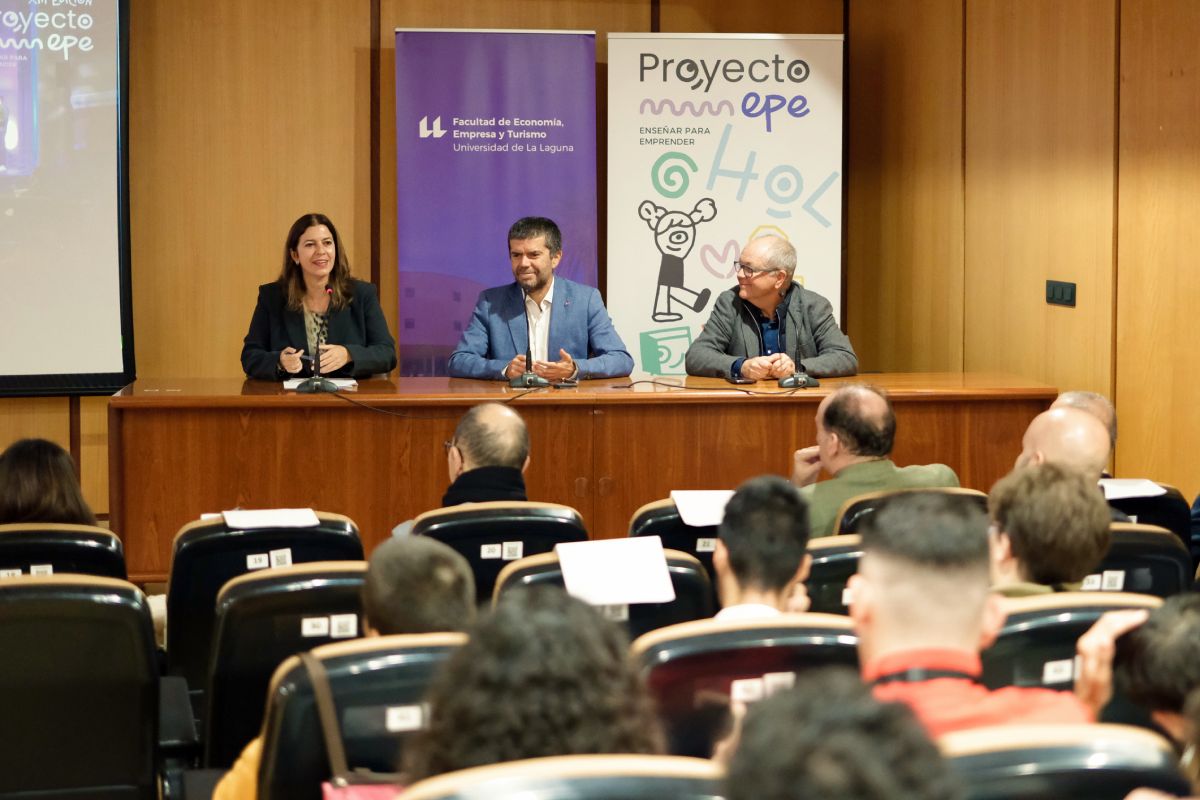
The thirteenth edition of the educational project “Teaching to Be an Entrepreneur” was presented today, Tuesday, February 10, at the Faculty of Economics, Business, and Tourism of the University of La Laguna. At the event, the university's rector, Francisco J. García Rodríguez, was accompanied by the Deputy Minister of Employment of the Canary Islands Government, Isabel León Villalobos, and by Julio Brito Santana, manager of the General Foundation of the University of La Laguna, who emphasized the importance of promoting entrepreneurship from an early age and the role of the public university as an agent of social transformation.
During the meeting, it was highlighted that “Teaching to Entrepreneur” has become a key tool for developing entrepreneurial skills in the educational field, promoting values such as teamwork, creativity, responsibility and equal opportunities, and contributing to improving the comprehensive training and future employability of students.
The General Foundation of the University of La Laguna highlighted the sustained growth of the project throughout its thirteen editions, reflected in the increase in participating centers and in the diversity of the students involved, which demonstrates the commitment of the Canary Islands institutions to an education connected with the social and economic reality of the archipelago.
Statements
The Rector of the University of La Laguna expressed his satisfaction with the launch of this new edition of the project, an initiative of which the institution is particularly proud and whose track record attests to its consolidation and success. In this regard, he highlighted the impact achieved, with nearly 15,000 participating students, more than 1,400 teachers involved, and the creation of over 800 school cooperatives.
He also emphasized that the project promotes a broad conception of entrepreneurship, which goes beyond the creation of companies and focuses on the development of attitudes and skills such as initiative, creativity, teamwork and the ability to transform reality, skills that are increasingly in demand by the productive fabric and the labor market.
The rector also emphasized the project's ethical and social focus, based on cooperative principles, as well as its practical, real-world nature, which allows students to create and present real products and services in public spaces. Finally, he highlighted the importance of networking and collaboration between the university, schools, and public administrations as key elements for building a better future through education.
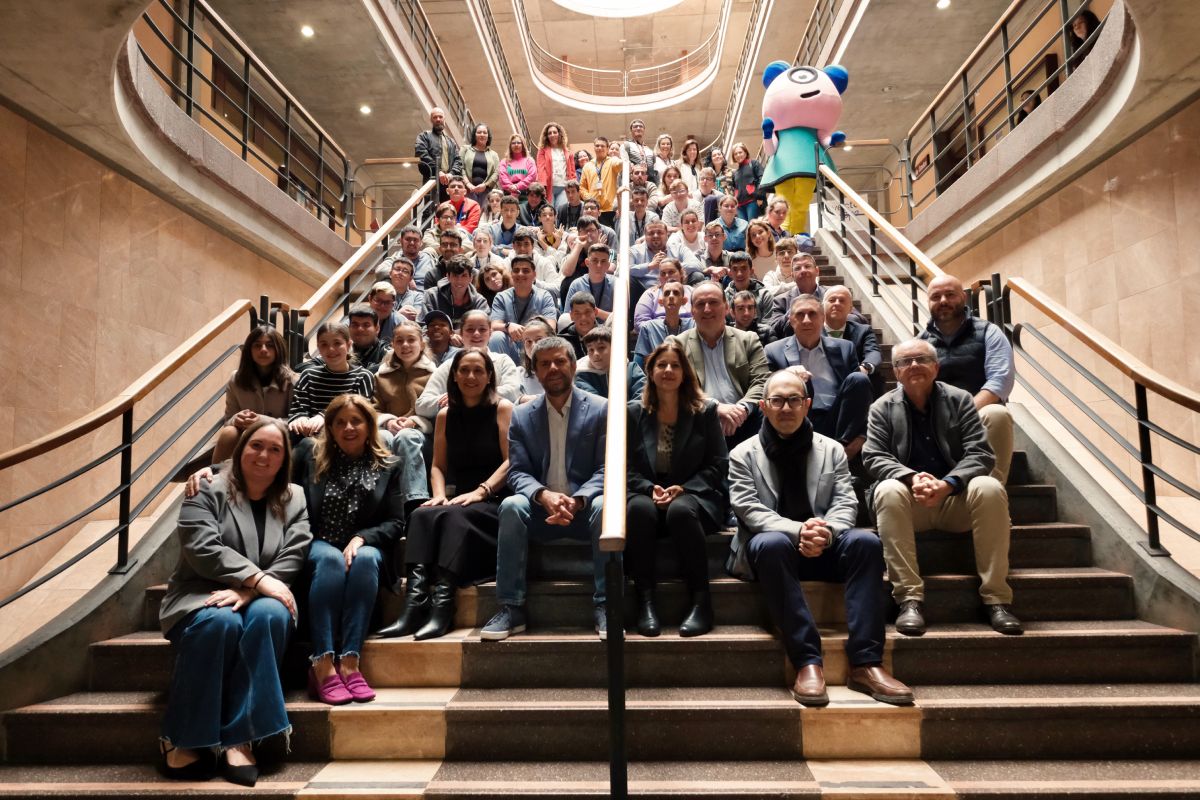 For her part, the Deputy Minister of Employment for the Canary Islands Government highlighted the strategic role of this initiative for the future development of the islands' productive sector, noting that it is a training program designed to stimulate the personal, professional, and social skills of the students. In this context, she explained that the project allows participants to simulate the creation of cooperatives and develop products or services in a real-world environment.
León added that this initiative aims to foster an entrepreneurial spirit and culture from an early age, encompassing all levels of the education system, from Early Childhood and Primary Education to Secondary Education, Special Education Classrooms, Transition to Adult Life (TVA), Basic and Adapted Vocational Training, and Special Educational Needs (NEAE) +21. He also noted that this project to promote cooperativism is part of the Social Economy initiatives promoted by the Canary Islands Employment Service.
Next, the manager of the General Foundation of the University of La Laguna, Julio Brito Santana, presented the main indicators and lines of action of this new edition of the project, highlighting its inclusive nature and its implementation in all educational stages.
Shared experiences
The event concluded with a participation space with students and teachers from educational centers such as IES San Matías, Colegio Echeyde II, CEIP Camino Largo, IES María Rosa Alonso and IES Domingo Pérez Minik, who shared experiences related to the creation of school cooperatives and showed the prototypes of products developed during the course.
The “Teaching to Undertake” (EPE) project is an educational initiative implemented by the University Employment Agency of the General Foundation of the University of La Laguna, financed by the Canary Islands Employment Service (SCE), an agency attached to the Ministry of Tourism and Employment of the Government of the Canary Islands, and developed in collaboration with the Ministry of Education, Vocational Training, Physical Activity and Sports.
This 13th edition involves 125 educational centers in the province of Santa Cruz de Tenerife, representing the stages of Early Childhood Education, Primary Education, Compulsory Secondary Education, Basic and Adapted Vocational Training, Special Education Classrooms, and Special Educational Needs (SEN) +21. By island, participation is distributed as follows: 100 centers in Tenerife, 10 in La Palma, 10 in El Hierro, and 5 in La Gomera. Of these, 40 centers are implementing the project with students with disabilities, reinforcing the initiative's strong inclusive nature.
Since its inception in 2010, the project has promoted the creation of 766 school cooperatives in the province of Santa Cruz de Tenerife, with the participation of 14,885 students, the involvement of 1,380 teachers and a total of 407 educational centers, far exceeding initial expectations.
New features
Among the main new features of this edition is the presentation of methacrylate plaques to participating schools as a means of identification and recognition of their commitment to entrepreneurial education. Furthermore, the working materials have been adapted for easy reading in collaboration with the Spanish Easy Reading Association, promoting accessibility and active student participation.
This edition also strengthens collaboration with local entities, incorporating new alliances such as the CD Tenerife Foundation and the CB Canarias Foundation, which join already established collaborating entities such as Cajasiete, Loro Parque Foundation or SAT Fast.

 Spanish
 English
 French