What will the oceans of the future be like? In the second decade of the 21st century, scientists began to warn about ocean acidification, that is, the decrease in the pH of the sea caused mainly by the absorption of carbon dioxide (CO₂) from the atmosphere.
In 2015, José Carlos Hernández Pérez, Professor of Zoology at the University of La Laguna, and Celso Agustín Hernández Díaz, a researcher at the same institution, discovered that natural CO₂ emanations exist south of La Palma, acidifying the waters. This phenomenon has created a unique natural laboratory for studying the effects of acidification on the marine environment. Marine Observatory for Climate Change (OMACC). “Later we realized that much of the island’s west coast is dotted with these natural acidification enclaves,” explains Hernández Pérez.
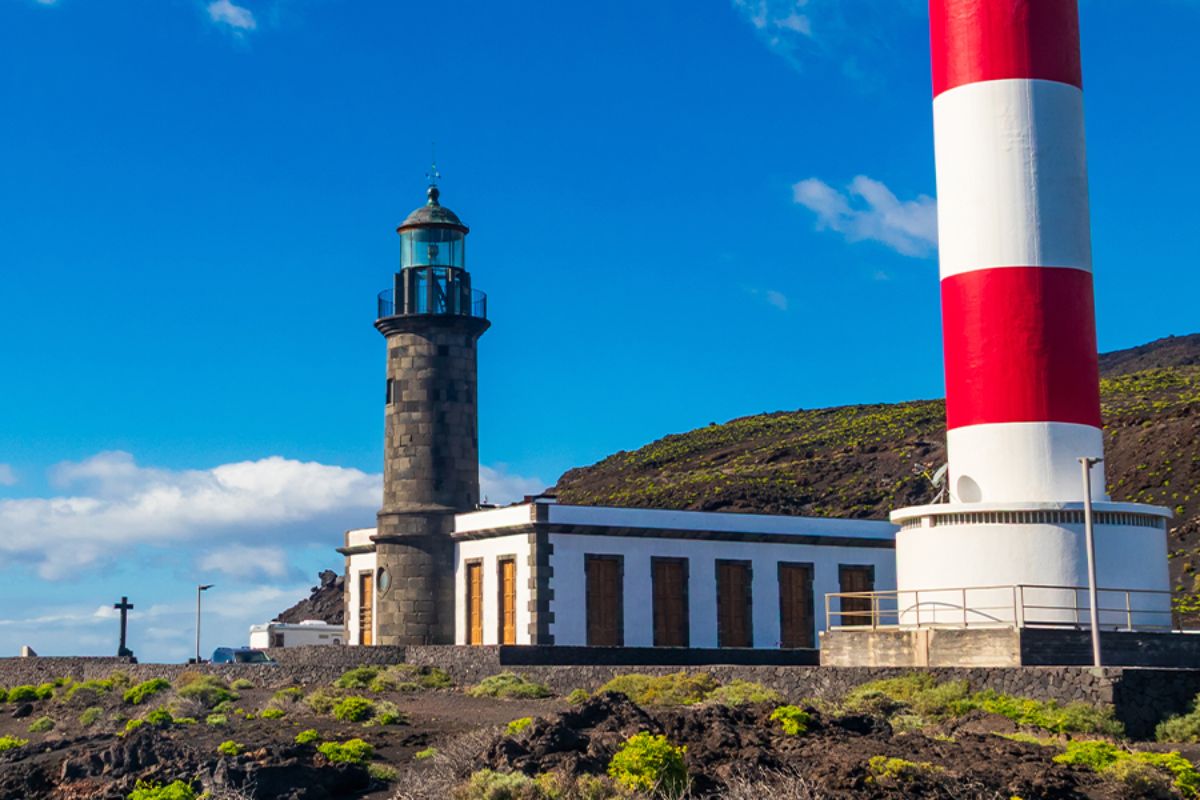
Thus began several lines of research and collaboration between scientific institutions to develop preliminary studies on the chemical characteristics of the water in this area and its effects on the organisms that inhabit it. This culminated in 2023 with the opening of the Observatory's infrastructure, following a landmark agreement between the University of La Laguna, the University of Las Palmas de Gran Canaria (ULPGC), the Fuencaliente City Council, and the Port Authority of Santa Cruz de Tenerife. The facility was made possible by the renovation of common areas of the Fuencaliente Lighthouse, which now houses not only an interpretation center for educational purposes, but also a marine laboratory for national and international research groups interested in analyzing in situ the effects of these processes on the marine ecosystem of La Palma.
Since the beginning of the research, the lines developed at this research center have received funding for five competitive projects that have resulted in two doctoral theses, 22 top-level scientific articles and two globally relevant reviews on ocean acidification.
The work carried out at the OMACC involves staff from two groups at the University of La Laguna: on the one hand, the Marine Ecology group (ECOMAR), led by José Carlos Hernández Pérez, with the collaboration of Sara González Delgado —a permanent member of the observatory— and Beatriz Alfonso Hernández; On the other hand, the Marine Botany group (BOTMAR-ULL), led by Professor Marta Sansón Acedo, which participates primarily through Carlos Sangil Hernández —a permanent member of OMACC— and Celso Agustín Hernández Díaz. The project also has the collaboration of the Professor of Plant Physiology Águeda González Rodríguez.
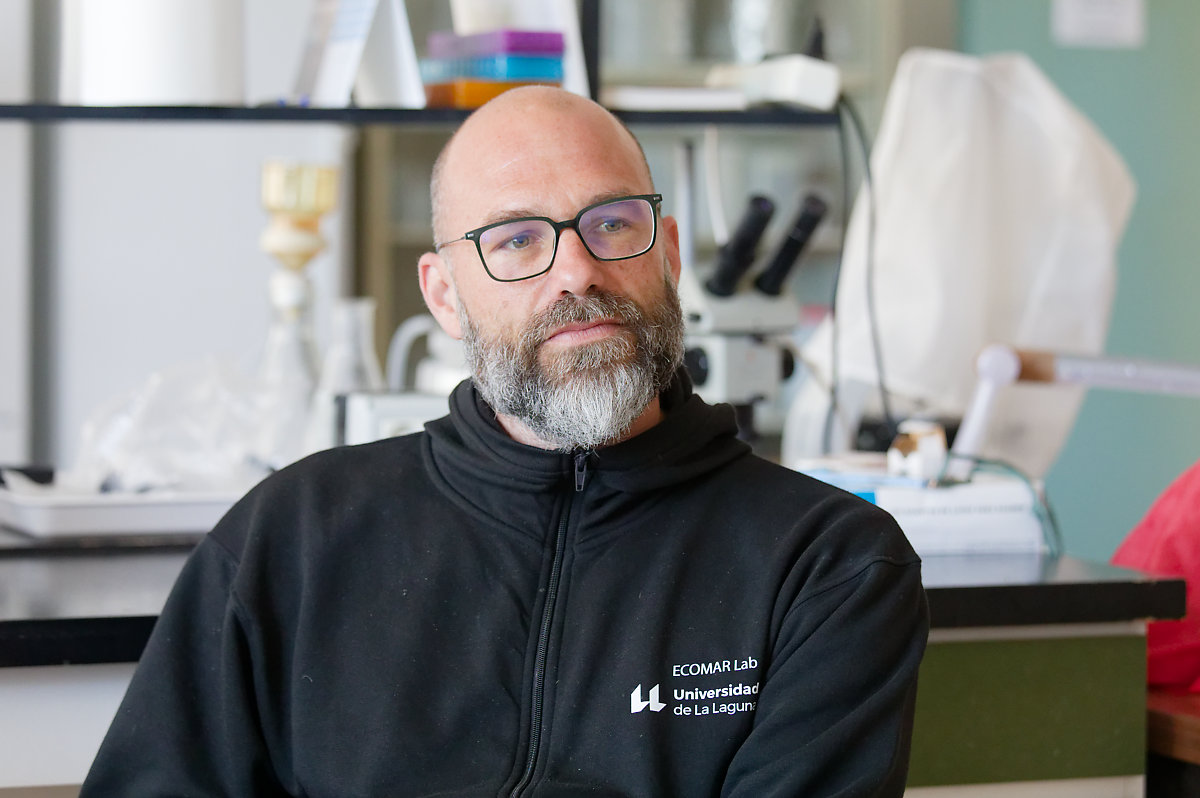
José Carlos Hernández Pérez. Photo: Emeterio Suárez.
An exceptional location
Ocean acidification is a chemical process characterized by the progressive decrease in the pH of the water, which in this case is due to underwater seepage of groundwater altered by CO₂ emissions of volcanic origin on the island. Experts point out that this phenomenon replicates, on a local scale, a similar effect to that which climate change will cause in the oceans as a consequence of the increased CO₂ concentrations generated by human activity. This alteration has a decisive impact on marine ecosystems, as it transforms the living conditions of the organisms that inhabit them: it can lead to the disappearance of some species, but also favor the proliferation of others better adapted to the new circumstances.
However, in addition to studying acidification, “La Palma is an exceptional place due to its location, as it borders more tropical ecosystems and acts as a beacon for observing arriving species, becoming a sentinel of the tropicalization of the Canary Islands' waters,” explains Hernández Pérez. Because it is a fairly protected area, its biodiversity is in optimal condition, making it a model site compared to other areas of the Canary Islands. Furthermore, having a marine reserve is essential for studying how ecosystems function without the pressure of human activity.
The island also exhibits underwater volcanism, not limited to CO₂ emissions. “It has been confirmed that some lava flows from Tajogaite reached the sea, and currently, several teams are investigating the colonization of these new spaces and environments,” explains Hernández Pérez. He adds: “This process resembles the initial formation of an island, similar to how the Canary Islands' ecosystems originated, and allows us to analyze the area's evolution in detail.”.
Currently, the research team is analyzing how some marine organisms evolve and adapt to ocean acidification. “Through epigenetic and population genetics studies, we investigate which genes are activated or deactivated depending on environmental stress conditions,” says Hernández Pérez. “Even in very close proximity, with less than 50 meters between acidified and control zones, we observe organisms with distinct adaptations, which allows us to redefine our understanding of evolutionary processes in these natural environments,” the biologist points out.
Different adaptation strategies
This line of research is part of one of the most ambitious projects currently underway at the OMACC and is closely linked to the work of researcher Sara González Delgado. Her doctoral thesis was developed from studies conducted at this site as a member of the ECOMAR group at the University of La Laguna.
Currently, González Delgado is a Juan de la Cierva postdoctoral fellow at the University of Barcelona, an institution that, along with the University of La Laguna, is participating in a national research project focused on studying the adaptive capacities of sea urchins and marine vertebrates inhabiting these waters under conditions of environmental stress. The researcher points out that, despite this context, some species exhibit specific adaptation mechanisms, the analysis of which allows us to understand which factors contribute, directly or indirectly, to their survival.
During her doctoral thesis, the researcher initially focused on the chemical characterization of the waters in the study area, in collaboration with the University of Las Palmas de Gran Canaria (ULPGC). Subsequently, the work shifted to the analysis of marine communities, such as invertebrates, fish, and algae, and finally delved into the genetic study of the adaptation strategies of these species.
Cutting-edge research in marine chemistry and botany
From the field of Marine Botany, the BOTMAR-ULL group conducts research aimed at characterizing the algal communities that inhabit the ocean and understanding the mechanisms they use to cope with the impact of ocean acidification. More specifically, these studies, which are part of the project Environmental gradients as natural laboratories to understand the future and dynamics of marine benthic communities, They analyze how acidification processes affect the life cycles of macroalgae and their calcification phases, an evolutionary innovation that, as Carlos Sangil Hernández explains, is closely linked to the acidification of waters.
The researcher emphasizes that a natural laboratory like the one offered by this research site presents an exceptional opportunity to advance these lines of work, by reproducing conditions similar to those predicted for the oceans of the future. This allows for the collection of observational evidence that can later be replicated in the laboratory in order to reproduce, confirm, and compare the conclusions reached.
Furthermore, the marine botany researcher emphasizes that this new laboratory represents a highly relevant site for research. in situ, Thanks to the year-round accessibility to these CO₂ upwelling zones, “from a scientific point of view, the impact of an observatory like this is enormous,” notes Sangil Hernández, since ocean acidification is probably one of the most damaging impacts of climate change and has been the cause of some of the largest extinctions recorded in the planet's history. In this context, this site represents a key opportunity to address a challenge of enormous magnitude for the future.
In addition to the research staff from the University of La Laguna, the Marine Observatory for Climate Change includes the participation of specialists in Chemical Oceanography from the University of Las Palmas de Gran Canaria (ULPGC). Among them are Magdalena Santana Casiano, co-director of the center, Melchor González Dávila, and David González Santana, members of the research group. QUIMA-ULPGC.
Their research focuses on the study of the CO₂ system and ocean acidification, as well as the chemistry of trace metals, such as iron and copper. This research allows them to assess the impact of these processes on climate change and global warming, with particular attention to their effects on marine ecosystems. The OMACC's location in volcanically influenced ocean waters and its strategic position in the subtropical Atlantic makes it a prime location for monitoring these processes and understanding how global change is transforming ocean chemistry.
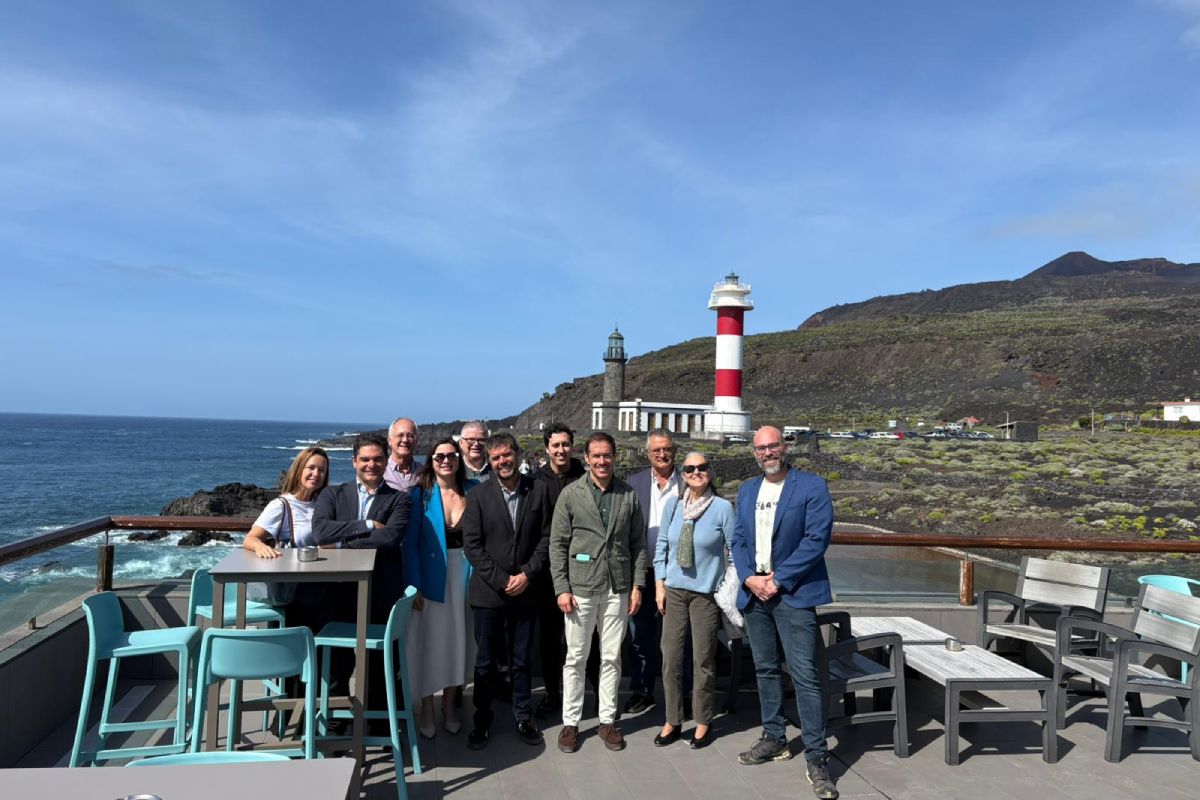
Authorities who attended the event with the Fuencaliente lighthouse in the background.
New laboratory
On February 7, 2026, the Fuencaliente Lighthouse hosted the inauguration of the new OMACC laboratory, an infrastructure project promoted by the Ministry of Ecological Transition and Energy with an investment of €137,500. The event brought together representatives from the Government of the Canary Islands, public universities, and island and local institutions, who all agreed on the strategic value of this unique location, marked by natural CO₂ emissions, for studying ocean acidification.
Following the official ceremony, attention shifted to the laboratory, where the equipment used for scientific research was presented. This equipment was acquired thanks to funding granted to the DELTA project by the Oceanic Platform of the Canary Islands (PLOCAN). The laboratory includes an automated titrator for measuring parameters such as dissolved oxygen, the water's capacity to neutralize excess CO₂, and pH.
It also has high-precision sensors that record marine environmental conditions in real time, magnifying glasses for biological analysis, refrigerators for sample preservation, and a small boat that facilitates travel to different sampling points. Finally, it should be noted that the carpentry work and the installation of the water intake had a positive impact on the local economy.
The observatory features a research laboratory and an exhibition hall with panels explaining ocean acidification, La Palma as a natural laboratory, CO₂ upwellings in Fuencaliente, and the various organisms that inhabit these ecosystems, such as starfish, anemones, algae, and other marine invertebrates. Visitors can also use a microscope to closely observe some of these species and understand how they might change in a more acidified ocean.
Cutting-edge Canary Islands science
The Rector of the University of La Laguna, Francisco García, emphasizes that the OMACC represents an exceptional opportunity to position Canarian science at the international forefront, highlighting the collaboration between the archipelago's two public universities. "It is a true window to the future: it allows us to anticipate what our oceans will be like, and we have the institutional support, technological resources, and human capital necessary to seize this strategic opportunity," he notes.
Beyond its research potential, García highlights the center's role as a hub for attracting international talent working on the global challenge of climate change's impact on the oceans. She also emphasizes its importance in the field of education, as it functions as a natural laboratory where master's students conduct fieldwork, gaining firsthand experience in a privileged scientific setting.
The rector also emphasizes that the OMACC is a key element of the University of La Laguna's La Palma campus, integrating teaching initiatives, university outreach programs, and collaboration with local authorities promoted by this scientific hub. In this context, the academic institution is fully committed, aiming to strengthen the public university's presence on the island, consolidate existing infrastructure, and expand into new areas of activity in teaching, research, and knowledge transfer.
With the opening of its latest facilities, the Marine Observatory for Climate Change inaugurates a new way of looking at the ocean, understanding climate change, and turning a global challenge into an opportunity for knowledge, training, and the future of the Canary Islands.
Communications Office

 Spanish
 English
 French