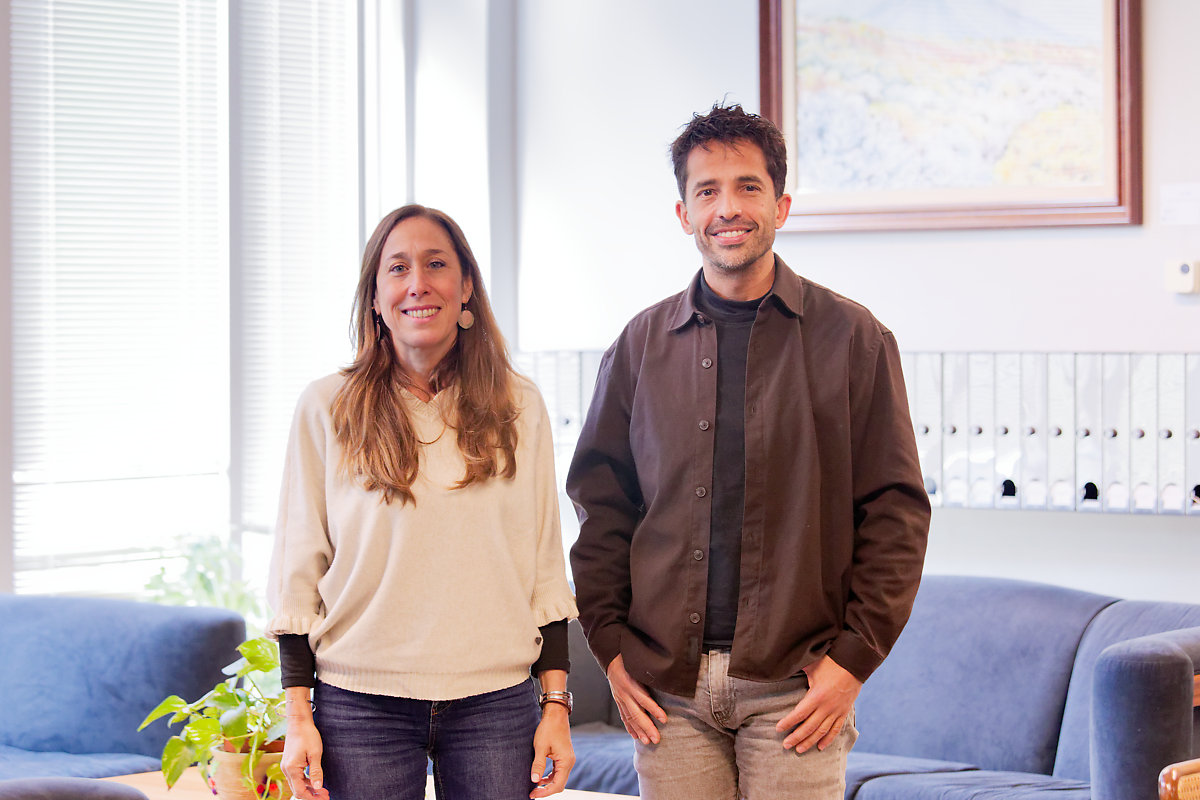
Understanding how citizens are informed about climate change is the starting point of a investigation developed at the University of La Laguna, which analyzes the dynamics of information avoidance and superficial consumption of news around this phenomenon and the factors that influence these behaviors.
The work, led by Alberto Ardèvol-Abreu y Patricia Adriana Delponti, tenured professors of the academic institution and members of the Laboratory for Research on Media and its Effects (LIME), has been published in the magazine Journalism Studies. It is based on a longitudinal survey of the adult population residing in Spain with two waves of data collection between April and July 2024.
The results show that approximately 88.1% of people admit to avoiding news about climate change to some extent, while over 90.1% acknowledge consuming this type of information superficially, through headlines or brief snippets. These figures confirm that both practices are part of the usual patterns of news consumption in the current media ecosystem.
The analysis distinguishes between information avoidance—deliberately avoiding certain content—and what is known as news snacking, This rapid consumption allows users to stay informed without delving into the details. According to Ardèvol-Abreu, these are not new behaviors but rather dynamics that have intensified with the transformation of access to information, increasingly mediated by mobile phones and social networks.
However, the research team emphasizes that these behaviors are not necessarily negative in all contexts: avoidance can serve as an emotional regulation mechanism in situations of information overload. In the case of climate change, however, limited involvement can hinder deep understanding and informed participation.
 One of the most striking findings is the relationship between trust in science and superficial consumption. The team hypothesized that greater trust would encourage more detailed reading, but the data points in the opposite direction: the greater the declared trust in science, the greater the tendency to skim. Ardèvol-Abreu interprets this result as a form of "cognitive delegation": if experts are studying the phenomenon, some people consider it unnecessary to personally engage with the details of the information.
For Delponti, this result forces a re-examination of certain assumptions in science communication: “It’s not enough to trust science; something more is needed for real engagement.” The researcher emphasizes that trust is necessary, but not sufficient, to guarantee an informed and participatory citizenry.
The factor that carries the most weight in explaining these behaviors is the perception known as news-finds-me —“the news finds me”—, a concept developed by several researchers in previous work. This refers to the widespread idea that it is not necessary to make an active effort to stay informed because current events will reach you anyway through social media or your personal environment.
The research team clarifies that this is not an objective reality, but rather a misconception that can generate a false sense of being well-informed. According to the results, this perception is the strongest predictor of both avoidance and superficial consumption of information regarding climate change. When relevant information is assumed to appear automatically, the motivation to consult direct sources or delve deeper into the content decreases.
These results are situated within a broader context marked by the polarization of public debate and the intrinsic complexity of climate change. Delponti points out that media coverage of climate change is often associated with specific episodes or extreme events, which can contribute to a fragmented perception of the problem. Furthermore, she notes that this is an issue that has become heavily incorporated into political debate in recent years, which also influences how it is received by the public.
Ardèvol-Abreu adds that, despite the broad scientific consensus that has existed for decades on the anthropogenic origin of climate change, social perception does not always reflect this agreement, especially in certain international contexts.
The research is part of a larger project initiated in 2019 in collaboration with the University of Las Palmas de Gran Canaria, he Government of the Canary Islands y Loro Parque Foundation, The project focused on studying the effects of climate change on the threatened biodiversity of the Canary Islands. Subsequently, the project's continuation received funding from the Spanish Foundation for Science and Technology (FECYT), incorporating a specific line of communication and awareness-raising based on empirical evidence.
 “Before designing dissemination strategies, we needed to understand what was happening with the reception of the message,” explains Delponti. The researcher advocates for data-driven communication that considers not only the scientific evidence of the phenomenon, but also the evidence on how messages are reported and received.
This approach has allowed communication to be geared towards formats adapted to current consumption patterns, combining information and entertainment, promoting citizen science activities, and exploring narratives that seek to build community around environmental protection. According to Delponti, designing strategies based on empirical results contributes to making investment in outreach more effective and aligned with the realities of communication.
Both agree that the results have direct implications for journalism and science communication. In addition to fostering trust, they believe it is essential to spark interest and strengthen media literacy and critical thinking from an early age, especially in an environment characterized by algorithms, information fragmentation, and artificial intelligence.
The work of Ardèvol-Abreu and Delponti also opens up future lines of research on how media and digital platforms can adapt their formats to improve attention to and understanding of complex issues such as climate change. Understanding these patterns, they conclude, does not imply offering immediate solutions, but rather providing evidence that allows for the design of more effective and sustainable communication strategies.

 Spanish
 English
 French