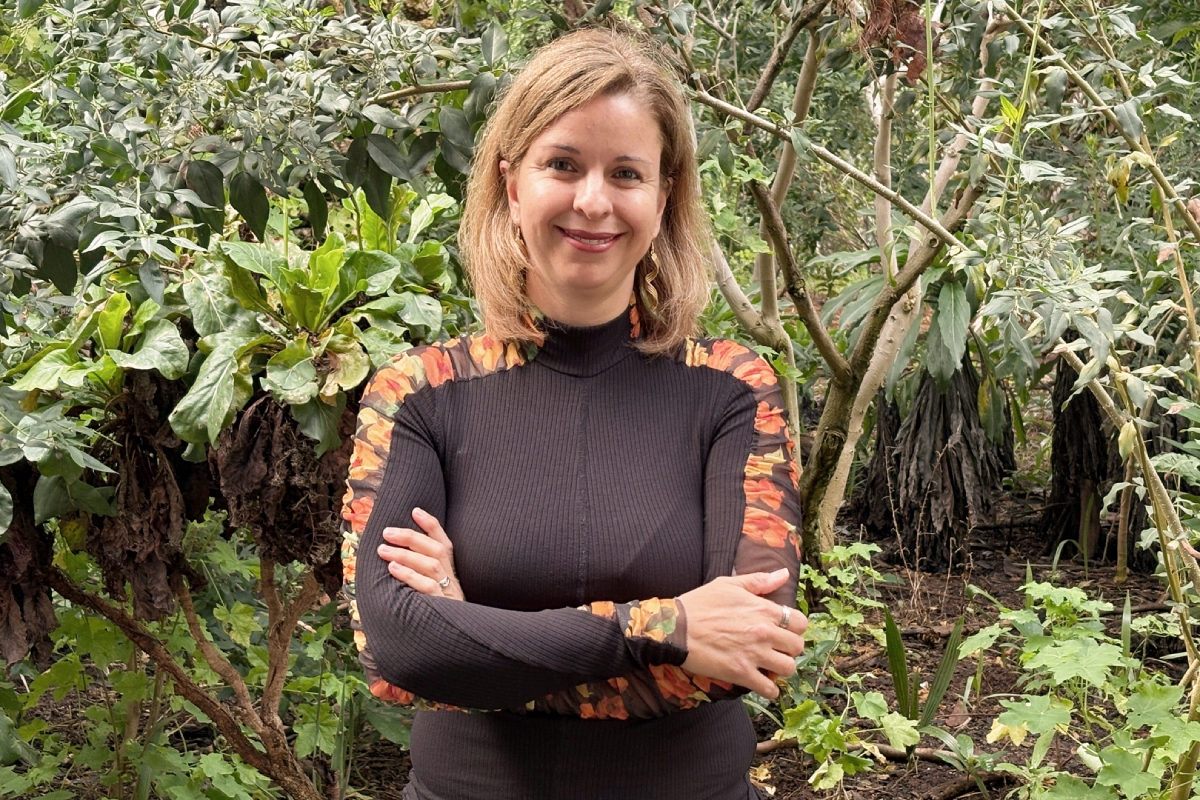
Humiliation, emotional blackmail, and sexist language are the invisible forms of violence that underpin more serious ones, such as murder, physical assault, and rape. All of these affect women and constitute what is known as the iceberg of gender-based violence. “Where are the homeless women?” asked Alejandra Rodríguez Alemán, author of the thesis. «"Female homelessness and gender violence from an intersectional perspective in the Canary Islands"», recently defended at the University of La Laguna.
The question arose while she was working at Cáritas and observed that the majority of homeless people were men. For Rodríguez Alemán, a social worker and sociologist whose work has always focused on the study of gender violence, this was perplexing: “If historically and culturally women are the most impoverished, where are they?” she reflects. In the Canary Islands, the second region with the highest risk of poverty and social exclusion in Spain according to the European Anti-Poverty Network in Spain, this question takes on even greater relevance.
Rodríguez Alemán's professional career is closely linked to gender-based violence. She has developed tools and protocols to help various government agencies learn to identify and address it within both professional and community settings. Thus, when she decided to pursue an academic career, she chose to focus her research on female homelessness from the perspective of gender-based violence and intersectionality.
The thesis, directed by the professor of Sociology and Anthropology at the University of La Laguna, Carmen Ascanio Sánchez, The study was limited to Gran Canaria, a decision motivated by the research deadlines and the restrictions of the COVID-19 pandemic. “The thesis was planned for the entire Canary Islands, but the pandemic forced me to interview women who are very difficult to locate, who survive in invisible homelessness and are underrepresented by the public administration,” she explains.
Many homeless women don't live on the streets, but in boarding houses, shared rooms, or hidden spaces like caves or ravines. To reach them, the researcher started "from the ground up," contacting professionals who provide services to these women and were aware of gender-based violence. Then, she established contact with the management of these organizations.
The researcher conducted semi-structured and biographical interviews, supplemented by field notes to record verbal and non-verbal communication. The interviews were conducted via videoconference or in locations such as parks, always adapting the language and format to the participants' abilities, many of whom did not speak Spanish or were illiterate.
The testimonies gathered reflect the complexity of female homelessness and the multiple forms of violence these women experience. For example, a young woman with several children, a substance addiction, and a victim of gender-based violence recounted her experience without being able to identify that she was suffering abuse at the hands of her current partner. “I couldn’t intervene or persuade her. My mission was to collect her testimony,” she states. Another case is that of a Colombian woman who defined herself as a money-making machine. “Despite being very capable and feeling able to generate income, for her, four walls were not synonymous with having a home,” she explains.
The research also documents the structural and psychological violence that trans women face, from family rejection to discrimination in schools and workplaces. “Often it starts with the father, who may reject his child because of their identity or because they don't conform to the traditional model of hegemonic masculinity,” she says.
Other testimonies reveal the intergenerational violence that perpetuates poverty and exclusion. “A Roma woman was unable to face a job interview with a man because of previous experiences of violence,” she states. “She had suffered sexual abuse at the hands of her grandfather, and her parents knew it, but they had to respect the wishes of the family patriarch,” she recounts. Furthermore, the investigation documents extreme cases of violence. A woman fleeing Mali to protect her daughter from female genital mutilation is raped at the border, loses her baby at sea, and endures prolonged homelessness in the Canary Islands.
Rodríguez Alemán emphasizes the need to consider cultural and generational diversity. Young and older women are the most invisible. “Young women seem to have the resources, but that’s not always the case; and older women have gone through a full cycle of homelessness and violence that has plunged them into irreversible poverty, unable to integrate into the job market or rely on a family support network,” she states.
The researcher warns that resources and public policies are primarily designed for men and tend to be paternalistic and temporary, unable to offer long-term stability. Therefore, she proposes adopting European models such as Housing First, which prioritizes access to stable housing before other interventions, and improving coordination among social services, health services, gender violence support services, and those aimed at migrant women or people with disabilities. “If you don’t have a home where you feel safe, what are you asking of me?” asks Rodríguez Alemán.
In addition to raising awareness of homeless women, the author wants to share the results of her thesis with public administrations and the resources that serve them, so they can evaluate and improve the policies implemented. “Spain is a pioneer in gender-related public policies in Europe, but they are still insufficient. Other strategies must be implemented to effectively reduce this phenomenon,” she concludes.

 Spanish
 English
 French