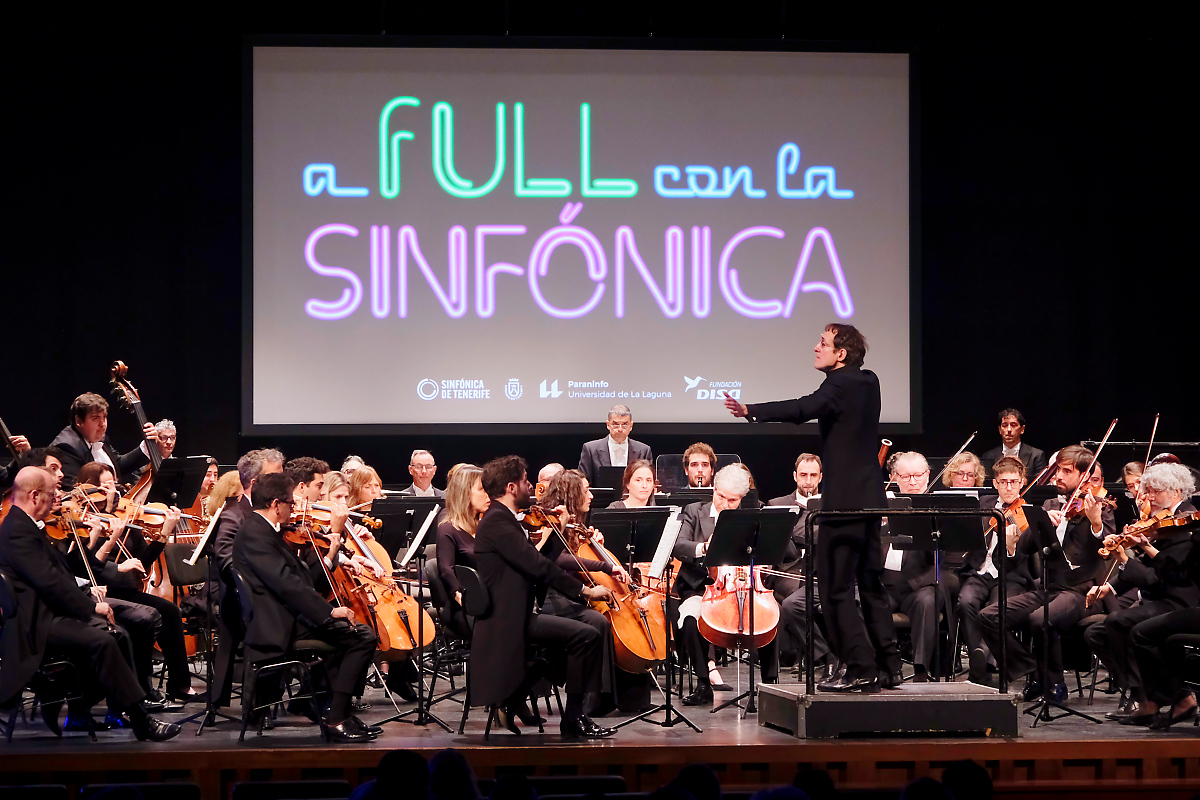
The Tenerife Symphony Orchestra performed two symphonic poems by Richard Strauss (1864-1949) yesterday, February 26, at the Paraninfo of the University of La Laguna, under the baton of principal guest conductor Pablo González: “Don Juan” and “Death and Transfiguration.” This performance is part of A fULL con la Sinfónica (Full with the Symphony), an initiative to bring classical music closer to young university students. Therefore, all three concerts in the series are free for students and include a presentation to introduce the works to this audience. Yesterday's presentation was given by Mario Marzo and Nacho Castellanos, creators of the podcast El Vomitorio.
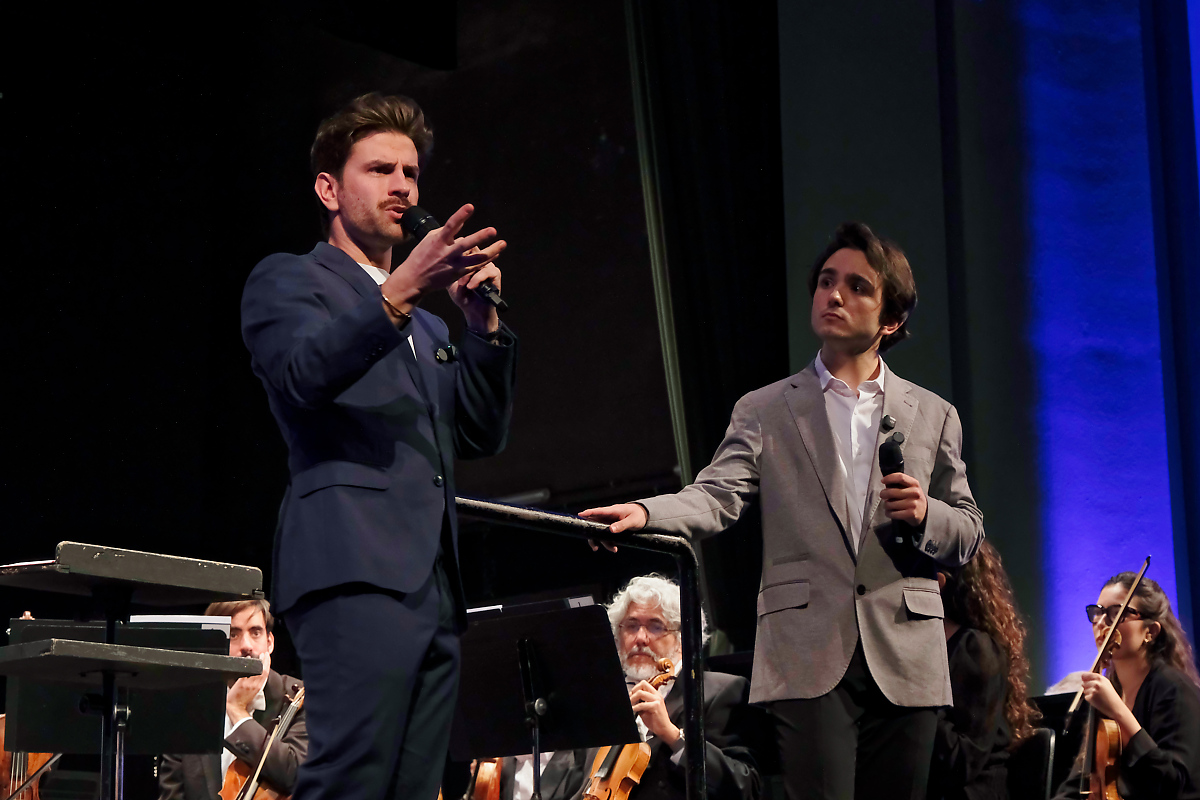
Mario Marzo and Nacho Castellanos, responsible for El Vomitorio.
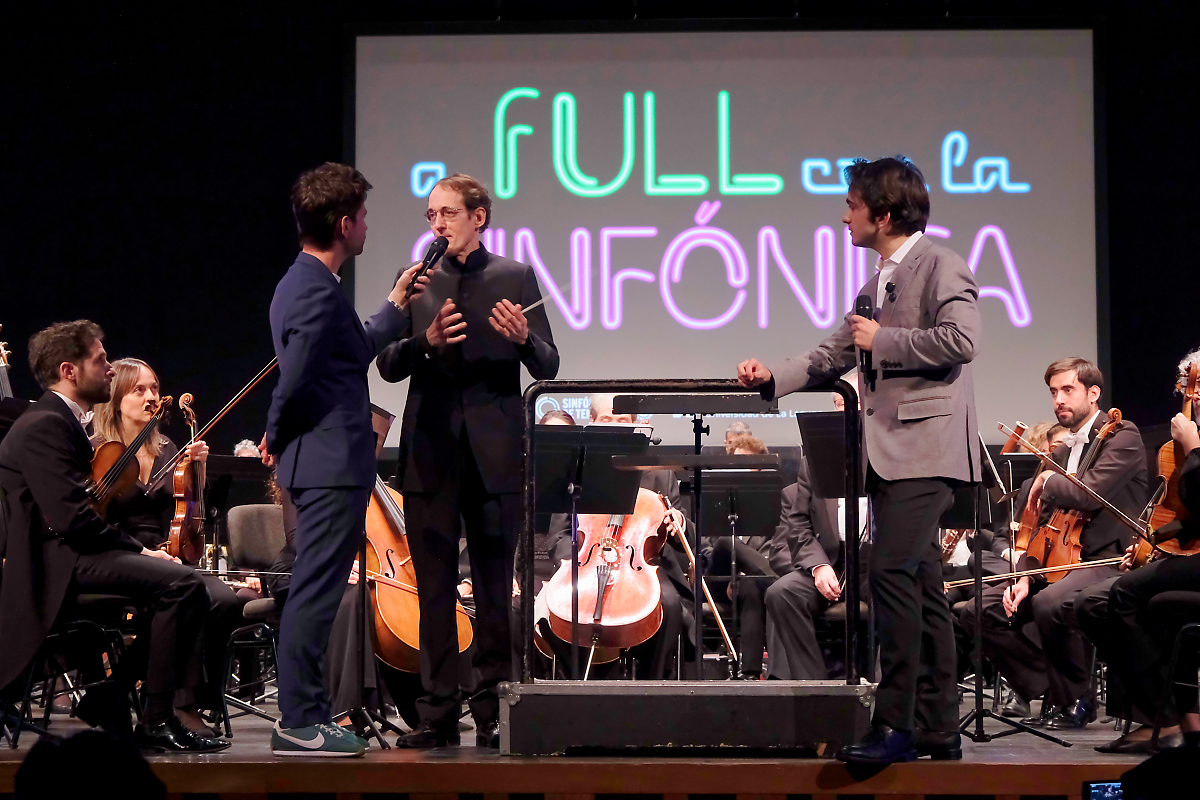
Both presenters skillfully combined informative content with humor and enjoyed the complicity not only of the audience, whom they welcomed with a quiz about the life and work of Richard Strauss, but also of the musicians of the Tenerife Symphony Orchestra and its director, who intervened in a relaxed manner to answer Marzo and Castellanos' questions with humor and even explained with musical examples some fragments of the first of the works that were going to be performed, breaking down its main themes to facilitate a better understanding of what the composer wanted to express.
“Don Juan,” written with Strauss when he was just 24, is structured around the repetition of a vibrant theme representing the overflowing and insatiable passion of the famous lover, interspersed with other themes representing his successive conquests. This main theme returns one last time in its most splendid version, perhaps to announce that he has finally managed to sublimate the passion he has pursued all his life, but an overwhelming silence cuts short this crescendo, giving way to a melancholic ending that recounts the character's death, which Strauss based on the melancholic version of the poet Nikolaus Lenau.
Death once again takes center stage in "Death and Transfiguration," another early symphonic poem, written by Strauss when he was 25. The work recounts the end of an artist who, on his deathbed, recalls happy episodes from his youth. Therefore, necessarily languid passages alternate with more lively ones that evoke those memories. The piece concludes with a climax in which the main theme seems to refuse resolution and end, as if clinging futilely to life. On this occasion, the composer based the piece on a poem written specifically for it by the poet Alexander Ritter, which was read by Pablo Marzo to the audience in the Paraninfo before the orchestra began playing.
 The “Full Throttle with the Symphony” series is supported by the DISA Foundation and will return to the Paraninfo on Thursday, April 16th with a program whose tickets are now available, directed by Ariane Matiakh. Composed of a piece by Franz Liszt (“Hungaria, symphonic poem no. 9, S. 103”) and the “Dances of Galánta” by Zoltán Kodály, it will feature a presentation by art history popularizer Miguel Ángel Cajigal, better known on social media as “El Barroquista”.

 Spanish
 English
 French