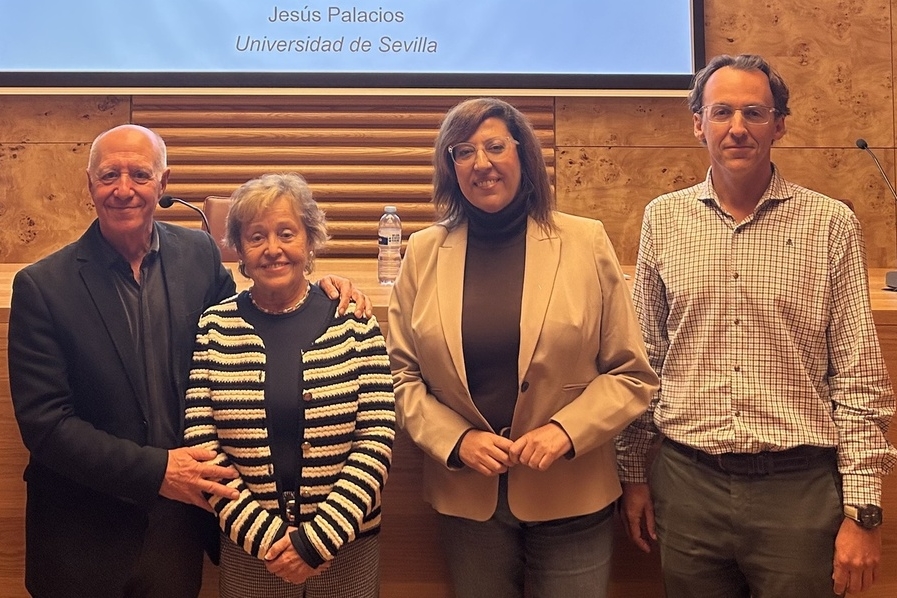
The Auditorium of the Museum of Nature and Archaeology (MUNA) hosted the event last Thursday, February 26th. “From adversity and harm to protection and development”, a meeting focused on analyzing how adverse childhood experiences influence development and what strategies can promote recovery.
From early morning, professionals in the field of child and family protection gathered in this space to share knowledge, reflect, and discuss one of the system's most complex challenges: how to transform situations of harm into opportunities for development. The event was organized by the Directorate General for Child and Family Protection, in collaboration with the Institutional Chair of Childhood and Adolescence at the University of La Laguna (ULL).
The opening remarks were delivered by Sandra Rodríguez González, Director General of Child and Family Protection for the Government of the Canary Islands, who emphasized the importance of creating training and networking opportunities for professionals to improve intervention with children and their families. Following her presentation, Jesús Palacios, Professor of Developmental and Educational Psychology at the University of Seville, delved into the consequences of early adversity, the possibilities and limitations of protective intervention, and underscored the importance of acting based on scientific knowledge.
After a break, the day continued with a presentation by Dr. Iván Galtier Hernández, Professor of Neuropsychology (ULL), who offered an in-depth analysis of the impact of adverse experiences on the neuropsychological development of children and adolescents. During his presentation, he focused on how these experiences can influence brain function and the development of higher psychological functions. He presented preliminary data from the research project he is leading, thanks to the cooperation agreement signed in 2022 between the Regional Ministry of Social Rights, Equality, Diversity, and Youth and the ULL.
In the last presentation, Dr. María José Rodrigo, Professor of Developmental and Educational Psychology and Professor Emerita of the ULL, focused her presentation on the response of the maternal brain in contexts of neglectful parenting, providing a key perspective to understand family dynamics in situations of risk.
Beyond the theoretical content covered, the conference highlighted the need to move towards more sensitive, coordinated, and evidence-based intervention models. It was emphasized that these models must be able to respond to the complex and diverse realities faced by many children and adolescents, including situations of social, familial, or emotional vulnerability. Furthermore, the importance of ongoing professional development, active family participation, and the integration of different stakeholders in a collaborative approach was stressed, in order to guarantee support strategies that truly improve quality of life and foster the holistic development of children and adolescents.

 Spanish
 English
 French