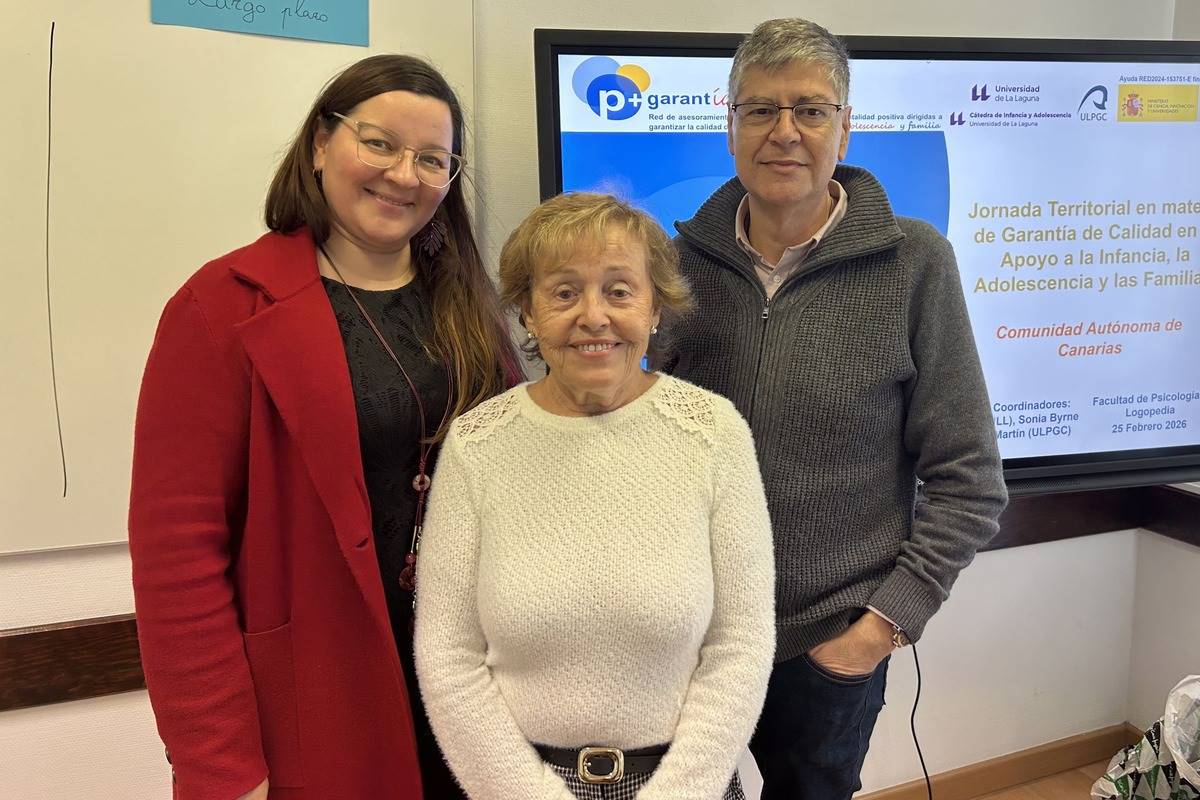
The Faculty of Psychology and Speech Therapy at the University of La Laguna hosted the "Regional Conference on Quality Assurance in Support for Children, Adolescents, and Families." This meeting is part of the Red P+Garant[IA] project, a nationwide initiative aimed at strengthening positive parenting policies through the use of scientific evidence.
The event aimed to strengthen collaborative spaces among researchers, professionals, and social organizations, promoting evidence-based practices that foster the holistic development of children and family well-being. It also facilitated the sharing of knowledge, experiences, and tools to improve support for families in the Canary Islands and generate recommendations applicable nationwide.
This initiative is part of a European network comprised of research teams from various Spanish universities, working together to design an Improvement Plan for the Quality Assurance System in family support. Through this collaborative approach, the aim is to generate a robust methodological framework that will allow for the evaluation, adjustment, and optimization of policies supporting children and adolescents, taking into account both the available scientific evidence and the real needs of different regions. The workshop in the Canary Islands also provided an opportunity to gather local information and experiences that will enrich the recommendations at the national level, ensuring that the proposals are effective, sustainable, and adapted to the social and cultural realities of each community.
The conference, organized by the Chair of Childhood and Adolescence at the University of La Laguna, was coordinated by María José Rodrigo, Professor Emerita at the ULL, Sonia Byrne, Assistant Professor at the ULL, and Juan Carlos Martín, Professor at the ULPGC. Its objective was to create a space for dialogue to analyze the current state of family support in the Canary Islands and included the participation of social workers, researchers, institutional representatives, and third-sector organizations.
The meeting focused on identifying both the system's strengths and its main areas for improvement, as well as proposing concrete measures to ensure higher quality care for children, adolescents, and families. The conclusions reached in the Canary Islands will be incorporated into the national strategic document. Furthermore, the project places special emphasis on giving a voice to families and professionals, promoting a collaborative approach that will allow for the development of more effective policies, tailored to real needs and capable of generating a positive and sustainable impact on the quality of life of children and adolescents.

 Spanish
 English
 French