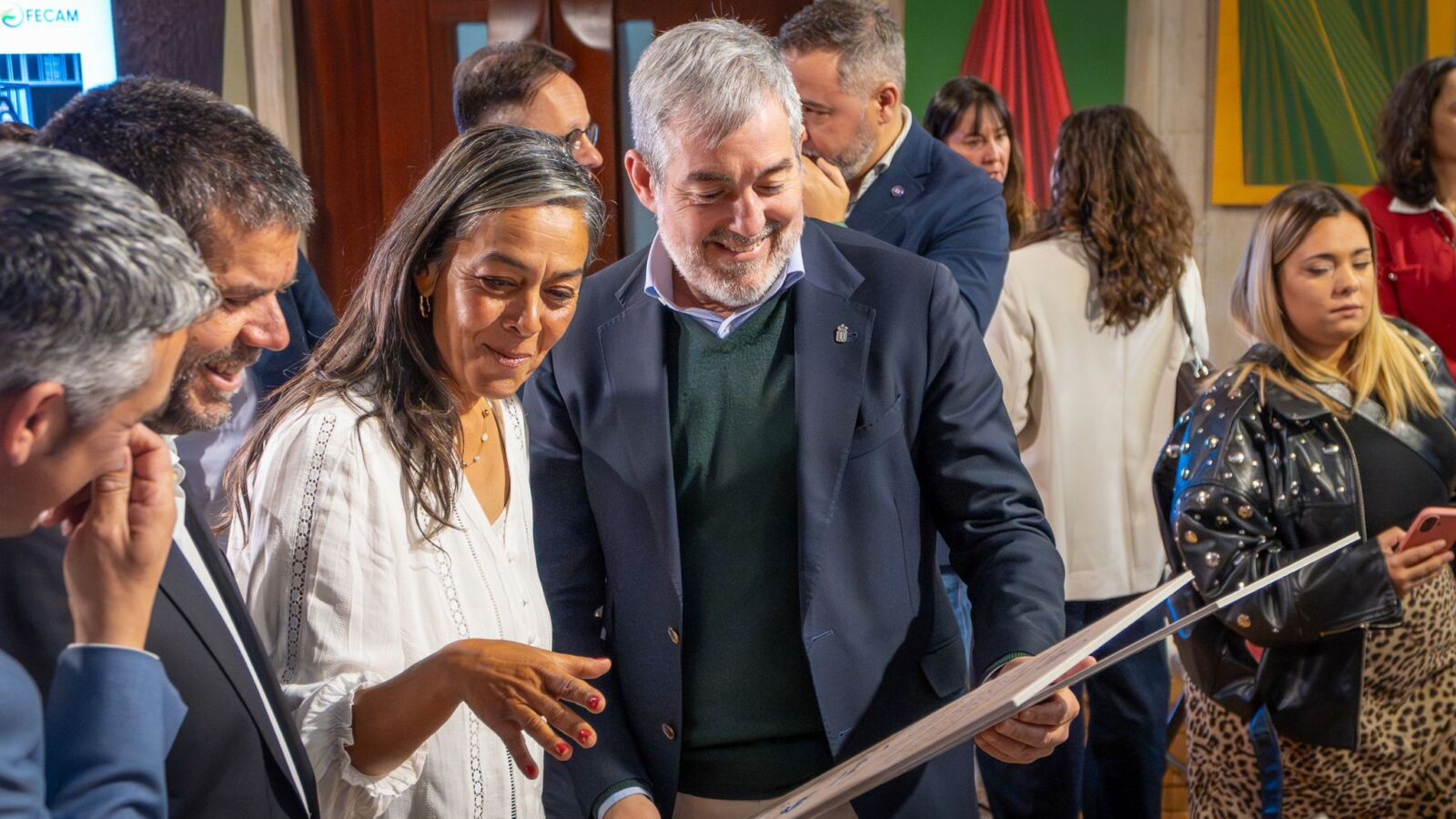
The President of the Canary Islands, Fernando Clavijo, highlighted the creation of a space for participation, decision-making, and leadership for women entrepreneurs in rural areas. This is one of the key measures to foster alliances among them and strengthen their influence as a group. This initiative follows the conference “Rural Women in the Canary Islands: Challenges and Opportunities in Municipalities with Fewer Than 10,000 Inhabitants,” held at the University of La Laguna in late 2025, the results of which were presented today, March 6, at the Government Headquarters in Santa Cruz de Tenerife.
The President of the Regional Government emphasized that municipalities with fewer than 10,000 inhabitants "help preserve our culture, our identity, our landscapes, and our food production. Their entrepreneurial women are the driving force behind the economic and social life of these areas, and therefore, we are certain that there can be no future for the islands' rural areas without their active and equal participation. They want to be key players in sustainable development and in creating opportunities for future generations," he stated. Clavijo stressed that this is the perfect moment to empower rural women. This objective aligns with the Canary Islands Agenda 2030, and furthermore, 2026 is officially the International Year of the Woman Farmer, declared by the United Nations General Assembly and led by the FAO.
According to the Minister of Agriculture, Livestock, Fisheries, and Food Sovereignty, Narvay Quintero, the conclusions of these conferences leave a clear message: “The future of rural Canary Islands depends on recognizing, highlighting, and strengthening the role of women who live and work in our mid-altitude areas. They have historically sustained agricultural holdings, led business initiatives, and spearheaded community projects that are essential for the territorial cohesion of the Canary Islands. That is why the Government of the Canary Islands wants to move forward with measures that facilitate their leadership, such as promoting shared ownership of facilities, supporting female entrepreneurship, and eliminating barriers that still exist in areas such as connectivity, digitalization, and work-life balance.”.
Along the same lines is 'Dinamiza Rural', a project of the Canary Islands Government through GMR Canarias, which aims to revitalize rural areas through initiatives in rural municipalities and support projects that generate activity, opportunities, and employment. ‘The program we are presenting today for 2026 continues this work with new training, cooperation, and entrepreneurship support initiatives, because strengthening the leadership of rural women also means promoting the sustainable development of our rural areas and guaranteeing their future,’ she added. Another challenge identified is promoting shared ownership of livestock farms, a concept already enshrined in legislation, which will allow women to move beyond working in the shadows, empower them in decision-making, facilitate their access to subsidies, and guarantee them a dignified retirement.
 The rural environment extends beyond the primary sector; it is a means of preserving the culture and identity of the islands, they maintained at the event. However, various structural barriers, such as poor connectivity and the digital divide, hinder female entrepreneurship because completing any administrative procedure requires them to dedicate time to traveling to metropolitan areas. Furthermore, rural women feel that work-life balance is more complex because caregiving remains predominantly female, and this acts as a deterrent when it comes to implementing improvements and innovations that involve training or relocation.
The mayor of San Sebastián de La Gomera and member of the FECAM Rural Development and Fisheries Commission, Angélica Padilla, referred to “the firm commitment of the administrations to strengthen the role of women as agents of change in their communities, with public policies that guarantee equal opportunities and development. The empowerment of rural women is not only a matter of social justice, but also a condition for the prosperity of the archipelago. Only with training, support, and visibility will we be able to consolidate a productive sector led by women that drives true sustainable development in our territory,” she added.
For his part, the rector of the University of La Laguna, Francisco García, alluded to the need to “strengthen the presence of women in positions of power and influence” and to “the greater difficulties faced by women living in rural areas. Therefore, from the Chair of Agritourism and Wine Tourism of the Canary Islands, we promote spaces for rigorous reflection to take action in this area, and this public university will continue working alongside the primary sector in order to leave a better future for generations to come,” he noted.
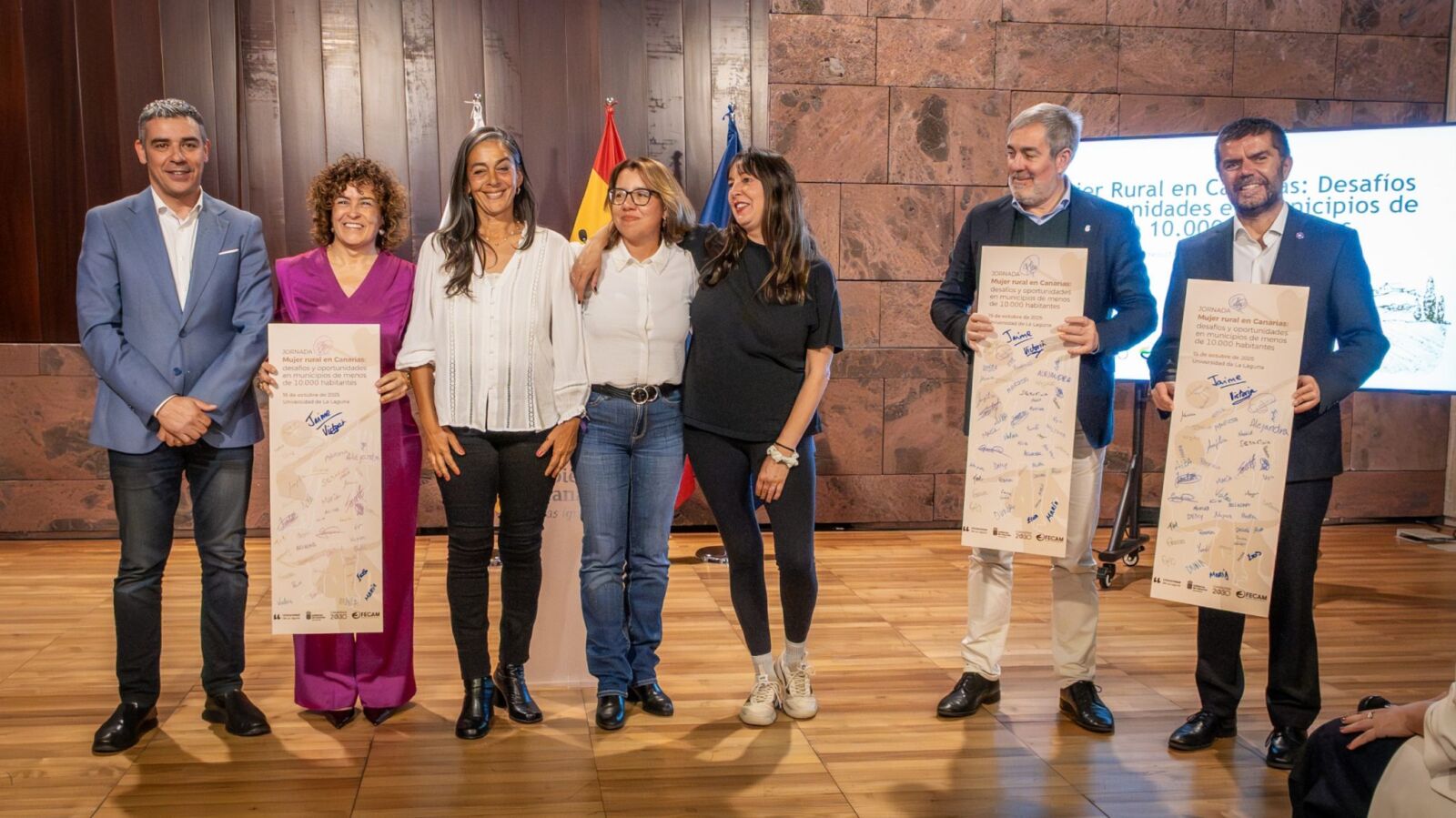
During the meeting, Noelia Cruz, coordinator of the day and member of this chair, was in charge of presenting the main conclusions and three of the speakers of that day gave foam boards with the graphic image of the 2025 Conference, signed by the participants in the event, to the representatives of the Government of the Canary Islands, the University of La Laguna and the Canary Federation of Municipalities (FECAM).
The event, held last October, was attended by over sixty people, including students, researchers, and faculty from the University of La Laguna (ULL), representatives and technical staff from public and private administrations, and professionals from the archipelago's primary sector. Participants analyzed the realities faced by women working in rural areas of the Canary Islands and identified the main challenges and opportunities for achieving effective equality and sustainable territorial development. The event was organized by the Canary Islands Chair of Agritourism and Wine Tourism, a joint initiative of the Canary Islands Institute of Agri-Food Quality and the University of La Laguna, and the university's Department of Agricultural and Environmental Engineering, in collaboration with the Government of the Canary Islands through the Canary Islands Agenda 2030 and FECAM (Canary Islands Federation of Municipalities).
The event also served to present an update on the program's extension into 2026. This year, the program is structured in four complementary, interconnected, participatory, and results-oriented phases. Phase I focuses on creating a hub that emphasizes innovation, collaboration, community, and growth. Phase II involves launching a university micro-credential aimed at providing applied training and capacity building. Phase III will again include workshops, similar to those held in 2025, to raise awareness, foster strategic debate, and build consensus. Finally, Phase IV consists of an academic mission to promote international cooperation, advanced knowledge transfer, and territorial returns.
(Text and photos provided).

 Spanish
 English
 French