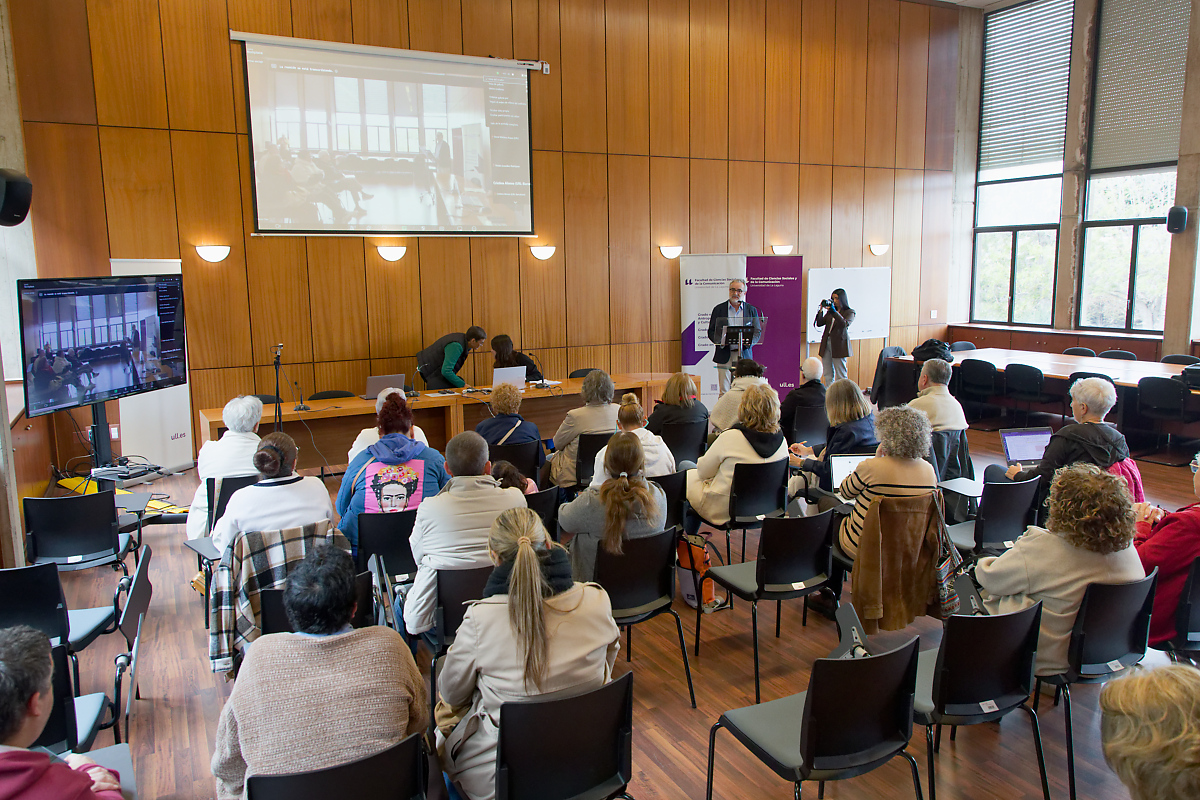
The Faculty of Social Sciences and Communication held the seminar “Accessible Housing for People with Intellectual Disabilities from the Perspective of Key Stakeholders” on March 5th and 6th. This seminar was part of the Fri-Housing research project, led by Professors Rosa Díaz of Pablo de Olavide University and Yolanda de la Fuente of the University of Jaén. At the University of La Laguna, the research team is coordinated by Professor [Name Missing]. Celsa Cáceres, from the area of Social Work and Social Services.
The meeting brought together research teams, social work professionals, disability organizations, and participants in the study, with the aim of advancing the conceptual and methodological development of the project and sharing results with the community. Fri-Housing seeks to create tools that allow for the identification and evaluation of the characteristics that residential environments should have to promote independent living and full community integration for people with intellectual disabilities.
A first proposal
The first day, held on Thursday, March 5, was dedicated to the technical work of the research team. During this session, the project's progress was reviewed, and the first version of the scale prototype designed to evaluate the level of "friendliness" of homes was presented, both in existing homes and in those that may be designed in the future.
This tool aims to translate into concrete indicators the characteristics that residential spaces must have to promote the autonomy, accessibility, and social inclusion of people with intellectual disabilities. The development of this scale is one of the project's main outcomes and will allow, in subsequent phases, the evaluation of different housing alternatives and guide the design of new housing models.
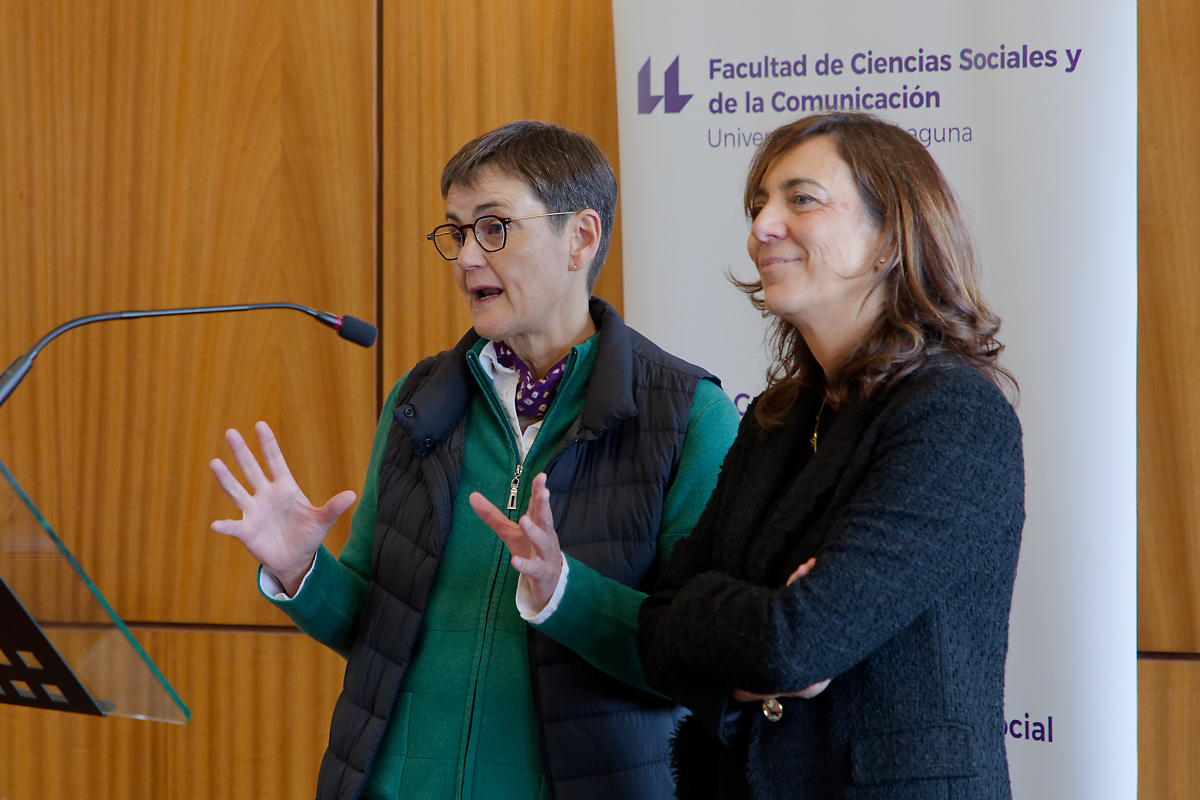
Celsa Cáceres (left) and Rosa Díaz (right).
Return the results
The session on Friday, March 6th, was open and participatory. The Dean of the Faculty of Social Sciences and Communication, José Antonio Batista, welcomed the attendees and opened the session, which brought together professionals, social organizations, participants in the focus groups, and interested members of the public.
Conceived as a knowledge transfer seminar, the meeting aimed to share the results with the participating population and reflect collectively on the experience, with a view to the next phase of the project. During the session, the results of the work carried out in the Canary Islands were presented, followed by dialogue sessions and roundtables in which people involved in the research process participated. These activities allowed for comparing the findings with the participants' direct experience and gathering new input for the development of the assessment tool and future, more inclusive residential models.
Conclusions in the Canary Islands
The results obtained in the Canary Islands suggest that truly accessible housing for people with intellectual disabilities should be designed from a comprehensive approach, taking into account both the characteristics of the residential space and its relationship with the community environment.
Among the most relevant aspects identified, the most important is to promote personal autonomy, favoring environments that allow people to develop their life project with the greatest possible degree of independence.
It is also relevant to apply the principles of universal design, incorporating all the necessary resources to guarantee complete accessibility, not only physical, but also sensory and cognitive.
Another important point is to locate housing in neighborhoods with nearby services, which facilitate daily mobility, access to resources and interaction with the neighborhood, as well as promoting interpersonal relationships and community participation, as a key element for authentic social inclusion.
These results reinforce the idea that the concept of friendly housing is not limited to the physical conditions of the property, but also includes the quality of the urban and community environment in which it is located.
The seminar concluded with a speech by the Vice-Rector for Culture and University Extension of the University of La Laguna, Isabel León, who closed the event and highlighted the importance of applied and participatory research to move towards more inclusive environments that respect the rights of people with disabilities.

 Spanish
 English
 French