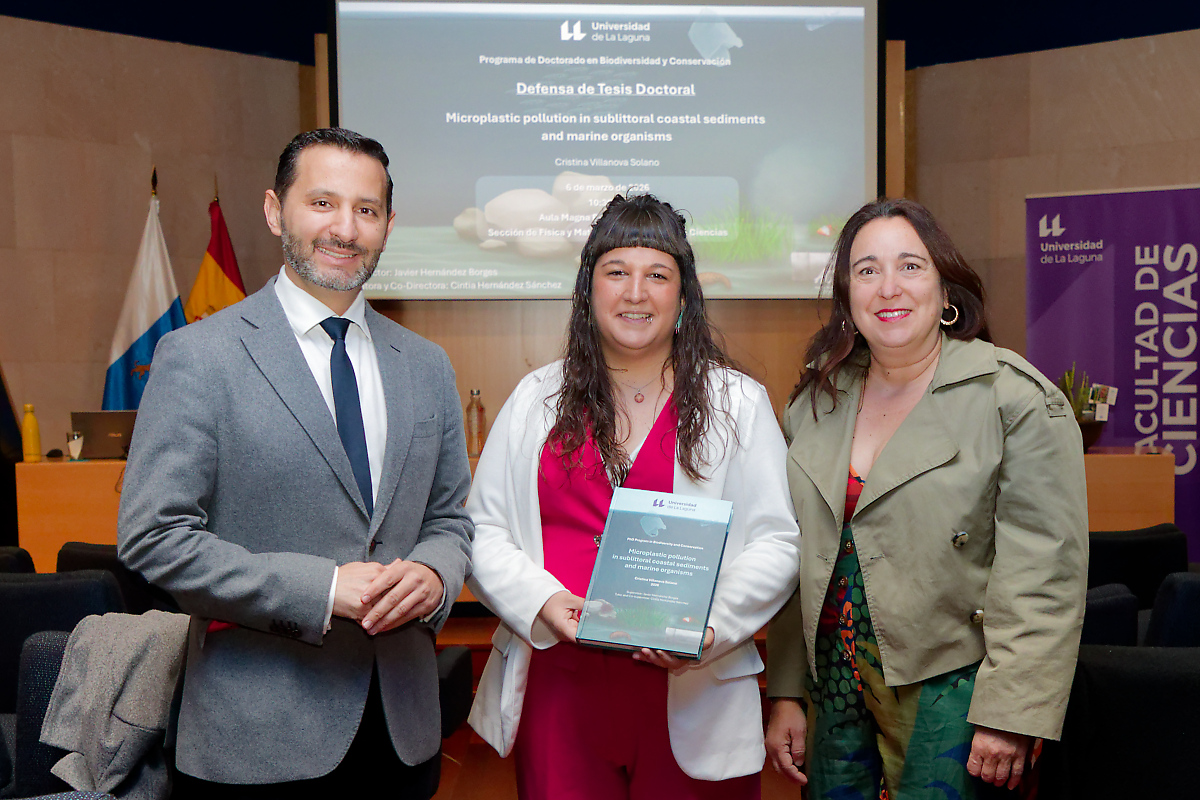
The Blas Cabrera Felipe Auditorium of the Physics Department at the University of La Laguna was the setting, on March 6th, for the reading of the doctoral thesis entitled “Microplastic Pollution in Sublittoral Coastal Sediments and Marine Organisms”, presented by Cristina Villanova Solano. The research, developed over the last five years, offers a comprehensive analysis of the presence of microplastics in the marine ecosystem, with special attention to coastal sediments and various organisms in the Canary Islands and the Azores.
One of the most significant findings of this study is that the main pollutant detected in all the environmental compartments analyzed is textile fibers from domestic laundry, primarily of a cellulose nature. According to the data provided by the author, a single wash cycle of six kilograms of laundry can release approximately 700,000 fibers into the environment, which current wastewater treatment plants are unable to fully retain, ultimately ending up in the sea.
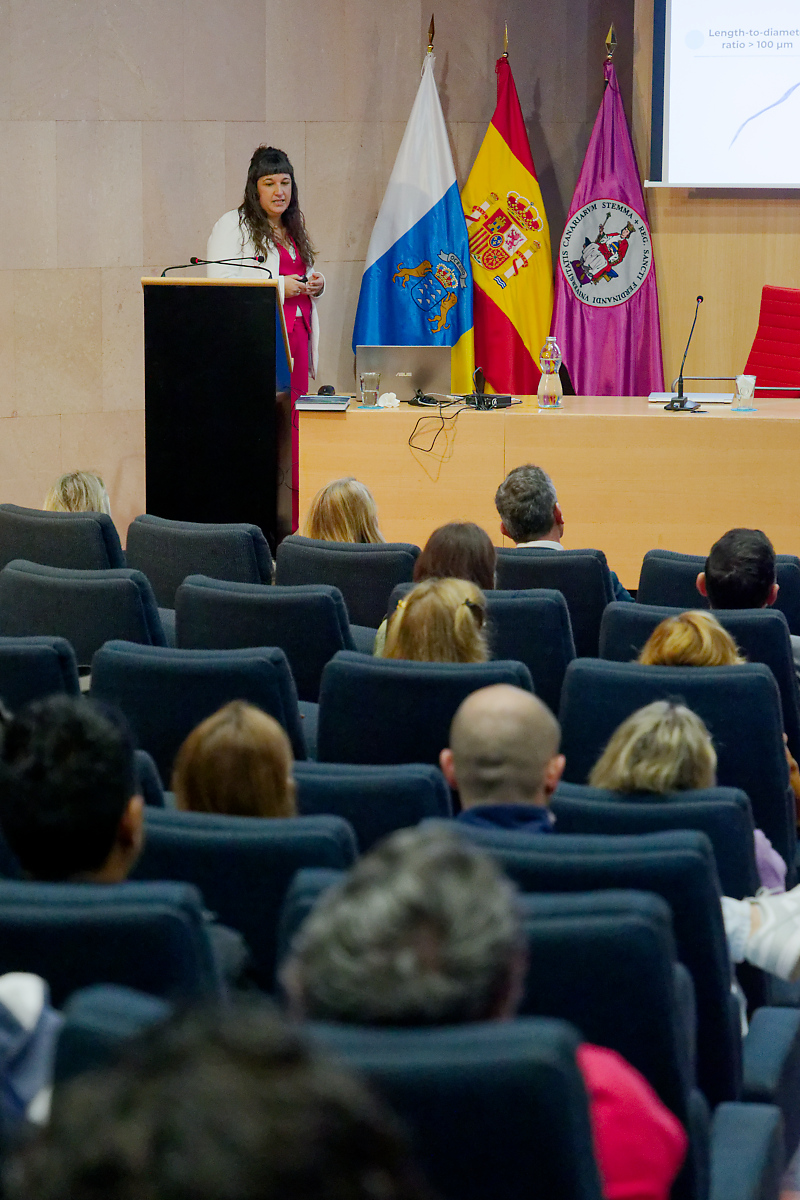
A moment of the defense.
This work, which has been directed by Doctors Javier Hernández Borges y Cintia Hernández Sánchez, This research has allowed scientists to document the transfer of these pollutants through the food chain, analyzing everything from benthic invertebrates, such as sea cucumbers and sea urchins, to pelagic organisms like krill. In the case of sea cucumbers, it has been identified for the first time that ingestion is not the only route of entry; these particles can also be retained in their defense systems through the water they suck in to breathe. Similarly, the analysis of nearly a thousand krill in the Azores confirmed that this crustacean, a key food source for large cetaceans, is ingesting microplastics, posing a risk of bioaccumulation for higher species such as whales.
Geographically, the thesis reveals that, after analyzing 30 locations throughout the Canary archipelago, the highest concentrations of microplastics in sediments were found in specific areas such as La Graciosa and La Restinga, on El Hierro. This suggests the influence of local port activities and current dynamics on the accumulation of this waste. To ensure the reliability of these findings, the researcher developed an extremely rigorous work protocol in cleanrooms with filtered air, even using orange lab coats to identify and rule out any possible accidental contamination during the laboratory process.
Finally, the work of Villanova Solano, which was evaluated by a panel composed of Francisco Javier Bayo, from the Polytechnic University of Cartagena; Sabrina Clemente Martín, from the University of La Laguna; and Mariacristina Cocca, A researcher from the Institute of Polymers, Composites and Biomaterials of the Italian National Research Council emphasizes the urgent need to establish internationally standardized policies and methodologies that allow for the effective comparison of data from different parts of the world. She insists that, while legislative steps have been taken to ban microplastics in cosmetics, it is essential to continue advancing the regulation of wastewater and the constant monitoring of these pollutants to mitigate a problem that is already affecting marine biodiversity globally.

 Spanish
 English
 French