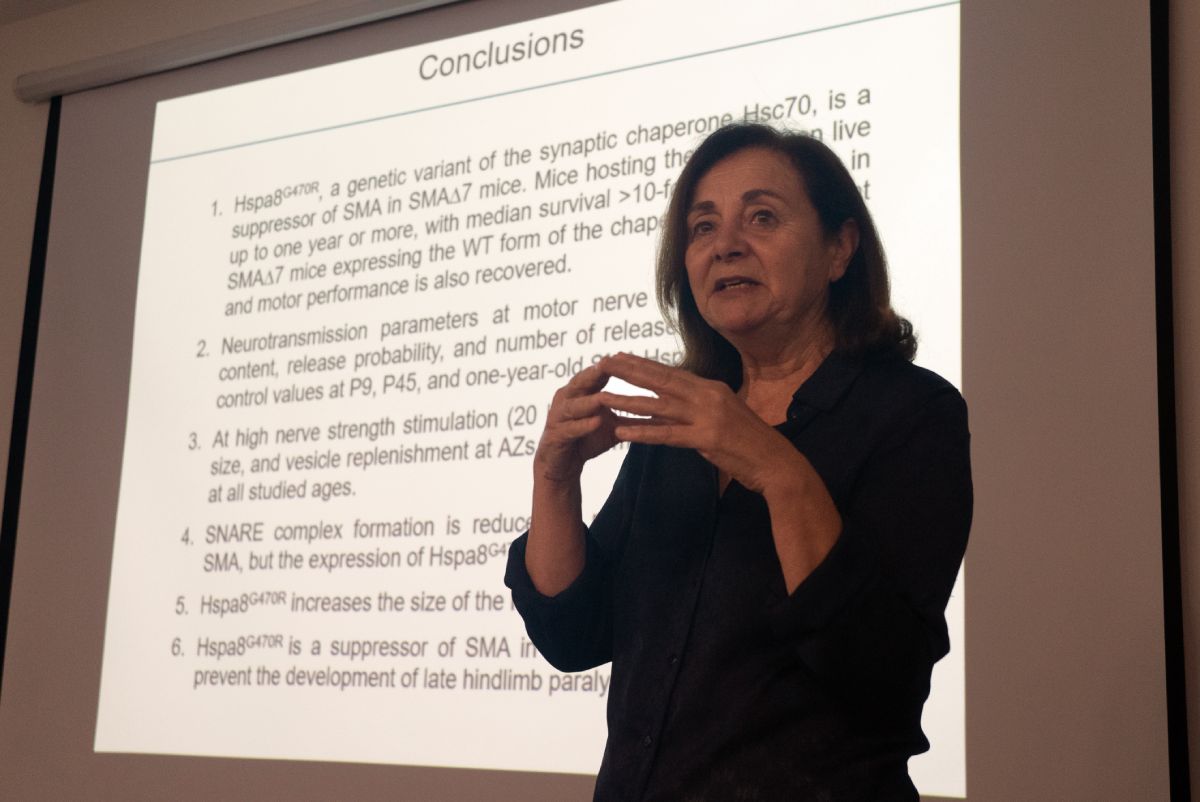
The Institute of Biomedical Technologies (ITBThe Faculty of Sciences at the University of La Laguna has launched a regular program of scientific seminars in the last year, designed to become a permanent fixture within the center's research activities. The initiative is held every Tuesday at 1:00 PM with the aim of strengthening the internal scientific culture and promoting the institution's research to the wider community.
Teresa Giráldez y Olga Tapia, Researchers from the Department of Basic Medical Sciences and members of the ITB's Outreach and Visibility Committee, which spearheaded this initiative, emphasize the importance of these seminars. "Science is an international endeavor," the first of them points out, explaining that these weekly sessions serve two main purposes: to publicize research conducted at other centers and to foster interaction with researchers at the University of La Laguna.
The seminar format follows a model commonly used in international universities and research centers: a scientific lecture focused on biomedicine, followed by a discussion and a space for direct interaction between the invited speaker and the attending researchers. “The program brings us science, but at the same time allows us to take our science further,” explains Giráldez. This direct contact facilitates scientists from other institutions integrating the University of La Laguna into collaborative networks, project reviews, and other opportunities.
The program combines external and internal participants. Each month, one Tuesday is dedicated to early-career researchers, especially doctoral students, to practice oral presentations of their scientific results—a key skill in a research career. Another Tuesday is reserved for senior staff from ITB and the University of La Laguna, with the aim of showcasing the institution's research areas and fostering collaboration. The remaining sessions are led by invited scientists, both national and international.
Attendance at the seminars has steadily increased, and the room is now practically full. Regular attendees include undergraduate, master's, and doctoral students in Biology, Pharmacy, and Medicine, as well as members of the academic institution's research community, mostly from the ITB and the Faculty of Medicine. Professionals from the university hospitals also participate.
The seminars cover diverse areas of biomedicine, from molecular studies at the atomic level to innovative therapeutic applications. Presentations have included work on neurodegenerative diseases, altered pathways in cancer, genetic causes of respiratory pathologies, large-scale population genetic screenings, and new strategies based on RNA or polymeric materials to improve drug delivery.
The selection of speakers begins with proposals from the university community itself, submitted through an internal form. “They tell us who they want to invite, why, send us a summary of their professional career, and, within our means, we include them in the program,” explains Giráldez.
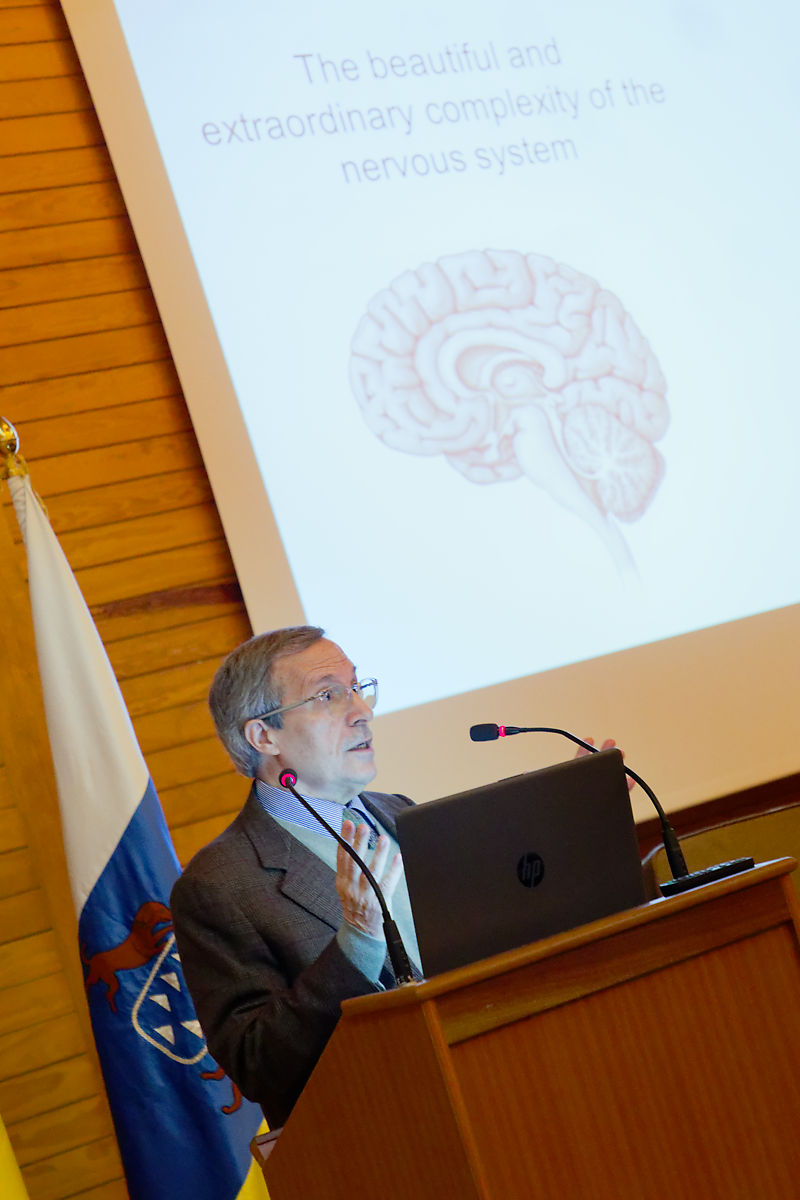
Josep Dalmau's seminar. Photo: Emeterio Suárez.
One example of success was the invitation extended to neurologist Josep Dalmau. “This was initiated by this seminar program, funded by the Vice-Rectorate for Research and Transfer, so that medical students could bring in a researcher who gave a highly influential lecture. We provided him with information, encouraged him, and helped him with all our infrastructure and funding,” explains Giráldez.
One of the ITB's objectives is to consolidate these seminars as a structural part of the research activity at the University of La Laguna. The committee emphasizes that the program has the support of the Vice-Rectorate for Research and Transfer and that the seminars are organized efficiently to maximize their scientific and educational benefits. "The idea is to have a stable, regular, and planned program that allows us to promote our research and strengthen the training of our research staff," Giráldez stresses.
To broaden the scope of each presentation, ITB has launched some short videos with the invited people, with the aim that the entire university community can access the main ideas of each seminar.
In addition to Teresa Giráldez and Olga Tapia, the committee is made up of Itahisa Marcelino, Victor Garcia, Airán Milián, Eladio Frías, and Nair Mesejo. The seminar program also has the support of the Bioavance Foundation, created by the Tenerife Island Council to support the University of La Laguna in the development of biomedical research.

 Spanish
 English
 French