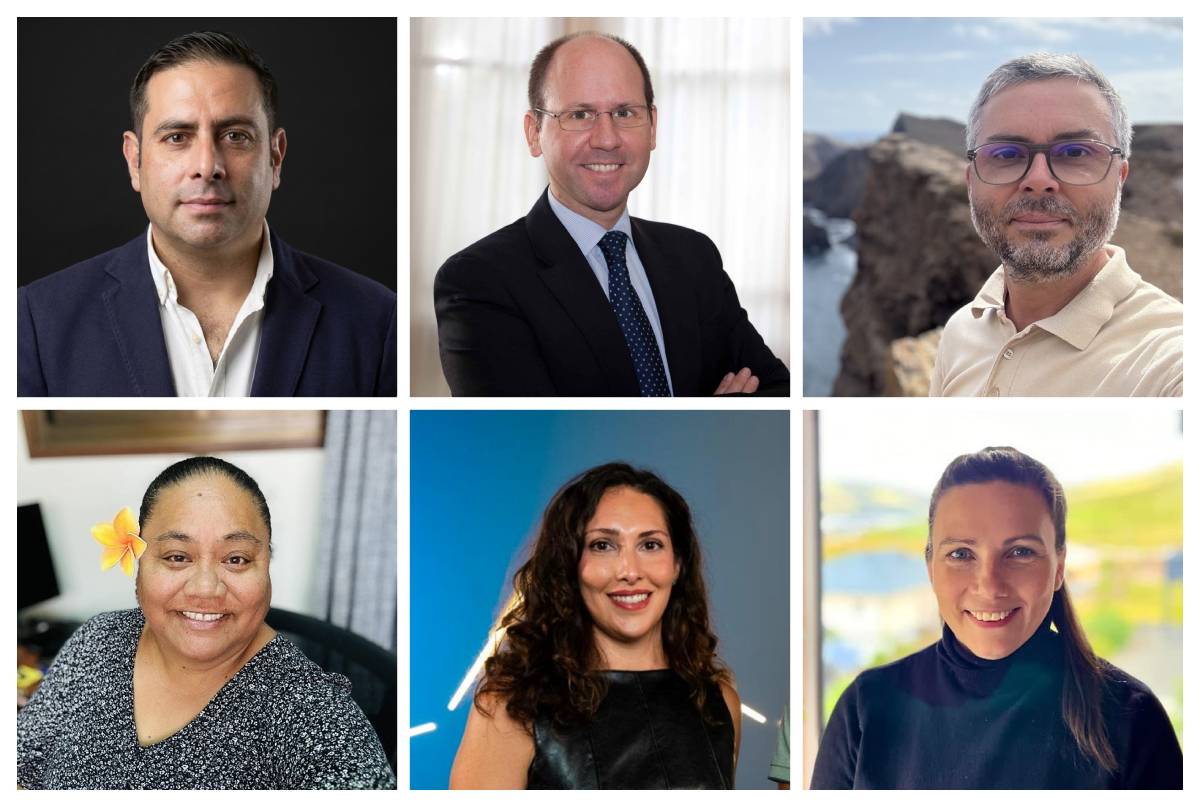
The University of La Laguna has reinforced its role as a benchmark in the analysis of water security in islands with the celebration of the international webinar “Water Security in Island Territories under Climate Change”, a meeting that brought together specialists from Europe, the Caribbean and the Pacific to address one of the major environmental and territorial challenges of the coming decades: ensuring water in island regions subjected to increasing climatic, demographic and economic pressure.
The final roundtable discussion summarized the main conclusions and confirmed a fundamental consensus among geographically distant regions: water security is impossible without diversifying sources, modernizing networks, improving governance, and implementing data-driven planning. In the Canary Islands, the position defended by the University of La Laguna was clear: adaptation requires digitizing the water cycle, closing the loop through reuse, reducing losses, integrating water and energy, and preparing for a more demanding climate scenario.
The meeting concluded with an idea that transcends the webinar itself: the islands need to communicate with each other more frequently, share solutions, and build joint projects. In this regard, the University of La Laguna acts not only as host, but also as an institution capable of fostering knowledge transfer and international cooperation around one of the major challenges of the 21st century for archipelagos: water security.
The initiative, held within the framework of the World Water Day Week 2026, It was organized by the University of La Laguna within the dissemination and transfer activities of the DIVULGAGUA2026 project, funded by the Tragsa Group, with the coordination of Juan Carlos Santamarta and moderated by Noelia Cruz Pérez, Both are from the Department of Agricultural and Environmental Engineering. The meeting was conceived with the aim of placing island territories at the center of the international debate on water, adaptation, and resilience, and establishing a stable network for scientific exchange between archipelagos that share structural problems, even though they are located in very different geographical contexts.
The session was opened by Ignacio González-Castelao Martínez-Peñuela, president of the Water Committee of the World Federation of Engineering Organizations (WFEO), who stressed that islands can no longer be relegated to a footnote in major international water forums. During his address, he warned that the availability of freshwater in these territories is inherently limited and that the convergence of tourism pressure, climate dependence, aquifer fragility, and increasing demand is no longer a future risk, but a present reality.
From there, the webinar drew a comparative map of water challenges in different island territories around the world. From the Faroe Islands, geologist Óluva Eidesgaard, from the Faroese Geological Survey, explained how even in regions with high rainfall, tensions persist related to water quality, the fragmented management of the resource, and the need to strengthen regulation and monitoring, especially after the approval of the country's first groundwater law.
From Martinique, hydrogeologist Benoit Vittecoq, regional director of the BRGM (National Geological Service of France), defended the need to intensify the exploration of volcanic aquifers and warned about the vulnerability of island systems to network losses, the expected decrease in rainfall and the pressure of water-intensive agricultural models.
Regarding the Pacific, Misileti Masoe-Satuala, of the Pacific Water and Wastewater Association, insisted that water security cannot be addressed solely as a technical issue, but also as a matter of social resilience, governance, and community involvement.
The Canary Islands case
In this international dialogue, the University of La Laguna presented the Canary Islands' experience as one of the most comprehensive laboratories for studying water security on volcanic islands. In his presentation, Juan Carlos Santamarta, also a member of the WFEO and the United Nations Working Group on Groundwater, explained the unique characteristics of the archipelago, which comprises eight volcanic islands, a strong dependence on tourism, intensive agriculture in certain areas, and a high degree of hydrogeological complexity.
He also noted that water management in the Canary Islands cannot be understood from a single source of supply, but rather from the combination of groundwater, seawater desalination and regeneration, in a context marked by the reduction of aquifer recharge, the increase in evapotranspiration, seawater intrusion and the aging of some of the hydraulic infrastructure.
One of the most relevant aspects of the meeting was the presentation of tools developed by the University of La Laguna itself to anticipate scenarios and improve decision-making. On the one hand, it was shown SICMA Canarias, a very high resolution climate platform designed for island territories that allows projecting key variables until the end of the century and relating them to water planning.
On the other hand, progress was made on the new cascading failure platform, designed to identify critical nodes in water infrastructure and analyze how forest fires, storm surges, floods, landslides, eruptions, or earthquakes can trigger successive disruptions in the system. Both tools reinforce the idea that water security no longer depends solely on having resources, but also on anticipating vulnerabilities and planning based on scientific evidence.

 Spanish
 English
 French