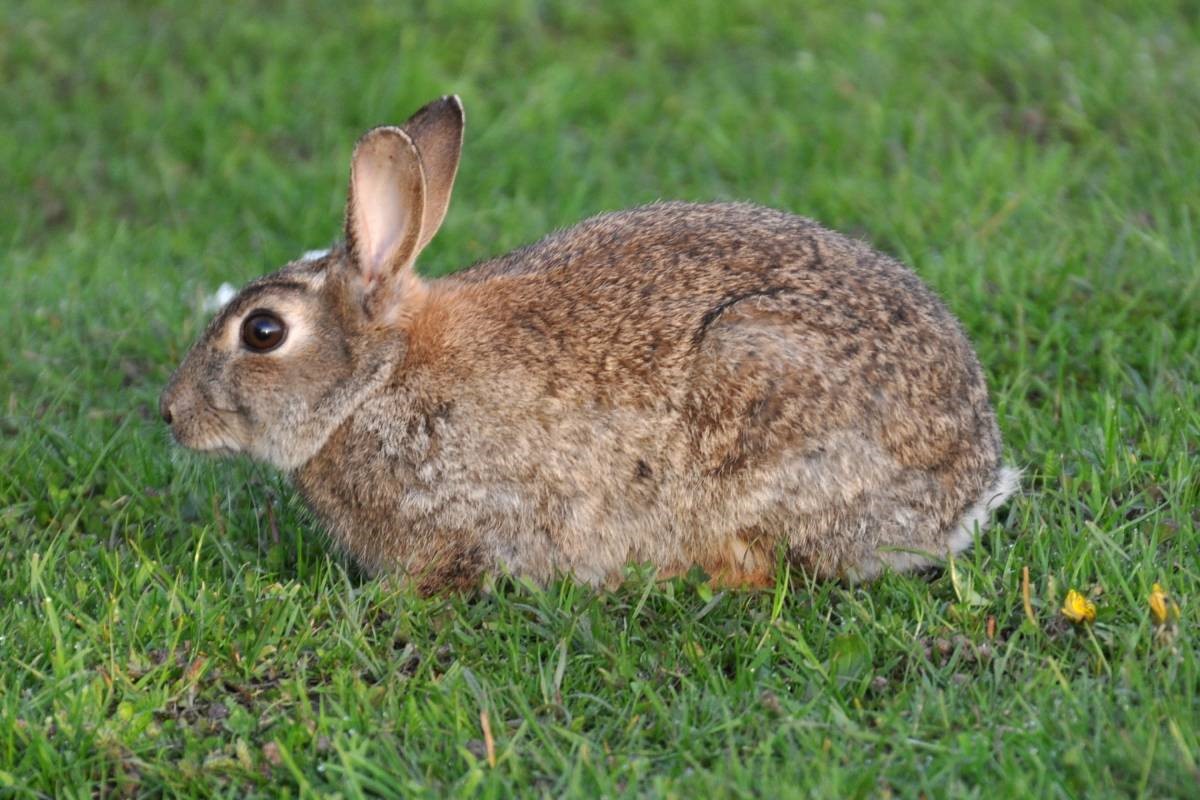
A research team, with participation from Zebensui Morales Reyes, A researcher from the Department of Animal Biology, Soil Science and Geology at the University of La Laguna has published a study that warns of the worrying decline of the Iberian rabbit (Oryctolagus cuniculus algirus) in large areas of peninsular Spain. Specifically, in more than 701% of the areas where it is present, forestry and environmental agents have detected a decrease in its populations in the last decade.
The work has been published in the scientific journal Global Ecology and Conservation and is the result of collaboration between the University of La Laguna, the Institute of Advanced Social Studies of the CSIC, the Research Institute of Hunting Resources (IREC, CSIC-UCLM-JCCM), the Institute of Forest Sciences (ICIFOR-INIA-CSIC) and the Ministry of Environment and Climate Change of the Xunta de Galicia.
The research systematically covers the entire Iberian Peninsula, where the rabbit is a key native species in Mediterranean ecosystems. With responses from 1,956 forestry and environmental agents distributed throughout Spain (761 from the peninsula), the study offers the most comprehensive and up-to-date overview to date of the species' status.
One of the study's main contributions has been the use of forestry and environmental agents as key informants. These professionals, in direct contact with the natural environment, provide a privileged perspective on changes in wildlife. This approach has allowed for a detailed assessment of the rabbit population's status in Spain, overcoming the limitations of other monitoring methods.
An uneven decline among subspecies
The results show a clear pattern: the subspecies Oryctolagus cuniculus algirus, The species, present in the southwest of the Iberian Peninsula and in regions such as Galicia, shows a generalized downward trend. In more than 701% of the areas where it is present, agents report a decrease in its populations over the last decade.
On the contrary, the subspecies Oryctolagus cuniculus cuniculus, The subspecies distributed across the central, eastern, and northeastern parts of the Iberian Peninsula presents a very different picture: 53.6% of the agents in its distribution area reported stable or increasing trends. In fact, in certain agricultural areas, this subspecies has proliferated to the point of causing significant damage to crops, taking advantage of the abundance of food and the protection offered by roadsides and railway lines from predators and hunters.
The study identifies viral diseases, such as myxomatosis and rabbit hemorrhagic disease, along with habitat loss resulting from land-use changes, as the main factors contributing to the decline. In response, the researchers propose a reorientation of species management, advocating for differentiated strategies for each subspecies. Among the suggested measures are habitat improvement, adjustment of hunting pressure (i.e., regulation of hunting), and controlled restocking to prevent genetic impacts.
A keystone species on the peninsula
In mainland Spain, the rabbit plays a fundamental role in the food chain and is essential for the conservation of numerous threatened predators, such as the Iberian lynx and the Spanish imperial eagle. Its decline could have cascading effects on biodiversity. This ecological role contrasts sharply with its role in the Canary Islands, where, as an introduced species, it has a direct impact on native flora and fauna.
The authors emphasize the urgent need to adopt differentiated conservation measures before the decline irreversibly compromises the peninsular Mediterranean ecosystems. Zebensui Morales Reyes' participation in the study was made possible by a postdoctoral contract from the University of La Laguna, the "la Caixa" Banking Foundation, and the CajaCanarias Banking Foundation.

 Spanish
 English
 French