If we were to try to trace the origins of poetry, many sources would agree that the earliest evidence we have of this written literary genre dates back more than 4,000 years, with the first Sumerian and Egyptian inscriptions on cuneiform tablets. Specifically, the tablets known as the "Epic of Gilgamesh," a composition of five different poems, constitute the oldest known epic. It is an epic literary narrative about the exploits of the Uruk king, Gilgamesh, which explores themes such as friendship, courage, and the unattainable quest for immortality.
However, to consider this work as the beginning of poetic creation would be to assume that orality is not part of poetry. Before being written or inscribed on these tablets from ancient Babylon, this literary genre was recited or sung to facilitate the memorization of myths and legends. Therefore, attempting to pinpoint a date for the beginning of poetry remains a challenge for research. But what can be confirmed is that this literary genre endures to this day and forms part of our popular culture and artistic expression.
To support linguistic diversity and promote the teaching of poetry and its oral tradition, UNESCO decided to celebrate World Poetry Day every March 21st. This date also coincides with the spring equinox in the Northern Hemisphere. This is no coincidence, since poetry is generally associated with the beauty of this season, and the metaphor of spring blossoming is often used to compare it to the awakening of emotions that reading a poem evokes. For specialists such as Katya Vázquez Schröder, A researcher in the Department of Spanish Literature at the University of La Laguna, she believes poetry appeals to beauty and emotion, as it manages to stir something within each person. However, she emphasizes that the term needs to be redefined, because beauty can be understood from different perspectives. The philologist quotes the Palestinian poet Marwan Makhoul with the line, “To write poetry that is not political, I must listen to the birds. But to listen to the birds, the bombing must stop.” With this, the specialist wants to reflect how something as painful and horrific as war and death can be transformed into something beautiful, capable of producing empathy and sensitivity. “This is what poetry achieves, and this is where I find the fascination of reading and studying it,” the philologist adds.

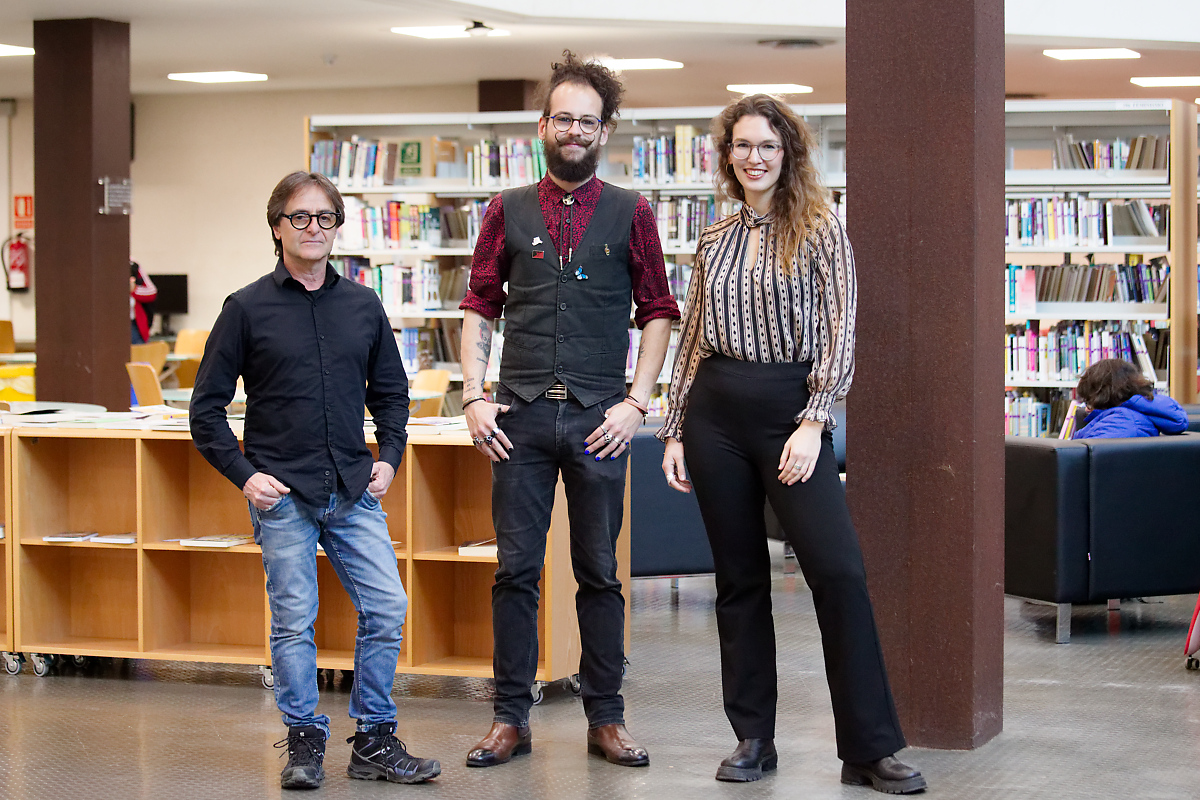
Katya Vázquez Schröder
Migrant memory
Vázquez Schröder focuses her research on contemporary Latin American poetry, specifically Argentine poetry, from the perspective of migrant memory. For the researcher, this literary genre is a way of looking at and paying attention to the world from different perspectives. “Poetry manages to recount events that didn't even happen to you, but that are captured in the stories of your grandmothers or neighbors, and yet it's still true. To speak of other people's reality is also to speak of your own.” The poet mentions the writer and Nobel laureate in Literature, Annie Ernaux, to cite the term autosociobiography, which refers to this idea that when someone talks about themselves, they are talking about many people and even a society, or vice versa.
Thanks to her research, the philologist observes a trend in both Latin American and Canarian poetry: a tendency to look back and question that not-so-distant past that has shaped our present. “What’s special about it, and why I consider it essential as an object of study, is that it uses many resources to tell a story. Even in its silences, pauses, and rhythms, I find ways to explain that context of migration. For me, the fascinating aspect lies not only in being able to read and enjoy it, but also in researching it,” she explains.
Beyond his research work, Vázquez Schröder directs the Literature and Theater section of the Ateneo de La Laguna together with the philologist Antonio Martín Piñero, Martín Piñero, a doctoral candidate in the Spanish Language Department at the University of La Laguna, and his colleague, both researchers, work to raise the profile of young authors in the Canary Islands through this institution. They both note the proliferation of this particular literary genre in the archipelago. “More than 150 authors have been featured since we started at the Ateneo, and there are still many more we haven't been able to give a platform to,” emphasizes Piñero.
For the researcher, poetry, unlike other literary genres, seeks the soul of things. “Studying it is not easy; it means trying to see the meanings hidden behind the signifiers, the poet's personal history, and their socio-historical context.” He emphasizes that within philological studies, this genre demands the development of a whole methodology to understand what is happening in the text. He adds that it also allows one to understand the humanistic perspective of how that person functions when studying their poems.
Poetry can be investigated from different perspectives, and this is demonstrated by the tenured professor of Didactics in Language and Literature at the University of La Laguna, Jesus Sebastian Diaz Armas. The PhD in Hispanic Philology was part of the Literary Translation Workshop at the University of La Laguna, which he directed Andrés Sánchez Robayna. Among her many translations of poems are the anthology of the Italian poet Mario Luzi, and more recently, the translation of the work of the Italian essayist and poet Antonio Prete. “Translating poetry has allowed me to study a great number of works that have enriched my own, and I have discovered, in this other form of creation that is translation, the beauty of constructing a text that is undeniably personal but is based on a text that is not your own,” she says.
Díaz Armas currently teaches in the Primary Education and Early Childhood Education degree programs. He believes that training future teachers to appreciate poetry is essential. With these students, he conducts an oral research project where they ask their families about poems they know or that have been passed down to them. “The interesting thing is that I have students from the Sicue program, or with parents of other nationalities, and the results are fascinating, because you can see that all cultures have created poetry around lullabies or lullabies "And the way to lull children to sleep, and it is interesting to see how these songs allow us to study the female figure inside and outside the home and what her role is in society," explains Díaz Armas.
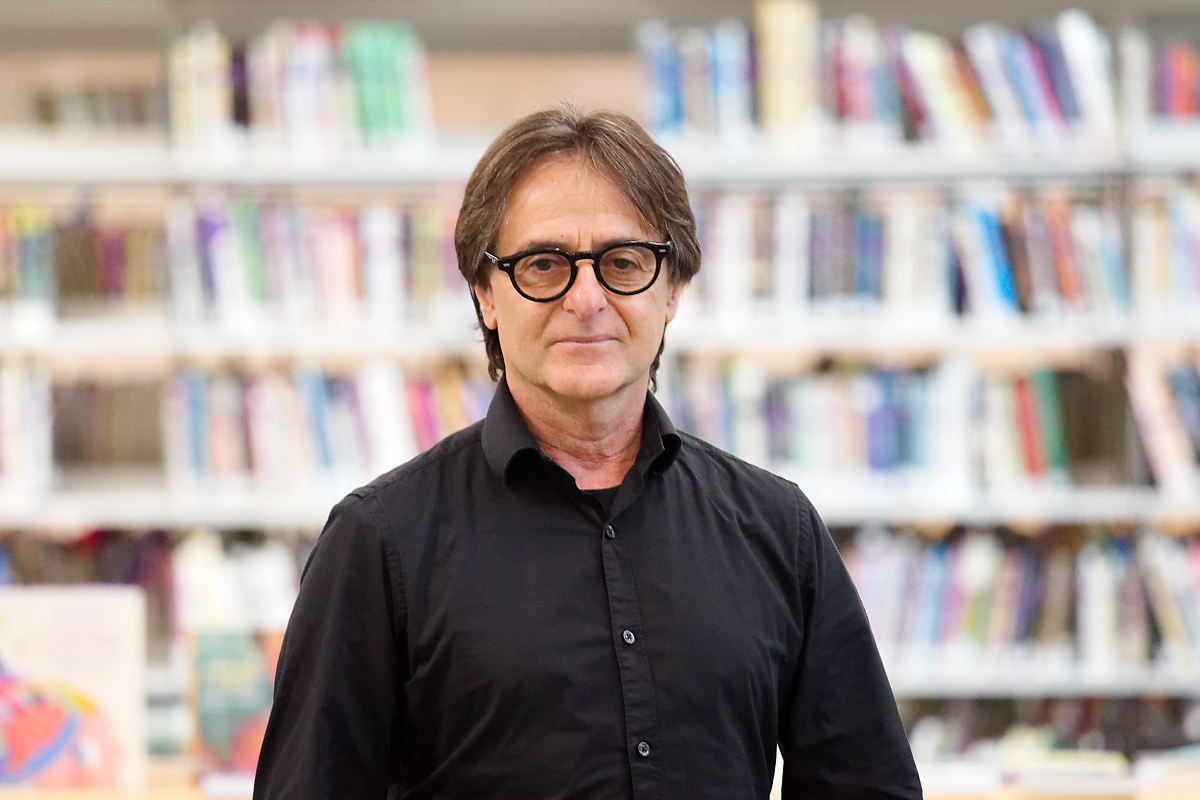
Jesus Sebastian Diaz Armas
The importance of orality
Attempting to confine this literary genre is a complex challenge, because it shouldn't be considered a delimiting space, but rather a place where artistic expression seeks its utmost freedom. Martín Piñero affirms that poetry reminds you that everything has its place and the right to occupy that place: "All events and feelings deserve to have a poem written about them." He maintains that poetry reveals a whole world of serious, sad, harsh, and explicit imagery that moves, stirs, and appeals. "An author who greatly inspired me was Leopoldo María Panero, who wrote about sordid, dark things, about pain, and I remember that he awakened many feelings in me, and for me, that was the beauty of those emotions," he recalls.
Beyond its written form, this literary genre has always been linked to speech and song, being a genre that has been transmitted orally, a point emphasized by our researchers. Díaz Armas maintains that “poetry has always been present; it's just that people are often unaware of it. Sometimes you meet an older gentleman and tell him that what he just said was poetic, and he doesn't believe it because he doesn't grasp the concept of poetry.” The philologist highlights the importance of folk poetry for his studies, such as that researched by José Pérez Vidal in La Palma in his 1987 ballad collections. “There were specific moments, especially when people went to festivals, for example, the Candelaria festivities, when they would sing, recite, and tell stories along the way. All of that is poetry, and somehow that oral tradition has allowed it to reach us today in written form,” Díaz Armas explains.
Vázquez Schröder agrees that the importance of orality should not be forgotten: “There is a lot of poetry in the environment of people who don't even know that it is poetic, but nevertheless there is a construction of language that does make it beautiful.” Within her research on Argentine poetry and migrant memory, she observes how this orality has been reflected a posteriori in those stories, collecting the oral transmission of past generations.
From the perspective of Spanish Philology, the study of this genre reminds us that language is a constant creation. Martín Piñero speaks of the particularity of "poetic license," which is very interesting from a philological point of view because it allows for the use of speech in many ways not included within academic language, but which nevertheless represent a more popular culture. "I'm referring to being able to use the neuter gender, or to being able to recover oral or popular tradition," he points out.
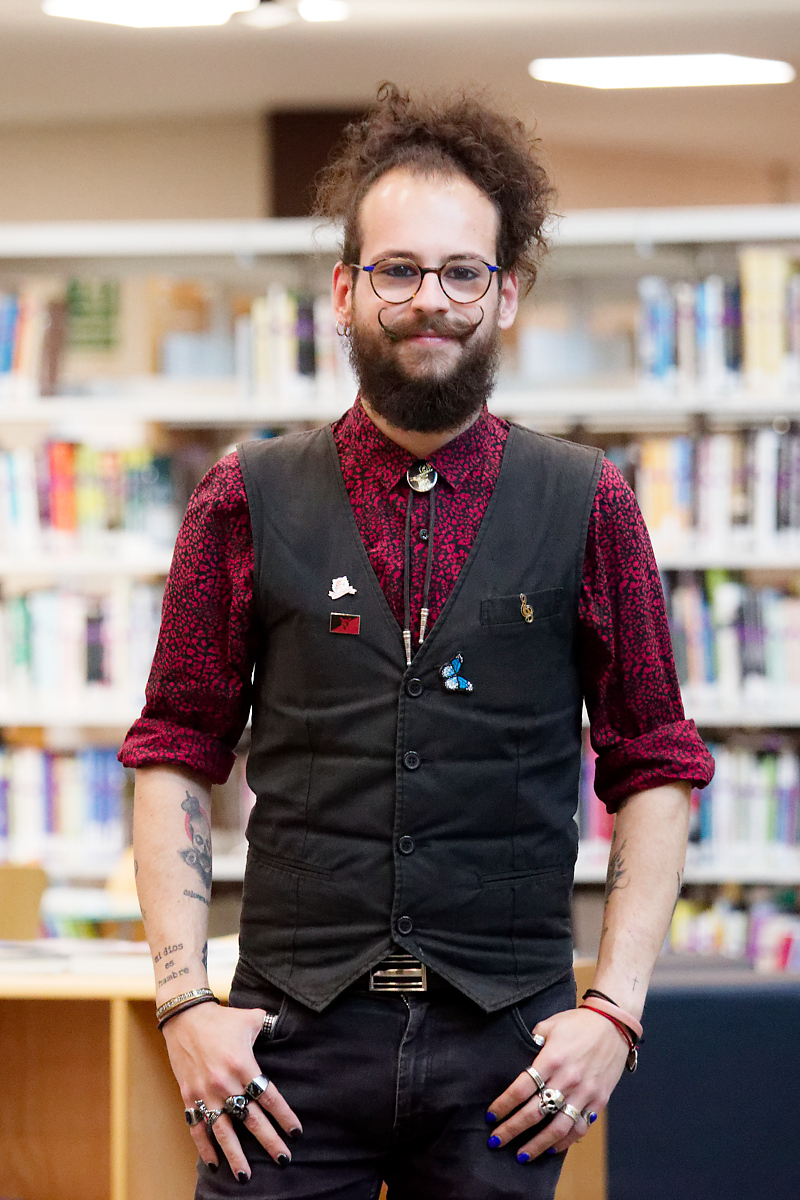
Antonio Martín Piñero
A genre more alive than ever
Thanks to social media, poetry seems to be experiencing a surge in its use and dissemination, partly due to the democratization of being able to write freely in these spaces and publish your stories instantly. “Everyone has the right to write poetry, since this genre offers many freedoms,” declares Martín Piñero. He asserts that although people may find it difficult to understand, they often enjoy reading it because of the way it's told, its composition, and the sound it evokes, as it stirs something pleasant in the reader. He also emphasizes that poetry can be an easier genre to consume within the whirlwind of the internet, where consumption has become faster, and social media algorithms reward immediacy and brevity. “The interesting thing about poetry is that in just a few words, if they are well-chosen and have a certain intention, it should be enough to awaken a feeling within you,” he affirms. Her colleague at the Ateneo de La Laguna, Vázquez Schröder, agrees with this statement that, although it still has a stigma of being something complicated to read or understand, she observes that "many times people who want to start writing their own texts for the first time, do so from poetry.".
Professor Díaz Armas, a tenured professor at the University of La Laguna (ULL), adds that he has observed the significant presence of poetry in primary and secondary school classrooms. "Because it makes extensive use of language, especially expressive language, it fosters a high level of linguistic and literary competence in children," he explains. As a professor of Language and Literature Didactics, he asserts that working with poetry is fundamental for students, from preschool to primary school, not only as a study tool but also as a means of expression.
From his field of study, the specificities of Canarian Spanish, Martín Piñero also observes an increase in this genre within the Canary Islands. Specifically, from a philological perspective, he notes that alongside this increase, there is a revival of Canarian speech and its expressions in literature and poetry. He affirms that currently there is a resurgence of our way of speaking, and this reflects the diversity and popular culture to which this literary genre has always been linked. In other words, this abundance of poetic works has been accompanied by a resurgence of Canarian linguistic identity in these narratives.
But beyond this proliferation of the genre on social media, specialist Vázquez Schröder emphasizes the importance of researching it. She champions the study of poetry as a way to approach one's own writing and understanding of language, and how researching it fosters one's own creativity. "For me, it's fundamental, and I'm completely influenced by what I read, and that ends up forming a collage of what I write as a poet," she says.
Challenges
Currently, poetry faces significant challenges within academia. According to this Argentinian philologist, one of the challenges that research into this genre must address is working from a creative perspective within academia. She argues that it often seems as though one must choose between rigor and creativity, but she asserts that writing itself can create new avenues that are useful for both research and teaching. Another idea that the specialist also champions is opening doors for all young people who are beginning to write poetry, and encouraging universities to research it. "Research fosters your own creativity and serves as a method for creating poetic texts," she points out.
Díaz Armas champions this same idea of fostering research, encouraging students to rediscover all those texts and poets that remain unexamined. She also emphasizes that not all research has to focus on discovering new authors; many previously analyzed works can be revisited. “I find it incredible that poems by Quevedo and Góngora are still being researched by new generations, and that people continue to write about them, finding new resonances,” she explains. The interesting thing about this genre, she concludes, is that it allows for reading and rereading a work, always revealing a new line of inquiry. This makes it possible for this field to attract more researchers who will continue to advance the construction of an unlimited theoretical framework.
For his part, Martín Piñero adds that the other major challenge facing university institutions, and more specifically philological studies, is to refocus on society and the importance of the outreach work that researchers must carry out, so that everything studied and researched is done with the purpose of sharing it with the public. The philologist reiterates that there is an obligation to give back to society all poetic research, because it forms part of our popular culture, and therefore these studies belong to society.
(This report is part of the InvestigaULL Commemorations Calendar, a science outreach project promoted by the University of La Laguna)
Scientific Culture and Innovation Unit (Cienci@ULL)

 Spanish
 English
 French