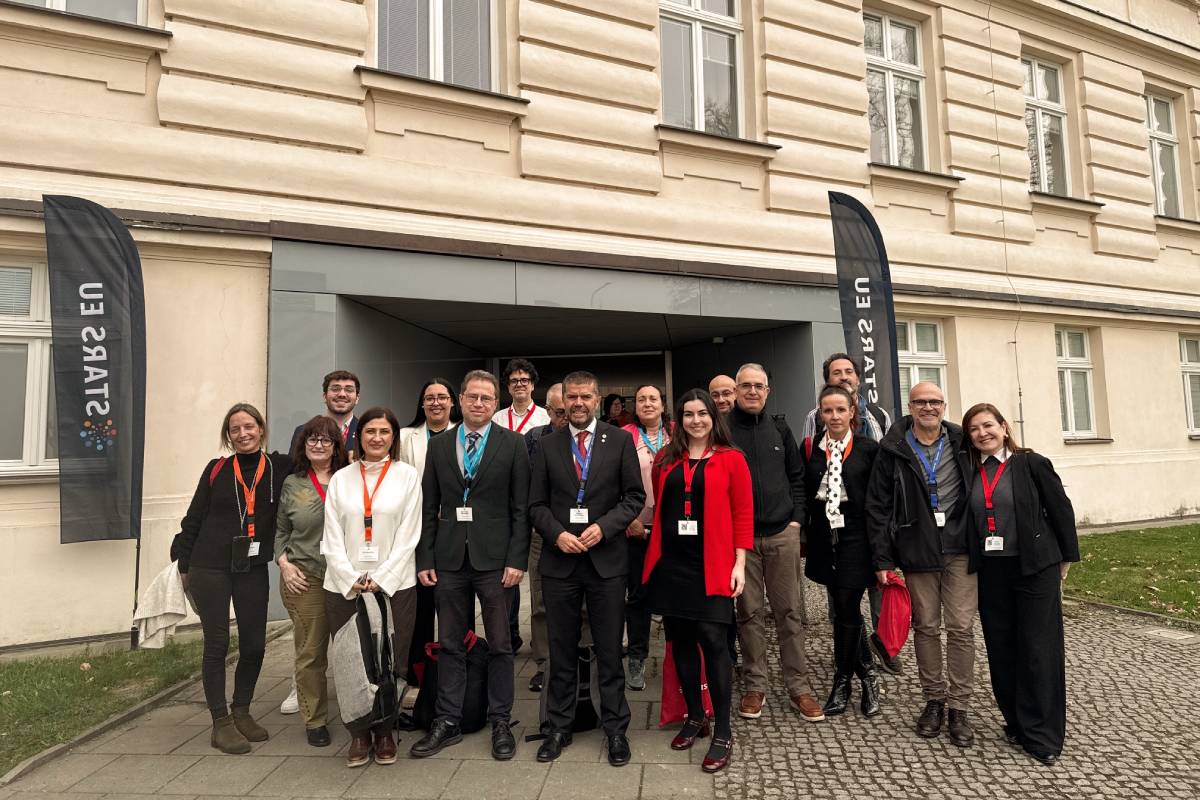
A delegation of fifteen people from the University of La Laguna, headed by its rector Francisco Garcia, traveled this week to the Czech city of Opava to participate in the annual conference of the alliance STARS EU, The meeting, which runs from today, Wednesday the 25th, until Friday the 27th of March, is under the theme "Transformative Education for the Future of Europe," as this year's meeting has focused on educational innovation.
The rector points out that tomorrow, Thursday the 26th, will be especially relevant because the meeting of the STARS EU Commission, composed of the rectors who make up the alliance, will take place to address some crucial issues for the future of this organization, such as a new governance model that includes greater integration.
“We are going to work on a general agreement in which we will establish the rules of operation and decision-making. We will also evaluate the current status of some of the most important objectives of our alliance, such as joint degrees—the joint degrees—, in which the University of La Laguna is actively participating in the creation of a master's degree with two other universities in the alliance,” García explains.
Following that meeting, the agreement will also be formalized with his counterpart from Aleksandër Moisiu University in Durrës (Albania)., Shkëlqim Fortuzi, to launch what will be the first joint doctoral program within the alliance.
“This meeting is an opportunity to continue advancing the European Universities program, which I believe is a new milestone in the history of the European Union, comparable to the Erasmus program and, certainly, one of the main elements contributing to creating the idea of Europe as a continent committed to education, the rule of law, and a rules-based development model. In these times, This program is taking on even greater importance. We are gambling with the future.”.
Parallel sessions
This morning's opening ceremony was held at the Silesian Theatre, featuring speeches by Dick Pouwels, Rector of the Hanze University of Applied Sciences (Netherlands) and coordinator of the alliance; Tomáš Gongol, Rector of the host institution – Silesian University in Opava; Roman Klepetko, Deputy Director of the Czech National Agency for International Education and Research; and Jan Veřmiřovský, Deputy Governor of the Moravian-Silesian Region.; The deputy mayor of the city of Opava, Michal Kokošek; and the opening speaker, Elinor Vettraino, from Aston University in Birmingham (United Kingdom), who gave the lecture “The Human Algorithm”, in which she advocated for a bolder, group, critical and open university education to face the uncertainty that seems to be the norm for the future.
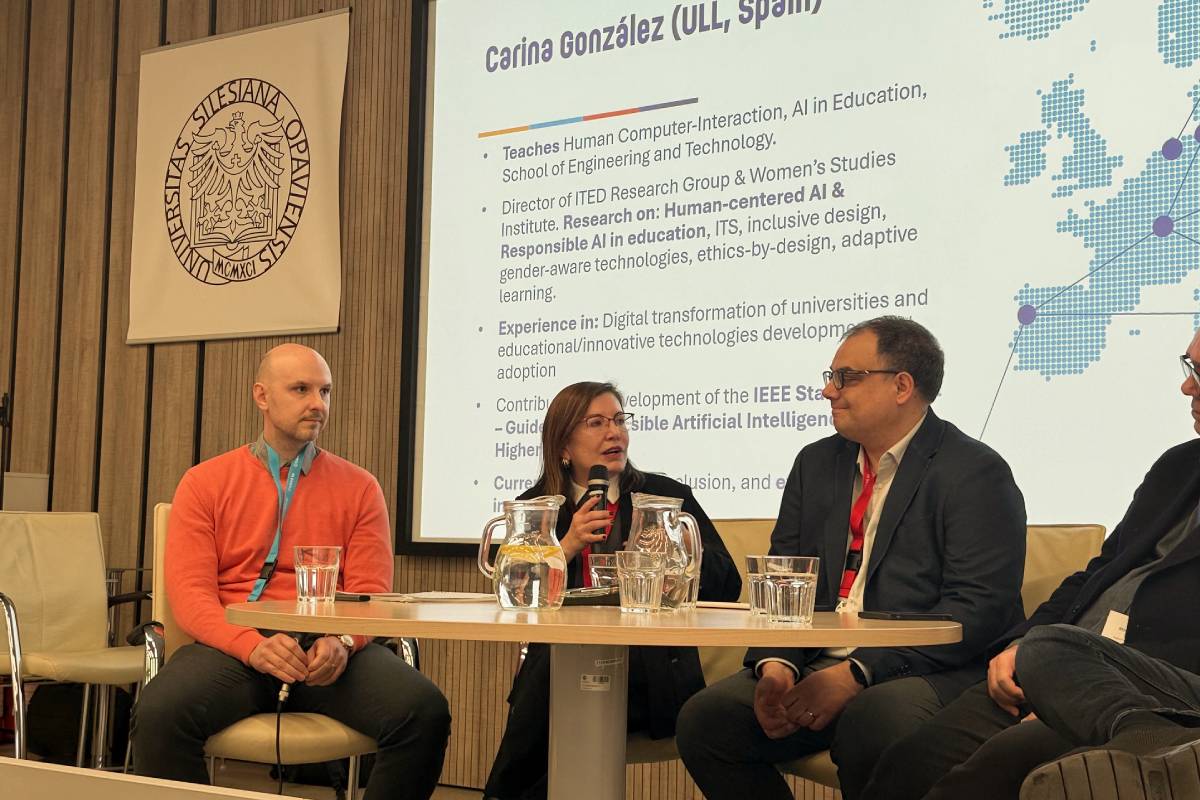
Carina Gonzalez.
Following the opening, the session moved to the Faculty of Public Policy, the venue for the working meetings, where the morning session featured two simultaneous open debate panels: “Human-centered Artificial Intelligence and flexible pathways: making a truly transformative digital transformation,” with the participation of the Professor of Architecture and Computer Technology at the University of La Laguna Carina González; and “From the classroom to the region: transformative education as an engine for the European transition”, which featured the participation of Angel Acebes, from the Physiology area of the Canary Islands center.
Carina González explained that her panel addressed how Moving from a technocentric, tool-based view of AI to a more human-centered one. “All universities have been adopting AI since 2022, but we must analyze how to create ecosystems, increase its educational potential, and integrate this technology into the curriculum,” which also involves a process of AI literacy. “We need to bridge the gap between faculty and students, and also learn how to use AI critically and ethically.”.
González participates in the alliance within the work package on innovative teaching methodologies, which also includes compiling innovative experiences with artificial intelligence being implemented by STARS EU academic institutions. “Tomorrow we will dedicate the entire session to co-creating AI-based solutions for all the alliance's universities, applicable in all areas. We call them 'Light Talks', that is, conversations that inspire the development of concrete proposals.‘.
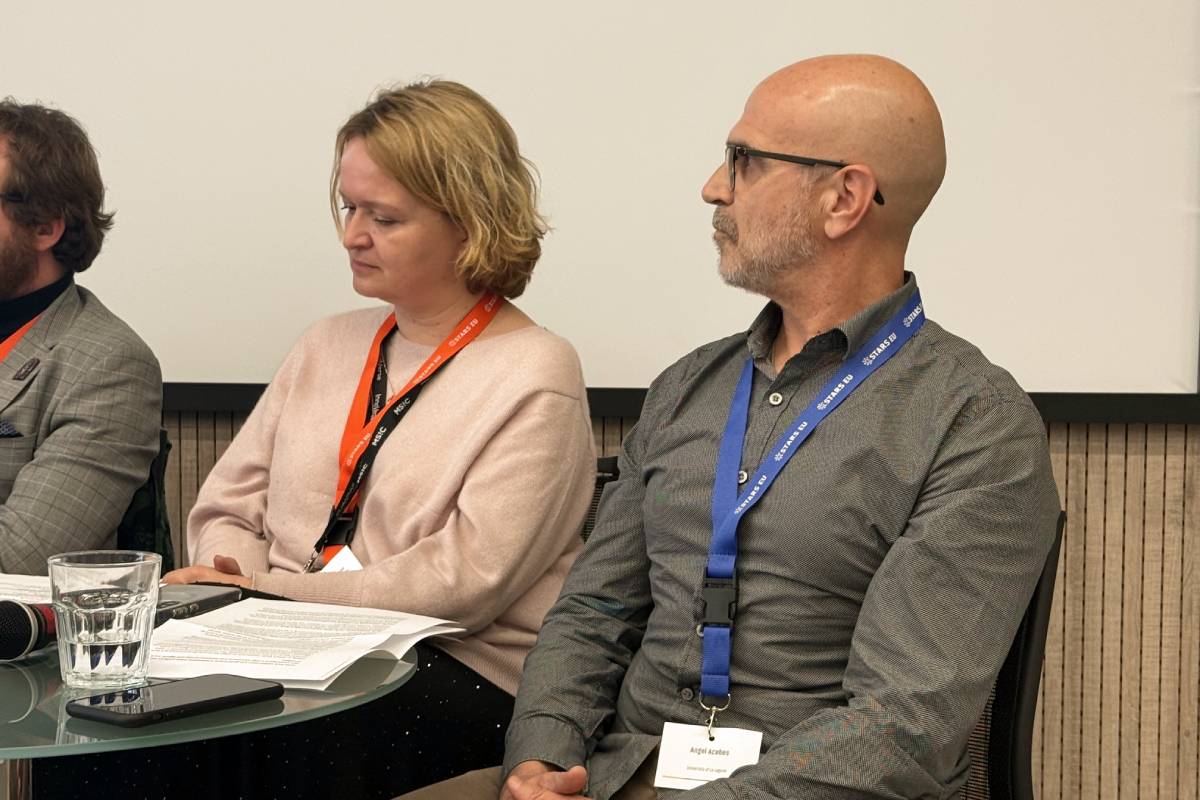
Angel Acebes.
During their panel, Ángel Acebes and the other panelists addressed the importance of making the university a more accessible space for new generations, as they are the leaders of the future. The professor from the University of La Laguna emphasized the importance of involving the organizations, institutions, and companies behind universities in the educational transformation process. He gave the example of creating a new degree program that integrates Biology and Medicine, which, as a new degree, takes at least two years. He compared this lengthy and complex process to a large dinosaur struggling to move.
Regarding how to change and adapt the academic curriculum, Acebes referred to the need for flexibility and adaptability, while also addressing an essential shift in mindset. As for the challenges universities must face, the panel mentioned the need to involve stakeholders more –stakeholders– and have the ability to make the leap from the local to the regional level. As Acebes himself pointed out, “Go out and explore other ways of thinking.”.

 Spanish
 English
 French