The United Nations declared 2025 the International Year of Quantum Science and Technology, a commemoration coinciding with the centenary of the first theoretical developments in quantum mechanics. The initiative aimed not only to bring this discipline closer to the general public but also to highlight its growing impact on everyday life. What for decades was a field of research confined to specialized textbooks has now become one of the driving forces of scientific and technological innovation.
Quantum physics studies the behavior of matter at its smallest scale, where particles such as electrons and photons obey very different rules than those of the visible world, especially under conditions where their effects become more evident, such as at very low temperatures.
Over the course of a century, key figures such as Erwin Schrödinger, Werner Heisenberg, and Paul Dirac have demonstrated that, in the microscopic universe, and also in certain collective systems, phenomena like superposition, entanglement, and superconductivity defy classical intuition. Far from being mere theoretical curiosities, these effects have opened the door to advances in new materials, ultra-precise measurement systems, and more secure communications, as well as fueling the global race to develop quantum computers, one of the major milestones pursued by the so-called second quantum revolution.
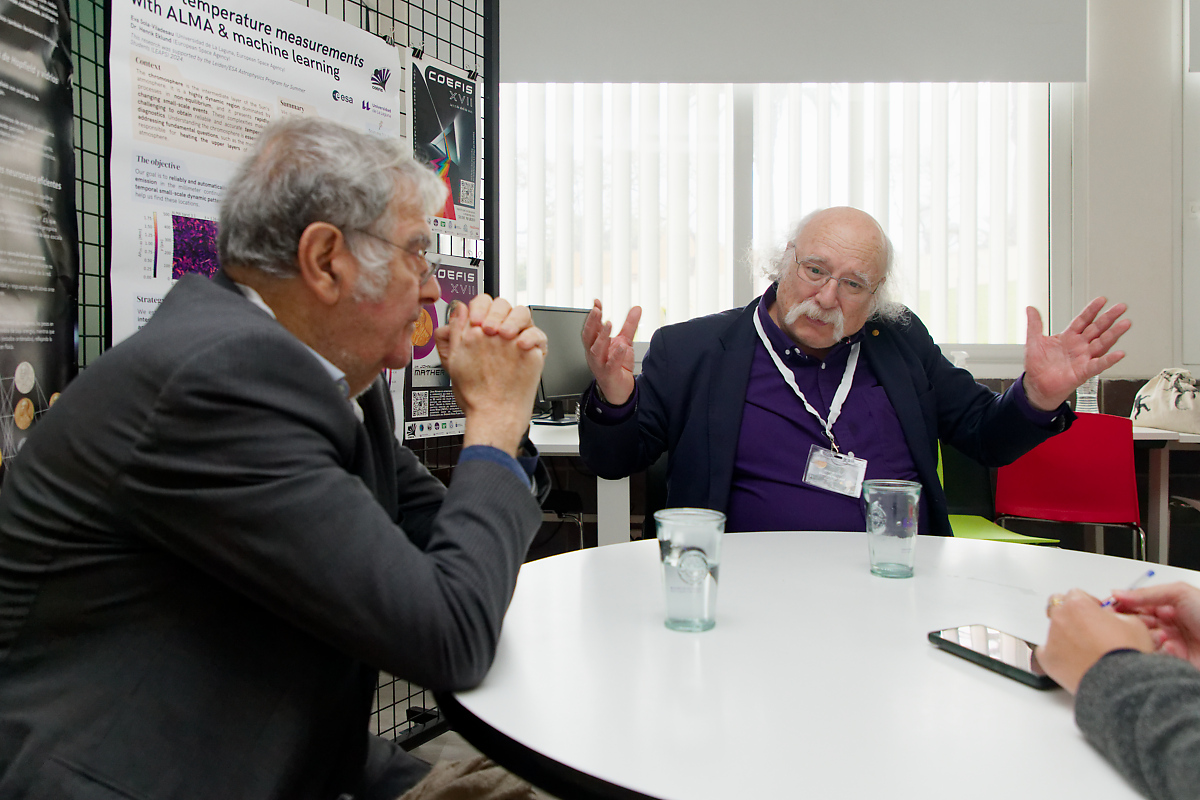
Serge Haroche, professor at the Collège de France, and the British theorist Duncan Haldane
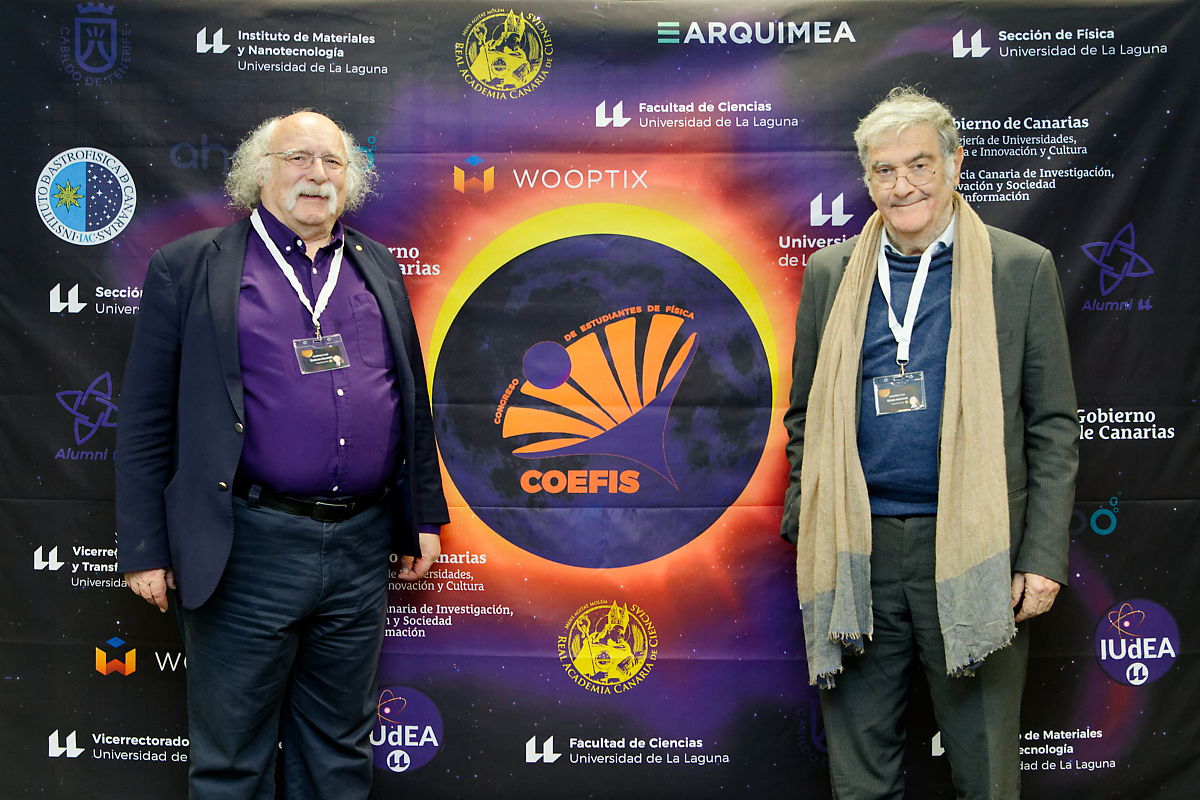
In this context of scientific effervescence, the Physics Students Congress of the University of La Laguna (COEFIS) recently brought together two international references in the field: the experimental physicist and Nobel Prize winner in Physics in 2012 Serge Haroche (Casablanca, 1944), professor at the Collège de France and the École Normale Supérieure in Paris and a pioneer in quantum optics; and the British theorist Duncan Haldane (United Kingdom, 1951), professor at Princeton University and awarded in 2016 for his contributions on the topological phases of matter. Both offered an exceptional opportunity to approach the foundations and promises of a discipline that is redefining the future.
In his presentation to young researchers, Duncan Haldane addressed the prospect of a second quantum revolution, as well as the development possibilities arising from advances in the understanding of topological quantum states and entanglement. He explained that quantum physics has become an increasingly broad and diversified field of study, although more direct technological applications are still awaited.
“Recent research, such as studies on innovative experiments with graphene or on the fractional quantum Hall effect, shows that there is enormous activity in this field, but for now most of it is carried out in an experimental and theoretical setting. It remains a vibrant field of study, and there are still many interesting questions to be answered, although it would be great if some technology emerged from all of this,” he adds before emphasizing that, in this field, most of the major discoveries have been completely unexpected.
In this regard, he is particularly optimistic about the development of new materials, driven by the growing ability to control matter at the microscopic scale. “I think the most immediate application is in new sensor technologies. I believe these practical applications will have a shorter-term impact. Using quantum mechanical principles to make extremely precise measurements could have applications in agriculture, as well as in many other fields.”.
The Nobel laureate asserts that “one idea is to map the Earth’s surface using highly precise magnetic field measurements. These gravitational measurements at the atomic level are also being used to observe with great accuracy the characteristics of the terrain and what lies beneath it, so they have clear real-world applications, even if they seem less spectacular to us.” He also points out that these kinds of direct applications can facilitate access to scientific and technological development in small or emerging countries, fostering the creation of smaller-scale industries in this field.
Basic science versus the pressure of applied science
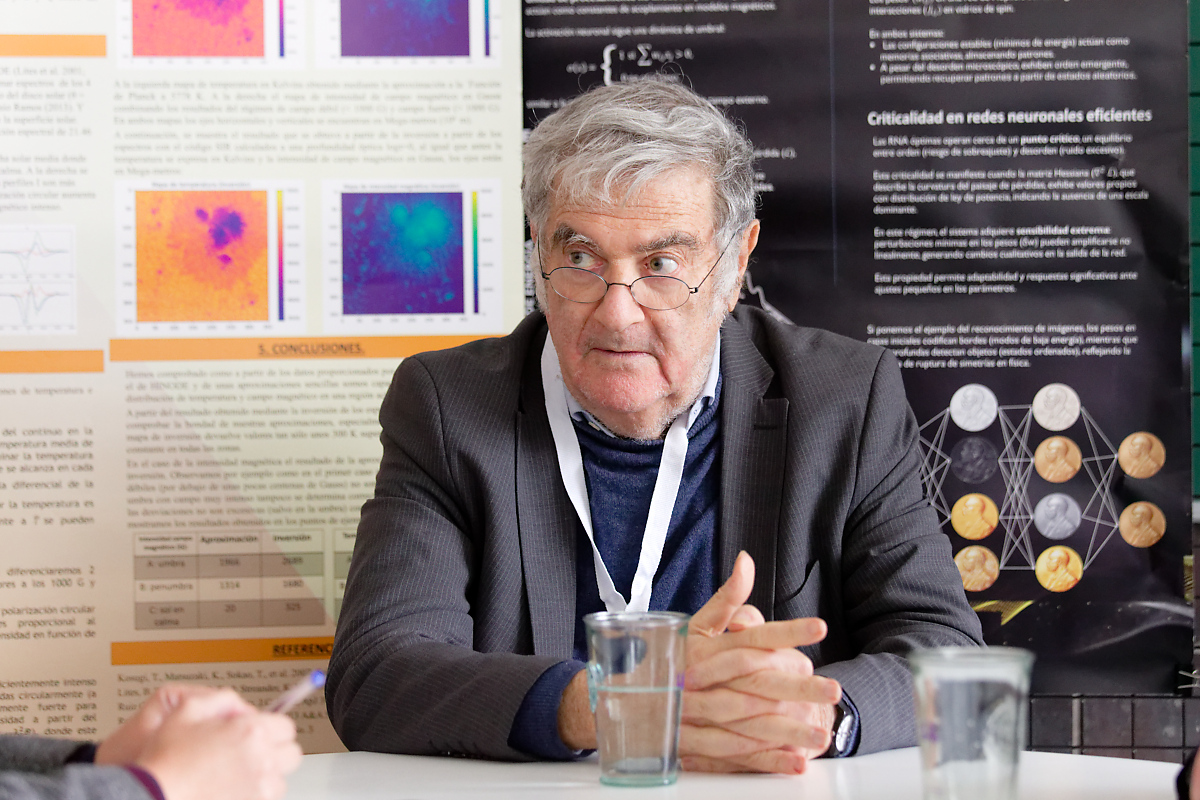
Serge Haroche
According to Serge Haroche, there is an excessive interest in defining the terms of this second quantum revolution and in anticipating the applications of research in theoretical physics. In fact, during the interview, he expresses particular skepticism about the development of quantum computing and the current tendency of politicians and funders to prioritize applied research without understanding the importance of a solid scientific foundation.
“I think that when we do basic science, we never know where it will lead us. All past examples show that the distance between a fundamental discovery and its resulting application is not only unpredictable, but generally very wide. The founding fathers of quantum physics—Heisenberg, Schrödinger, Bohr, and Dirac—never claimed to be leading a revolution; they simply worked, and the advances followed one after another. Today, scientists are forced to justify their work by announcing future applications and technologies, without any guarantee that they will ever be achieved,” he points out.
For the French scientist, one of the most fascinating aspects of the evolution of physics throughout his career has been witnessing how traditionally separate fields of study have begun to converge. “For example, Duncan and I approached the idea of quantum information from very different starting points: he, by observing the emergent properties of large ensembles, while my research has focused on the study of individual particles. This allows us to address problems from different angles and arrive at more interesting conclusions,” he notes.
Therefore, during his presentation to students and young researchers in Physics at COEFIS 2026, Haroche emphasized the importance of “the usefulness of useless knowledge.” His talk focused on the value of basic research, even in fields seemingly far removed from immediate applications, using quantum physics as an example. “What attracts brilliant minds to science are the fundamental questions, trying to understand the world, the universe, and this is why it is so important to promote research in basic science,” he stressed. He added that investment in science should not only be encouraged but also properly directed, and he lamented the decline in funding for basic research.
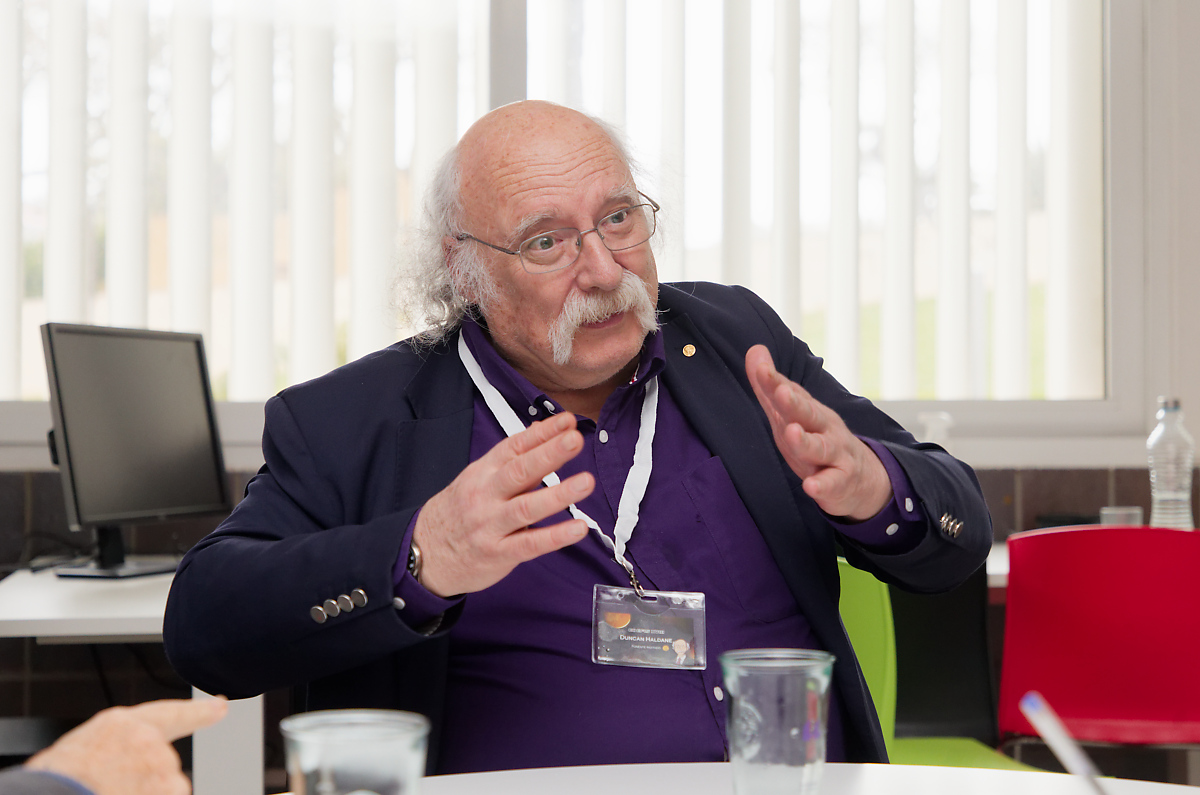
Duncan Haldane
He also criticizes the competitive climate fostered by large technology companies as unhealthy, as it creates dynamics in which small academic laboratories cannot compete. In this regard, he argues that the optimal solution would be to achieve combined funding, in which universities and academic institutions, with government support, would support young scientists dedicated to basic research, while private companies would collaborate in the subsequent application-oriented phases.
In this regard, Duncan Haldane agrees that the desire to make discoveries in basic science remains one of the main drivers of high-quality research. “I think it’s very important that even the smallest countries have one or two research centers where world-class science is being conducted, as this serves as a way to bring scientific culture to society and inspire new vocations,” he points out.
Education and inspiration
The British scientist adds that universities play a fundamental role in this process, although he also emphasizes the importance of primary and secondary education. “Most of the people I’ve met who have been successful in their scientific careers tell the story of a science teacher who inspired them in school,” he says, before highlighting that this early stimulation is key to sparking an interest in science. “Not everyone will end up in top-level research positions, but they will have received a scientific education and a way of thinking that will be very useful to them in whatever roles they pursue,” he points out.
For Haroche, the importance of science education in the early stages of schooling is especially evident in mathematics: “You very often find people who tell you they don't understand or enjoy mathematics, and this is because they didn't receive a good education that showed them its usefulness and the essence of its function,” he states. He also calls for greater investment in education and a better appreciation of the role of teachers.
Both award-winning scientists developed their research careers at academic institutions where they combined research with teaching. “A very important aspect of research is the transmission of knowledge and experience to the younger generation, so I believe it is essential not to separate research from teaching,” Haroche insists.
The French researcher emphasizes that his experience at the Collège de France was particularly enriching in this regard, since “at this institution you have to explain the research you are developing to people who do not belong to your same field. This need for clarity can give you ideas about elements you have not taken into account or experiments that can help you understand certain processes or phenomena more deeply,” he underlines.
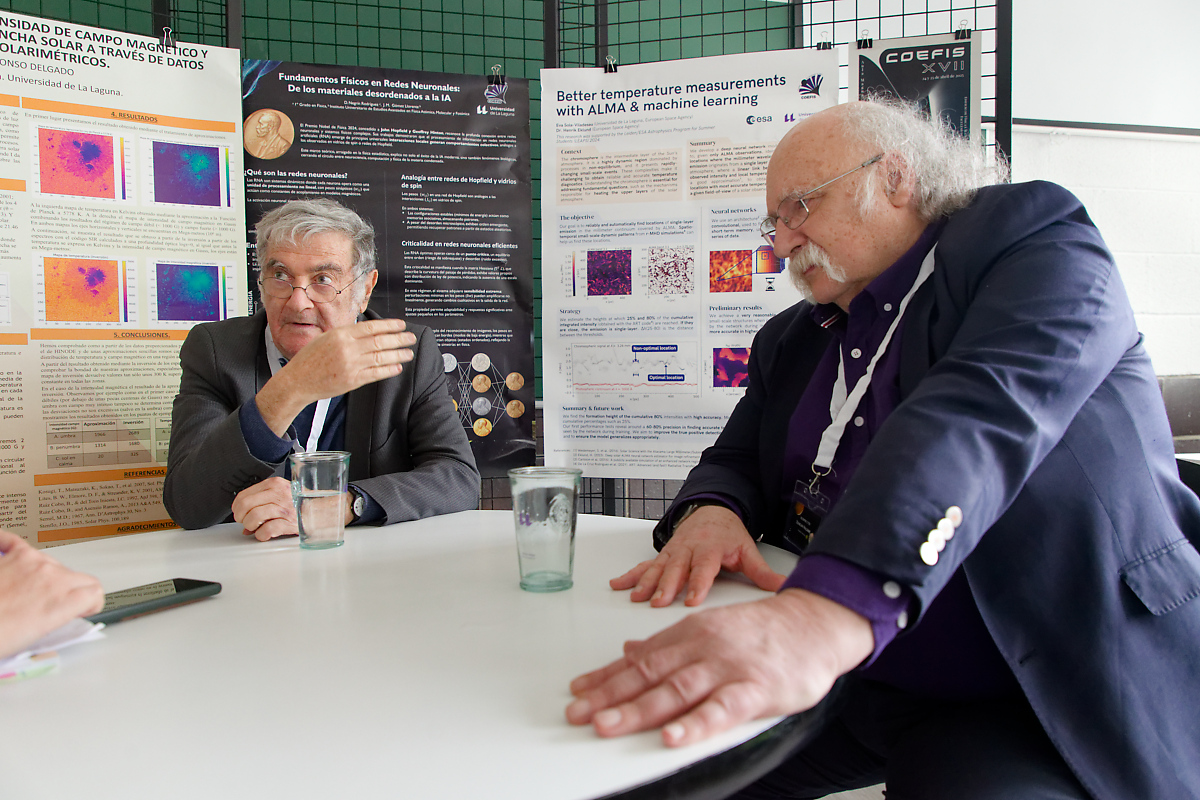 Haldane shares this view. The British physicist has spent much of his career at Princeton University, where, he explains, he continues to teach both advanced courses and courses for first-year undergraduate students. “Sometimes your brain is stuck working on a project, and instead of continuing to bang your head against the wall, the exercise of explaining, for example, Newton’s laws, can inspire you to look at things differently, helping you overcome that hurdle,” he says.
“One of our privileges as scientists is to understand the beauty and depth of the scientists who came before us in previous centuries in their efforts to better understand the world,” says Serge Haroche. In this regard, both researchers emphasize their debt to the physicists who came before them and who, in many cases, acted as mentors throughout their careers.
“In the field of modern physics, it is clear that my work has its origins in the discoveries of great figures in 20th-century physics such as Otto Stern and Isidor Rabi, who in turn influenced the generation of Alfred Kastler and one of his first students, Claude Cohen-Tannoudji, all of whom were awarded the Nobel Prize during their careers,” acknowledges Haroche. Cohen-Tannoudji was a mentor to the French physicist, who emphasizes both this necessary deference to previous generations and the influence of the historical context in which scientific ideas emerge and key decisions are made in a research career.
Curiosity as a scientific driving force
Haroche points out that, in his case, the space race to the Moon was one of the main stimuli that sparked his interest in science during childhood. “I was fascinated by the fact that I could calculate, simply using the mathematical skills we had at the time, the trajectory of a rocket and the speed it needed to reach to escape Earth's gravitational field. For a child interested in the stories of the great explorers of the 19th and 20th centuries and the novels of Jules Verne, the race to the Moon was an adventure that combined science with exploration,” he recalls.
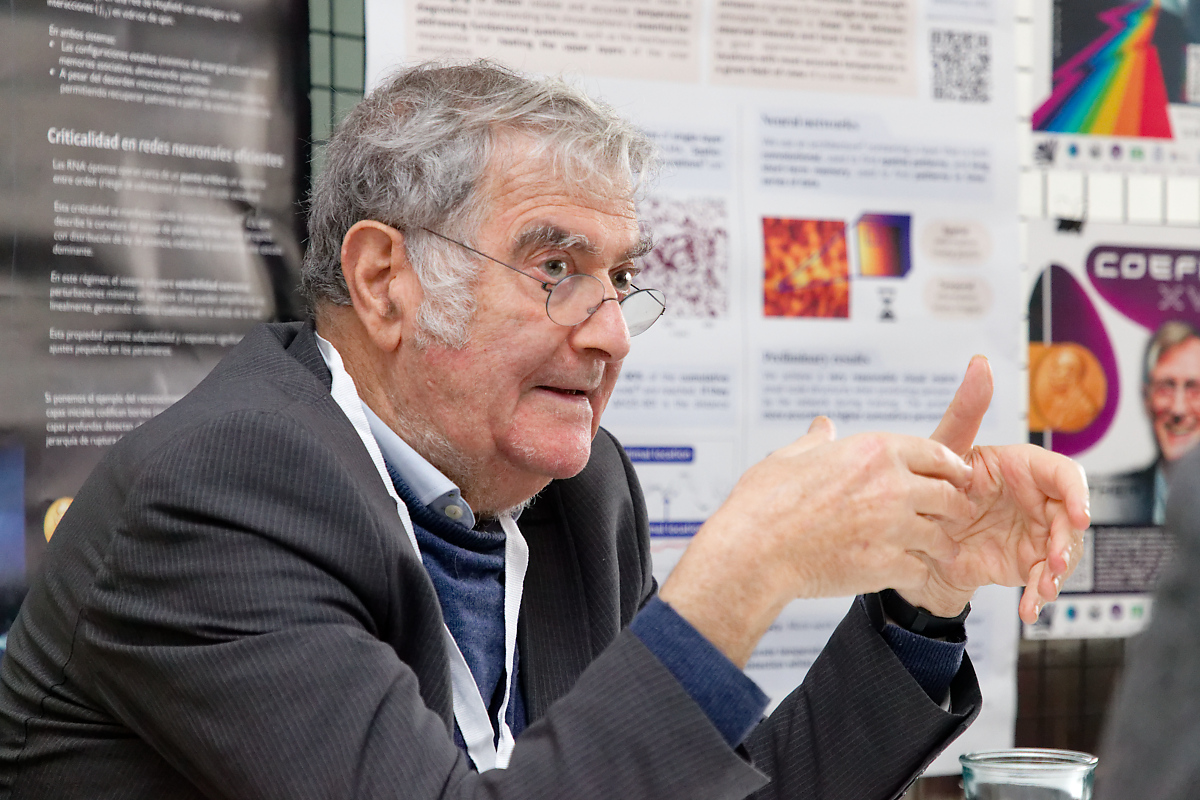 Currently, he believes that the search for exoplanets and life in the universe can play a similar role as a driving force for basic science. “Beyond naive dreams of colonization, it is clear that we need to know what is out there in the universe, and to do this, it is necessary to increase the precision of our measurements by developing new optics and technologies. These discoveries, in turn, become byproducts that can result in useful tools for advancing other branches of science on our planet, even if we don't yet know what those tools will be. This is the value of the big questions in science,” he emphasizes.
For Haldane, “experimentation is the source of all knowledge.” In this sense, the lack of access to experimental methods for addressing some of the great questions of theoretical physics, such as string theory or the role of the graviton, constitutes both a challenge and a stimulus for the development of new lines of research.
Therefore, they believe that conferences like COEFIS are essential for maintaining contact with new generations of physicists and understanding their concerns firsthand. Both agree that future scientists must be passionate about their chosen path and opt for areas that spark their curiosity. They add that success in a scientific career depends largely on luck, although they emphasize that, especially at the beginning of a research career, it is essential to remain open to different ideas and fields of work.
In Haldane's case, she considers it crucial to expose oneself to multiple areas of knowledge and remain open to new learning. “I always tell graduate students to attend as many seminars as possible, since in these spaces they can learn something new or even get ideas for making connections between their work and that of another researcher. The most fruitful thing is being able to realize that something you already know can be used in a different area and offer a new perspective,” she insists.
Finally, Haroche adds the importance of scientific intuition in identifying those lines of research that may prove most promising in the long term. “A scientific life won't be easy, especially at the beginning, as there is a lot of competition. Therefore, you need to feel comfortable in your scientific environment and find your own niche,” he points out.
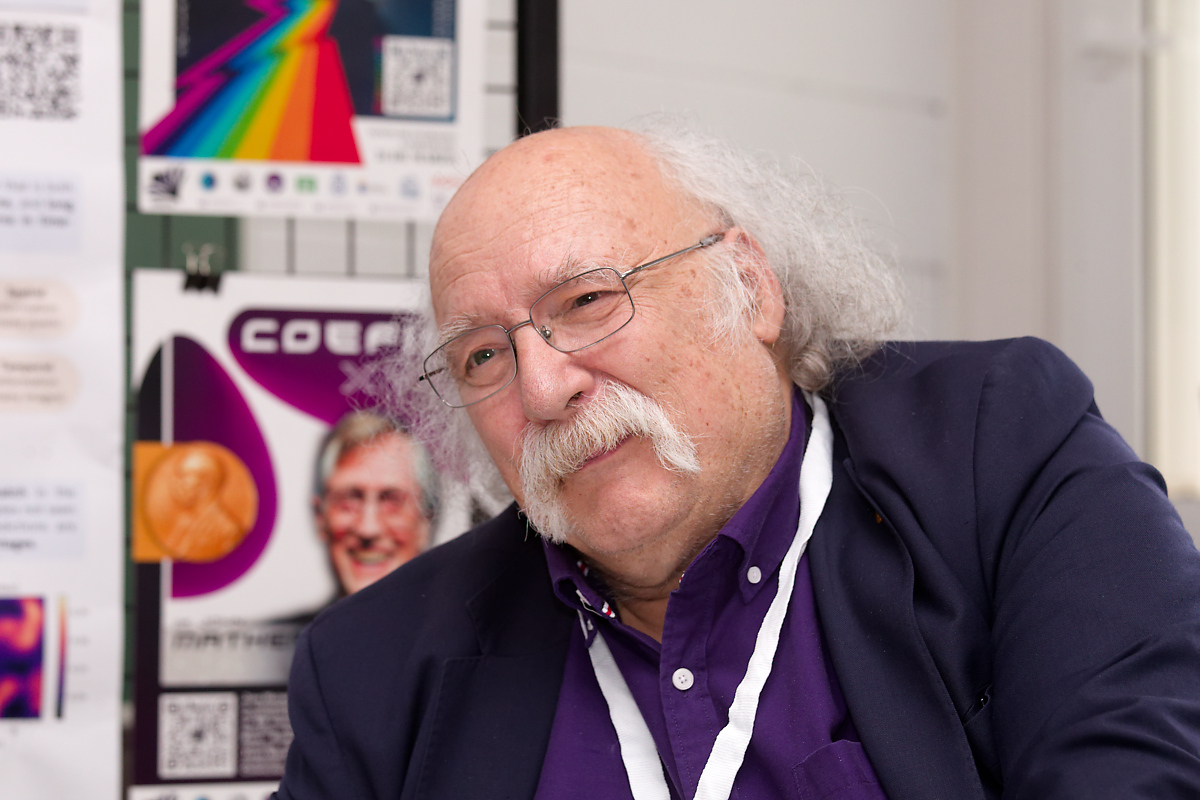 In his case, the development of the laser as a scientific tool early in his career allowed him, as an experimentalist, to develop projects that were previously unthinkable. Currently, he maintains that there are great expectations surrounding artificial intelligence, which he considers a useful tool for both basic science and, especially, applied research. However, he insists that it will remain just a tool: “The creativity and imagination of a human brain are needed to advance science. Added to this are the emotions that accompany these qualities, the ambition to discover new things… All of this is also influenced by the connection with other people interested in these advances and the competition that arises,” he emphasizes.
This competition, they add, should be understood not as a cutthroat dynamic, but as a form of emulation, a force that drives one to improve their own work by learning from the example of others. They hope that their reflections will inspire new generations of theoretical and experimental physicists to continue exploring these big questions.
“Every few years there’s a new surprise, a new discovery. That keeps everyone younger, because there are always new problems to solve,” says Duncan Haldane. “And, in our case, it makes us want to live longer, if only out of curiosity about where they’ll lead,” adds Serge Haroche.
Scientific Culture and Innovation Unit (Cienci@ULL)

 Spanish
 English
 French