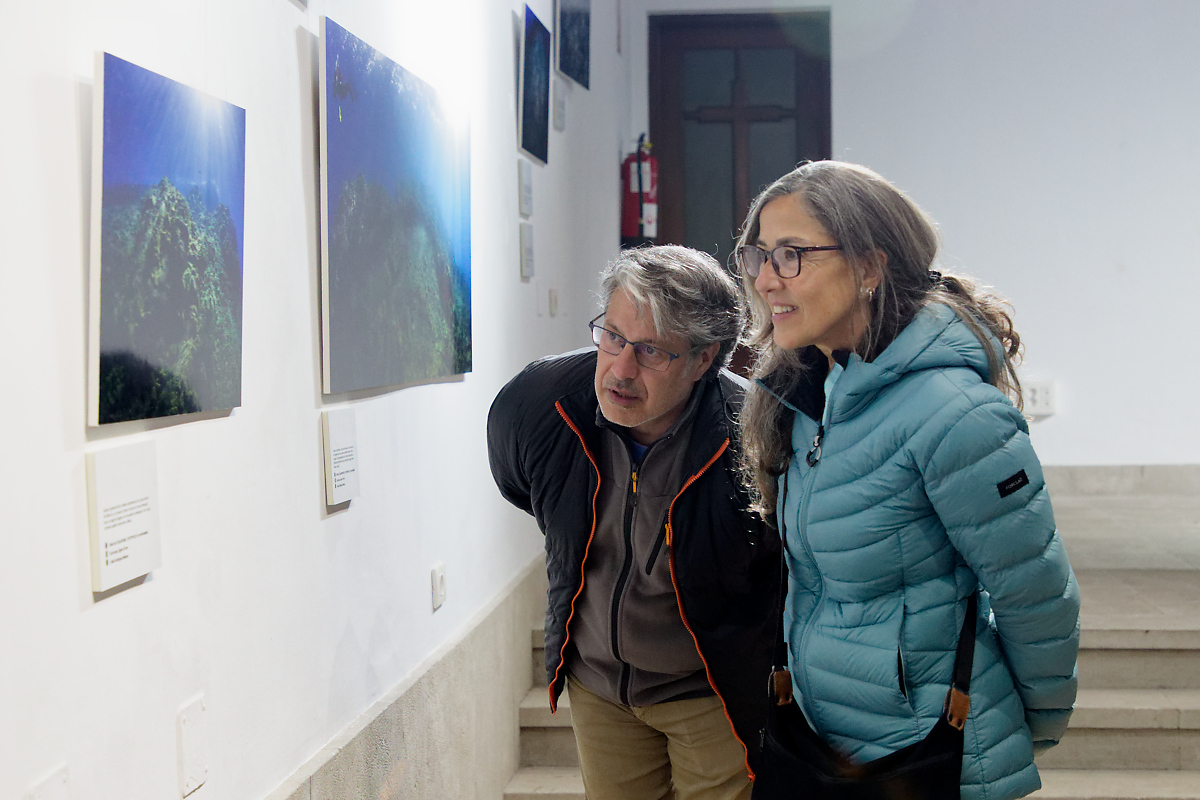
Once again, several services and departments of the University of La Laguna have joined together to launch the Conference on Canary Islands Biodiversity and Sustainability of the academic center, who are celebrating their fifth
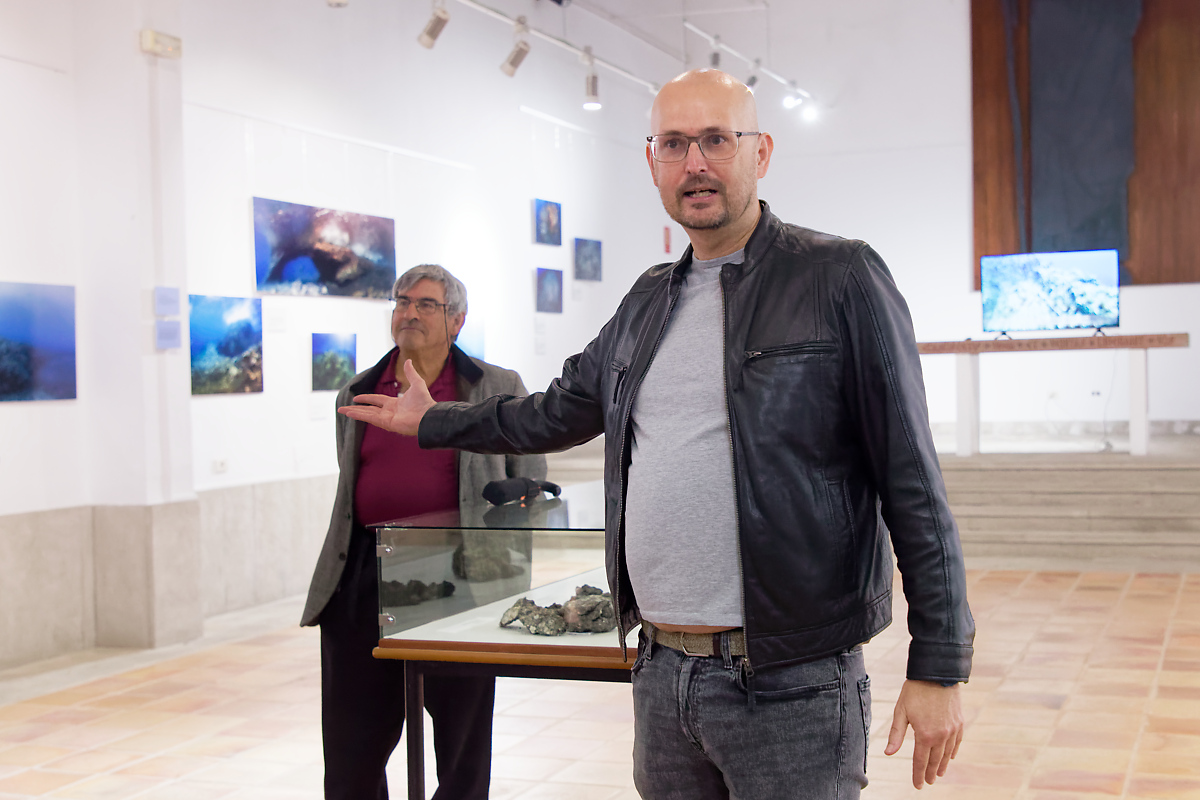
Carlos Sangil and Ramón Casillas, at the exhibition about the underwater world of La Palma.
This edition is an event that unfolds over several weeks with the aim of raising awareness among the university community and society at large about environmental stewardship and the fragility of these islands. Photographic exhibitions, panel discussions, and activities for children and families will take place around the university's main building until May 15.
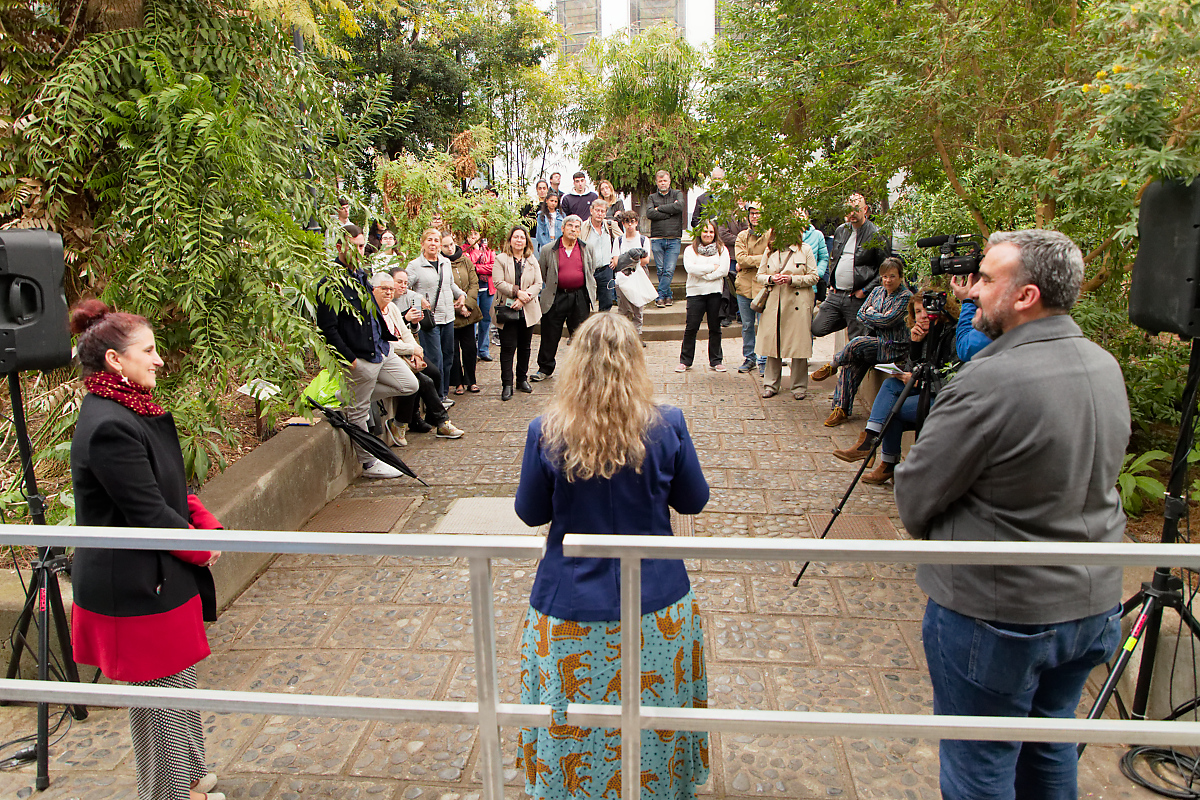
A moment from the inauguration.
The main drivers of this initiative are the Vice-Rectorates for Culture and University Extension, on the one hand, and for Sustainability and Infrastructure, on the other, as well as the Parks and Gardens Department and several university chairs. Specifically, the organizing committee consisted of Beatriz Martín and Borja Arizón, from the PTGAS (Galician Technology Park), and Cristina González and Sara González, from the teaching staff. All of this was supported by the Department of the Environment of the La Laguna City Council.
This week, two exhibitions have actually been inaugurated, one on the seabed in La Palma Following the Tajogaite volcano, led by the Botmar research group, located in the La Capilla Art Room, and another about the historical volcanoes of Lanzarote, now that 200 years have passed since the eruptions on the island, led by retired Physics professor Vicente Rodríguez.
At the inauguration, the Vice-Rector for Culture and University Extension, Isabel León, stated that knowledge of the natural environment “depends on science, technology, and cultural refinement,” in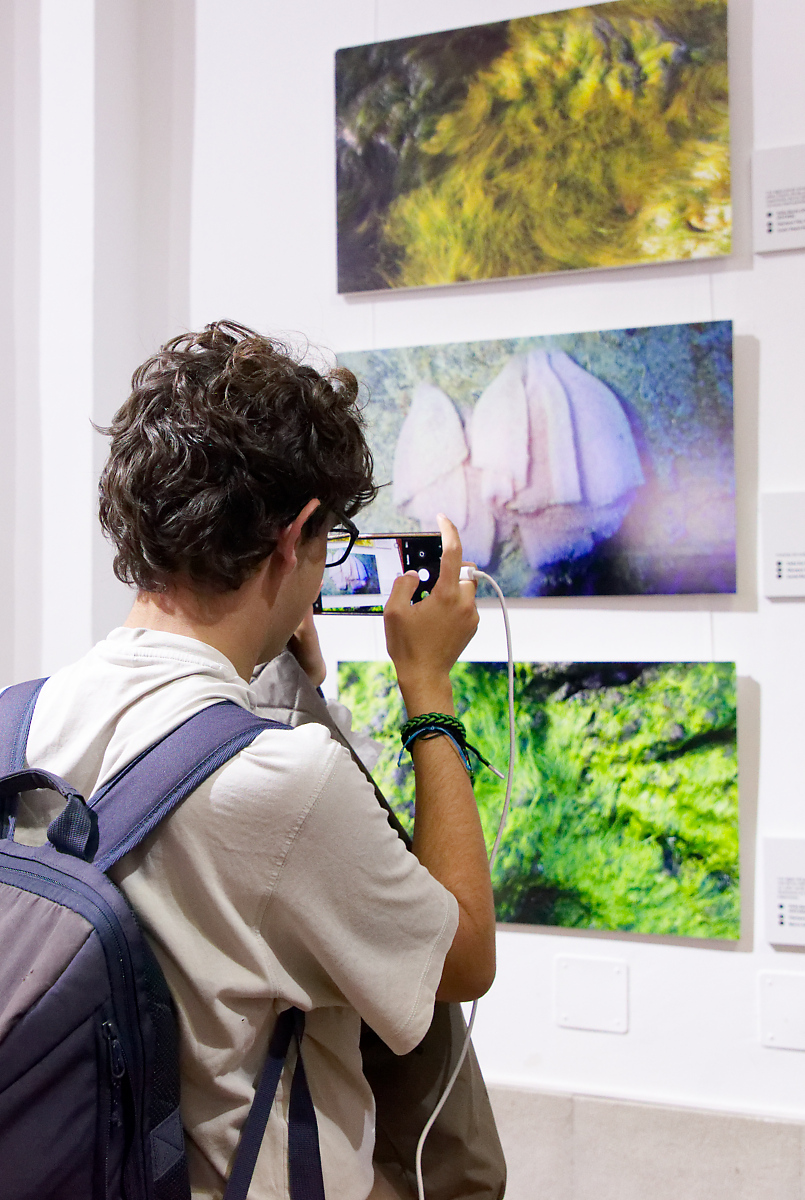 the sense that the more knowledgeable we are about our physical environment, the more sensitive and prepared we are to protect it.
These events also have a strong educational focus, and in fact, hundreds of schoolchildren are expected to visit during April and May, accompanied by university students, to learn about the exhibitions, work in workshops and prepare them to become active citizens and defenders of their environmental rights.
Specifically, the exhibition at La Capilla, curated by marine biologist Carlos Sangil and featuring photographs by Julián Rodríguez, showcases fascinating images of the seabed around La Palma from the Tajogaite eruption to the present day. The exhibition vividly illustrates the recovery of life in the lava deltas, at a depth of forty meters, where the colonization by marine organisms is evident. It also highlights the monitoring carried out by the University of La Laguna's research group in the intertidal zone, where macroalgae and macroinvertebrates, such as black limpets, have appeared. This exhibition will be on display until May 15th.
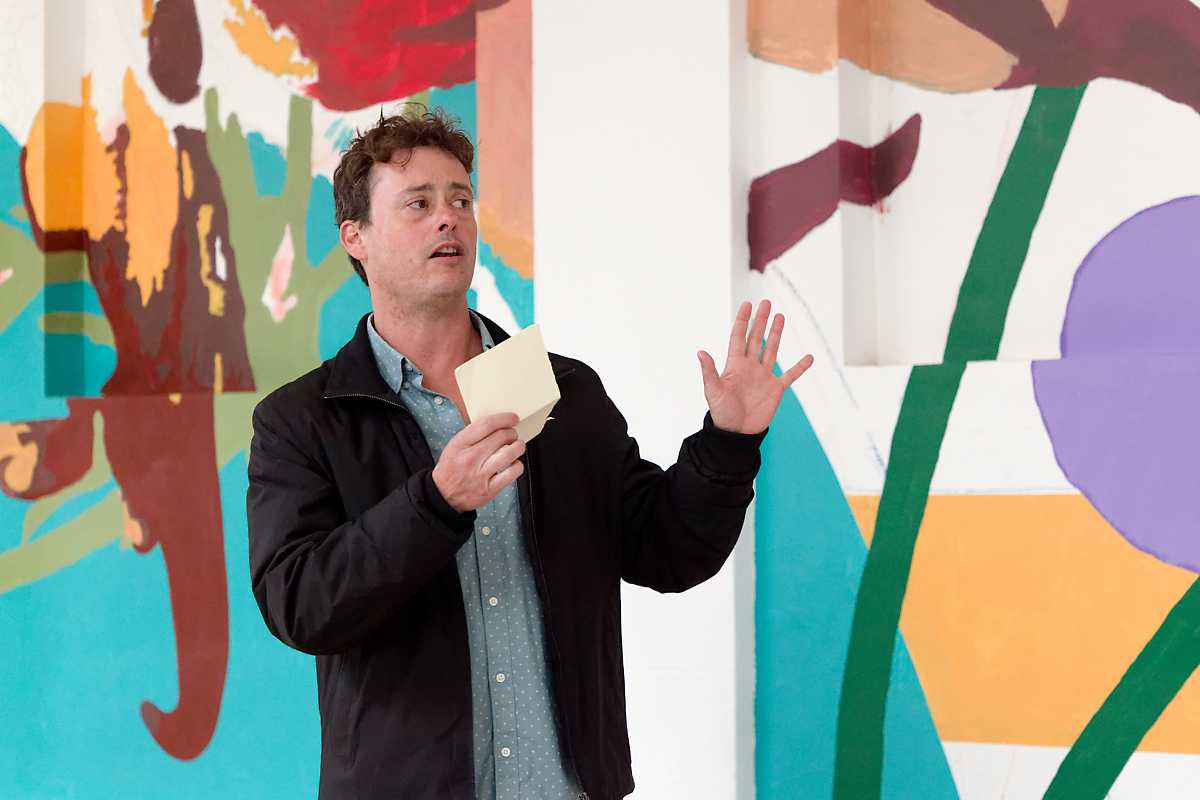
José Otero, professor of Fine Arts, explaining the mural.
The events are accompanied by a large mural in the vicinity of the university's Central Courtyard, currently being completed by muralist professor José Otero and a team of 25 students specializing in Fine Arts Painting. Otero himself explained that there has been exponential growth in this artistic technique, and that the faculty itself has produced muralists who are now highly recognized in the art world. The proposal, focused on the endemic flora of the Canary Islands, was discussed and chosen in class, and represents a series of images that interact with the courtyard itself, where native species are planted, creating a combination of organic forms with geometric lines.
Finally, the photographic exhibition at the Paraninfo Art Gallery portrays the eruptions of the last volcanoes on the island of Lanzarote in the 19th century: Tao or Cleric Duarte Volcano (July 1824), New Fire or Chinero Volcano (1824) and Tinguatón Volcano (October 1824).
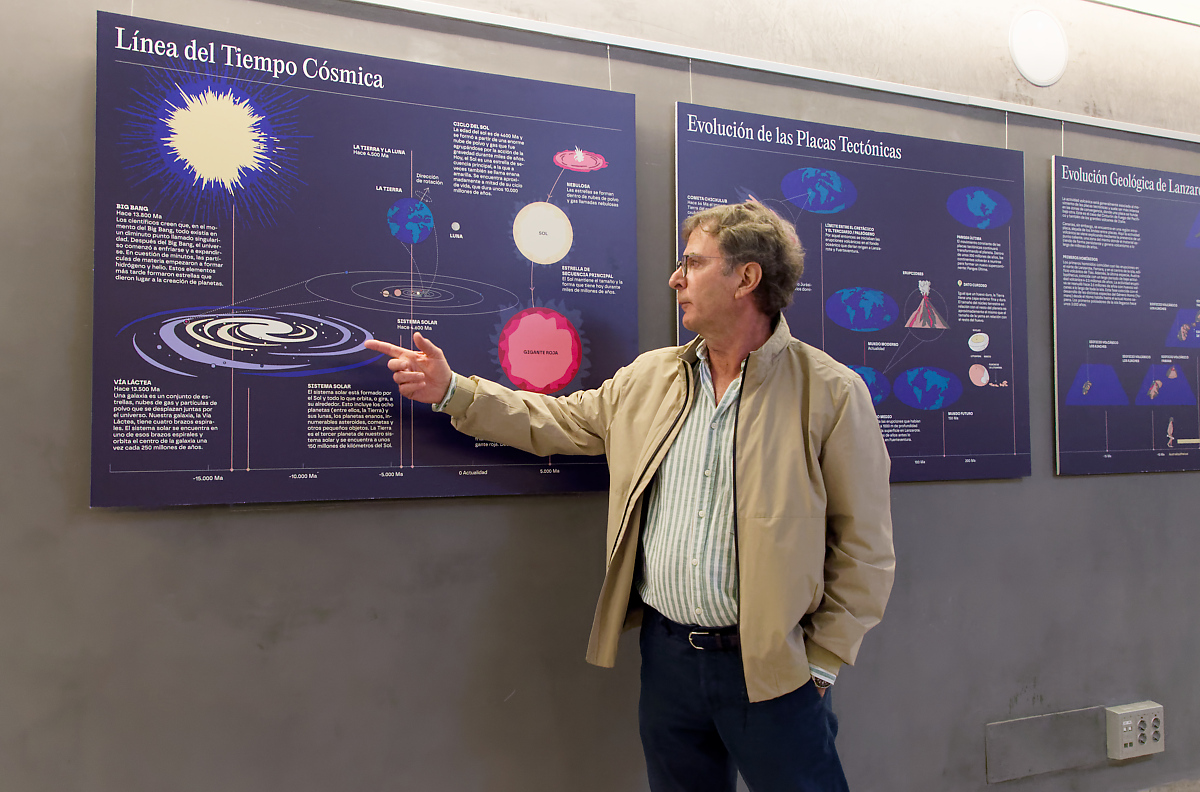
Vicente Rodríguez, curator of the exhibition on historical volcanoes of Lanzarote.
It also provides historical records of volcanoes in the Canary Islands, allows you to consult the minutes of the Teguise City Council from that time, and informs you about the naturalists of the 19th and early 20th centuries, among other information panels.
The opening session, held this past Wednesday, was completed with a concert in the Paraninfo by Lula Mora, the stage name of the singers Sara Caride and Silvia Izquierdo, who combine music and poetry with their cultural references from the Canary Islands and Galicia.

 Spanish
 English
 French