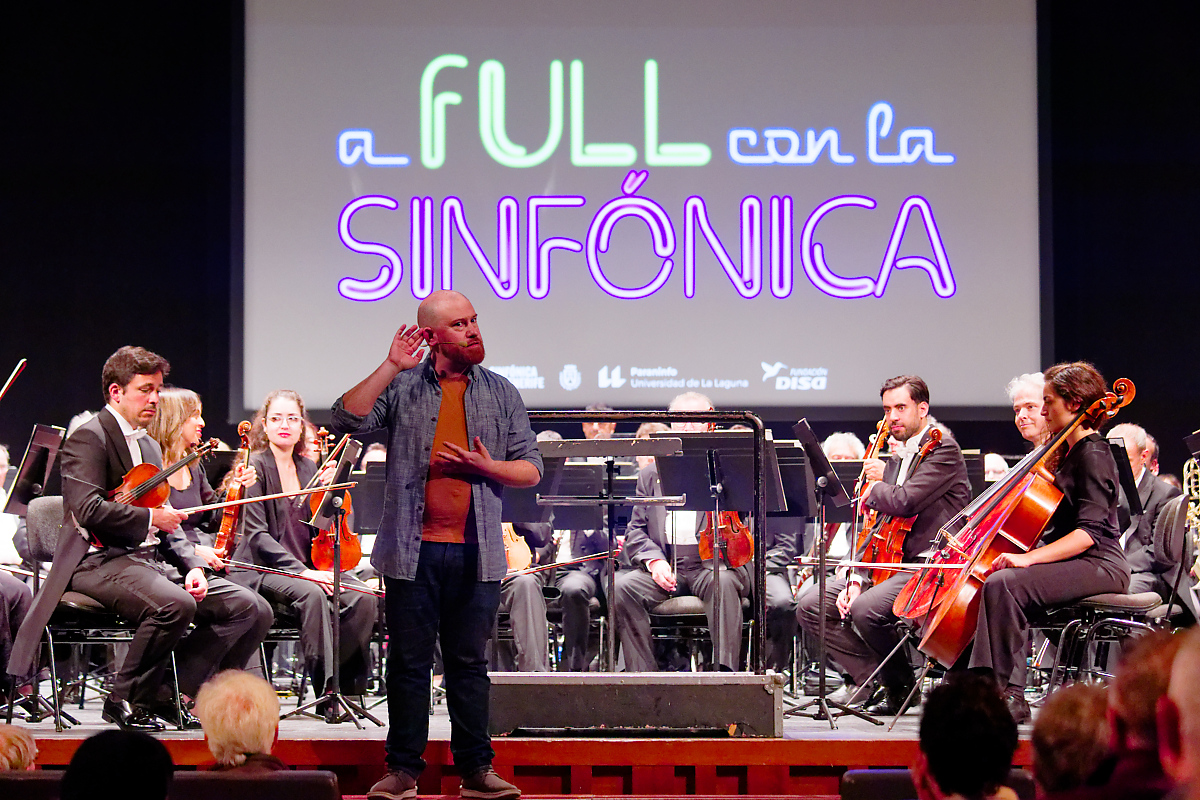
It was a twist of fate that Hungary, a country as relevant in the news today, was chosen to host the final concert of this year's 'Full House with the Symphony' series, held yesterday, Thursday, April 16th, in the Paraninfo of the University of La Laguna. This was noted by the evening's presenter, art historian Miguel Ángel Cajial, known as 'El Barroquista' (The Baroque Enthusiast), who provided context for the two pieces by Hungarian composers performed by the Tenerife Symphony Orchestra under the baton of guest conductor Arine Matiakh: "Hungaria" by Franz Liszt and "The Dances of Galánta" by Zoltán Kodály.
Regarding the first point, Cajial focused on the figure of Liszt, a key figure in the history of Western music for being "the first rock star," given the anticipation and impact of his performances. This musician, in addition to being one of the greatest pianists in history, possessed great physical appeal. Although he was educated in the German musical tradition, and this is reflected in his compositions, in "Hungaria" (dated 1854) he sought to reclaim Hungarian national identity, which at that time was diluted within the Austro-Hungarian Empire.
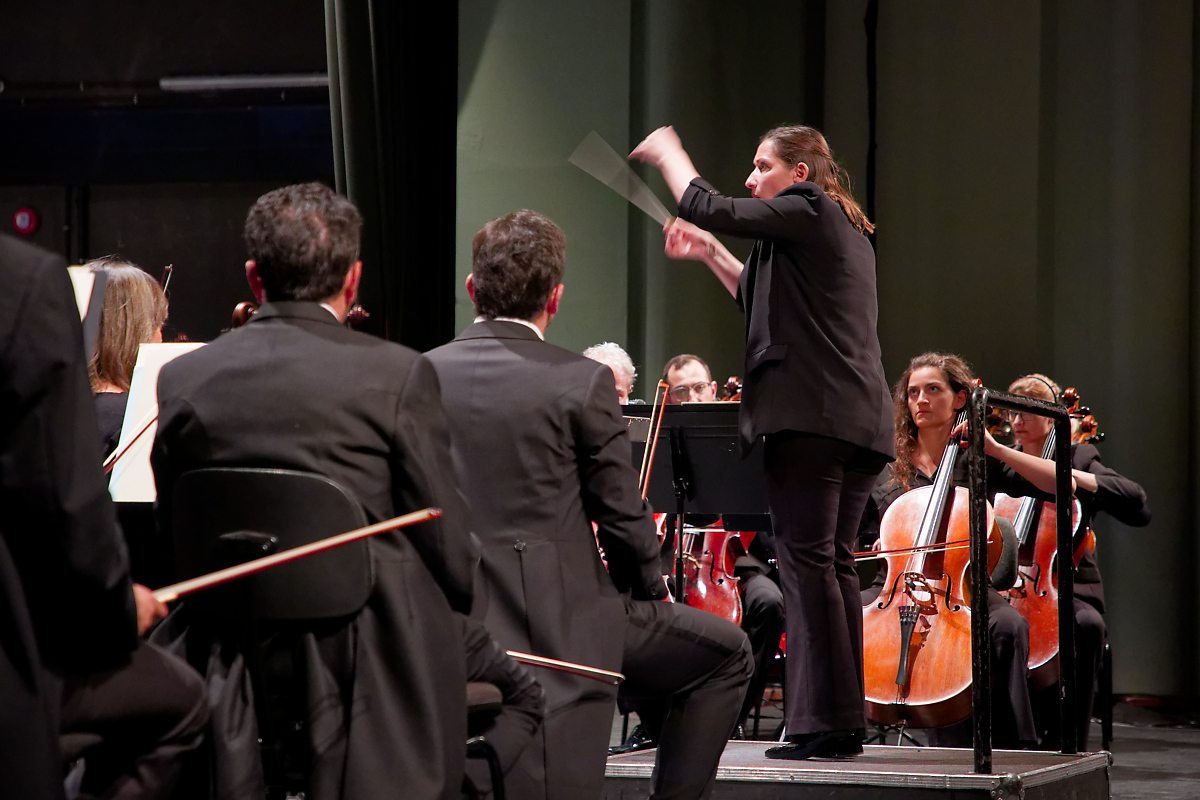
Arine Matiakh, the guest director.
The piece was Liszt's tribute to the heroes of the failed Hungarian Revolution of 1849, and as such, it is highly emotional music that combines serene passages with epic ones and even martial airs at certain moments. As Cajial explained, it was all composed in a very orthodox style, representing an "imagined Hungary" by the composer, a romantic idealization of how his homeland sounded to him.
In contrast, the next work proposed a different approach: to make the real Hungary resonate in the orchestra pit. The composer Zoltán Kodály traveled through towns and cities across his country, transcribing the folk music shared with him by the locals, and then incorporating it into his symphonic works. This ethnomusicological approach, which valued folklore and sought to represent the musical identity of a people through their traditional pieces, was innovative in the 19th and early 20th centuries, and Kodály, like his compatriot Béla Bartók, was one of its pioneers.
“The Dances of Galánta,” dated 1933, refers to a small village in what is now Slovakia, where Kodály himself lived for seven years as a young boy. The work seamlessly blends five different pieces (dances) that range from the placidity of a slow tempo to the frenzy of an Allegro, concluding with an energetic and lively finale that drew a standing ovation from the audience in the Paraninfo auditorium, who enjoyed this hour-long performance.
‘'Full House with the Symphony' is a cultural program that concludes its second year with this concert, and has been sponsored by the Tenerife Symphony Orchestra with financial support from the DISA Foundation and
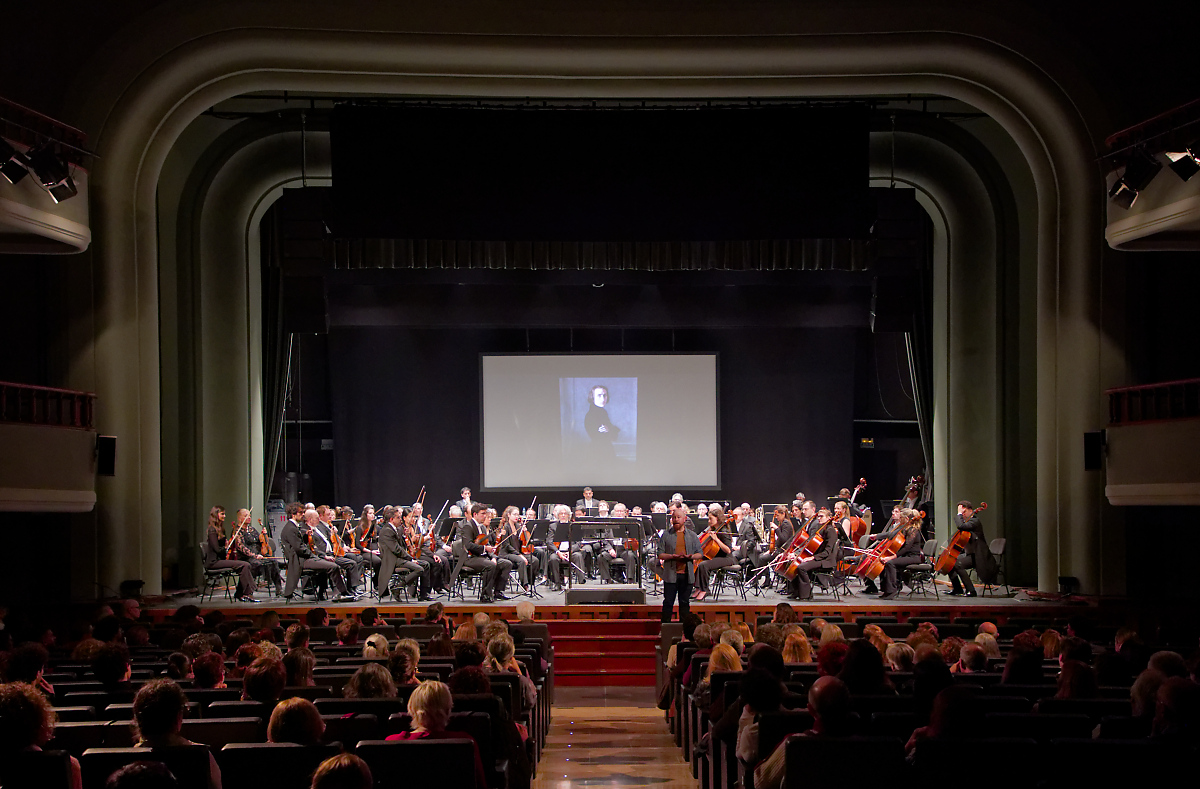
General view of the room at the beginning of the session.
Logistics department of the University of La Laguna. Its main objective is to bring classical music closer to the younger university community in order to attract more people to concert halls. To this end, the initiative offers free admission for students of the academic institution, attractive prices for the general public, and the participation of presenters such as 'El Barroquista', who come from the world of social media, podcasts, or urban music and are therefore familiar with the target audience segment of this initiative.

 Spanish
 English
 French