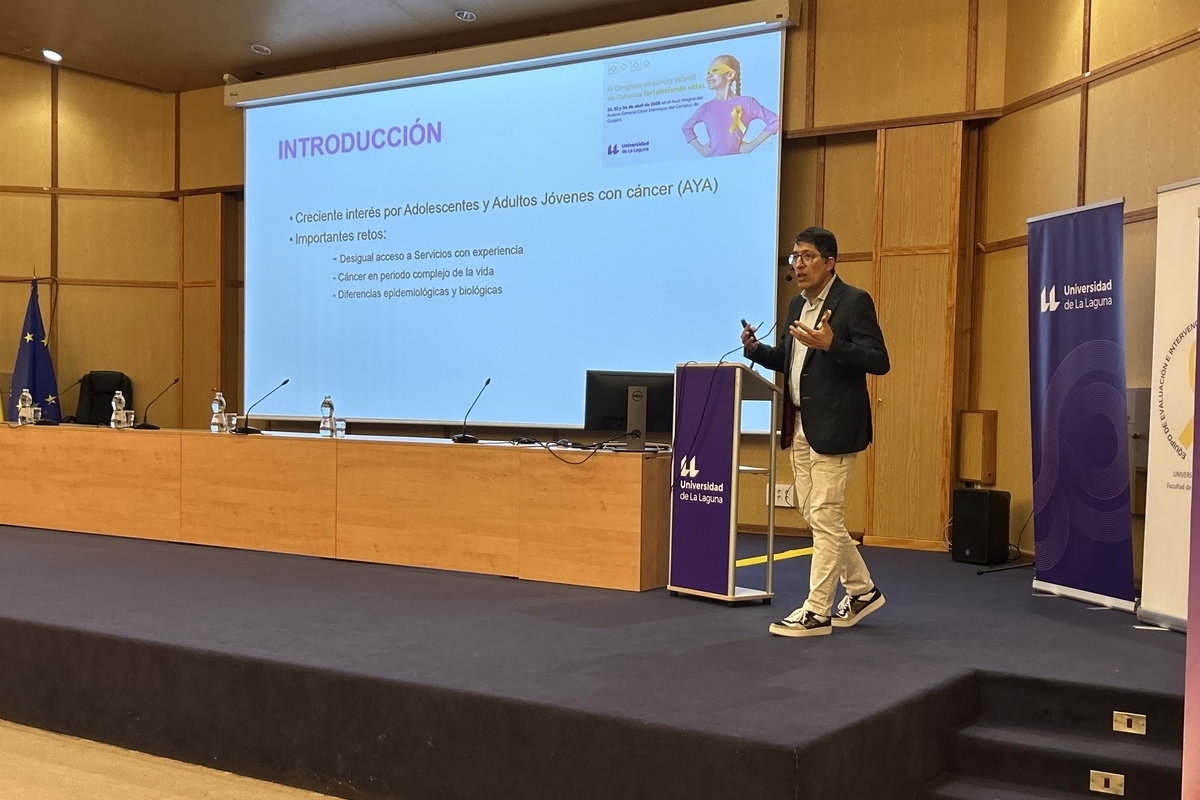
Adolescents with cancer have historically been an invisible group within the healthcare system, a reality that was the focus of one of the presentations at the III Congress on Childhood Cancer in the Canary Islands: Strengthening Lives, Held on April 24th, the congress, entitled “Specificities of the adolescent with cancer: the need for adolescent units,” was presented by Dr. Antonio Moliner Honrubia, coordinator of the congress, who outlined the main shortcomings in the care provided to this group and argued for the urgent need to adapt care models to their needs.
During his presentation, the specialist explained that adolescents have been relegated for years to a "ground state" between pediatric and adult oncology, leading to inequalities in access to treatment and a lack of uniformity in care. Depending on where they live, these patients may be treated in pediatric units or adult services, without a consistent approach, which directly impacts their prognosis.
The impact of cancer at this stage, he noted, is especially significant, as it coincides with a key moment in personal development. The disease strikes during a phase in which identity, independence, and social relationships are being built, abruptly interrupting this vital process. Clinically, the speaker emphasized that the types of cancer affecting adolescents differ significantly from those seen in childhood and adulthood. Among the most frequent are hematological tumors, such as leukemias and lymphomas, although with increasing age, other cancers such as thyroid and breast cancers begin to appear. This unique characteristic necessitates specific therapeutic strategies.
Furthermore, he noted that historically, this group has had worse survival rates for certain tumors, such as acute lymphoblastic leukemia. This difference has been linked to both biological factors, such as a lower prevalence of favorable genetic characteristics, and the application of treatment protocols designed for adults, which are less effective in this patient profile.
In recent years, various studies have demonstrated that the use of pediatric protocols improves outcomes in adolescents, prompting a shift in clinical practice. In this regard, the specialist emphasized the importance of adapting treatments to the specific characteristics of this group. One of the central themes of the presentation was the need to create specialized units for adolescents and young adults, a model already implemented in several European countries. These units allow for more specialized care, integrating medical, psychological, and social approaches. In Spain, however, this model is still under development and faces structural limitations, such as the age-based division between pediatrics and adult medicine, with a barrier around 18-19 years of age.
To illustrate these difficulties, Moliner presented the clinical case of an adolescent diagnosed with Hodgkin's lymphoma, whose case revealed multiple obstacles within the healthcare system. The patient experienced a delay in diagnosis after visiting the emergency room several times without receiving a conclusive evaluation, a situation that reflects one of the common problems in this age group: late detection.
Throughout his treatment, the case demonstrated the complexity of care, with referrals between different centers and the involvement of both pediatric and adult teams. The patient underwent various therapeutic approaches, including chemotherapy, radiotherapy, immunotherapy, and transplants, until achieving complete remission, highlighting both the difficulty of the process and the importance of coordination among professionals.
Another topic addressed was the limited participation of adolescents in clinical trials, considered crucial for improving survival. Factors such as age restrictions, a lack of coordination among specialists, and a lack of awareness of available studies have historically hindered their access. However, recent international initiatives have begun to reduce these barriers, broadening inclusion criteria and fostering collaboration between pediatric and adult oncology.
Beyond medical treatment, the presentation focused on the psychosocial needs of adolescents with cancer, which differ from those of other age groups. These include concerns about body image, identity formation, the need for independence, and the importance of their social environment. In this regard, the specialist emphasized the need for specific psychological support and respect for these patients' privacy. The importance of fertility preservation was also addressed, a particularly relevant issue at this stage of life, requiring planning and early intervention whenever clinical conditions allow.
The expert also emphasized the need for comprehensive follow-up after recovery from the illness, as many patients develop long-term effects from the treatments. This process requires the involvement of multidisciplinary teams and a smooth transition from pediatric to adult services, ensuring continuity of care.
Moliner advocated for a comprehensive, multidisciplinary care model tailored to the needs of adolescents, including appropriate hospital facilities, specifically trained professionals, and greater patient participation in decision-making. The presentation highlighted that, despite significant progress in recent years, adolescents with cancer continue to face major challenges within the healthcare system, making it essential to further develop specific strategies to ensure equitable, high-quality care.
The Chair of Childhood and Adolescence was a collaborating entity in this important Congress, co-directed by one of its members, Prof. Dr. Sergio Hernández Expósito.

 Spanish
 English
 French