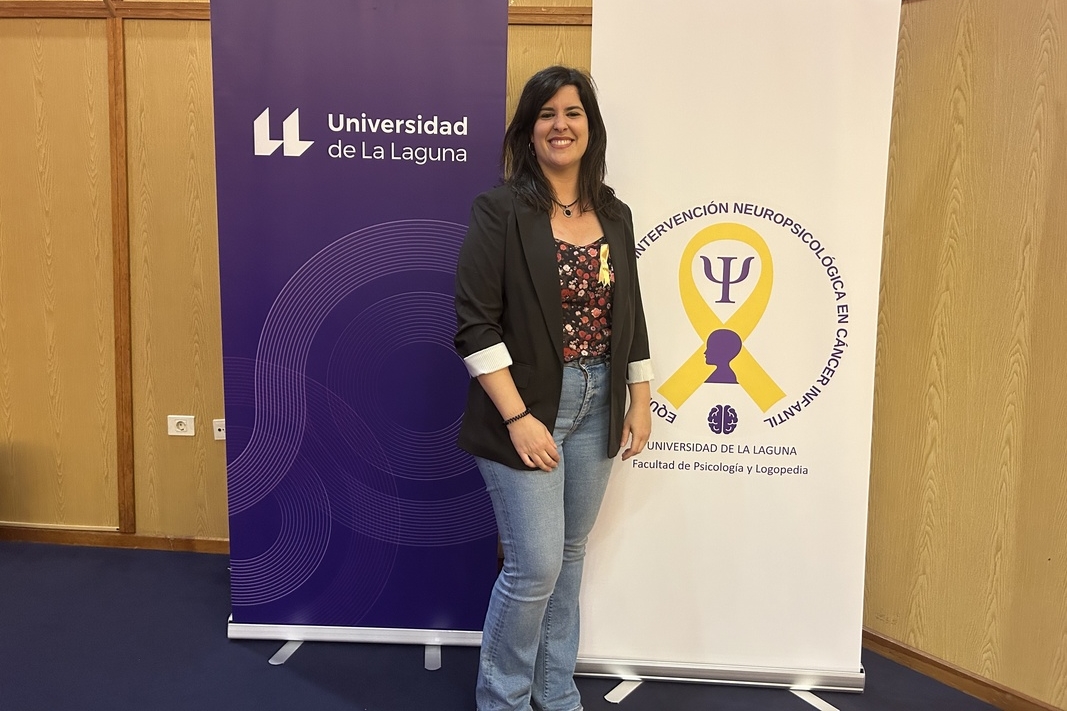
Last Thursday, April 23, Irene Roch, a clinical psychologist at the University Hospital Complex of the Canary Islands, during her participation in the III Congress on Childhood Cancer in the Canary Islands: Strengthening Lives, focused her presentation on highlighting the importance of emotional support for children with cancer and their families. Her aim was to emphasize the psychological dimension of the process and to champion "love" as an essential tool within the healthcare setting.
During her presentation, entitled To be there when everything changes, Roch surprised everyone by introducing an unusual concept at a scientific conference: “I come as a messenger of love,” she declared to a packed auditorium. Far from detracting from the rigor of her work, she explained that this term defines the foundation of clinical practice in highly vulnerable contexts. “When we talk about childhood cancer, we think of suffering, which is present, but there is also immense love,” she emphasized.
The psychologist described the diagnosis of a serious childhood illness as “a meteorite falling into a family’s life and changing everything.” Not only is health lost, she explained, but also routine, identity, and the sense of control. Given this scenario, she argued for the need to understand the process as a continuous grieving process: “It is the grief for health, for normalcy, for autonomy.”.
Roch approached this grief from an active perspective, based on emotional tasks such as accepting reality, expressing emotions, adapting to the new situation, and reframing the experience in order to move forward. In this sense, she emphasized the importance of allowing both adults and children to express their emotions without censorship. “Not giving them that space doesn't protect them; on the contrary, it leaves them alone with what they feel,” she warned.
One of the key points of her presentation was the need to include children in the information about their illness, adapting it to their age. Contrary to the tendency to hide the diagnosis to "protect" them, Roch argued that children perceive what is happening and need to understand it. "If they feel that something is being hidden from them, the anxiety is even greater," she explained.
Psychological support, she explained, is provided through a multidisciplinary network that includes healthcare professionals, families, educational institutions, and associations. The goal is to reduce the emotional impact of the process, offer coping mechanisms, and, as much as possible, restore a sense of control to patients. “Sometimes it’s small gestures, like asking them when they want to talk or simply knocking on the door before entering,” she noted.
The intervention also focused on the patients' siblings, often "the forgotten ones," and on the need to support the entire family during and after treatment. Roch emphasized that, although many families expect to "return to normal" after the illness, the experience profoundly transforms their way of life. "Life changes, and you have to learn to reframe everything you've experienced," she stated.
In the final part of her presentation, the psychologist addressed support in situations where a cure is not possible, highlighting the work of the pediatric palliative care team. She emphasized the importance of ensuring quality of life until the end and allowing children, when families wish, to spend their final days at home.
The event concluded with a moving tribute to a young patient, whose story exemplified children's ability to face illness with joy, courage, and love. "There are stories that aren't measured in years, but in the impact they have," Roch read, visibly moved.
With her presentation, Irene Roch made it clear that addressing childhood cancer cannot be limited to medical treatment. Emotional support, based on empathy, active listening, and love, is essential for coping with one of the most complex processes a family can face.
The Chair of Childhood and Adolescence was a collaborating entity in this important Congress, co-directed by one of its members, Prof. Dr. Sergio Hernández Expósito.

 Spanish
 English
 French