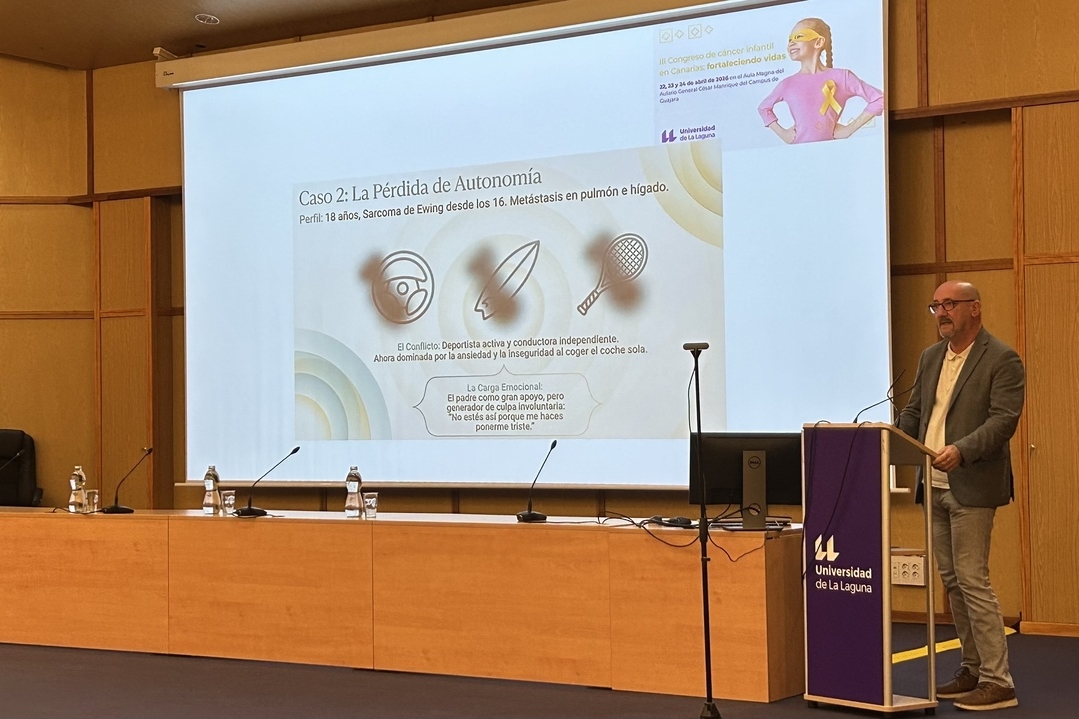
Psychological support in the final stages of life for children and adolescents with cancer was the focus of one of the presentations at III Congress on Childhood Cancer in the Canary Islands: Strengthening Lives, The procedure was performed on April 24th. The intervention was carried out by Dr. Anastasio Pablo González Báez, Master in palliative care at the end of life and professor at the European University of the Canary Islands, who addressed a complex and often avoided reality: cases in which the disease is not overcome.
During his presentation, the specialist emphasized that, despite medical advances, a significant percentage of children still do not survive cancer, highlighting the need to strengthen emotional support for both the patient and their family. In this regard, he insisted that society's response must focus on ensuring a dignified, supported, and humane end of life. The speaker advocated for an interdisciplinary approach to care, stressing the importance of coordinated work among the various professionals involved. He explained that care should not be limited to isolated interventions, but rather integrate psychologists, healthcare professionals, and other specialists into a unified care process.
Throughout the conference, González Báez reflected on the difficulty of coping with death at a young age, noting that the loss of a child constitutes one of the most intense existential crises for a family. He also discussed how this impact affects not only the parents, but also siblings, friends, and professionals who support them through the process. To illustrate these ideas, the expert shared real-life experiences from his professional career. In one case, he recounted supporting a family whose child suffered from a rare disease with a limited life expectancy. He emphasized the parents' involvement and the importance of allowing the family to participate in the final moments, which contributed to a calm and emotionally connected farewell.
In another case, focusing on a young woman with advanced cancer, the study highlighted communication difficulties within the family environment, as well as the weight of fear and anxiety surrounding the illness. Through psychological intervention, aspects such as emotional management, open communication, and the need to face reality together were addressed.
One of the key points of the presentation was the critique of the so-called "conspiracy of silence," a practice in which patients are kept in the dark about the seriousness of their condition. According to the specialist, this attitude, motivated by the fear of causing suffering, can generate greater anxiety and uncertainty in the child. In response, he defended the importance of adapting communication to the patient's age and level of understanding, facilitating the expression of their fears and needs. He also explained how the perception of death varies according to the developmental stage: at a young age, there is no complete understanding of its irreversible nature, while in adolescence, denial or a sense of invulnerability may emerge. These differences, he noted, must be taken into account when providing psychological support.
The expert also addressed the impact of grief on families, highlighting that the loss of a child can generate feelings of guilt, failure, and isolation. In some cases, he indicated, these situations can lead to the breakdown of the relationship due to the difficulty in sharing the pain. He also warned about the consequences for siblings, who may experience feelings of abandonment or loneliness by being relegated to the background during the grieving process. In this context, González Báez emphasized the need to support the entire family, promoting spaces for communication and support that allow for a healthy grieving process.
In conclusion, the speaker emphasized that psychology plays a fundamental role at the end of life, not so much in providing answers about death, but in helping to manage fears and facilitating a more conscious and supported process. Intervention, he stated, should focus on improving quality of life until the very end and ensuring that both the patient and their family can face this process with the greatest possible well-being.
The conference emphasized the importance of integrating emotional care into childhood cancer care, highlighting that, even in cases where a cure is not possible, it remains essential to care for, support, and humanize each stage of the process.

 Spanish
 English
 French