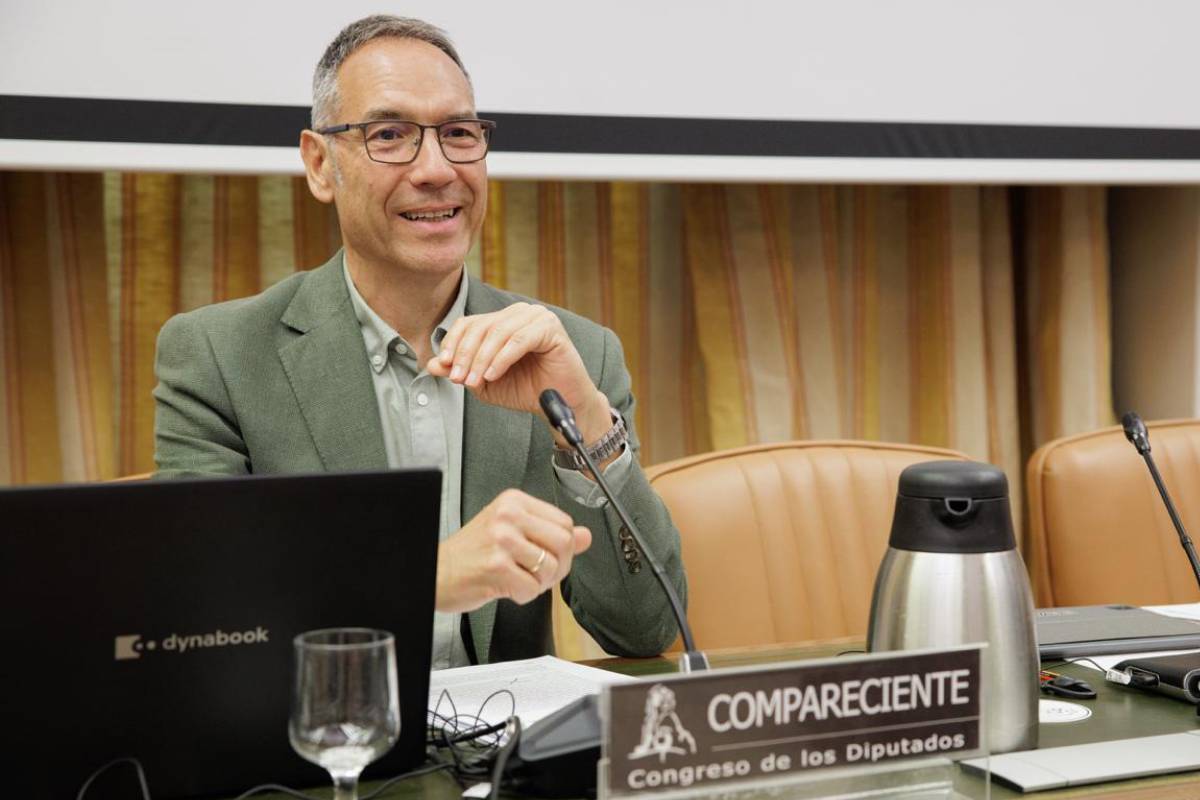
The University of La Laguna has been the focus of interest of the recent Working Committee on Social Economy, Inclusion, Social Security and Migration of the Congress of Deputies, through the appearance of the tenured professor Vicente Zapata Hernández, insofar as the academic institution has been developing since 2001 a series of actions that promote scientific knowledge of migrations and intervention for the promotion of cohesion and social coexistence in the archipelago.
More recently, it has been involved in promoting a broad participatory strategic planning process that has culminated in the definition of the Canary Islands Plan for Immigration and Intercultural Coexistence 2026-2029. All of this has been done in collaboration with Canary Islands institutions such as the Tenerife Island Council and the Government of the Canary Islands.
At the request of the Mixed Group, the appearance took place amidst the extraordinary regularization process for migrants in Spain and the imminent entry into force of the European Pact on Migration and Asylum. Two issues were addressed in the session. Regarding the first, Zapata stated that it must be carefully managed "so that it becomes a collective success for our society." And regarding the second, two months before its implementation, he noted that agreed-upon solutions must be found "so that its application does not create more difficulties than already exist in the management of certain migration flows and asylum.".
During the appearance, it was noted that Spain has gone from 40 to almost 50 million inhabitants so far this century, with the Canary Islands growing by more than half a million residents, and that a large part of the new neighborhoods come from a wide range of countries, particularly Latin American and European, which results in greater cultural diversification and social heterogeneity.
The success of this process, structural and necessary for a country languishing from a sociodemographic perspective and needing to maintain its economic momentum, according to Zapata, “requires great attention and even delicacy; therefore, noise and the spread of fear, if not hatred, do little to help.” In fact, a significant part of his speech focused on the risks of rising xenophobic and racist attitudes, which contribute to consolidating and spreading hate speech. For this reason, he emphasized that this is not only an opportune moment, but a necessary one, for the activation of the Intercultural Integration and Coexistence Plan currently being developed by the State.
Zapata rejected the reductionism "that focuses migration on exceptionality and emergency, leaving out of the social focus its broad spectrum of dimensions and its contribution to the regional development process, where the individual and the collective are connected.".
Finally, he emphasized the importance of strengthening work at the local level with a community focus, “where neighborhood relationships are woven together with varying degrees of intensity, forged in increasingly heterogeneous social contexts,” and highlighted the recent experience gained with 'ParticipaBarrio', a multi-sited R&D project in different locations across the country. Within this framework, the researcher believes we must approach the issue with discernment and perspective to develop strategies ‘that allow us to move towards more harmonious environments, activating the positive value of diversity.’.
The members of parliament participating in the committee focused their remarks on the effects of the European Pact on Migration and Asylum, calling for key strategies to address the tensions arising from migration processes. They also emphasized the importance of having appropriate, multi-level migration strategies and policies that promote regular and safe migration, tailored to the country's reception capacity.

 Spanish
 English
 French