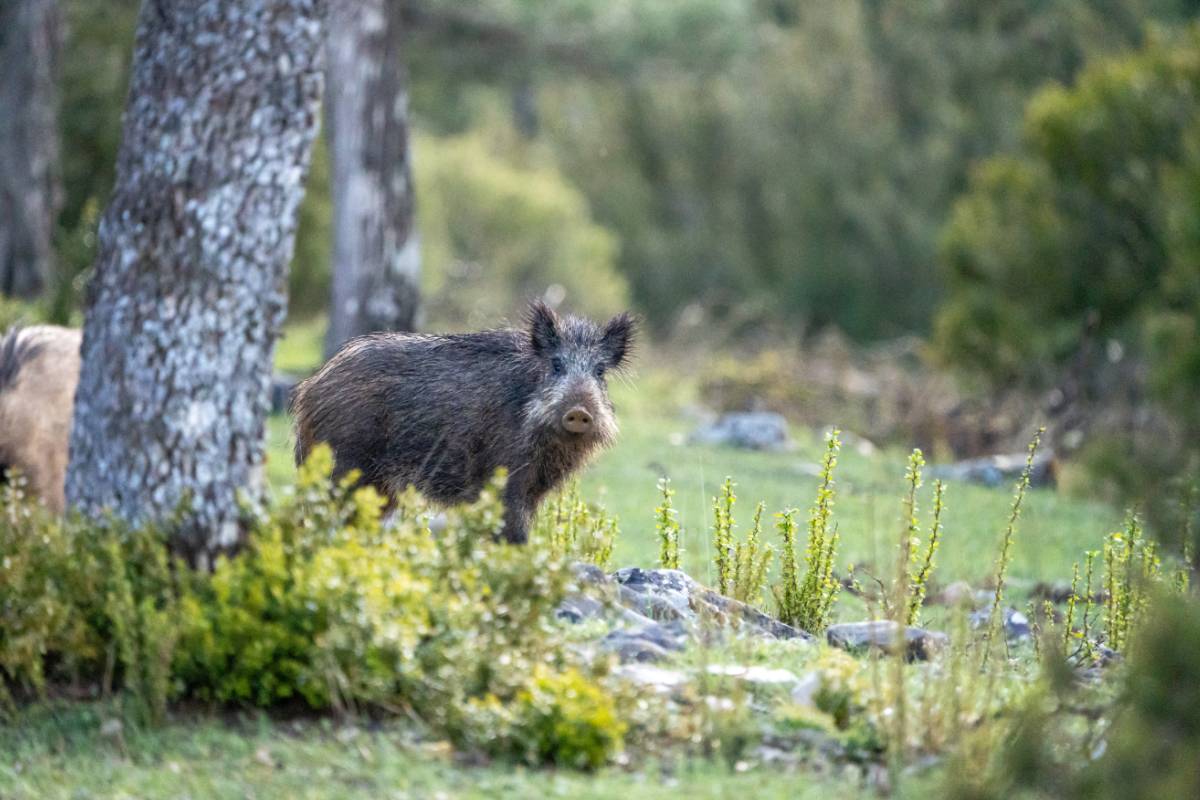
A multidisciplinary research team, with participation from Zebensui Morales-Reyes, a researcher from the Department of Animal Biology, Soil Science and Geology at the University of La Laguna, has published a study on how the growing populations of wild boar (Sus scrofa) are perceived by Spanish society.
The work, published in the journal Ecosystems and People, This study is the result of a collaboration between the Institute of Advanced Social Studies (CSIC) in Córdoba, the Institute of Forest Sciences (ICIFOR-INIA-CSIC) in Madrid, and the University of Almería. The team drew on the knowledge of 1,830 forestry and environmental agents distributed throughout mainland Spain, whose responses covered more than 5,000 municipalities and 761,000 hectares of the peninsular territory.
One of the most innovative contributions of the study is its use of forestry and environmental agents as key informants, rather than directly surveying the stakeholders involved. These public officials possess extensive knowledge of wildlife and maintain daily contact with people present in the natural environment, such as farmers, ranchers, and hunters, making them privileged witnesses to the interactions between animal species and people.
This study focused particularly on wild boar, a species whose population is increasing in most ecosystems. The results were further validated in 20 in-person and online meetings with nearly 500 stakeholders and technicians from across Spain, reinforcing the reliability and representativeness of the information presented.
791 out of 3% of the agents rated the negative impact of wild boar as significant or very significant. Conversely, only 181 out of 3% gave that rating to the positive contributions of wild boar. According to the study participants, crop damage leads the list of negative impacts (811 out of 3%), and farmers are identified as the most affected group. Significantly, this damage is distributed evenly across all agricultural areas, regardless of the socioeconomic context.
The identified benefits, which appear only sporadically in some municipalities, accrue almost exclusively to the hunting sector through recreational hunting. This asymmetry can be a source of structural tension between farmers and hunters, exacerbated by the fact that in Spain, hunting reserve owners are legally responsible for damage caused by game species.
A management style that needs to be reoriented
The study suggests that recreational hunting, focused on trophy hunting, is insufficient to curb population growth. The researchers propose reorienting management towards population control and establishing formal intersectoral platforms to facilitate dialogue among all stakeholders involved with or affected by the species, as a way to achieve effective and socially acceptable strategies.
This work is part of the TED2021-132034B-I00 project (MCIN/AEI · NextGenerationEU/PRTR) and contributes to the 3022S/2023 OA project of the National Parks Network. Zebensui Morales-Reyes' participation was made possible by a postdoctoral contract from the University of La Laguna, the "la Caixa" Banking Foundation, and the CajaCanarias Banking Foundation.

 Spanish
 English
 French