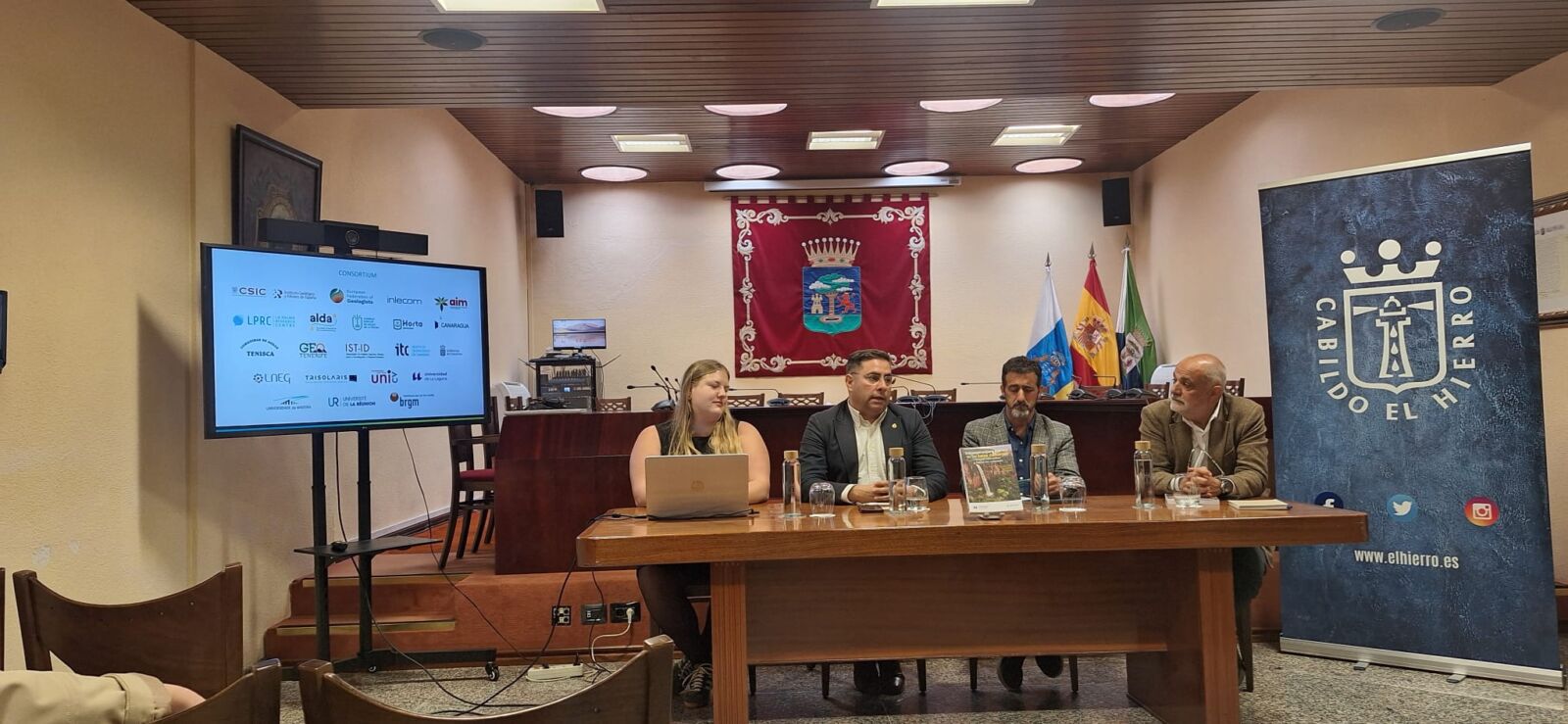
The Island Water Councils of El Hierro and La Palma, in collaboration with the University of La Laguna, have presented a digital platform capable of simulating how a natural disaster —a fire, a volcanic eruption, earthquakes, landslides or a flood— can trigger a chain of failures in the infrastructure that guarantees the water supply.
The tool, a pioneer in the island context, does not analyze each installation in isolation, but shows how damage at a single point —a well, a pumping station, a desalination plant or a pipeline— can spread and affect the entire water system.
This initiative places El Hierro, La Palma and Gran Canaria among the first European island territories to have a specific platform to simulate cascading failures in water systems in the face of natural hazards, also incorporating the critical relationship between water, energy and coastal infrastructure.
The platform was coordinated by Professor Juan Carlos Santamarta Cerezal and Professor Noelia Cruz Pérez, both from the University of La Laguna. Researchers Jelena Koritnik and Megan Expósito Brazier also participated in the presentations held on both islands, explaining the technical scope and specific application cases.
The water-energy nexus: the hidden vulnerability of the islands
One of the platform's most important aspects is its integration of the relationship between water and energy, a particularly critical link in island territories. Water requires energy at every stage of its cycle: collection, pumping, elevation, treatment, storage, and distribution. This dependence is heightened in seawater desalination, a strategic source for island water supply but vulnerable to power outages, coastal storms, or incidents affecting coastal infrastructure. The platform allows users to visualize these connections and anticipate how an energy, water, or coastal failure could spread and compromise the drinking water supply.
In territories such as El Hierro and La Palma, where water availability, rugged terrain and limited network connectivity affect the security of supply, the platform represents a change of approach: moving from managing emergencies once they have already occurred to identifying vulnerabilities and acting before they materialize.
In practice, the tool allows technical managers to detect critical infrastructure, assess protection alternatives, prioritize investments, and anticipate which areas, crops, or services could be affected by a system disruption.
Project scope and framework
The platform has also been developed for Gran Canaria, expanding its usefulness as a tool for comparative analysis of different hydraulic systems in the archipelago. The tool is part of the GENESIS project, a European initiative aimed at assessing the vulnerability and resilience of critical water infrastructure on volcanic islands. The methodology combines geospatial inventories, natural hazard analysis, and simulation of interdependencies between essential services.
The collaboration between the Island Water Councils and the University of La Laguna strengthens the transfer of scientific knowledge to public management. The platform is conceived as a tool to support analysis and planning, its purpose being to provide technical information to guide decisions on prevention and resilience improvement, without replacing official emergency procedures or detailed hydrological planning.

 Spanish
 English
 French