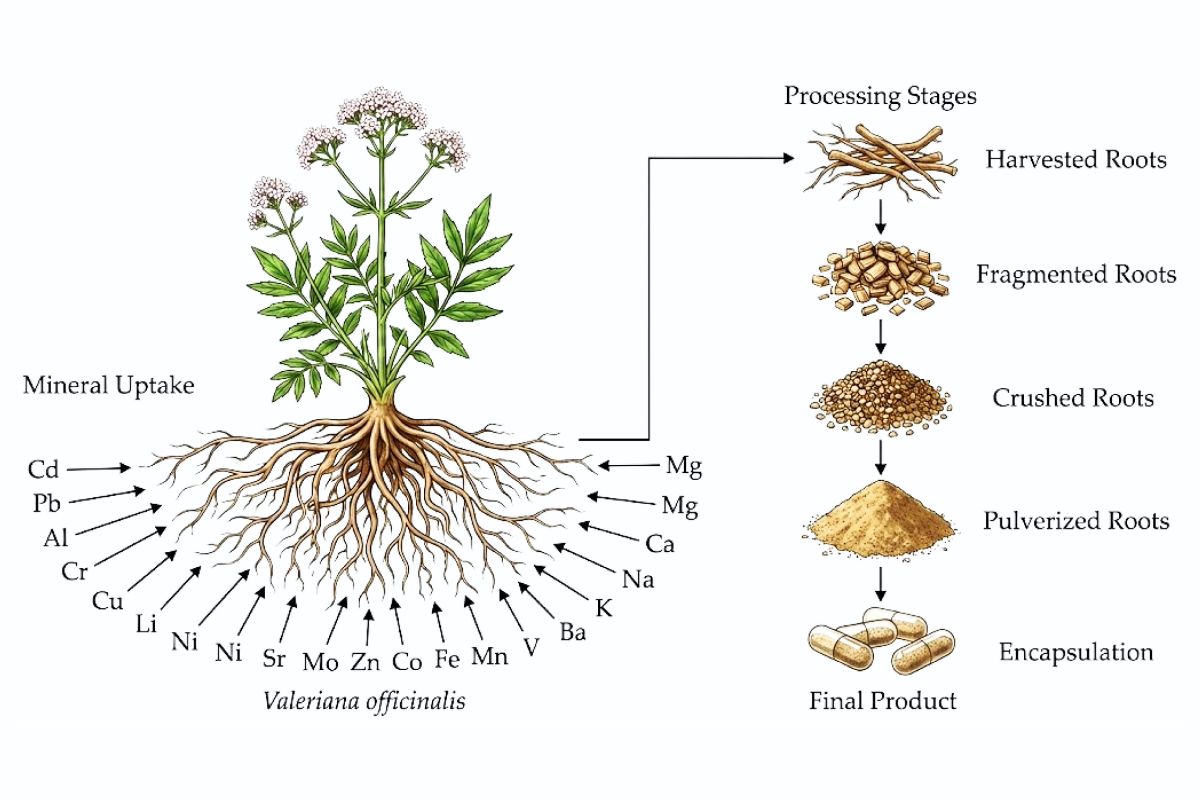
In recent years, mental health problems such as depression, stress, and anxiety have increased significantly. The World Health Organization (WHO) warns that more than one billion people worldwide live with them, representing 14% of the global population. Furthermore, these conditions often coexist with insomnia, a sleep disorder that makes it difficult to get restful sleep, or with mild anxiety, a mental disorder characterized by feelings of excessive worry.
Although various treatments exist to manage these conditions, the use of conventional medications has been controversial due to their toxicity profile. For this reason, in recent years there has been growing interest in safer alternatives such as traditional herbal medicine.
One of the most popular dietary supplements among the Canary Island population for the treatment of insomnia and mild anxiety is... Valeriana officinalis L., whose organ of use is its root. A study with the participation of the University of La Laguna and which analyzed the metal content in 23 samples of valerian root shows that six products containing this supplement exceed the recommended cadmium limit, but there is no toxicological risk at therapeutic doses according to the estimated daily intake.
The study Metal content in Valeriana officinalis L. root commercialized in a Spanish Region (Tenerife, Canary Islands), published in FOODS A study conducted by researchers from the University of La Laguna and the University of Las Palmas de Gran Canaria (ULPGC) has determined the metallic profile of this medicinal plant, marketed as an herbal product or as a food supplement, with the aim of evaluating whether it meets the established quality criteria for its sale. The study also assessed the toxicological risk of its consumption, in any form, according to the recommended dosage for use in herbal medicine.
According to the research, the presence of toxic metals in certain plants due to environmental pollution is a documented fact, especially given the increase in cultivated areas near sources of anthropogenic pollution. For this reason, the analysis of toxic metal content, particularly lead and cadmium, has been established as a quality control measure by international institutions, as these metals are highly toxic and nephrotoxic.
Maximum concentrations
The WHO has set the maximum recommended concentration of lead in medicinal plants at 10 mg/kg, and of cadmium at 0.3 mg/kg. However, the European Pharmacopoeia, compiled by the Council of Europe, establishes stricter general limits for medicinal plants, specifically 5 mg/kg for lead and 0.1 mg/kg for cadmium.
The results show that none of the different forms analyzed, according to their commercial presentation (powdered root in capsules or tablets, fragmented root in bulk bags, crushed root in infuser form, or powdered tablets), exceeded the safety parameters for lead concentration. The level in all samples was below 0.1 mg/kg, which is well below the most stringent limit established. Regarding cadmium concentration, the average of the established forms also did not exceed the safety parameter of 0.1 mg/kg.
However, it should be noted that, in the case of cadmium, although the average was lower, six samples exceeded the most stringent parameter set at 0.1 mg/kg. These include: Pinisan in a bag (0.11 mg/kg), Relax in capsules (0.12 mg/kg), Relax in infusions (0.13 mg/kg), Kneipp in tablets (0.15 mg/kg), Milvus in capsules (0.16 mg/kg) and a bulk sample from the market (0.23 mg/kg). These quality control results indicate the need to strengthen controls, especially regarding cadmium. However, the concentration of this metal in these six cases remains below the levels established by the WHO.
According to the research, it can be concluded that there is no toxicological risk associated with the ingestion of any of the metals in the consumption scenario established for a therapeutic intake of valerian root, regardless of the form in which it is consumed, even at its highest dose.
The study concludes that regular consumption is safe despite occasional excesses, although it is urgent to monitor the concentration of toxins in herbal supplements. Furthermore, in light of the results obtained, the researchers suggest that more comprehensive studies on the concentration of toxic metals in medicinal plants are needed, as well as improvements and updates to legislation regarding the presence of these metals in such plants.

 Spanish
 English
 French