The transformation of neighborhoods doesn't depend solely on large-scale urban development projects or institutional decisions. In many areas, especially in peripheral or vulnerable contexts, change also arises from neighborhood ties, collective participation, and the capacity of citizens to imagine and build more livable, inclusive, and cohesive spaces. In this process, disciplines traditionally associated with aesthetics, such as design, are beginning to acquire an increasingly relevant role as tools for social mediation, community engagement, and collective construction.
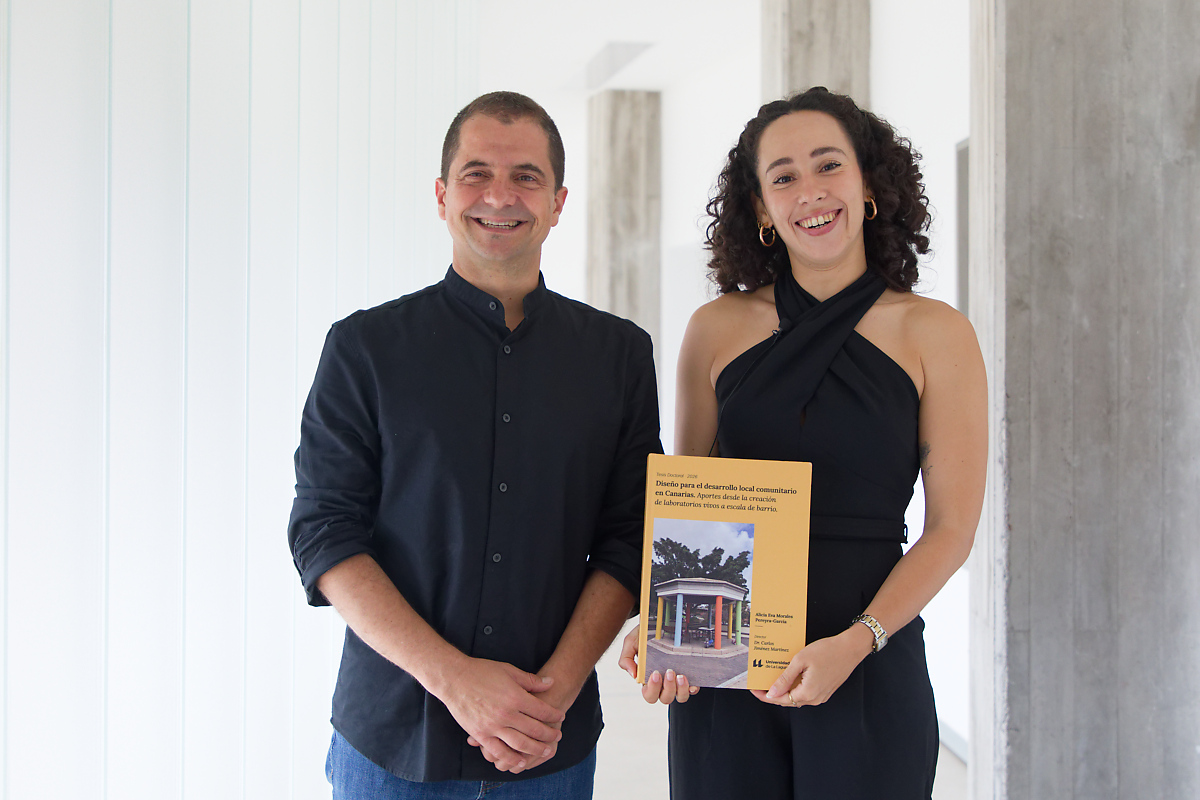
In this context is situated the doctoral thesis recently defended at the Faculty of Fine Arts of the University of La Laguna by the researcher Alicia Eva Morales Pereyra-García, titled “Design for local community development in the Canary Islands. Contributions from the creation of living laboratories at the neighborhood scale”. The work, developed within the doctoral program of Arts and Humanities and directed by Professor Carlos Jiménez Martínez, It analyzes how participatory design can contribute to local community development through collaborative processes between universities, citizens, and the local area. The panel responsible for evaluating the thesis was chaired by Daniela Selloni, a researcher at the Polytechnic University of Milan; the panel included as a member Carlos Casimiro da Costa, from the Polytechnic Institute of Bragança, and as secretary with the professor from the University of La Laguna María Teresa Arozena.
The doctoral thesis has been supported by the Canary Agency for Research, Innovation and the Information Society from the Ministry of Universities, Science and Innovation and Culture and by the European Social Fund Plus (ESF+) through the Integrated Operational Programme of the Canary Islands 2021-2027.
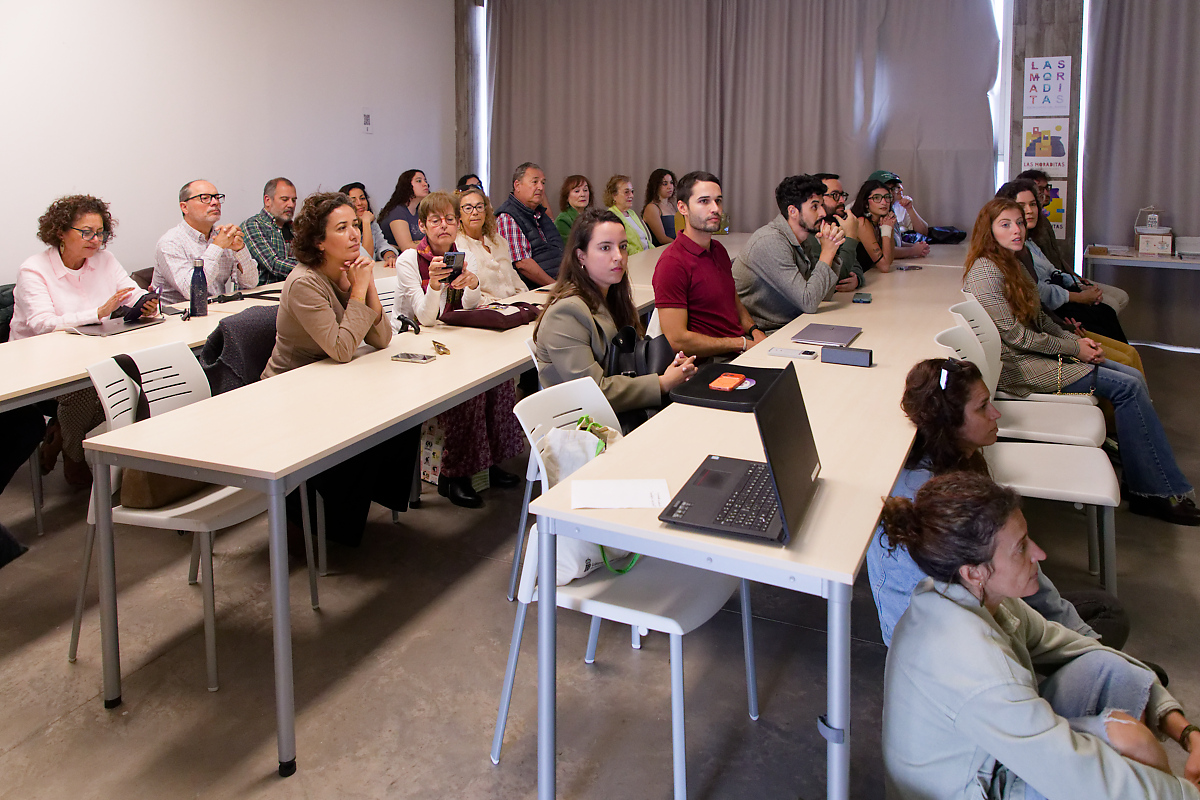
A large audience followed the defense of the doctoral thesis.
Design, participation and social transformation
The study stems from nearly ten years of work focused primarily on the Las Moraditas neighborhood in Santa Cruz de Tenerife. The author began developing projects related to this area during her undergraduate thesis and subsequently continued to explore this line of research through various postgraduate studies and community intervention experiences.
One of the main aims of this work is to broaden the traditional view of design, moving away from a conception focused exclusively on aesthetics or the creation of objects. The author advocates a perspective where design functions as a relational practice capable of fostering care, facilitating dialogue, and generating collective processes of social transformation.
From this perspective, the designer ceases to occupy solely a technical role and becomes a mediator, facilitator, and guide in community dynamics. The document addresses concepts such as social design, participatory design, and co-design, linking them to methodologies that foster citizen involvement, strengthen the social fabric, and promote the shared development of solutions.
The thesis pays particular attention to peripheral neighborhoods, understood as spaces where structural inequalities coexist with strong capacities for community resilience. According to the study, these territories constitute key settings for activating collaborative processes, recovering collective memories, and reinforcing a sense of local belonging.
Among the cases analyzed, the one developed in The Purple Ones, A self-built neighborhood on rural land, characterized by significant social and cultural diversity. There, [the following initiatives were promoted/promoted].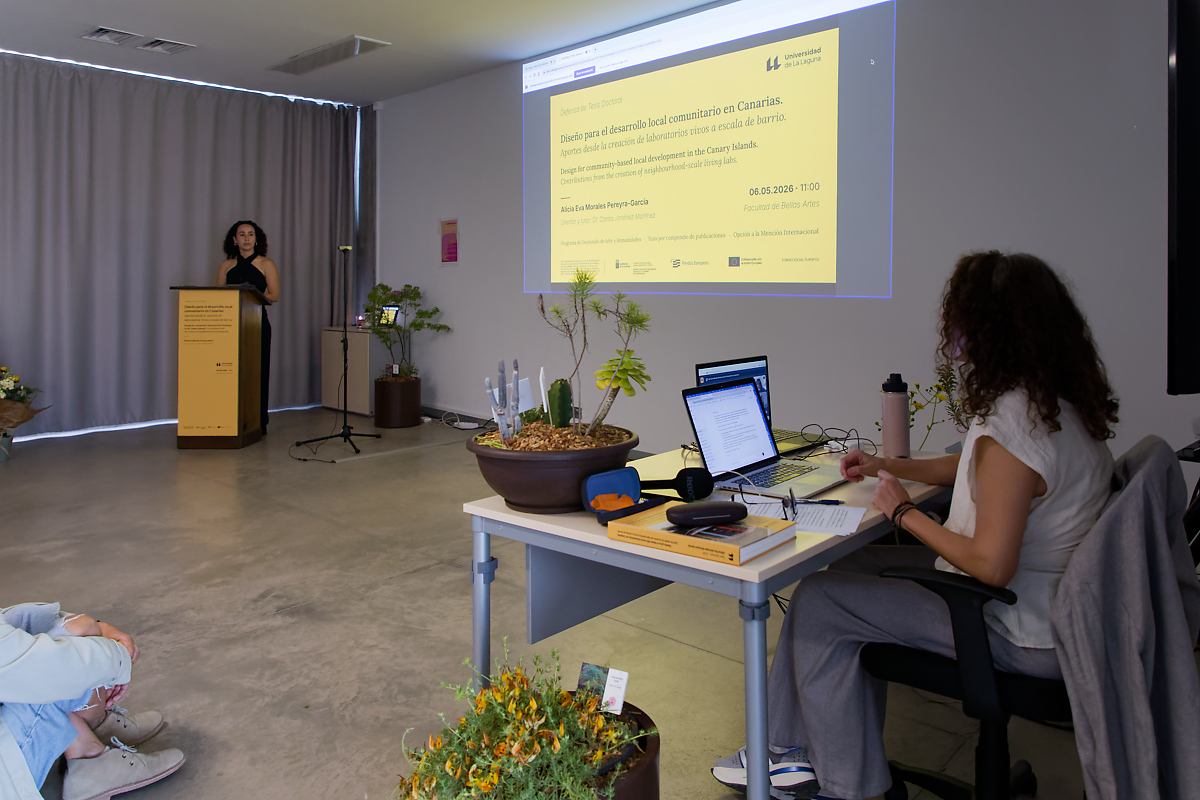 initiatives aimed at dignifying public spaces, recovering community heritage and strengthening ties between the university and the neighborhood.
The activities included murals, signage, community gatherings, cultural routes, audiovisual pieces, and various urban interventions developed through community participation. According to the study, these types of experiences foster new forms of learning connected to social reality and help blur the lines between the classroom and the community.
The report also includes initiatives that emerged during the COVID-19 lockdown, such as “Telecafecito en Las Moraditas,” a weekly virtual space that allowed for maintaining community contact during social isolation. Through open digital meetings, the project facilitated spaces for listening and neighborly support, as well as providing technological tools to older adults.
Another project analyzed is “Mestura La Palma,” developed after the eruption of the Tajogaite volcano. Through collaborative processes linked to design and collective creation, the initiative focused on recovering memories, heritage, and community ties affected by the volcanic emergency.
Impact on the community and on the students
The study also assesses the impact of these experiences on participating university students. The results show that many students encountered real-world community intervention projects for the first time, developing methodological skills, critical thinking, social awareness, and new professional perspectives related to design and social transformation.
The study also indicates that the communities involved strengthened their organizational capacity and began to recognize themselves as active agents in improving their own environments. The author particularly highlights the role of women within these community processes, emphasizing how much of the dynamics of listening, care, and social cohesion were sustained by female leadership.
Among its main conclusions, the thesis argues that design can act as a tool for mediation and support in local community development processes, especially in peripheral territories and contexts marked by social inequalities. The document also emphasizes the need to strengthen learning models connected to the local area and to the real problems faced by citizens.
The defense also drew a large audience to the Faculty of Fine Arts, a rare occurrence for this type of academic event. Family, friends, students, and people connected to the neighborhoods and community projects addressed in the thesis joined the researcher for the presentation of a work marked by a strong social dimension and a close relationship with the local area. During the event, the thesis advisor himself highlighted the exceptional nature of the attendance, which reflected the human and community impact generated over years of collaborative work.
The doctoral candidate finally obtained the highest possible grade, summa cum laude, and also received congratulations from the tribunal, which encouraged the researcher to continue developing projects and initiatives of this type due to their academic, social, and community impact.

 Spanish
 English
 French