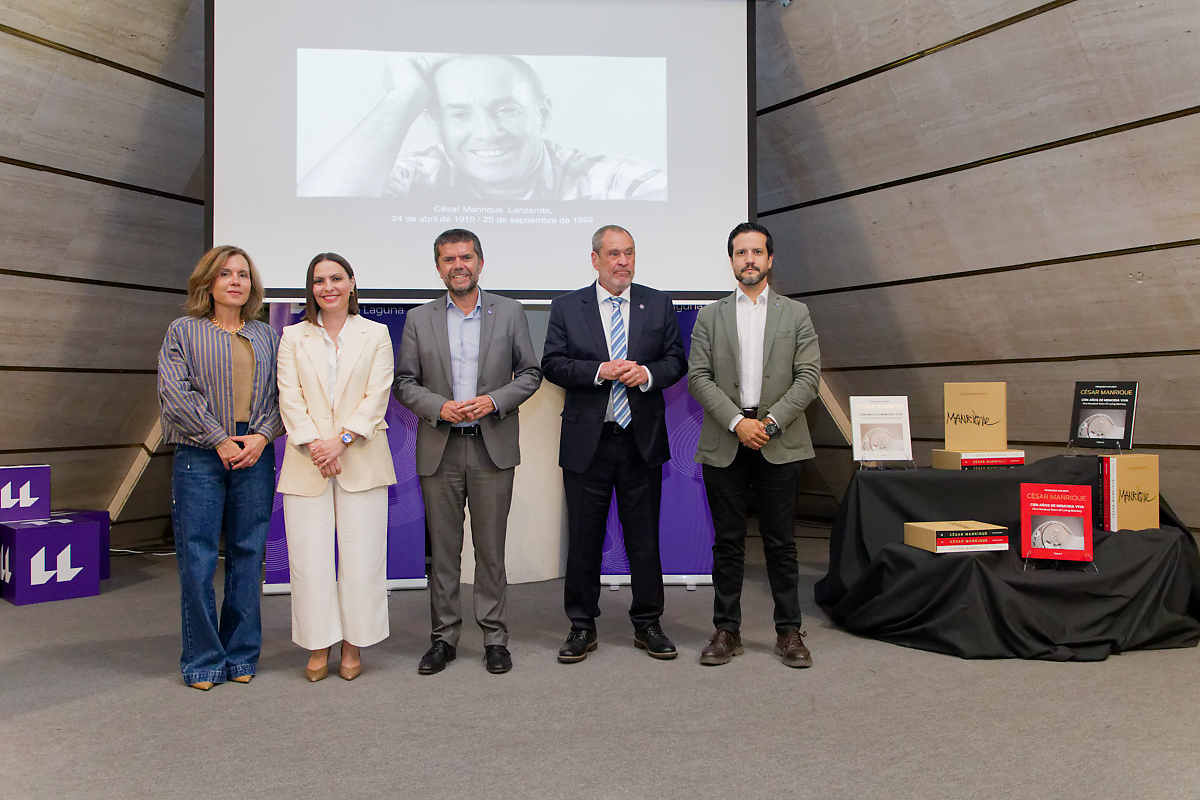
“César Manrique’s utopia was thwarted and turned into a dystopia caused by the misuse of his work and his image.” This is the forceful conclusion reached by the emeritus professor of Art History at the University of La Laguna. Francisco Galante Gómez The documentary “César Manrique: One Hundred Years of Living Memory,” which premiered yesterday, Tuesday, May 12, at the Faculty of Social Sciences and Communication, comes to a close. Despite everything, the academic ends on an optimistic note, acknowledging that, despite all the challenges, this artist remains a role model “because his artistic work and his message of safeguarding natural and human heritage are fundamental.”.
Galante was the screenwriter and co-director of this 70-minute film along with Pablo Sánchez Díaz-Llanos and Elena Sánchez Díaz-Llanos, an audiovisual work that complements a book of the same name of more than a thousand pages divided into three volumes written and coordinated by the academic, which was also presented yesterday.
The presentation also included the participation of the Rector of the University of La Laguna, Francisco J. García Rodríguez; the Minister of Universities, Science, Innovation, and Culture of the Government of the Canary Islands, Migdalia Machín Tavío; and was attended by the Deputy Minister of the Office of the Vice President, Antonio Hernández Rojas; and the Delegate of the Government of the Canary Islands in Brussels, Cristina Domínguez. The event was introduced by Carmen Delia Bienes of the Center for Canarian Popular Culture.
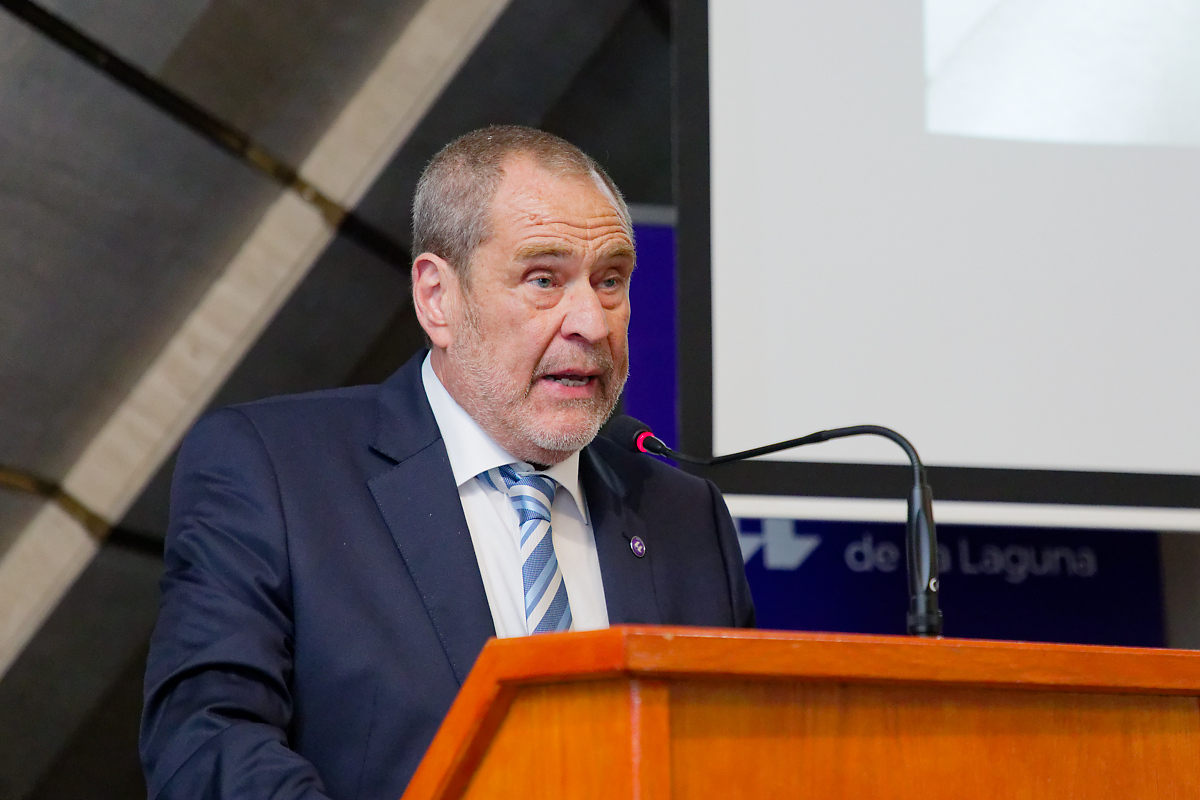
Francisco Galante.
A promise fulfilled
During his remarks following the documentary screening, Francisco Galante explained that with the publication of the book he is fulfilling a promise he made to Manrique himself on September 15, 1992—just ten days before his death—when they were both visiting an exhibition in Lanzarote. At that time, the artist, who was also a friend of the historian, asked him when he was going to write something about him, to which Galante replied: “When I’m ready.” The author confessed that, in truth, he still doesn’t know if he is, but he will soon reach the same age at which Manrique died, 73, so it was time to honor that promise.
The writing of this work has taken eight years, in addition to the experience gained since they first met in 1976. Galante has not only written a comprehensive historical and critical study of the work of the Lanzarote-born artist, but has also taken many of the photographs that illustrate it and designed the book. To give the work a collective dimension, its third volume includes contributions from other academics and artists who have shared their perspectives on Manrique.
The documentary complements this ambitious publishing project and distills over three hours of footage, enhanced by previously unreleased audio recordings of conversations between Galante and Manrique. This adds a more intimate dimension to the film, which reviews the author's major periods and works, with contributions from specialists in art, architecture, and environmental activism.
Although Galante was critical of certain politicians for whom "Manrique is an object that they use and manipulate," he appreciated the sensitivity of the Government of the Canary Islands at the end of the book's editing stage, which provided funds from Fedecan that allowed its completion.
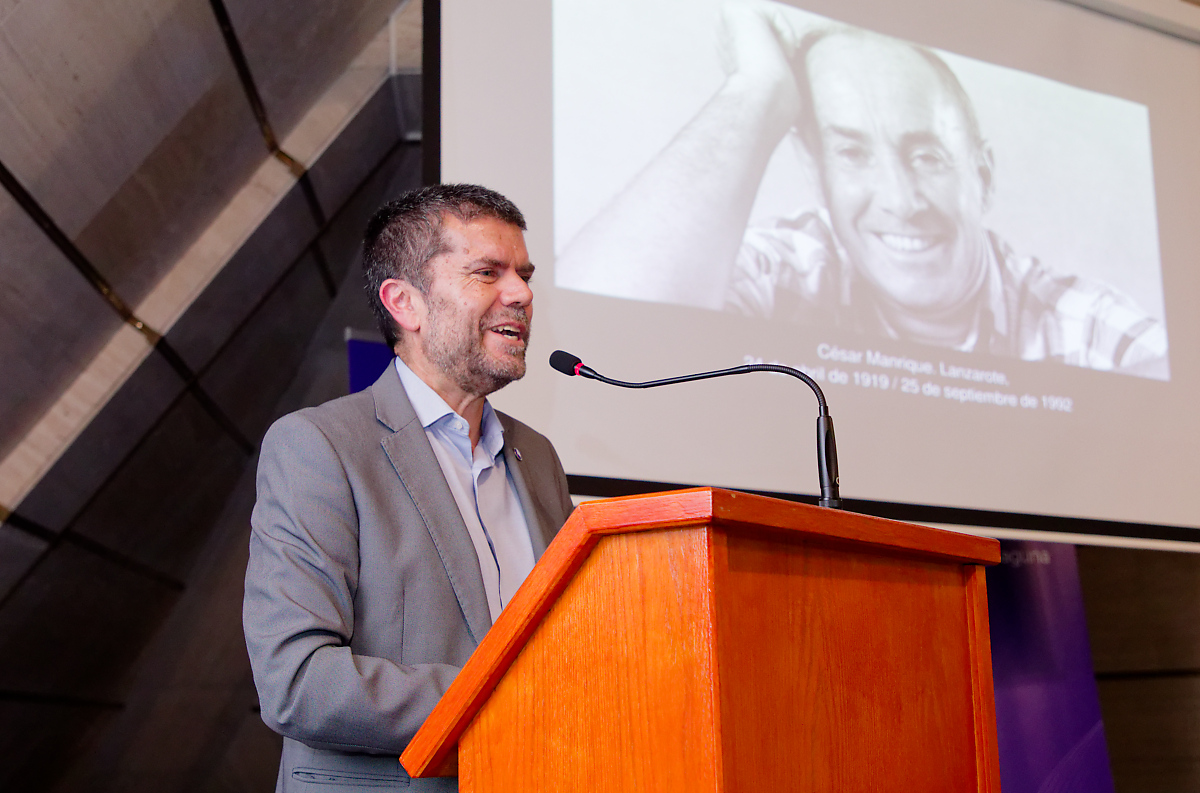
Francisco García.
The rector of the University of La Laguna praised the documentary, which allows viewers to maintain their sense of wonder at Manrique's work by providing new information and perspectives. He noted that this artist reminds him of the myth of Cassandra, the Trojan prophetess princess condemned by the gods to have her accurate visions of the future disbelieved. "Manrique's prophecies have come true; he foresaw the current housing and environmental crisis, so I believe that reclaiming his legacy forces us to confront this reality.".
García also highlighted the work of Francisco Galante, who is also the director of the César Manrique Cultural Chair at the University of La Laguna. Unlike those in charge of other chairs, who know the subject they are studying through documentation, in this particular case Galante “doesn't research a historical figure, but rather a friend, someone he spoke with,” which leads to some very special studies. “César asked us to connect love and truth, and that is reflected in this work.”.
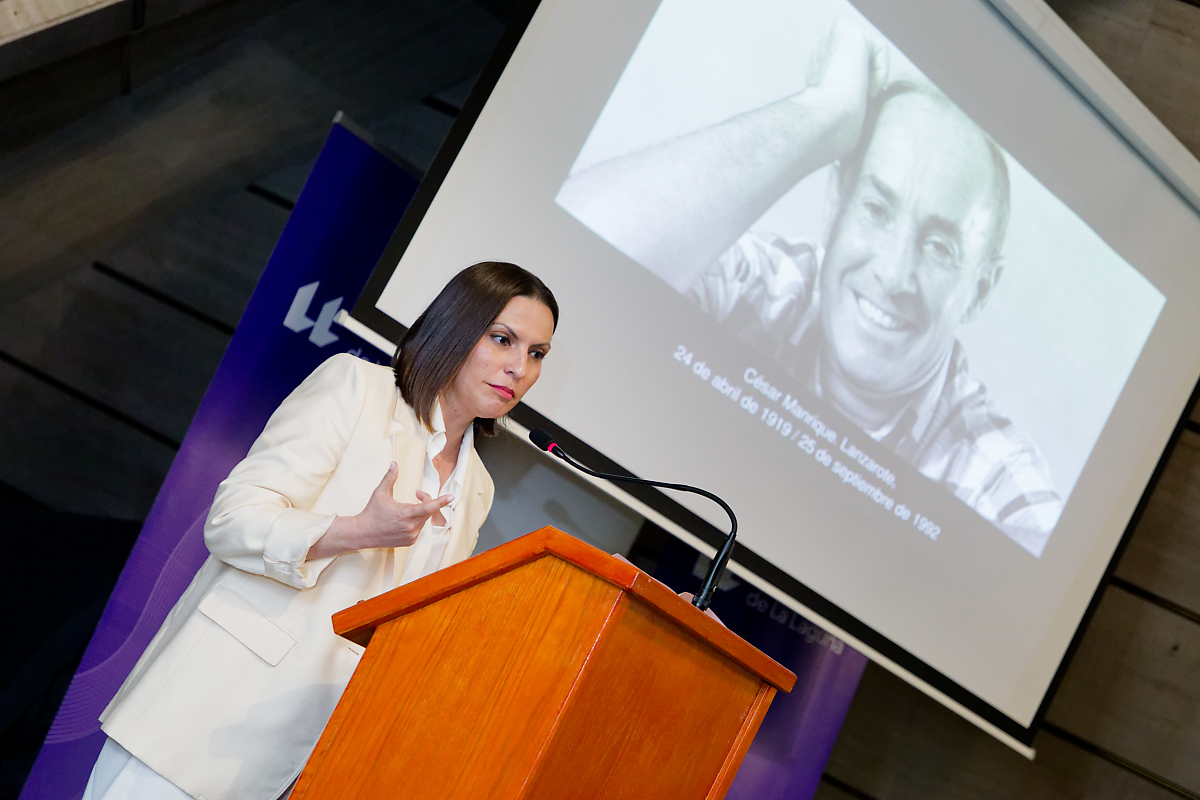
Migdalia Machín.
For her part, the Minister of Universities, Science and Innovation, and Culture noted that, being from Lanzarote and driven by her own curiosity, she has read extensively about Manrique throughout her life, and was therefore pleased to discover previously unknown information in this documentary. She praised how Manrique “had a vision and, from simplicity, was able to create something magnificent.”.
Machín Tavío responded to Galante's concerns, who expressed her certainty that, given the length of the work, few people would read it in its entirety and that it would be used more for specific reference. “That's a common thought among those who undertake this type of work, which is very private and solitary. But when it's published, the public appreciates it, so I'm convinced that this one will be read.”.

 Spanish
 English
 French