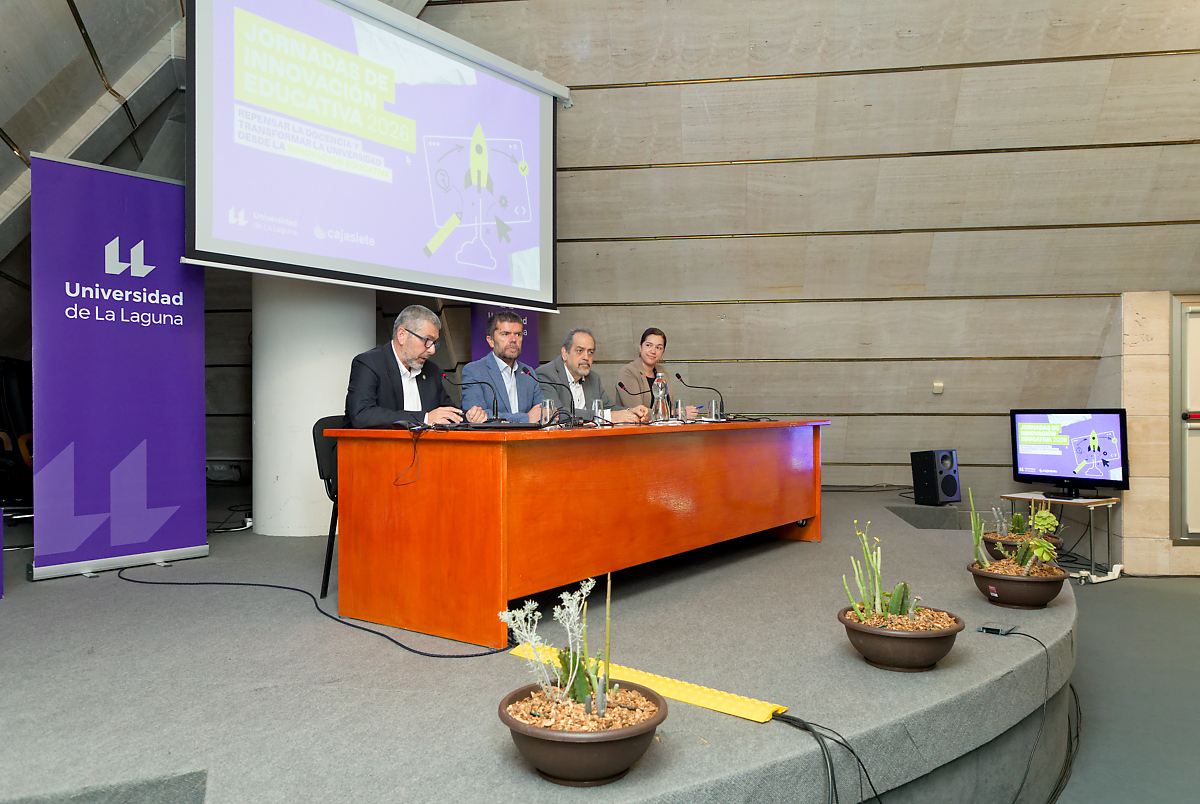
The University of La Laguna inaugurated today, Thursday, May 14, the Educational Innovation Days 2026, a meeting that brings together until tomorrow, Friday, professors, research staff and specialists in teaching transformation at the Faculty of Social Sciences and Communication.
The Rector of the University of La Laguna, Francisco García, opened the event by noting that these conferences have become a “must-attend” event on the institution's academic calendar. He emphasized that this year's theme, “Rethinking Teaching and Transforming the University through Educational Innovation,” encapsulates the conference's mission: to transform the university from the ground up, starting in the classrooms and through a review of daily teaching practices.
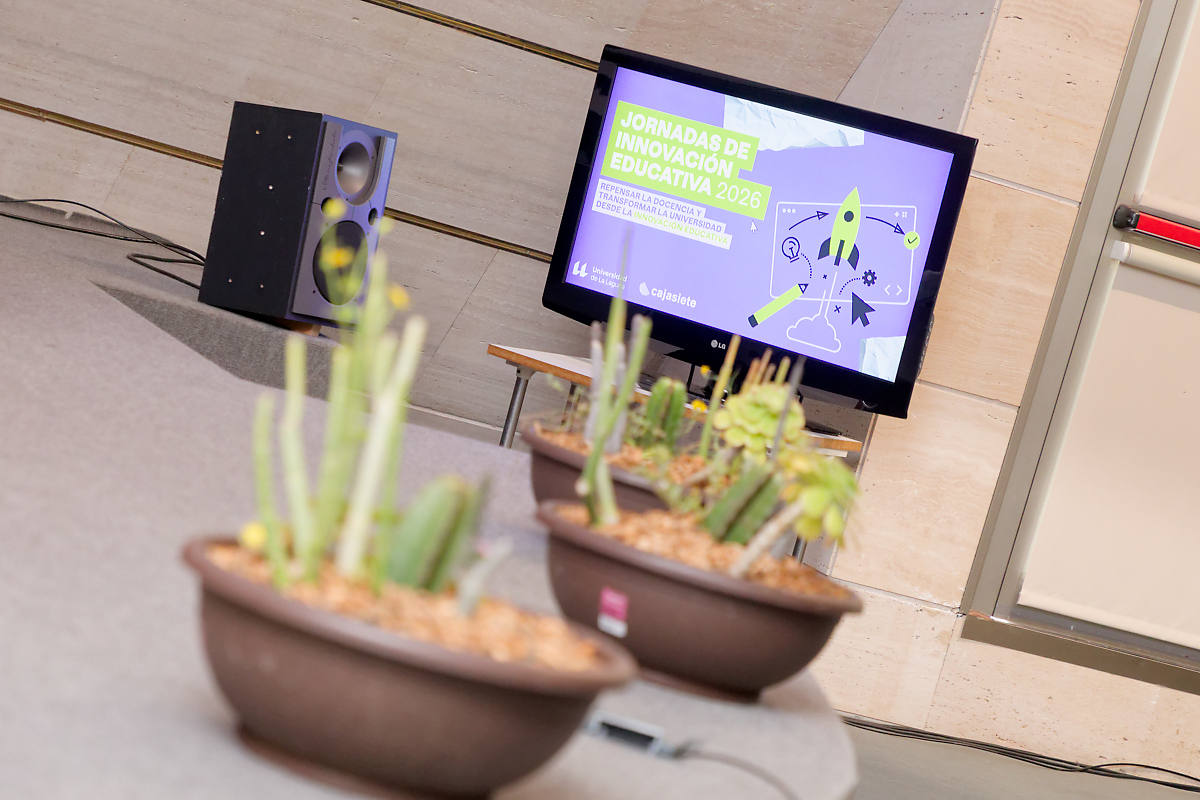 García emphasized that, in a context marked by constant change, “the only unviable approach is to keep doing the same thing.” In this regard, she argued that innovation depends not only on incorporating technology, but also on a cultural and pedagogical transformation. She also highlighted the 172 projects currently underway at the University of La Laguna and the ongoing collaboration with the University of Las Palmas de Gran Canaria, because “together we are stronger, but above all, more useful to society.”.
The Vice-Rector for Teaching at the University of La Laguna (ULL), José Manuel García Fraga, argued that educational innovation directly impacts the quality of teaching. During his speech, he pointed out that the traditional model based exclusively on lectures “has run its course” and advocated for the need to move towards more participatory classrooms, where students are actively involved in the construction of knowledge.
García Fraga emphasized that innovation “is an attitude” and not simply a way of using digital tools. In his view, one can also innovate “with a pencil, paper, and a good question.” The Vice-Rector highlighted that the University of La Laguna presented 172 projects related to educational innovation, 90% more than in the previous edition, in addition to 52 educational innovation and transfer projects and 14 service-learning projects.
The Director General of University Planning, Innovation, and Quality for the Government of the Canary Islands, Jassary Alvarado, conveyed the regional government's commitment to innovation in the Canary Islands' public universities. During her address, she stated that discussing innovation implies recognizing that students, technologies, and learning environments have changed, and therefore institutions must adapt to this new reality.
Alvarado emphasized that these conferences provide a productive space for reflection, knowledge exchange, and showcasing the work of a "competent, research-oriented, and committed" faculty dedicated to improving teaching. For his part, Luis Hernández, Vice-Rector for Degree Programs, Quality, and Educational Innovation at the University of Las Palmas de Gran Canaria, thanked the ULL for the invitation and highlighted the importance of cooperation among public universities, a model he described as essential in the current context, based on collaboration rather than competition.
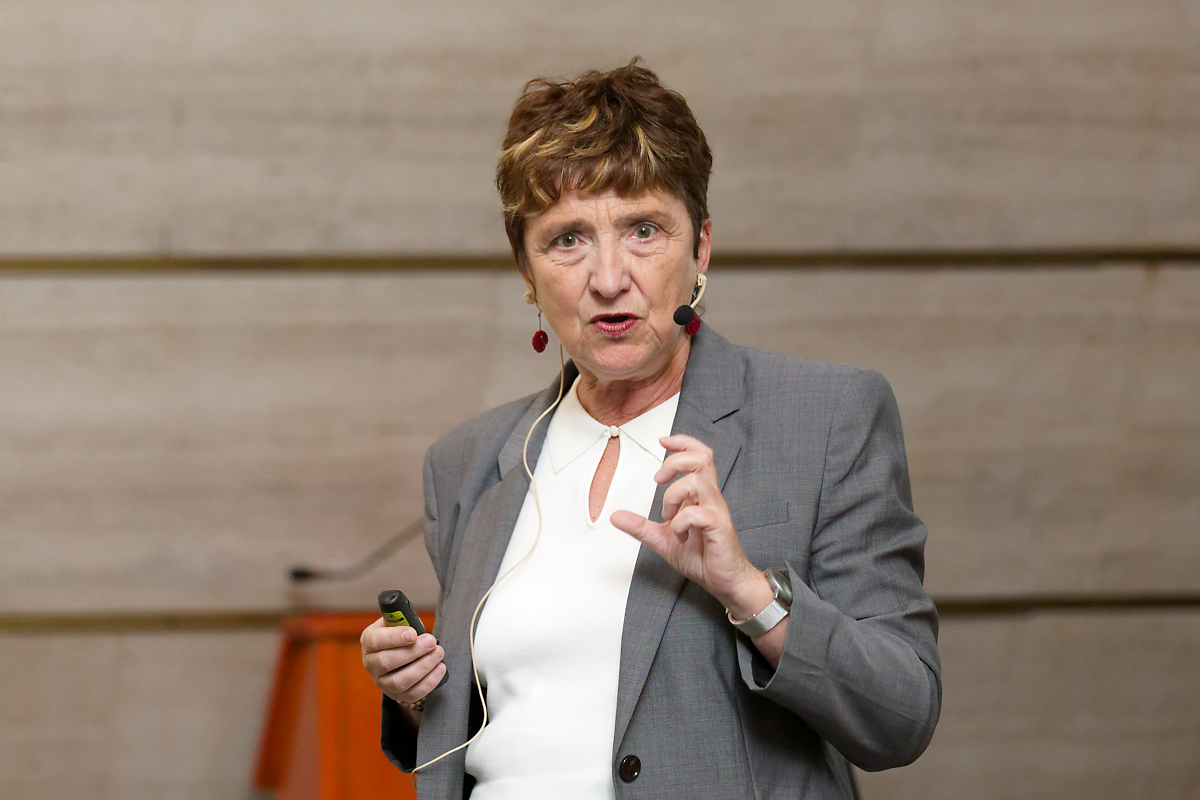
Idoia Fernández during her speech.
Following the institutional opening, the tenured professor from the University of the Basque Country Idoia Fernández She delivered the opening lecture on educational innovation. The researcher focused her presentation on the changes taking place in universities and how these affect teaching and learning methods in the classroom. The specialist cautioned that innovation cannot be limited to incorporating methodologies or technological tools, but must begin with a deeper question: how do university students learn today, and what conditions foster meaningful and critical learning? In this regard, she advocated for the need to promote more participatory classrooms, where students do not simply reproduce content, but actively construct knowledge.
Fernández also addressed phenomena that, in his view, are transforming the university context, such as student disengagement, changes in attention spans, absenteeism, and the emergence of artificial intelligence. During his presentation, he shared examples and situations observed in classrooms to reflect on new behavioral dynamics and the need to better understand what is currently happening on campuses.
He defended the importance of scientifically grounding innovation projects and developing deeper diagnoses of university learning, taking into account the particularities of each discipline. In this regard, he especially valued the collaboration between the two public universities in the Canary Islands and the need to build shared institutional strategies to guide teaching innovation in the coming years.
The program brings together more than eighty presentations distributed in thematic sessions on the current challenges of higher education: artificial intelligence, active learning methodologies, formative assessment, sustainability, equality and interculturality, as well as proposals related to service-learning, critical thinking, new literacies and innovation in health and clinical simulation fields.

 Spanish
 English
 French