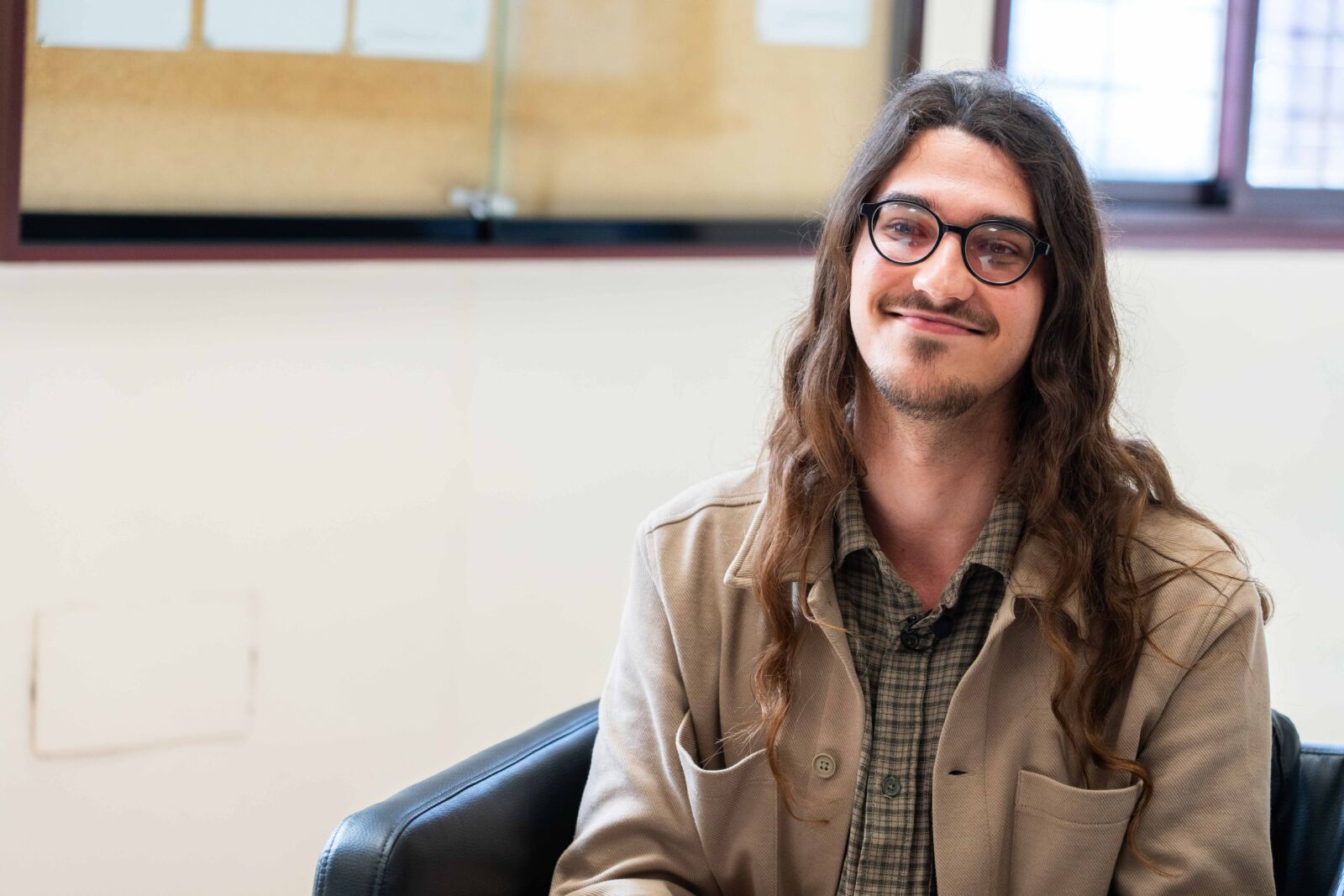
Philosophy didn't appear as an obvious vocation in Óscar Marrero Pérez's life from the beginning. During high school, his path seemed to be leading him toward other fields, especially mathematics and psychology. He had even participated in an early mathematical talent development program, and everything pointed to him continuing in the scientific field. However, amidst reading, intellectual curiosity, and a growing sense of wonder, he ended up discovering that what truly attracted him were the big questions related to reality, consciousness, and knowledge.
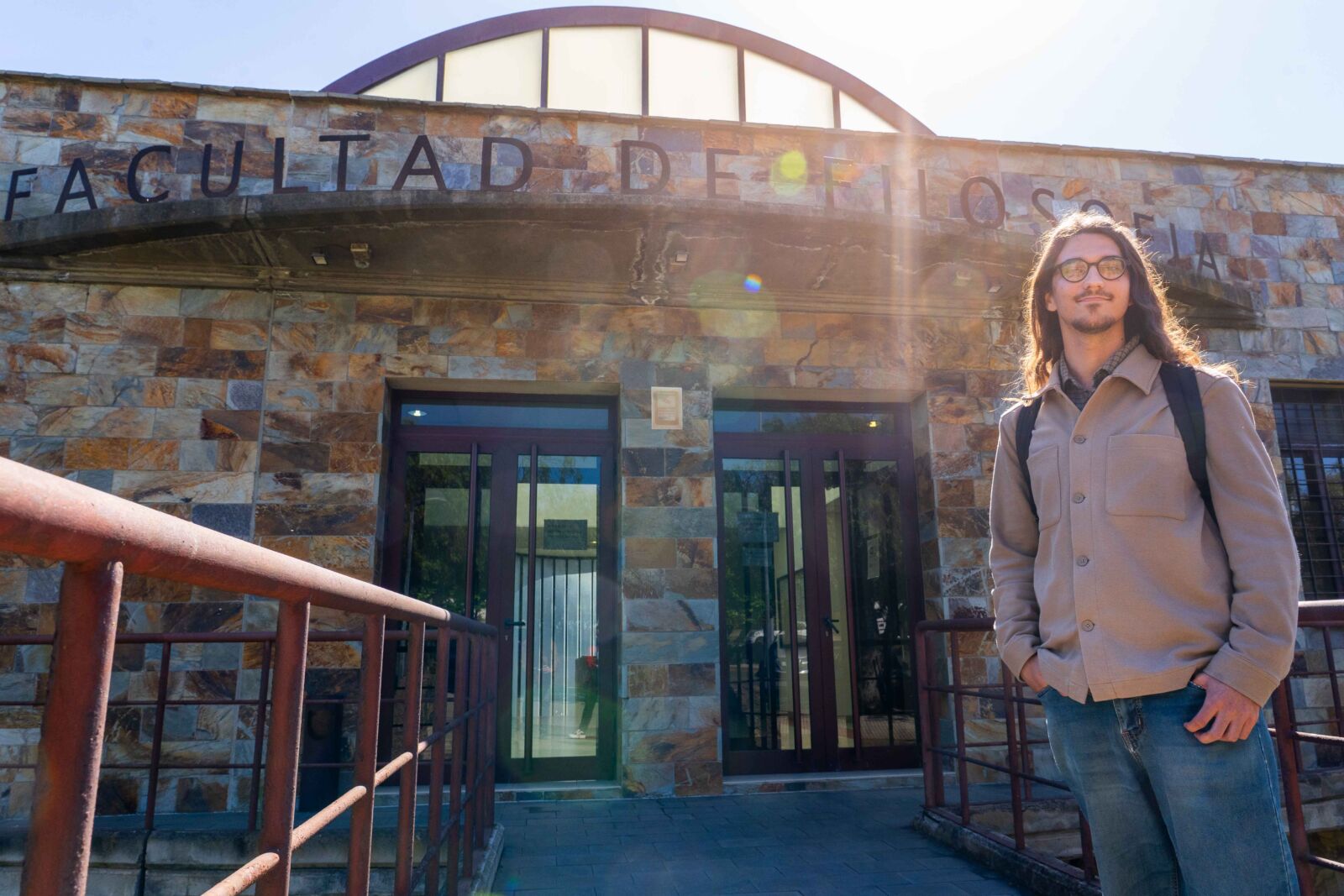
That interest would eventually lead him to Bachelor's Degree in Philosophy from the University of La Laguna and, years later, became the student with the best academic record at the institution during the 2024/2025 academic year, an achievement for which he received the XIV ULL Alumni Award for best academic record. This accomplishment certifies not only his grades, but also a trajectory marked by perseverance, intellectual curiosity, and a deep commitment to his studies.
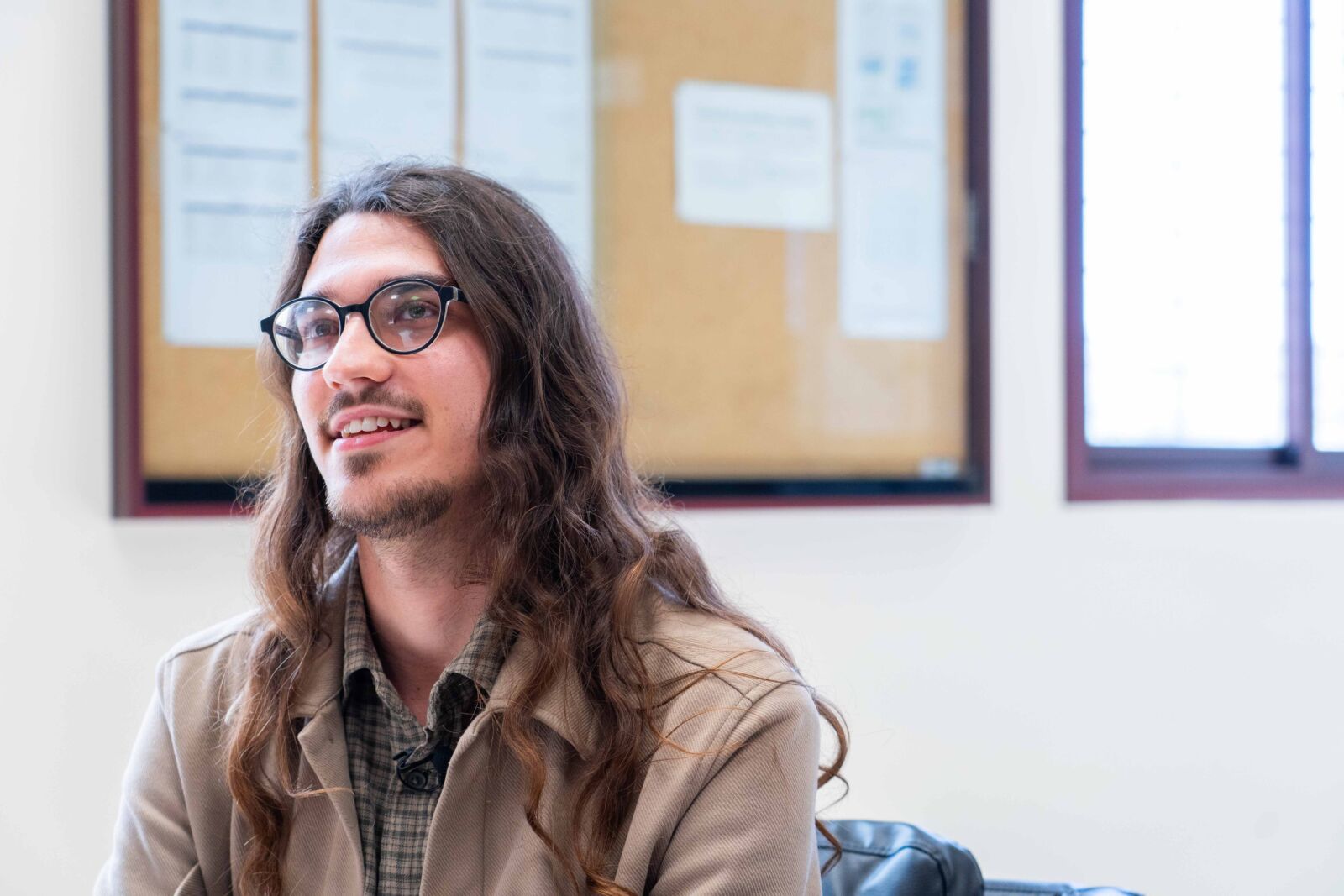 “I think that to get such a high grade, first and foremost, you have to be really motivated by what you're studying,” he explains. For him, the difference wasn't just in traditional academic effort, but in maintaining interest beyond the classroom. “The motivation to keep learning and discovering that there are still things you don't understand is a driving force for continuing your education, not only in the classroom, but also in your free time.”.
Her introduction to philosophy began while she was trying to expand her knowledge of psychology. Through her own research, she discovered that much of the early history of this discipline was closely linked to philosophy, and she began reading out of curiosity. First came some introductory texts she found at home, and later, authors like Nietzsche and Descartes. “I didn’t understand anything, but I kept reading,” she recalls with a laugh.
Those early readings sparked a growing interest in broader, more abstract questions. “I realized I was more interested in general, fundamental questions,” he explains. At the same time, he found within philosophy spaces where he could remain connected to mathematics through disciplines such as logic and analytic philosophy.
He chose to study at the University of La Laguna primarily because of its proximity and his personal circumstances, although he acknowledges that his university experience far exceeded his expectations. “I’m very happy with the education I’ve received here,” he says. The Philosophy department became a space for constant debate, the exchange of ideas, and academic closeness that profoundly shaped his university career.
The start of her degree, however, was marked by a significant adjustment period. She particularly remembers the impact of tackling complex texts during her first year, a stage she describes as demanding but also very enriching. “In high school, you have a very specific idea of what philosophy is, and when you get to university, you discover that the field is much broader,” she explains.
 This shift in perspective solidified, especially during the second semester, thanks to a course taught by Professor María del Rosario Hernández, whom he identifies as one of the most important teachers in his university career. “She was the first professor I would stay after class to discuss things,” he recalls. Those conversations ultimately drew him closer to analytic philosophy, a school of thought linked to language, logic, and mathematics that would come to shape much of his later interests.
Along with Hernández, he also mentions Manuel Liz and Margarita Vázquez as key figures during his studies, especially during the development of his final year project and his participation in research projects. “They are very intelligent, very interesting people with interests very similar to mine,” he notes. Beyond the academic content, he particularly highlights the constant dialogue and the close relationship he found with the faculty in the department.
His final degree project, entitled Review of panpsychist approaches to the hard problem of consciousness, He tackled one of the most complex debates in the philosophy of mind: the problem of subjective experience and consciousness. His research stemmed from an idea as striking as it was thought-provoking: the possibility that some kind of consciousness exists in all matter, even in seemingly inert elements. “It seemed completely crazy to me,” he admits. It was precisely this mixture of fascination and intellectual bewilderment that ultimately drove him to delve deeper into the subject.
Much of his philosophical interest has been influenced by authors such as Gottlob Frege and David Chalmers, key figures in contemporary analytic philosophy and philosophy of mind. The discovery of texts related to logic, semantics, and consciousness ultimately reinforced the connection between philosophy and mathematics that he had been pursuing for years. “I would open texts expecting to find one thing and instead find formulas, logical arguments, or debates about language that I found fascinating,” he says.
Beyond the technical complexity of his research, Óscar Marrero champions philosophy as a discipline that can also be enjoyed. “Some philosophies are almost a game: arguing, thinking, connecting ideas,” he explains. That's why he rejects the idea of studying solely as a sacrifice or suffering. “When you're passionate about something, you don't experience it as a punishment.”.
Although she acknowledges experiencing periods of fatigue and a certain loss of motivation during her degree, she considers these phases a natural part of any demanding university experience. Both developing her final degree project and her current Master's program in Teacher Training have allowed her to reconnect with the discipline from new perspectives.
Indeed, one of the aspects he most values from his university experience is the way he learned to approach knowledge. In his case, he was never particularly inclined to memorize by rote. “If you truly understand the main ideas, then you can connect concepts and improvise during an exam because you've really internalized it,” he explains.
She is currently pursuing a Master's degree in Teacher Training at the University of La Laguna and is certain that teaching will play a significant role in her professional future. "Secondary and high school education motivates me immensely," she says. She is particularly interested in the possibility of conveying philosophy in an accessible and engaging way, moving away from the notion of it being an inaccessible or overly theoretical subject.
She believes that much of the relationship students develop with philosophy depends precisely on how it is taught. “We all remember having teachers who either brought us very close to a subject or who managed to completely distance us from it,” she reflects. That's why she's interested in exploring more dynamic and participatory methodologies that allow students to approach complex philosophical questions in a more accessible way.
He does not rule out, however, continuing his involvement in research through a doctorate, more as a personal interest than a purely professional decision. “Dedicating a few years to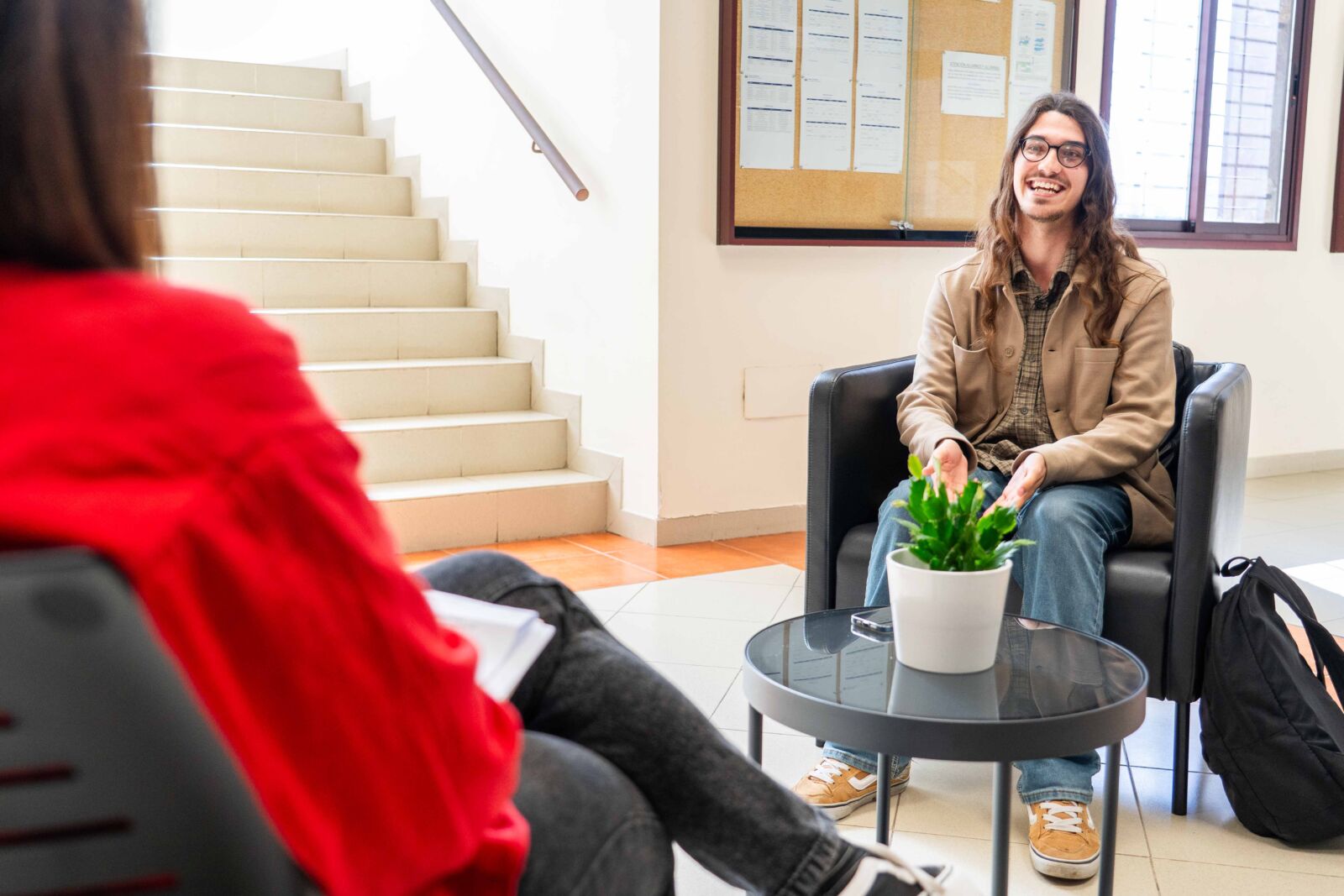 "Researching something that really interests me still appeals to me a lot.".
In a social context marked by immediacy, social media, and information overload, Óscar believes that philosophy can provide valuable tools for critically reflecting on reality. Even so, he avoids presenting it as an absolute solution and argues that critical thinking must be built upon multiple fields of knowledge.
She also challenges some common misconceptions about the Humanities and their supposed lack of career opportunities. She points out that there are currently many fields where philosophical backgrounds are present: from teaching to hospital bioethics, political philosophy, and interdisciplinary teams working with artificial intelligence. “If anyone thinks that studying philosophy is only useful for becoming a teacher, that’s not true,” she states.
In this sense, she considers it important to break with certain preconceived ideas about the Humanities and to assert that disciplines such as philosophy continue to play a relevant role in contemporary debates related to ethics, technology, communication, and politics. “Philosophy is more present than we think,” she points out.
However, when asked what she takes away most from her time at university, she doesn't mention the award or the grades. She speaks first of the people: the friendships she built during those years, the professors who shaped her path, and the conversations shared inside and outside the classroom.
He also talks about something less visible, but probably more important: the intellectual tools acquired during his degree. “You leave university feeling like you don’t know much about anything,” he acknowledges, “but the important thing is that you have the skills to deal with new texts, problems, and contexts.”.
And perhaps therein lies one of the keys to his academic journey. Not so much in having found definitive answers, but in having learned to keep asking questions.
Communications Office

 Spanish
 English
 French